







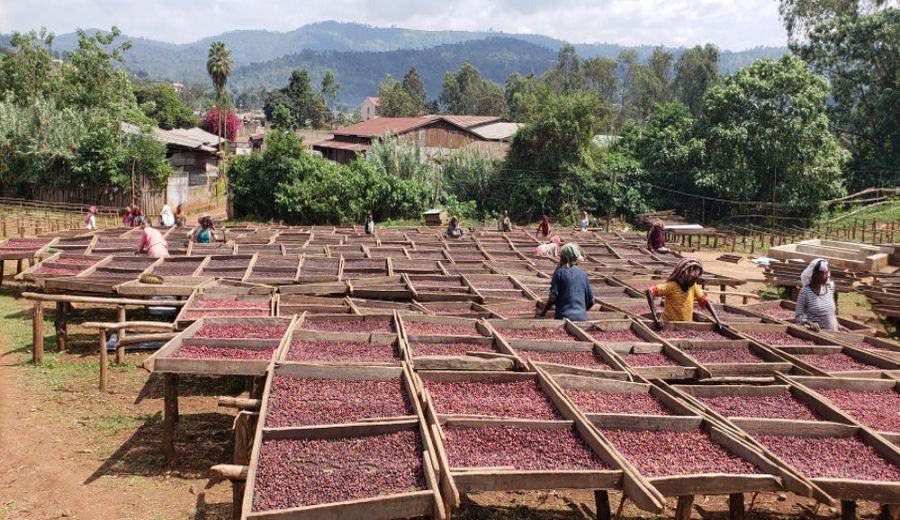
Introduction:Take an in-depth look at the Konga Cooperative in Ethiopia’s Yirgacheffe region, and discover how this organization—certified both Fair Trade and Organic—produces Grade 1 G1 coffee beans with bright acidity and juicy flavors through high-altitude cultivation and meticulous natural processing. This article details its geographical environment, processing methods, roasting recommendations, and pour over parameters, offering a comprehensive guide from farm to cup for this popular specialty coffee.
Among Ethiopia’s many coffee-growing regions, Yirgacheffe has long been renowned for its distinctive citrus notes and floral aromas, and the Konga Cooperative, located in the southern part of the region, stands out even among its peers. Established in 2002 and part of the Yirgacheffe Coffee Farmers Cooperative Union (YCFCU), the cooperative now comprises over 2,200 farmers working across 3,361 hectares of land, primarily situated at elevations above 1,800 meters in the Gedeo Highlands. In addition to producing high-quality coffee, Konga Cooperative has also earned international certifications for both Fair Trade and Organic farming, demonstrating its commitment to sustainable agriculture and social responsibility.
The name of the Konga Cooperative comes from the nearby Konga River and the surrounding settlement. This land enjoys abundant rainfall and sunlight, and the soil is particularly conducive to coffee tree growth due to its rich iron content. It is reported that the local soil layer exceeds 1.5 meters in depth, allowing coffee roots to access nutrients deeply, while the iron content promotes chlorophyll synthesis. This helps the coffee cherries accumulate richer flavor compounds and sugar content, laying a solid foundation for subsequent processing.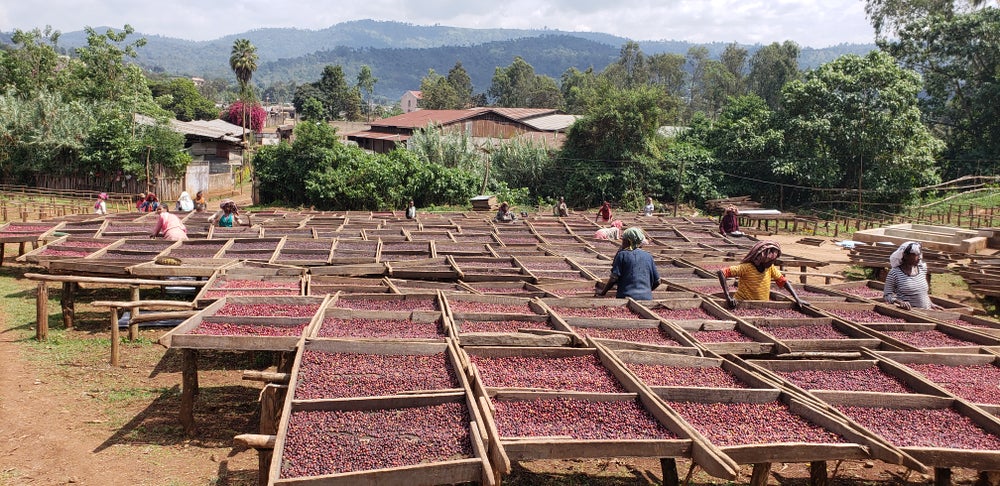
In 2020, the Konga Cooperative won the championship in the Natural category of the TOH (Taste of Harvest) competition hosted by the African Fine Coffees Association (AFCA). This competition is regarded as the African version of COE (Cup of Excellence) and attracts top-tier coffees from 12 countries each year. The selection process is rigorous: batches scoring below 80 points in cupping are first eliminated, and then professional judges from both domestic and international backgrounds evaluate each entry according to SCAA standards. Ultimately, the natural-processed beans from the Konga Cooperative stood out, proving that their quality has reached world-class standards.
The natural G1 coffee beans introduced in this article come from the Wote Washing Station under the Konga Cooperative. This washing station is located in the village of Konga and is named after the nearby Wote River, with all processing water drawn from this clear river. The station collaborates with 600 to 700 smallholder farmers in the surrounding area. These farmers each cultivate less than one hectare on average, maintain low coffee tree density, and often intercrop with other cash crops such as sweet potatoes, mangoes, and avocados, which helps preserve biodiversity and soil health.
In terms of processing, these coffee beans are processed using the traditional natural method. From harvest, strict sorting is carried out to remove unripe or defective beans. The selected coffee cherries are first soaked in water, where buoyancy is used to separate ripe from unripe fruits, ensuring that only the denser, ripe cherries that sink to the bottom proceed to further processing. These carefully chosen cherries are then evenly spread on elevated African beds, avoiding direct contact with the ground to prevent contamination from earthy flavors. During the drying process, the moisture content of the cherries is gradually reduced from 70% to 10–12%. The cherries are turned multiple times a day to ensure even drying, covered at night to protect against moisture, and the entire process takes approximately two to four weeks until the fruit husk hardens completely. The beans are then removed from the cherries using a pulper.
The variety of these coffee beans is labeled as “Heirloom.” In reality, Ethiopia possesses the world’s richest coffee genetic resources, with many varieties yet to be scientifically classified or named, hence they are commonly referred to as “Heirloom.” This also explains why Ethiopian beans often vary in size but are packed with diverse and unique flavor potential.
For roasting recommendations, it is advised to use a semi-direct-fire roaster, such as the Yangjia 800N, with a charge weight of around 480 grams. The initial roaster temperature is set at 175°C, with the air damper open to 3 and the heat at 130. Once the turn-around point is reached (around 1 minute and 28 seconds), gradually adjust the air damper and heat to control dehydration and the Maillard reaction. When the bean surface begins to show wrinkles and dark speckles (around 8 minutes and 48 seconds), marking the start of first crack, adjust the air damper to 5 and allow the coffee to develop for another 50 seconds after first crack. Finally, drop the coffee at 189°C to preserve its rich fruity aroma and acidity.
Cupping results show that this natural G1 coffee performs best within 8 to 24 hours post-roast. Using a 200ml ceramic bowl, a water temperature of 94°C, a 1:18.18 brew ratio (11 grams of coffee to 200 ml of water), and a grind size passing through a 20-mesh sieve at 70%–75%, an ideal Golden Cup range concentration of 1.15%–1.35% can be achieved. During cupping, the dry aroma presents pronounced citrus notes, while the wet aroma emits delicate jasmine floral scents. The flavor profile includes citrus, honey, green tea, and jasmine, delivering an overall impression that is fresh and layered.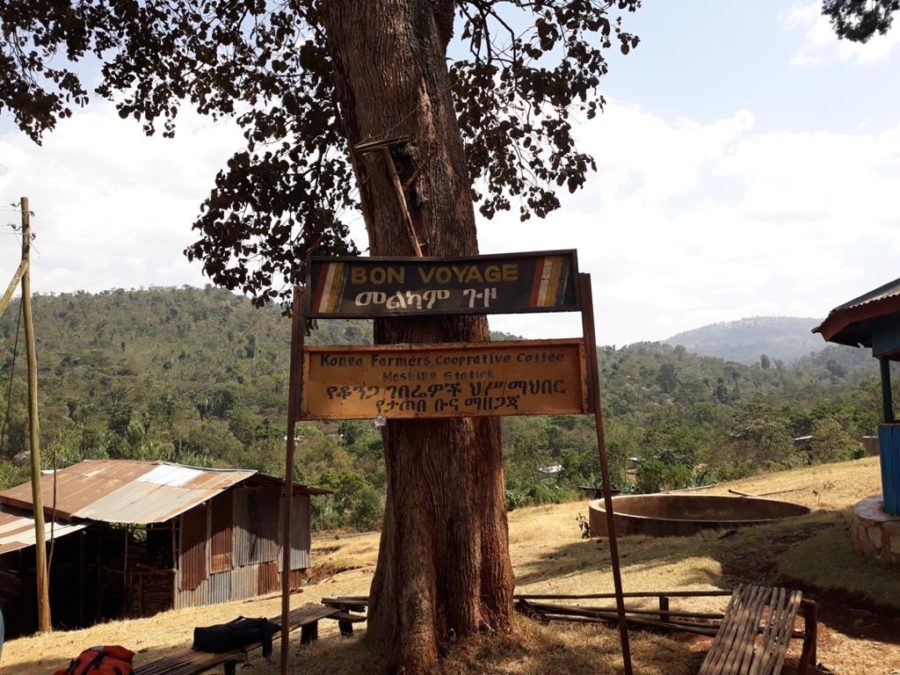
If choosing the pour over method, it is recommended to use a V60 #01 filter cone, with water temperature controlled at 90–91°C, a coffee dose of 15 grams, a brew ratio of 1:15, and a medium-fine grind (similar to fine sugar, around 80% passing through a 20-mesh sieve). The specific technique involves: starting with a 30-second bloom using 30 grams of water, followed by pouring in a small circular motion until reaching 125 grams for the first pour. When the water level drops close to exposing the coffee bed, continue pouring to 225 grams, then remove the V60. The total brew time is approximately 2 minutes and 10 seconds, fully highlighting the coffee’s high-toned berry, creamy, honey, and citrus characteristics. As the temperature decreases, the flavors transition to softer berries and citrus, with a smooth and lingering aftertaste.
The above content is compiled by CoffeeHunters, a coffee news website.


