







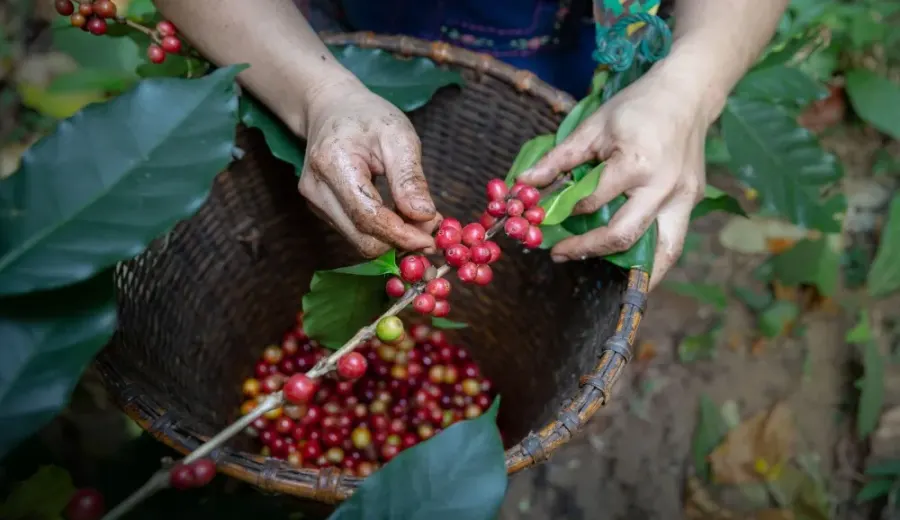
Introduction:As one of the oldest Arabica coffee varieties, Typica is renowned for its elegant and delicate flavor profile, yet it remains relatively rare in production. This article delves into the historical origins and global distribution of Typica, with a focus on analyzing the subtle flavor differences between Typica grown in Taiwan’s Alishan and Panama. It also provides practical pour over brewing tips and roasting references to help coffee enthusiasts experience the charm of this classic variety from the first sip.
Typica (Typica) is one of the oldest varieties within Arabica coffee and the progenitor of many modern coffee lineages. Although it has relatively low yields and weaker disease resistance, it has long held a place in the specialty coffee scene due to its refined floral aroma, bright acidity, and clean finish. From Jamaica’s Blue Mountain to Taiwan’s Alishan, and up to Panama’s high-altitude mountain regions, this ancient variety exhibits diverse flavor characteristics as it adapts to the terroirs of different growing regions.
To understand Typica, it’s essential to start with its origins. It is generally believed that Typica originated in Ethiopia, then traveled to Europe via Yemen, and was subsequently spread around the world during the era of colonial expansion. It was first introduced to Java, Indonesia by the Dutch, then brought to the Caribbean by the French, and from there disseminated throughout Central and South America. Due to its slow growth, limited yield per unit area, and susceptibility to leaf rust, Typica is now mostly cultivated in small-scale mixed plantings or by specialty smallholder farmers, rather than through large-scale commercial farming.
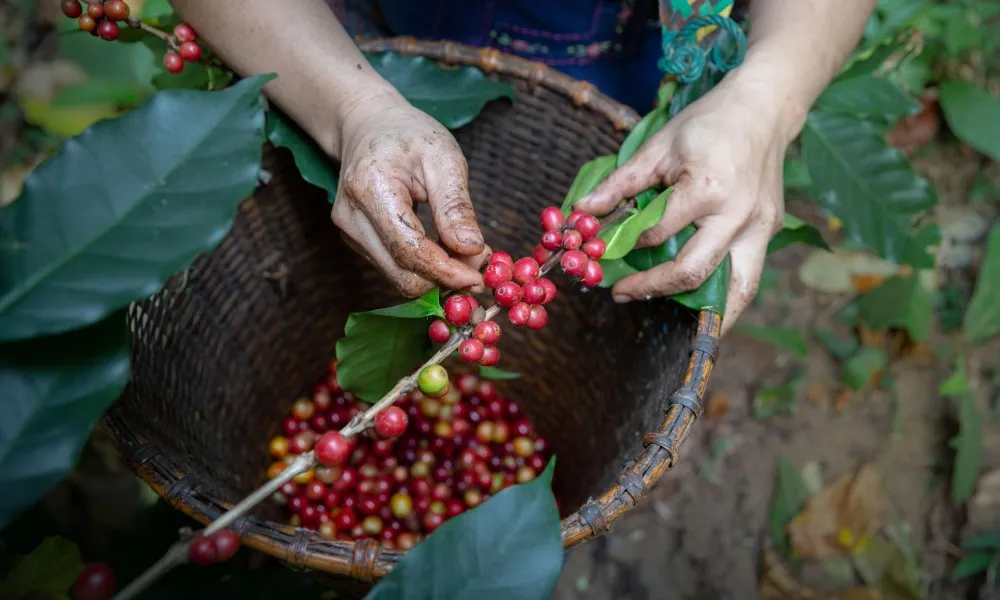
In different growing regions, the flavor profiles of Typica can vary significantly. Take the Typica grown in Taiwan’s Alishan as an example: cultivated in mid-altitude mountainous areas with distinct day-night temperature variations and moderate humidity, it delivers clear fruit acidity, delicate floral notes, and a soft caramel sweetness. This type of Typica typically has a medium body, with a smooth flavor progression, making it ideal for coffee lovers who prefer a refreshing taste. For pour over brewing, it is recommended to use a medium-light roast, with water temperature around 90–92°C, grind size slightly coarser than granulated sugar, and a brew time controlled to around 2 minutes to fully showcase its nuanced layers.
In contrast, Typica from Panama—especially those grown in high-altitude volcanic soil regions—often exhibits richer nutty and caramel tones, paired with soft citrus acidity and a lingering finish. Some Panamanian Typica, thanks to favorable microclimates, may even carry hints of floral notes and honey-like sweetness, resulting in a more rounded and full-bodied overall profile. For brewing, a medium roast is suggested, with water temperature slightly reduced to 89–91°C to highlight its sweetness and body. It suits drinkers who prefer a more complex and multi-layered cup.
It’s worth noting that although both come from the Typica variety, the Taiwanese Alishan and Panamanian versions show significant differences in acidity structure, sweetness expression, and body (mouthfeel). The Alishan Typica tends to have brighter acidity with subtle notes of peach or berries, while Panamanian Typica often features stone fruit acidity and sweetness (such as apricot or plum), along with more pronounced caramel and creamy smoothness. These differences stem not only from altitude and climate but are also closely related to local soil composition and processing methods (e.g., washed or natural).
If you wish to personally experience the difference between these two flavor profiles, it is recommended to try single-origin pour over beans from Taiwan’s high-altitude regions or micro-lot Typica from Panama, while paying attention to their processing methods and roast levels. For those new to pour over brewing, starting with a medium-light roast is advisable. By adjusting water temperature, grind size, and brew time, you can gradually identify the parameter combination that best highlights the unique traits of this variety. Additionally, using clean, low-mineral filtered water can further accentuate the delicate flavors of Typica.
In summary, although Typica may not be the most productive or robust coffee variety, its elegant flavor presentation and diverse regional expressions have made it a classic favorite among many coffee enthusiasts. Whether it’s the refreshing style of Alishan, Taiwan, or the rich intensity of Panama’s highlands, each sip offers a taste of this ancient variety’s timeless and distinctive charm.
The above content is compiled by CoffeeHunters, a coffee news website.


