







Introduction:The Gedeo Yirgacheffe Guddina Cooperative, a small farmers' organization located in Ethiopia's high-altitude regions, produces unique citrus and berry notes through its washed processing method. This article delves into the journey of Guddina’s development as it separated from the Wolkite Cooperative, deconstructs its traditional washed processing techniques, and provides tested light roast profiles and pour over parameters to help you accurately replicate that refreshing floral aroma and lingering green tea-like complexity. It's the perfect resource for discovering high-quality Yirgacheffe coffee beans and brewing inspiration.
Ethiopia is known as the birthplace of coffee and boasts the world’s richest genetic repository of native coffee varieties. Among its many remarkable producing regions, Yirgacheffe stands out with its bright acidity, citrus, and floral notes, making it a dream origin for specialty coffee enthusiasts. The Guddina Cooperative, located in the southeastern corner of Yirgacheffe, is considered one of the treasures that best preserves the area’s pure terroir characteristics.
Comprising about 300 smallholder farmers, this cooperative specializes in washed processing and is renowned for producing high-quality G1 grade coffee beans. The Yirgacheffe Guddina beans brought in by a certain coffee brand come from here, featuring a clear flavor profile with distinct layers of citrus, berries, and honey, and a lingering hint of green tea — making them an excellent choice for pour over lovers.
Originally a small town within Ethiopia’s Sidamo region, Yirgacheffe’s unique microclimate—shaped by its high altitude (1700–2100 meters) and cool, foggy weather—has created distinctive coffee flavors. As one of the world’s highest-altitude coffee-growing regions, it benefits from an exceptionally favorable cultivation environment, yielding richly layered, mellow, and delicate coffee flavors that burst with floral complexity and leave a long-lasting finish.
The Gedeb district, located at the southern end of the Yirgacheffe region, is a high-altitude micro-region under the Kochere administrative zone, with an average elevation of 1900 to 2200 meters. Although classified under Kochere in the ECX market, it has quality potential on par with Kochere itself. The Wolkite area, where the Guddina Cooperative is situated, is one of Gedeb’s most representative coffee-producing regions.
The Guddina Cooperative was originally part of the Wolkite Cooperative under the Yirgacheffe Coffee Farmers Cooperative Union (YCFCU). As the global specialty coffee market increasingly values "origin traceability," more villages with unique flavor profiles have chosen to establish their own cooperatives. In 2012, Guddina officially split from Wolkite to form its own cooperative, aiming to preserve the purest regional character. Most farmers in the community are experienced small-scale growers with mature planting techniques, and they adhere to traditional washed and natural processing methods.
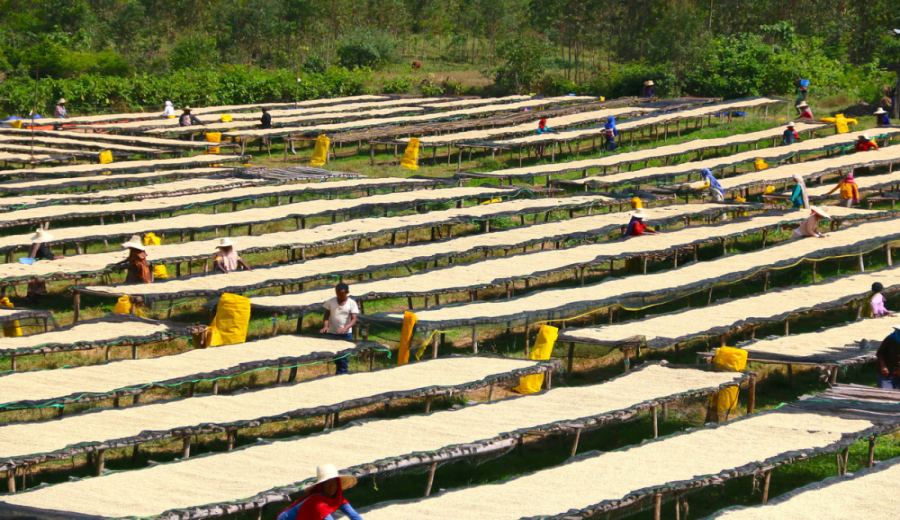
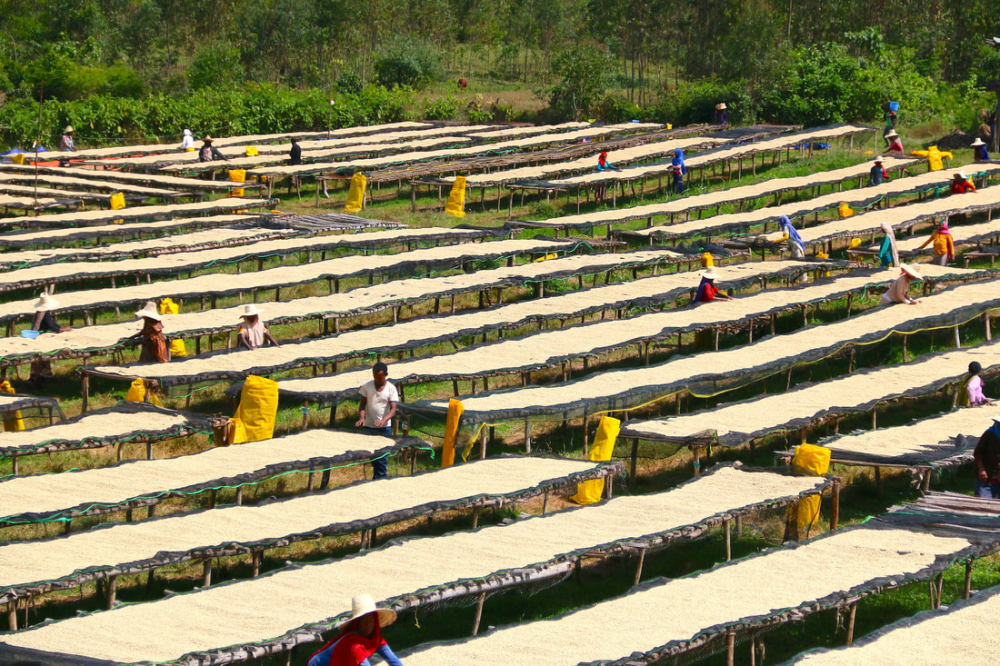
The washed processing procedure at Guddina is highly meticulous. Coffee cherries are delivered to the processing facility within 6 to 12 hours of harvest. After weighing, they are soaked in water, where unripe or defective cherries are removed using buoyancy principles. Next comes pulping, where the fruit flesh and skin are stripped away, leaving the beans with mucilage to enter fermentation tanks. Fermentation lasts between 18 to 36 hours, effectively breaking down the mucilage layer.
Once fermentation is complete, the beans are thoroughly washed with clean water to remove residual mucilage, then sorted to eliminate defective beans. Finally, the clean parchment coffee is spread on raised beds, concrete surfaces, or tarps for drying. Depending on weather conditions, this typically takes 5 to 14 days until the moisture content drops to around 11%, ensuring stable quality.
For high-flavor-profile washed Yirgacheffe beans like those from Guddina, roasters at a certain coffee brand typically adopt a light roast strategy to enhance its bright acidity and fruity characteristics. The charge temperature is set at 175°C, with the initial fan speed at 3 and heat at 120. Once the turning point (around 1 minute 32 seconds, 140°C) is reached, the fan speed is adjusted to 4 to maintain stable dehydration.
When the roaster temperature drops to 166°C, the heat is reduced to 100, and at 176°C it is further lowered to 80, while closely monitoring bean surface changes. At approximately 8 minutes and 28 seconds, the bean surface begins to show wrinkles and dark spots, and the coffee aroma transitions from grassy to baked—signaling the approach of first crack. First crack begins at 9 minutes and 38 seconds, after which the fan speed is adjusted to 5 to control the heat and avoid overly suppressing the cracking sound, allowing first crack to develop for about 1 minute and 30 seconds. The roast is then dropped at 193.5°C to lock in the bright floral, fruity, and citrus aromas.
To fully express the citrus, berry, and honey flavors of Guddina, the pour over parameters are crucial. It is recommended to use medium-light roasted beans with a high water temperature of 91–93°C to effectively extract a balanced sweet and sour profile along with delicate aromatic layers. If using an EK43s grinder, set the grind size to 10, corresponding to a sieve percentage of about 80% (based on SCA standards). Without a sieve tool, aim for an extraction time of around 2 minutes using a 1:15 coffee-to-water ratio for 15 grams of coffee.
The Hario V60 dripper is recommended, using a pulsed pouring technique: start with a 30-second bloom using 30 grams of water, then pour in a small circular motion until reaching 120 grams for the first pour. Once the water level drops slightly, continue pouring to a total of 225 grams, and remove the dripper just before the coffee bed is exposed. Keep the total brew time around 1 minute and 50 seconds. This approach fully highlights Guddina’s refreshing citrus and orange notes, and as the temperature cools, you can enjoy the enticing lingering flavors of berries, honey, and the final green tea-like finish.
The above content is compiled by CoffeeHunters, a coffee news website.


