








Introduction:Cuban coffee is renowned for "Cristal Mountain," but its true identity is actually the top grade in the official classification system. This article delves into the distribution of Cuban coffee-growing regions, the characteristics of the Typica variety, the washed processing method, the nine-tier grading standard, and its delicate and balanced island-style flavors—helping readers fully grasp the historical background and quality traits of this Caribbean coffee region.
Cuban coffee often garners attention due to the prestigious name "Cristal Mountain." However, "Cristal Mountain" is not the name of a coffee-growing region, but rather one of the highest grades in the official classification system established by the Cuban Coffee Institute. From its heyday in the 19th century, to its decline in the 20th century, and now to its stable support in the Japanese market, Cuban coffee demonstrates unique historical resilience and regional characteristics. This article will systematically introduce the coffee culture of this Caribbean island nation, covering growing environments, cultivated varieties, processing techniques, grading systems, and flavor profiles.

When it comes to Cuban coffee, many people immediately think of "Cristal Mountain." However, "Cristal Mountain" does not refer to a specific geographical region, but is a grading term used by the Cuban government to evaluate coffee quality. Dating back to the early 18th century, a French naval officer planted the first Typica coffee tree on the French Martinique Island in the eastern Caribbean. Subsequently, neighboring islands such as Jamaica and Cuba followed suit, ushering in a two-century-long boom in coffee exports. However, entering the 20th century, global geopolitical changes brought severe challenges to the coffee industries of island nations like Cuba, Puerto Rico, and Haiti, leading to continuous declines in both cultivation area and production, as well as impacts on quality. Even after the revolution, when the government attempted to revive the industry, it suffered a downturn due to a technological gap, aging labor force, and the ripple effects of the Soviet Union's collapse, causing Cuban coffee to hit rock bottom for a time.
Despite this, Cuban coffee still retains a loyal consumer base, with the Japanese market playing a key role. However, as Japanese demand grew, the actual production of Cuban coffee plummeted from nearly 3,000 tons in 2004 to just 500 tons in 2008. To meet market demand, Cuba gradually shifted to cultivating lower-quality Arabica and Robusta beans, causing its visibility in the specialty coffee market to gradually diminish.
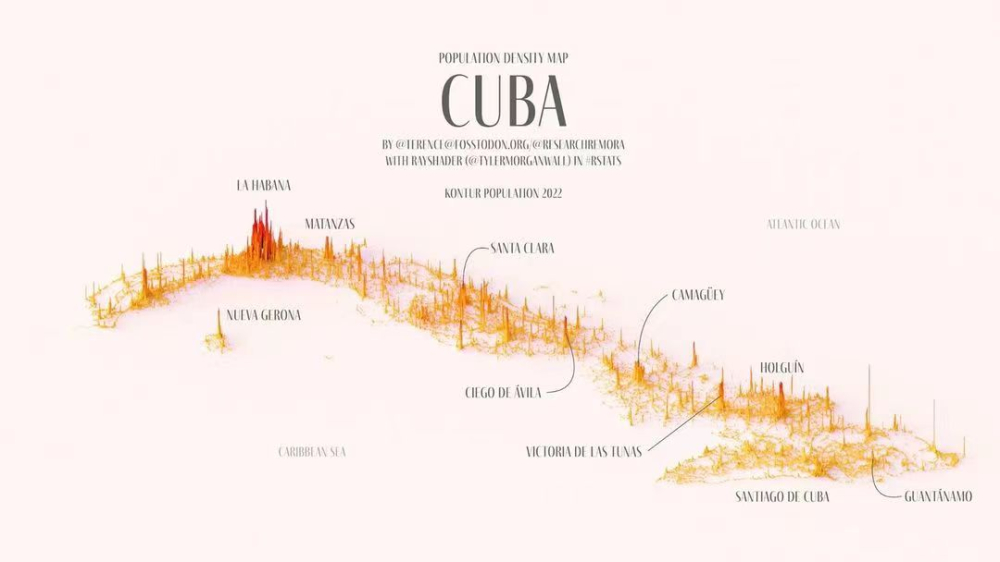
The name of the country Cuba originates from the now-extinct Taíno language, meaning "a land of fertile soil," which shows that its natural conditions were originally extremely favorable. When it comes to Cuban coffee, many people associate it with Cristal Mountain coffee, which is said to rival Blue Mountain. With similar flavors, it is often called "Cuban Blue Mountain," becoming a highlight in marketing. Cristal Mountain is located in northeastern Cuba, with altitudes ranging between 900 and 1,200 meters. It is the country’s second-highest mountain range, alongside the main mountain range in the southeastern part and the Escambray Mountains in the central-southern region, forming the three major coffee-producing areas. It is worth noting that not all Cristal Mountain coffee on the market necessarily comes from the Cristal Mountain region—it may also originate from the other two regions. The name mainly stems from its key export markets—Japan, France, Italy, and Germany—where Japanese consumers hold it in particularly high esteem and have bestowed upon it the elegant title "Cristal Mountain Coffee," which continues to be used to this day.
The main coffee variety cultivated in Cuba is Typica, a classic and historically significant Arabica variety. Typica coffee trees are known for their unique bronze-colored top leaves, hence they are also referred to as "red-top coffee." Its beans are relatively large, often shaped like pointed cones or slender tips, distinctly different from the more common rounded Bourbon beans. Coffee of the Typica variety typically exhibits a clean, bright flavor with balanced taste and a smooth aftertaste. Although the trees are relatively fragile and susceptible to leaf rust, their elegant flavor profile still holds a significant place in Cuban coffee.
In terms of processing methods, Cuban coffee primarily uses the washed method. This traditional technique effectively highlights the typical flavor characteristics of the region, including brighter acidity, higher cleanliness, and moderate body, while ensuring consistency in green bean quality. The main difference between the washed method and the commonly used natural (sun-dried) method lies in the fermentation step used to remove the mucilage layer. After fermentation, thorough washing is still required to remove residual fermentation bacteria and impurities. This process consumes a relatively large amount of water, followed by drying and hulling.
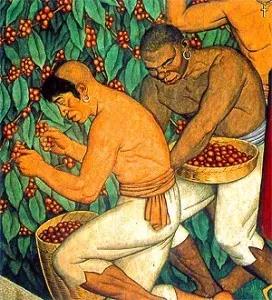
The Cuban Coffee Institute classifies coffee into nine grades based on bean size and flavor performance, from highest to lowest: Crystal Mountain, Extra Turquino, Turquino, Altura, Montana, Cumbre, Serrano Superior, Serrano Corriente, and Caracolillo. The grading is mainly based on particle size and can be grouped into three categories: ETL (Special Grade), TL (Medium Grade), and AL (Ordinary Grade). Among them, Crystal Mountain coffee beans are regarded as the most representative high-quality large coffee beans in Cuba.
Overall, Cuban coffee is a typical island-style coffee, known for its delicate, clean taste and unique flavor profile. When tasting, one can perceive the exquisite balance between acidity and bitterness, with a smooth texture and distinct layers. Its color is bright, the aroma is fresh and fragrant, and it carries a faint smoky note, creating a leisurely atmosphere reminiscent of a countryside cottage—offering coffee enthusiasts a distinctive taste experience.
The above content is compiled by CoffeeHunters, a coffee news website.


