







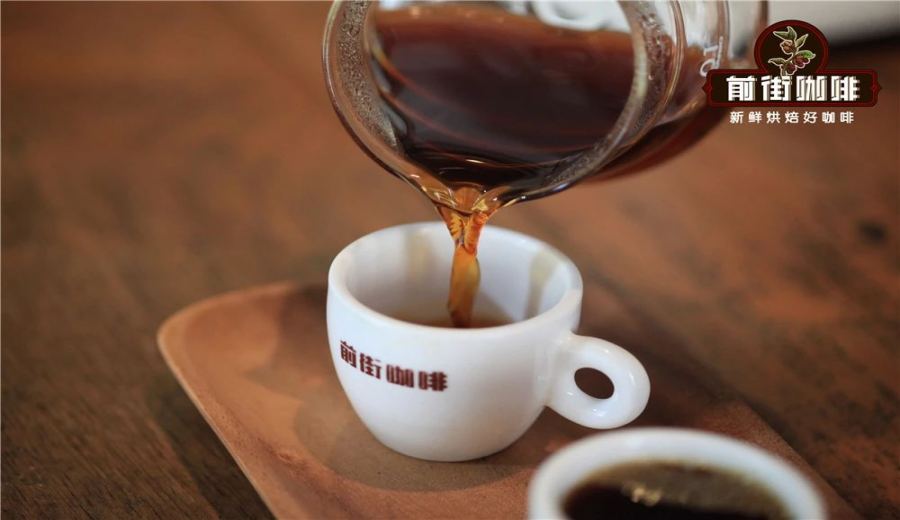
Introduction:Ethiopia is the holy land of specialty coffee worldwide, and the washed natural beans from the Sidamo region are widely loved for their berry sweetness and rich floral notes. This article delves into the regional background and variety origins of the Sidamo Huakui 8.0, while providing a detailed explanation of its pour over parameters, grind settings, and three-stage pouring technique to help you achieve a stable extraction and an exceptional coffee experience full of tropical fruit and berry flavors.
As the birthplace of Arabica coffee, Ethiopia has nurtured countless coffee varieties with unique flavor profiles, particularly renowned for their elegant floral aromas and rich fruity notes. The Sidamo region is one of the country’s classic coffee representatives, known for its mellow sweetness and layered complexity. Among them, Huakui 8.0 stands out as a top-tier washed natural bean from the area, captivating many pour over enthusiasts with its intense berry and floral notes. This article will take you through a comprehensive understanding of this star coffee, from its regional environment and variety characteristics, to its processing method, as well as practical pour over parameters and tips.

Coffee cultivation in Ethiopia relies on its uniquely favorable geographical environment. The country is mostly mountainous, with a tropical rainforest climate featuring abundant rainfall and pervasive fog throughout the year, coupled with an average altitude of over 2,000 meters, creating significant diurnal temperature variations that provide ideal growing conditions for coffee trees. Local coffee production models are diverse, mainly categorized into forest coffee, semi-forest coffee, garden coffee, and large plantations, among which garden coffee is the most prevalent—where farmers intercrop coffee with other plants, especially bananas, in their home gardens, forming distinctive micro-ecosystems with local characteristics.
It is worth noting that Ethiopia possesses an extremely rich genetic repository of coffee varieties. However, due to a lack of comprehensive genetic verification and the government’s intention to protect the diversity of native varieties, commonly seen Ethiopian beans are often uniformly labeled as “Heirloom (原生种).” These coffee beans are usually small in size with irregular shapes, mostly between 14 and 15 mesh, and their cupping profiles often exhibit bright floral notes along with fruity tones such as citrus and berries, making them truly distinctive.
Coffee is grown in all five regions of Ethiopia, but nine major producing areas are particularly renowned, including Gimma, Sidamo, Yirgacheffe, Harrar, Limu, Illubabor, Genji (Lekempti), Teppi, and Bebeka. Among them, Yirgacheffe, Harrar, and Sidamo are the three star-producing regions on the international market, highly recognized for both their flavor profiles and processing techniques.
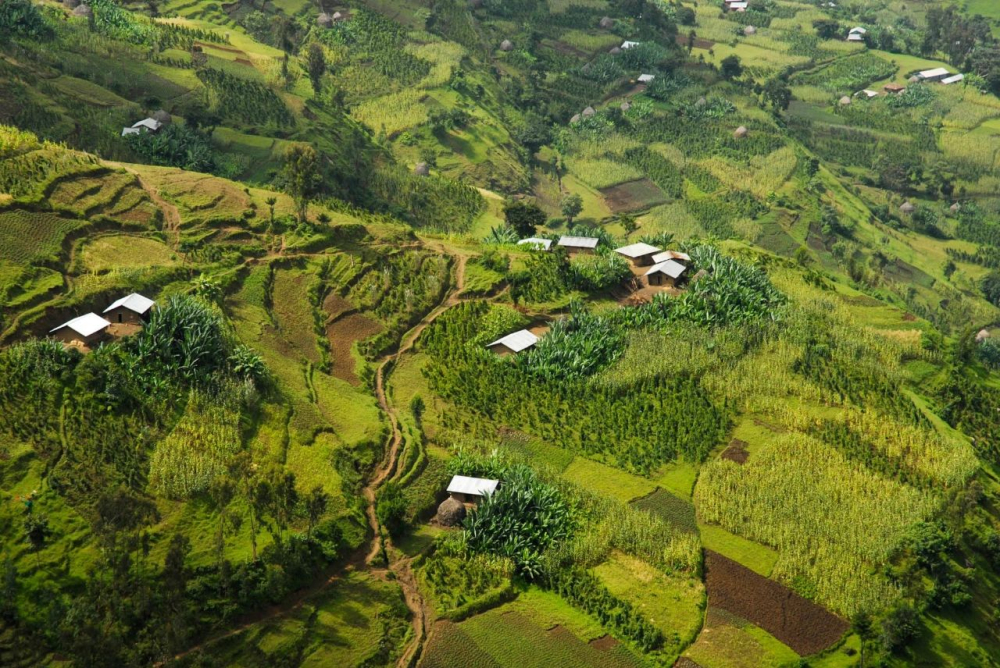
When talking about Sidamo (Sidamo), many may have also seen the spelling “Sidama (锡达马).” This actually involves a segment of ethnic history and administrative changes. The Sidama are one of the major ethnic groups in southern Ethiopia, with their own language, culture, and festivals, such as the “Fiche Chambalala” New Year celebration, which has been listed by UNESCO as an intangible cultural heritage and attracts over five million participants annually. During the colonial period, the area was mispronounced as Sidamo by outsiders, a name that was later even registered as a trademark but carries a derogatory connotation for the Sidama people. After Ethiopia implemented a federal system in the 1990s, the region was officially renamed Sidama. However, in the coffee market, “Sidamo” remains the most commonly used Chinese translation.
The Sidamo region is located near Lake Awasa on the southern edge of the East African Rift Valley, at an altitude between 1,500 and 2,200 meters. With its mild climate, abundant rainfall, and moderate shading environment, the coffee fruits can ripen slowly in cool weather, accumulating richer flavor compounds. Coffee in this region is mainly cultivated by smallholder farmers and then sent to various cooperatives or processing facilities for post-harvest treatment. In recent years, more producers have been directly collaborating with farmers to strengthen micro-lot management, thereby improving overall quality and flavor consistency.
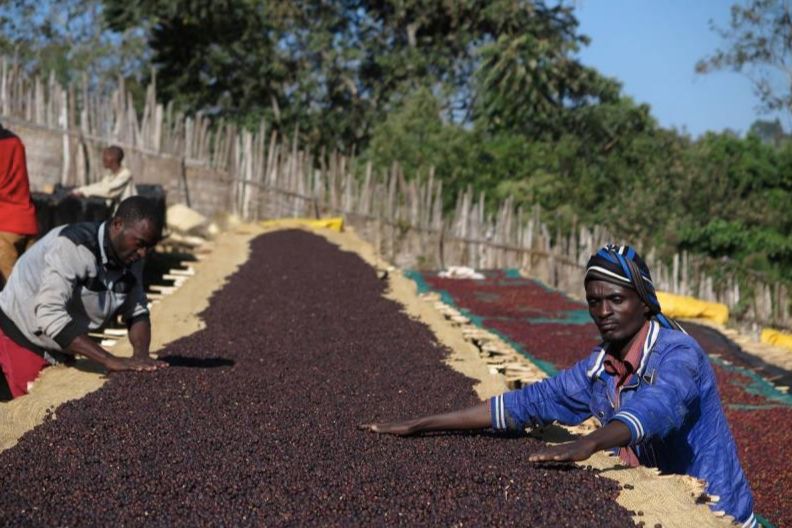
When it comes to the processing methods of Sidamo, sun-drying is the most traditional and common approach. Through natural drying, the coffee fruit pulp and seeds remain in prolonged contact, imparting the beans with a richer sweetness and complex layers. The washed natural beans from this region often exhibit an excellent balance of spice, floral, and fruity notes, with a smooth mouthfeel and long-lasting aftertaste. Compared to the washed method, sun-drying involves a longer fermentation time, which can produce more volatile aromatic compounds such as esters. These substances transform into enchanting sweetness and fruity tones during roasting, creating the unique charm of Sidamo sun-dried beans.
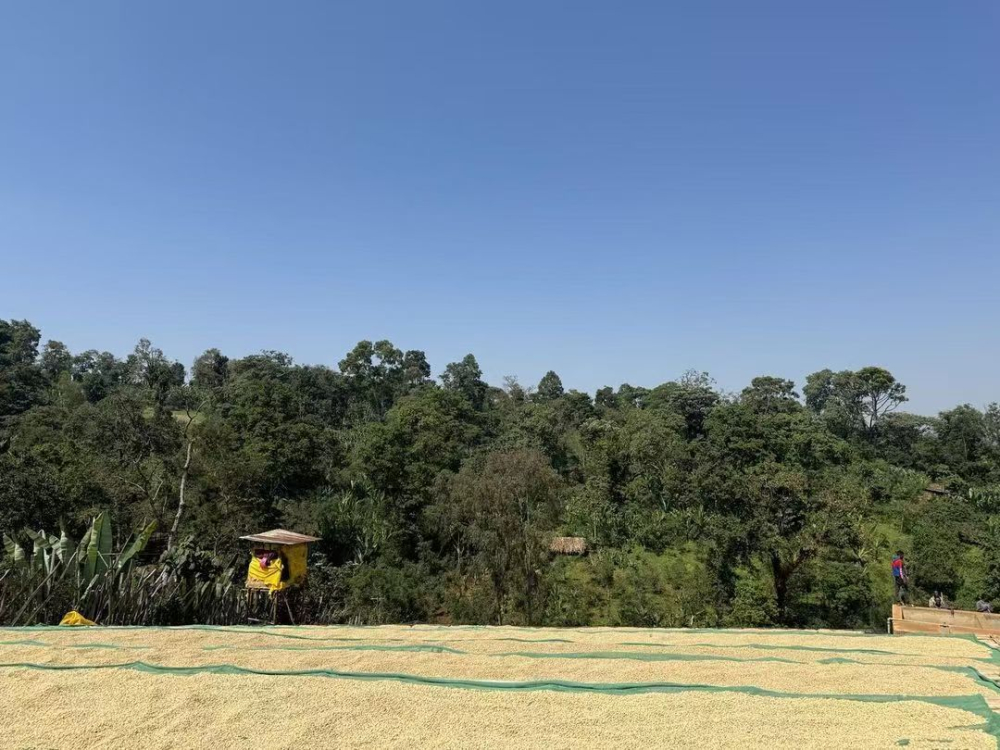
Among them, Hambella (罕贝拉), as a sub-region at the border between Sidamo and Guji (古吉), is currently administratively part of Guji. However, with an altitude of up to 3,200 meters, it is one of the few ultra-high-altitude coffee-growing areas in Ethiopia, neighboring the renowned Kochere in Yirgacheffe. The Huakui 8.0 bean originates from the Hambella region and gained fame after winning the championship in the TOH (Ethiopia National Taste of Harvest competition) in 2017. Its green beans come from the local Buku Abel processing factory, which harvests fully red-ripe coffee cherries with sugar content exceeding 30 from December to January each year. After strict quality selection, the cherries are placed on African beds for approximately 18 days of sun-drying. During this process, shading and covering are used to control temperature and humidity, ensuring uniform drying. The final green beans maintain a stable moisture content of around 13%.
To fully showcase the berry and floral notes of Huakui 8.0, medium-light roasting is typically employed to preserve more aromatic compounds. During cupping, its dry aroma features nuts, honey, berries, and a hint of fermentation scent. After brewing, it reveals a rich array of sweet and sour flavors including passion fruit, cream, and strawberry. The body is full and the aftertaste carries a layer of cocoa, making it highly favored by coffee lovers who appreciate berry-toned profiles.
To successfully brew out the exceptional flavors of Huakui 8.0, selecting the right equipment and mastering the correct parameters is crucial. It is recommended to prepare basic tools such as a pour over kettle, filter cone, server, grinder, filter paper, digital scale, and thermometer. Among these, the choice of grinder and grind size directly affect extraction efficiency and flavor expression. Generally, it is advised to use a standard 20-mesh 0.85mm sieve; for medium-light roasted Huakui 8.0, the target sieve passing rate is 78% to achieve a moderate grind fineness, similar to the texture of fine sugar. If using an EK43s grinder, a setting of around 10 can be referenced.
In terms of water temperature, a range of 92 to 93°C is recommended for medium-light roasted beans, helping to fully activate floral, fruity, and sweet notes, while avoiding too low a temperature that could lead to under-extraction. Additionally, the choice of filter cone also affects flow rate and extracted flavors. The V60 resin filter cone, with its unique spiral flow ribs and large hole design, extends the contact time between water and coffee grounds, making it suitable for medium-light roasted coffee and helping to enhance layers and clarity of flavors.
For the coffee-to-water ratio, a range of 1:15 to 1:16 is feasible. For a stronger flavor, choose 1:15; if you prefer a more refreshing and expansive taste, you can increase it to 1:16. Taking 15 grams of coffee powder as an example, the total water volume can be set to 225 milliliters, poured in three stages: the first stage with 30 milliliters for a 30-second bloom, the second stage adding water up to 125 milliliters, and the third stage bringing the total to 225 milliliters. The total extraction time should be controlled to around 2 minutes, helping to balance flavors and avoid over-extraction.
In summary, the Sidamo Huakui 8.0, with its unique regional advantages, traditional sun-drying processing, and refined micro-lot management, showcases the most captivating berry and floral characteristics of Ethiopian coffee. By mastering the correct pour over parameters and techniques, you can also easily recreate the exceptional flavor performance of this international competition-winning bean at home.
The above content is compiled by CoffeeHunters, a coffee news website.


