







Introduction:This article delves into Kochere, a refined micro-region within Ethiopia’s Yirgacheffe area, focusing on the unique flavor characteristics and production background of its washed G1 grade coffee beans. From regional geography, processing methods to actual cupping flavors, it provides a clear and accessible analysis, along with recommended pour over parameters and brewing tips to help coffee enthusiasts gain a fuller understanding of this highly regarded coffee bean and master the optimal extraction method.
Kochere is one of the most representative micro-regions in the Yirgacheffe area, renowned for its washed processing method and G1 high-grade coffee beans. Nestled in the Ethiopian mountains at an altitude of approximately 1,650 to 1,800 meters, this region produces coffee with bright citrus acidity, delicate floral notes, and silky sweetness, making it a classic choice for many pour over enthusiasts.
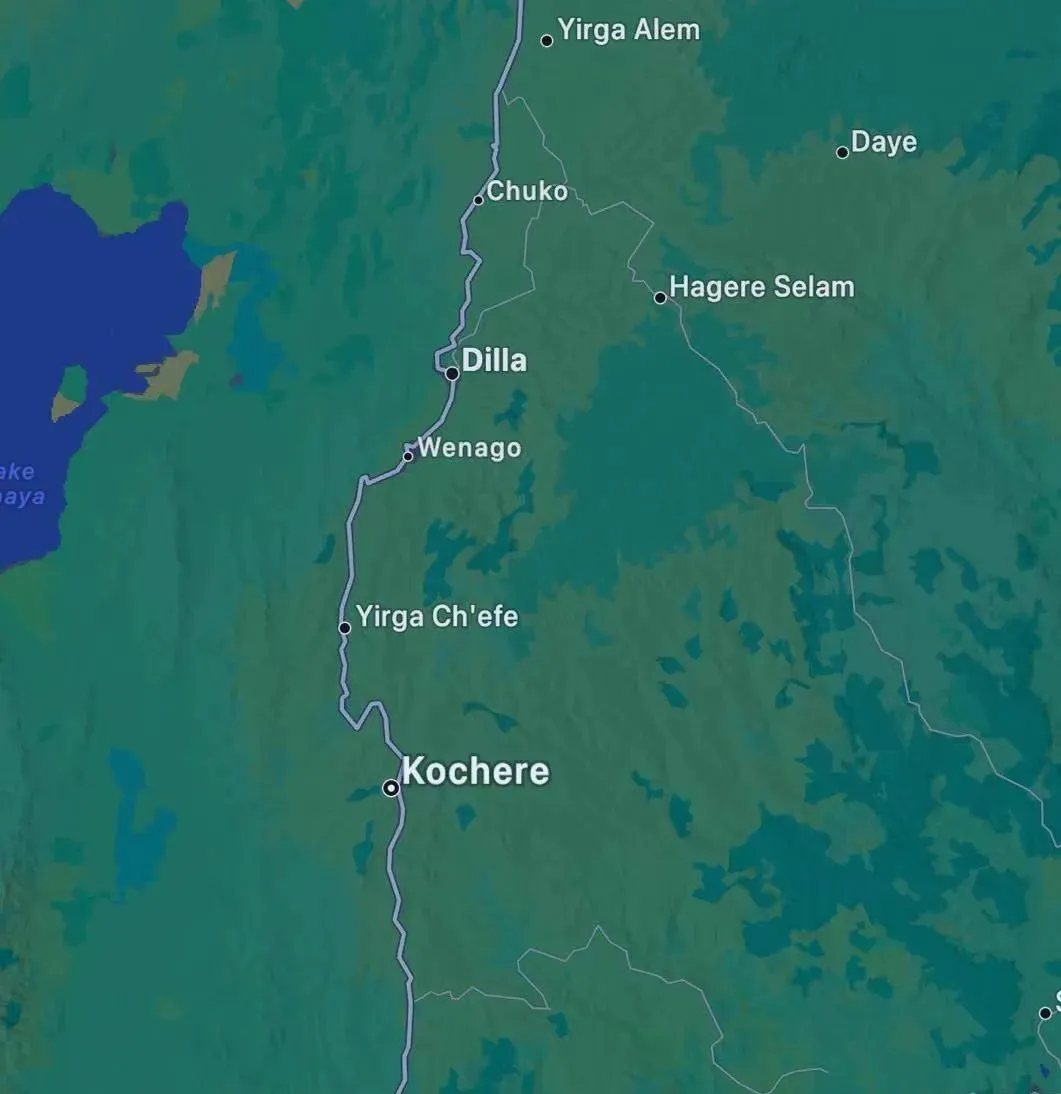
Within the broader Yirgacheffe region, Kochere—as well as nearby Wenago and Gelena Abaya—is grouped under the same major zone due to highly similar coffee flavor profiles. However, Kochere has gradually distinguished itself as one of the most recognizable micro-regions, thanks to its more concentrated supply of high-quality smallholder farms and advanced processing techniques. The area is home to around 100,000 residents, most of whom rely on coffee production for their livelihoods. This not only improves local living standards but also drives continuous upgrades in coffee processing equipment and technology. According to data from international coffee evaluation platforms, Kochere washed beans have even received scores as high as 94, attesting to their outstanding quality.
Administratively, Kochere is one of the 77 Woredas in Ethiopia’s Southern Nations, Nationalities, and Peoples' Region (SNNPR). In terms of coffee classification, it belongs to the Gediyo section within the Yirgacheffe area and is an important component of that region. Furthermore, Kochere can be further subdivided into several micro-regions, such as Chelelektu, Teklu Dembel, and Banko Gutiti. These smaller blocks are often named after specific villages, processing stations, or micro-zones, enhancing traceability and giving the coffee more distinctive and consistent flavor profiles. Typically, batches with such detailed origin information not only exhibit higher flavor stability but also command relatively higher market value.
Coffee production in Kochere is primarily carried out by smallholder farmers, who deliver their harvested coffee cherries to local cooperatives for unified processing. Take Chalalacktu village as an example: among its population of around 100,000, most rely on coffee as their main source of income. Thanks to the coffee industry, the local economy is relatively strong and is equipped with comprehensive public facilities such as health clinics and schools. In addition, local processing stations have adopted advanced washed processing equipment, enabling effective control over quality during fermentation, washing, and drying, thereby delivering clean, bright flavors with notes of molasses and citrus.
The featured Yirgacheffe Kochere washed G1 beans are among the finest examples. Classified as the highest-grade G1, these beans possess a highly distinctive flavor profile. Their dry aroma often carries fresh notes of lemon and jasmine, while the brewed cup reveals multi-layered flavors such as melon, citrus, ginger, and spiced tea. The taste is delicate and well-structured, making it ideal for pour over enthusiasts who appreciate bright acidity and fruity notes.
In terms of processing, Kochere coffee mainly employs the washed process. This method involves steps such as flotation, pulp removal, fermentation to eliminate mucilage, multiple washes, and finally drying and hulling. The washed process not only reduces the proportion of defective beans and enhances overall green bean quality, but also shortens the drying time, preserving the “clean” characteristics of the coffee. However, this technique demands high standards for water sources and processing equipment, and is not suitable for all regions. Kochere’s ability to consistently produce high-quality washed beans demonstrates the maturity of its processing technology.
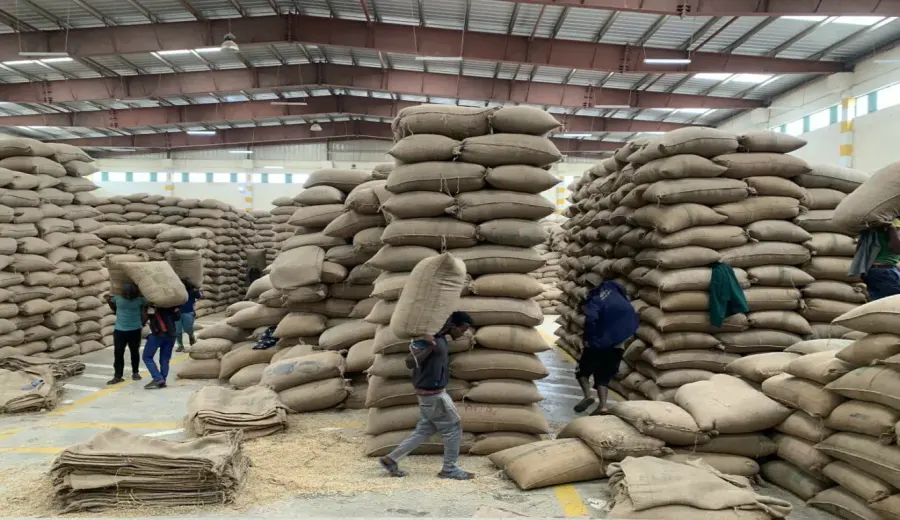
After the coffee beans are washed and dried to a moisture content of about 12%, the final step is to remove the parchment, marking the last stage of processing before export. This process not only affects the coffee’s shelf life but is also closely related to the purity of the final flavor.
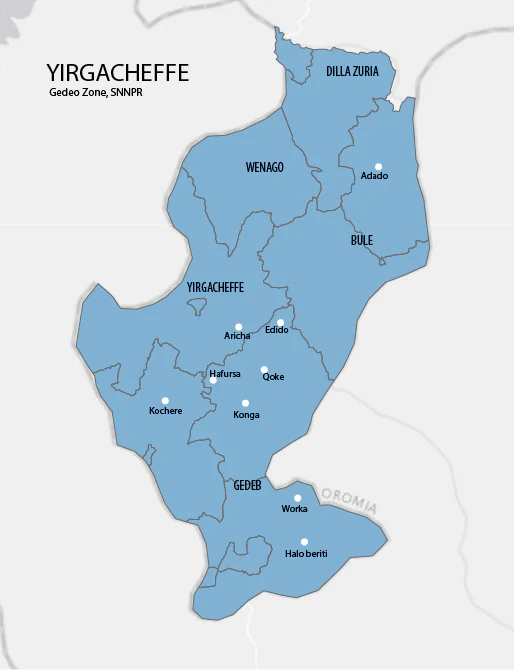
Beyond Kochere, the Yirgacheffe region also includes many other sub-regions and cooperatives, such as those in the Gedeb Area. This particular coffee, grown at altitudes between 1,900 and 2,300 meters and also classified as G1 grade, is processed using traditional washed methods and showcases a rich array of flavors including citrus, green tea, prune, and honey. Its dry aroma is dominated by citrus and lemon, while the wet aroma emits floral and berry notes. Upon tasting, one can experience bright acidity and a tea-like sweet aftertaste. It is suitable for brewing via pour over, drip bags, cold brew, and more.
For actual pour over brewing, it is recommended to use a medium-fine grind (such as superfine sugar or slightly finer than white sugar), with water temperature controlled between 90–92°C. The suggested coffee-to-water ratio is 1:15 to 1:16. During brewing, a staged extraction method can be employed—for instance, initially pouring 30% hot water for a 30-second bloom, followed by subsequent pours to reach the target volume. The total brewing time should be kept between 2 minutes 30 seconds and 3 minutes, which helps fully highlight its citrus acidity and delicate sweetness.
Overall, the Yirgacheffe Kochere washed G1 coffee beans, with their distinct regional flavors, excellent processing quality, and versatile brewing performance, serve as an outstanding entry point for many coffee enthusiasts exploring Ethiopian flavors. Whether one is focused on flavor complexity or aiming to improve pour over skills, this coffee bean delivers a satisfying tasting experience.
The above content is compiled by CoffeeHunters, a coffee news website.


