







Introduction:Jamaican Blue Mountain coffee is hailed as one of the world’s top-tier coffees. Its prestige lies not in mere reputation, but in its exceptional geographical environment, rigorous processing methods, and meticulous grading system. This article will delve into the origin background, variety characteristics, NO.1 grade standards, how to identify authenticity, and also provide practical pour over parameters, allowing you to fully grasp the essence of this classic coffee.
When it comes to premium coffee, many people immediately think of Jamaican Blue Mountain coffee. Even if they’ve never tried it, this name often comes up in conversations among elders or in specialty coffee discussions. What exactly is the allure of Blue Mountain coffee that makes people associate its name with “great coffee”? This article will take you through a comprehensive understanding of this world-renowned top-tier coffee — from its geographical environment, cultivated varieties, processing methods, grade classifications, to how to select genuine beans and pour over recommendations.
The uniqueness of Blue Mountain coffee is not solely due to the fame of its origin, but because every step — from cultivation conditions and variety selection to post-harvest processing — is extremely meticulous. This coffee offers a balanced flavor with a well-rounded acidity, sweetness, bitterness, and umami, along with a rich and layered aroma, making it a dream brew for coffee lovers worldwide.
Blue Mountain is the main mountain range in eastern Jamaica and one of the country’s most famous geographical landmarks. This mountain range boasts the highest peak in the Caribbean region, featuring steep terrain, cool climate, year-round cloud cover, and abundant rainfall. When sunlight penetrates the clouds and is refracted by the sea, the mountains often exhibit a pale blue halo, hence the name “Blue Mountain.” To protect the ecology, the government has designated areas above 1,700 meters as protected zones where coffee cultivation is prohibited. Therefore, all Blue Mountain coffee is grown below 1,700 meters.
Jamaican Blue Mountain coffee is primarily grown at elevations between 910 meters and 1,700 meters, covering four main producing regions: St. Andrew, St. Mary, St. Thomas, and Portland, with a total area of about 6,000 hectares. According to regulations by the Jamaican Industrial Board, only coffee produced within this altitude range can be officially called “Jamaican Blue Mountain coffee.” Coffee grown between 460 meters and 910 meters is referred to as “Jamaica High Mountain,” while that grown below 460 meters is classified as “Jamaica Supreme.” The latter two are both lower in quality and price compared to the Blue Mountain grade.
The primary variety planted for Blue Mountain coffee is Typica, one of the earliest Arabica varieties introduced from Yemen to Central and South America, known for its elegant acidity and sweet profile. However, Typica is naturally weak in disease resistance and low in yield, leading many regions to switch to higher-yielding varieties. Yet, under Blue Mountain’s unique conditions and after more than two centuries of adaptation, the Typica here has developed stronger disease resistance and a distinctive flavor profile, becoming the core variety of Blue Mountain coffee.
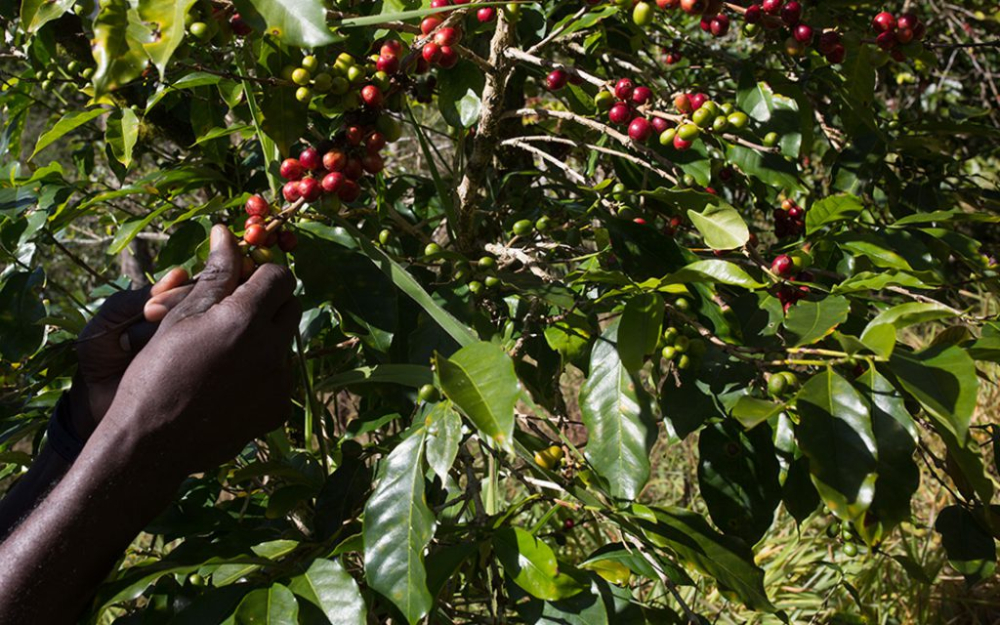
The processing procedure for Jamaican Blue Mountain coffee is quite traditional and meticulous, mostly carried out manually by local estates. Take the renowned Clifton Mount Estate as an example — located at an altitude of about 1,310 meters, it is one of the largest producers of Blue Mountain coffee in the region. During harvest, the estate employs local women familiar with the terrain to handpick only fully ripe coffee cherries, ensuring the quality of the raw materials. The harvested cherries are first manually sorted to remove defective ones, then the outer skin is removed mechanically, followed by fermentation in water tanks for 12 to 18 hours to remove the mucilage layer.
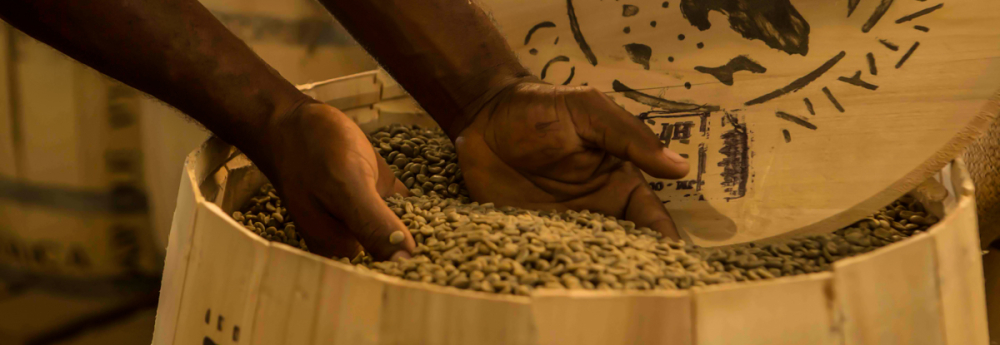
After fermentation, the beans are thoroughly washed again with clean water and undergo a second round of defect sorting. The clean parchment beans are then evenly spread on cement floors or wire racks to dry naturally until their moisture content drops to 10%–12%. The dried parchment beans are finally stored in temperature- and humidity-controlled wooden barrels until orders are received, at which point they are hulled and undergo final quality control. This traditional and time-consuming processing method is also a key reason for the stable quality and delicate flavor of Blue Mountain coffee.
The grading of Jamaican Blue Mountain coffee is extremely strict, categorized into four grades based on bean size, appearance, and defect rate: NO.1, NO.2, NO.3, and Peaberry (pea berry). Among them, NO.1 is the highest grade, commonly known as “Blue Mountain No.1,” requiring bean size to be between 17 and 18 screens, with a defect rate not exceeding 2%, and the appearance must be plump and uniform. Due to the multiple layers of stringent selection, the number of coffee beans that meet the NO.1 standard is limited, hence the relatively high price.
Additionally, high-quality Jamaican Blue Mountain No.1 coffee beans are usually packaged in wooden barrels, rather than the commonly seen burlap sacks. This packaging method not only prevents moisture and odors from penetrating, but also helps maintain the beans’ freshness and moisture stability during long-distance transport, making it one of the key features for identifying authentic Blue Mountain coffee.
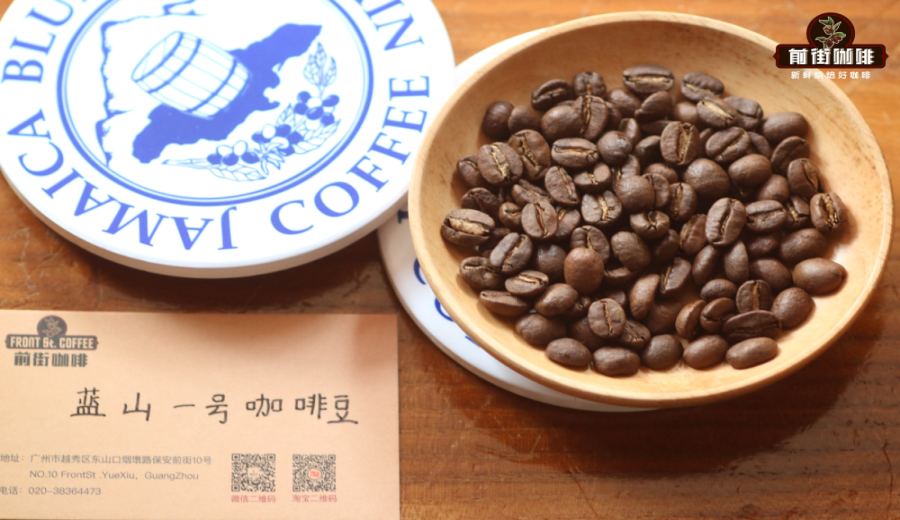
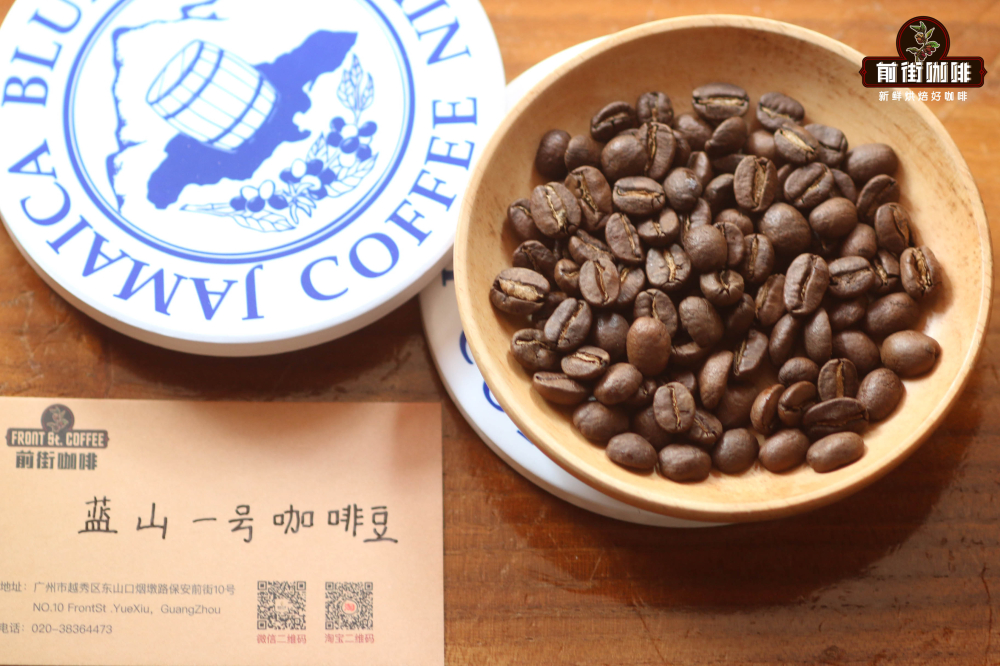
Due to the fame of Blue Mountain coffee, the market is flooded with various counterfeit products or blends merely labeled as having a “Blue Mountain flavor.” To identify genuine Blue Mountain coffee, consider the following points: First, authentic Blue Mountain No.1 is exported in whole wooden barrels; if the seller cannot provide barrel information, it may just be a blend or imitation. Second, you can request certification documents from the seller, issued by the Jamaica Coffee Industry Board (CIB) or the estate, as proof of authenticity. Moreover, observe the appearance of roasted beans — Blue Mountain No.1 beans should be uniformly sized, plump, smooth, and evenly colored.
As for brand choice, it actually matters less. As long as the beans are from officially certified Jamaican processing facilities or authorized farms, the quality is fundamentally guaranteed. The focus should be on confirming the grade and the authenticity of the source. Price and cost-performance are more practical considerations when purchasing.
When brewing Blue Mountain No.1 coffee beans, it is recommended to use a medium-to-dark roast to enhance its natural chocolate and nutty notes. For actual pour over brewing, it is suggested to use a KONO filter cone. Its tightly fitting filter paper design creates an immersion-like extraction effect, helping to improve richness and flavor integrity. At the same time, it is advisable to use slightly lower water temperature and a bit coarser grind to avoid over-extraction that could lead to bitterness.
Pour over parameter recommendations:
- Water temperature: 88°C
- Coffee-to-water ratio: 1:15
- Coffee powder amount: 15 grams
- Grind size: Approximately 75% passing through a standard 20-mesh sieve (medium-coarse to slightly fine)
- Extraction method: Three-stage pouring
Specific steps are as follows: First, pour 30 grams of hot water for a 30-second bloom, then pour in a circular motion from the center outward with a fine stream until reaching 125 grams. Once the water level drops, continue pouring in circles until reaching 225 grams. The total extraction time should be controlled to around 2 minutes. Finally, gently swirl the coffee liquid before enjoying.
Within 4 to 7 days after roasting, the coffee’s flavors are at their peak. It is recommended to enjoy it as soon as possible after purchase to experience the fullest sensory profile. When brewed under appropriate conditions, you will be able to taste the distinctive caramel aroma of Blue Mountain No.1, with a rich mouthfeel of nuts and dark chocolate, a full-bodied and velvety texture, and a sweet, refreshing aftertaste — an unforgettable classic experience for any coffee enthusiast.
The above content is compiled by CoffeeHunters, a coffee news website.


