







Introduction:Geisha coffee is renowned worldwide for its distinctive floral aroma and richly layered fruit flavors, yet its journey from the jungles of Ethiopia to the international specialty coffee stage remains little known. This article will take you deep into the discovery background of the Geisha variety, its rise at Panama’s Hacienda La Esmeralda, and the terroir characteristics of its three most famous cultivation plots. We will also provide professional-level pour over parameters and a three-stage brewing technique to help you fully experience the nuanced flavors of this legendary coffee.
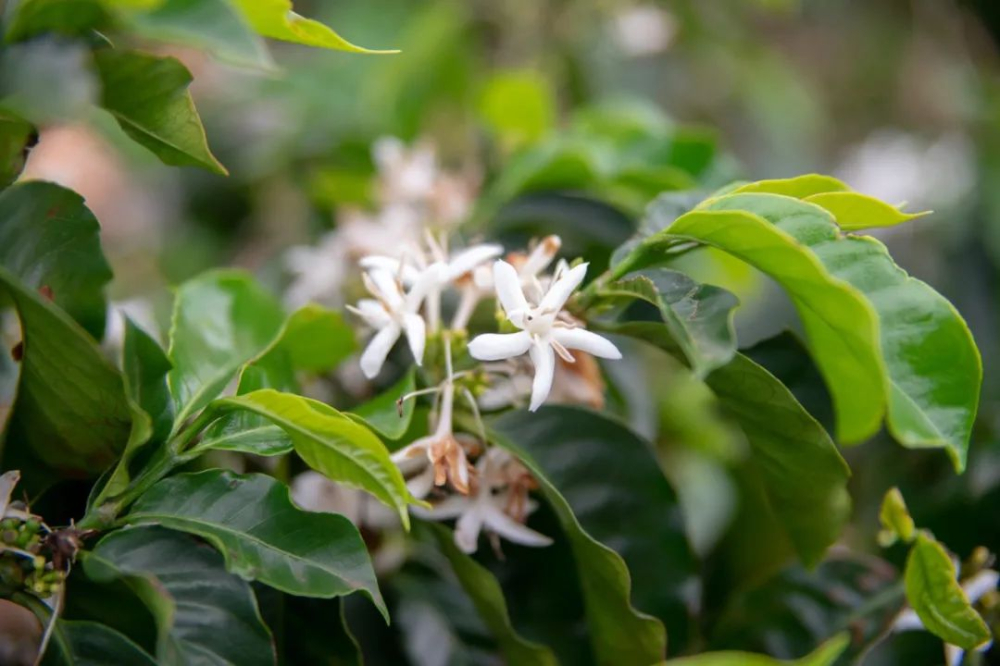
In today’s specialty coffee scene, Geisha is undoubtedly one of the most prestigious coffee varieties. Its signature jasmine, tropical fruit aromas, and multi-layered acidity-sweetness balance have captivated coffee enthusiasts around the globe. However, many people don’t know that this now highly sought-after variety underwent a long journey of over seventy years—from its initial discovery in the Ethiopian jungles to truly coming into its own.
The story began in 1931, when researchers, in search of disease-resistant coffee germplasm, collected samples from the Kaffa virgin forest in southern Ethiopia, among which was Geisha. It was named after its proximity to Geisha Mountain. The variety was subsequently introduced to Kenya, Uganda, Tanzania, and other regions for trial planting, and in 1953, it was brought to the Tropical Agricultural Research and Higher Education Center (CATIE) in Costa Rica, where it was registered under the number T2722.
Although there are records of its cultivation on several farms in Central America, due to the Geisha coffee tree’s relatively weak growth vigor, poor disease resistance, and low yield, it had long been overlooked by farmers and was grown only on a small scale. It wasn’t until 2003 that Panama’s Hacienda La Esmeralda began to notice the potential of this variety, and the following year, at the “Best of Panama (BOP)” competition, Geisha won first place—ushering in the global popularity of this coffee.
So who was the first to discover the potential of Geisha? The story goes back to the 1960s. At that time, Rudolph A. Peterson, planning for retirement, purchased a farm in the Bouquete region of Panama and named it Hacienda La Esmeralda, initially operating primarily in dairy products. In 1973, his son returned to Bouquete, shifting the farm’s focus to coffee cultivation, gradually expanding the area, and introducing multiple new varieties including Geisha.
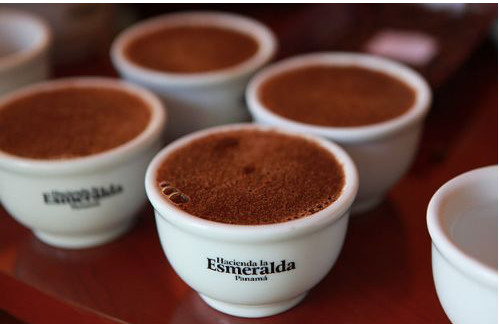
By 1997, the third-generation manager, Daniel Peterson, began participating in the farm’s operations. At that time, the concept of specialty coffee was gradually gaining traction. Daniel learned professional cupping techniques and conducted systematic cuppings of Geisha for the first time in 2003, also managing them according to cultivation altitude. The following year, they submitted Geisha coffee beans with outstanding performance and distinct floral and fruity acidity to the BOP competition—and won first place.
In 2005, Hacienda La Esmeralda brought Geisha to the Specialty Coffee Association of America (SCAA) competition, not only defeating many well-known varieties but also winning international recognition. It went on to win consecutively in 2006 and 2007, rapidly making Geisha the focus of the global specialty coffee scene. Since then, multiple producing regions, including Yunnan, have also attempted to grow Geisha, but when it comes to flavor performance and cultivation history, Panama’s Hacienda La Esmeralda remains considered the representative of this variety.
As Geisha’s reputation grew, the Peterson family implemented more scientific management of their cultivation blocks. The Geisha-growing areas of Hacienda La Esmeralda are mainly divided into three well-known plots: Cañas Verdes, Jaramillo, and El Velo. Each large plot is further subdivided into multiple smaller plots to ensure traceability and consistency in quality.
Among these, Jaramillo is widely regarded as the classic representative of Geisha’s flavor profile. This is the area where the Geisha variety was first discovered and focused on cultivating, with an average altitude exceeding 1650 meters. The high elevation and cool, humid climate create the rich and delicate aromas for which Geisha is known. The annual rainfall in this plot can reach up to 4000 mm, with significant diurnal temperature variations—the daytime average temperature ranges from 19 to 25°C, dropping to 11 to 15°C at night—which is extremely conducive to the accumulation of coffee flavor compounds. Jaramillo is further divided into six Red Label sub-plots, including Mario, Noria, Reina, Bosque, Buenos Aires, and the more recently added Caballeriza.
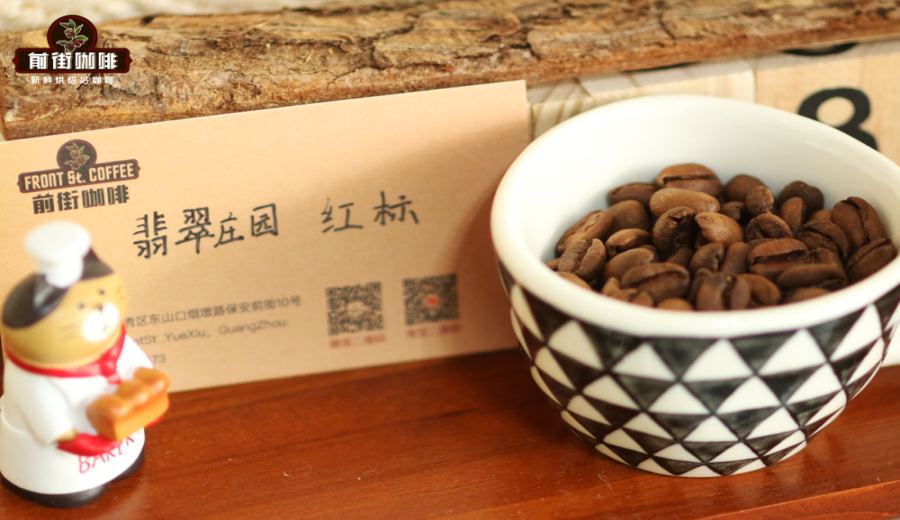
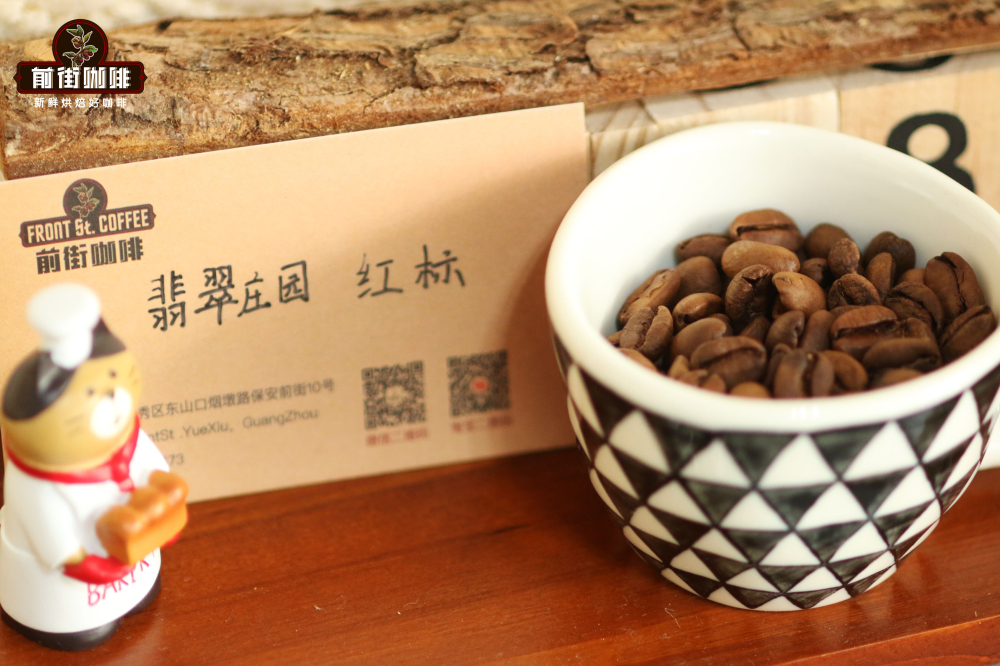
Another important producing area—Cañas Verdes, which in Spanish means “green reeds” or “green fields.” Although some land was acquired as early as 1967, it wasn’t until Geisha gained fame that the local producer family gradually expanded this area. Located on the eastern slopes of the Barú Volcano, this area features a wide range of altitudes, extending from 1500 meters up to 2050 meters. The complex terrain, fertile volcanic soil, along with notable diurnal temperature differences, bring intense and complex layers of aroma to the Geisha grown here. There are a total of 11 sub-plots in this area, such as Lino, Coronado, Fundador, León, Montaña, Trapiche, Jacinta, Cabaña, Tumaco, Nido, and Colga. Notably, the Red Label Geisha used by this store comes from the sun-dried beans of the Trapiche plot, offering rich flavors of jasmine, cranberry, passionfruit, citrus, and cinnamon.
To brew out the delicate flavors of Geisha coffee, certain techniques are essential. Since Geisha is typically medium-light roasted to preserve its bright acidity and fruity-floral notes, it is recommended to use a higher water temperature and finer grind size to enhance extraction efficiency. It is suggested to use a V60 filter with a 1:16 coffee-to-water ratio, water temperature controlled at 91-92°C, and grind size about the size of fine sugar (retaining 80% of particles after passing through a #20 sieve).
The specific brewing steps are as follows: First, place 15 grams of coffee grounds into the filter and perform a 30-second bloom with 30 grams of water. The water flow should circle from the center outward to ensure even saturation of the coffee bed. Then, in the second stage, pour 120 grams of water using a slightly larger flow to lift the coffee bed, keeping the water column vertical and even, completing this around the 55-second mark with a cumulative water volume of 150 grams. Finally, in the third stage, pour 90 grams of water using a small stream and slow circling motion to avoid disrupting the coffee bed structure. The total water volume is 240 grams, with a dripping time controlled to around 2 minutes and 10 seconds.
The resulting brewed Geisha coffee features a bright and refreshing acidity, with layered notes of jasmine, citrus, and tropical fruits. The mouthfeel is smooth, with a delicate tea-like aftertaste. Flavor expression also varies with temperature changes, making it well worth savoring slowly.

The above content is compiled by CoffeeHunters, a coffee news website.


