







Introduction:Indonesian Sumatran Mandheling coffee is renowned for its unique herbal, spicy, and woody aromas, but do you know the origin of this name and the wet-hulling process behind its distinctive flavors? This article not only explores the historical journey of how Mandheling got its name, but also delves into the key differences in its processing method. It also recommends two classic Mandheling coffee beans suitable for different levels of needs—from beginners to pour over enthusiasts—helping you find the one that best suits your flavor preferences and brewing style.
When it comes to Indonesian coffee, many people immediately think of Mandheling from the island of Sumatra. However, this widely known name actually does not originate from the place of origin or the coffee variety, but rather from a misunderstanding during wartime. During World War II, a Japanese soldier drank a cup of richly flavored coffee in a small town in northwestern Sumatra. Curious, he asked the shop owner what kind of coffee it was, but the owner misunderstood the question as being about his background and replied: "mandheling (Mandailing ethnic group)." After the war, the soldier returned to Japan and always remembered that coffee referred to as "Mandheling." It wasn’t until 1968, when Japanese traders imported large quantities of Sumatran coffee produced by the Pwani Coffee Company in Indonesia, that the name Mandheling officially gained international recognition and became synonymous with Sumatran Arabica beans.
The unique herbal, spicy, and woody characteristics of Mandheling coffee are closely related to its growing environment and processing method. Sumatra has a tropical rainforest climate, which is humid and rainy all year round. In addition, the terrain makes traditional washed or sun-dried processing less feasible, leading to the development of the "wet-hulling" method locally. This technique significantly shortens the fermentation and drying time, taking only about four days to complete, making it faster and more labor-saving compared to traditional methods. However, because the outer layer of the bean is removed earlier during the wet-hulling process, the internal flavor compounds become more concentrated, resulting in a unique profile that is low in acidity, full-bodied, and carries earthy, herbal, and spicy notes.
If you are a beginner just starting to explore single-origin coffee, it is recommended to try the entry-level Indonesian Mandheling G1. These coffee beans are sourced from the Lintong region in Sumatra, belonging to the highest-grade G1 green beans locally, and are processed with a dark roast to highlight rich caramel, nutty, and dark chocolate notes. The flavor is well-balanced and smooth on the palate. Most importantly, these beans are usually shipped within 24 hours of ordering and guaranteed to be from a fresh batch roasted within five days, making them perfect for everyday drinking or pour over practice. Suitable brewing methods include pour over, siphon cup, and moka pot, making it easy even for novice brewers to handle.
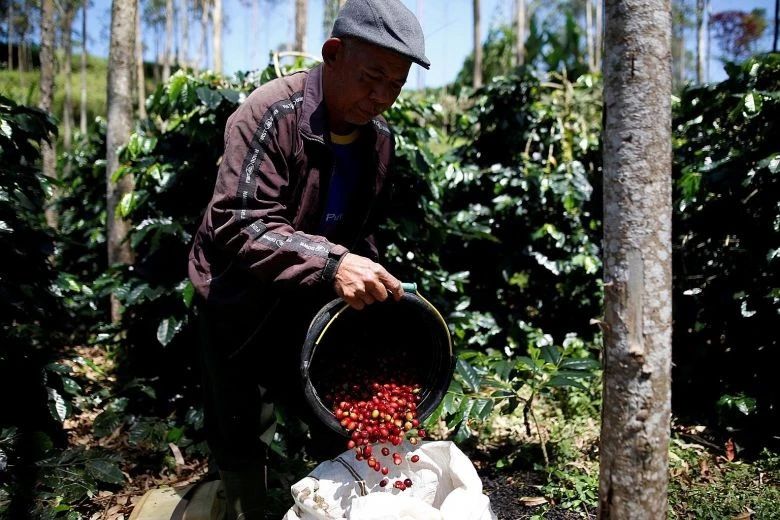
The Lintong region is located in the mountainous areas around Lake Toba in northern Sumatra. This lake is a famous high-altitude freshwater lake in Indonesia, with an average elevation of about 900 meters. The surrounding environment is ideal for growing Arabica coffee. Lintong Mandheling is processed using the traditional wet-hulling method and often exhibits distinct herbal and earthy aromas, making it an excellent choice for experiencing Sumatra’s classic “Southeast Asian-style” flavors.
If you want to further explore higher-quality Mandheling, consider the premium-grade "PWN Golden Mandheling." PWN is actually an abbreviation for the Indonesian trading company "N.V. Pawani Medan company," which has long focused on selecting and exporting high-quality Mandheling green beans. In the early years, Japanese buyers found that although Sumatran coffee had its unique characteristics, the quality varied greatly, so they requested suppliers to establish stricter selection standards. PWN then introduced a high-standard processing procedure, where each batch of beans must undergo one mechanical screening plus four rounds of manual hand-picking to remove defective beans, ensuring each bean is uniform in size, shiny in appearance, and free of obvious flaws. It is precisely because of this rigorous selection process that these coffee beans appear golden and dazzling in the sunlight, hence the name "Golden Mandheling."
Freshly roasted Golden Mandheling emits a complex aroma of cedar, nuts, and spices in its dry scent, and even more pronounced notes of licorice and caramel after brewing. Upon tasting, you can perceive a layered interplay of black chocolate, cocoa, nuts, and spices, with an overall clear flavor profile, noticeable sweetness, and almost no off-flavors or earthy taste. This coffee is not only suitable for pour over and French press, but also showcases its refined and delicate side when brewed with a siphon or used to make drip bags. It is a classic choice that advanced enthusiasts should not miss.
The above content is compiled by CoffeeHunters, a coffee news website.


