








Introduction:As a hybrid of Arabica and Robusta, the Catimor coffee variety is widely cultivated in regions such as Yunnan. It boasts advantages like high yield and disease resistance, yet it is often questioned for its flavor profile. This article will thoroughly analyze Catimor’s physical characteristics, helping you distinguish it from typical Arabica beans, and delve into its cupping flavor performance—especially how it varies at different altitudes. Practical brewing recommendations will also be provided to help you better understand this controversial yet practical coffee bean.
Catimor is a coffee variety resulting from the cross between a Robusta lineage (specifically the Timor variety) and Arabica lineages (such as Bourbon and Caturra). It was first successfully cultivated in 1959 at Portugal’s CIFC (Coffee Leaf Rust Research Center). The creation of this variety was primarily aimed at combating coffee leaf rust and other diseases, as well as increasing yield per unit area. As a result, it has become the dominant planted variety in many coffee-growing regions, especially in Yunnan.
In terms of appearance,Catimor coffee beans typically exhibit an oval shape with a relatively straight center cut.This differs from classic Arabica varieties such as Typica or Bourbon, which usually have more elongated ovals and slightly curved fissures. Observing the original image (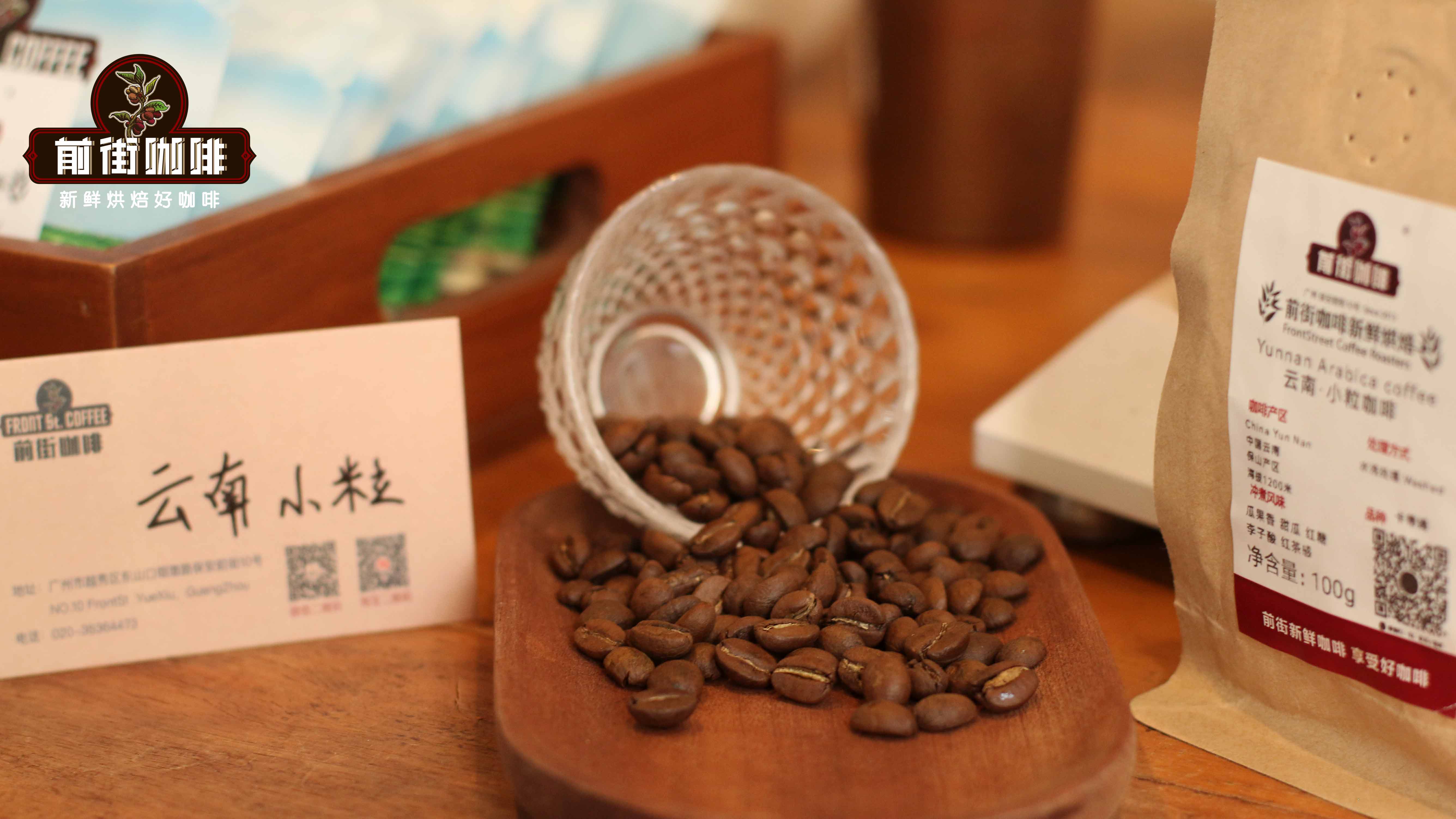 ) can help you more clearly compare the differences in shape. Additionally, Catimor plants are generally short in stature, making them suitable for high-density planting. Their new shoots often display a reddish-brown color, which is one of the identifying features of the plant.
Although Catimor carries Arabica genes, its flavor profile is often considered less rich compared to traditional specialty Arabica varieties due to its Robusta lineage.Common flavor descriptions include a lack of pronounced aroma, grassy or earthy notes, and some cuppers may even detect sharp astringency or woody tones.However, when grown at elevations above 1200 meters, its flavor profile usually improves, sometimes showcasing clearer fruit acidity and sweetness, though it still struggles to match classic varieties like pure Bourbon or Typica.
It is worth mentioning that Catimorhas an exceptionally high yield, reaching up to 350 kilograms of green beans per mu, far exceeding the output of many older varieties.At the same time, its resistance to diseases is particularly outstanding, effectively fending off coffee leaf rust and certain insect infestations. As a result, it requires relatively low technical input and management, which is one of the reasons for its popularity in commercial cultivation.
However, the advantages of high yield and disease resistance come with some drawbacks. Due to its heavy fruiting and rapid maturation, Catimor demands higher levels of nutrient supply and shade conditions. Poor management can easily lead to a decline in flavor. Moreover, its commercial lifespan is typically only around ten years, considerably shorter than other long-lived varieties, which increases the frequency and cost of farm renewal.
In the Yunnan region, Catimor is currently one of the main cultivated varieties. The “Yunnan Small Bean Coffee” produced there is based on Catimor, processed using the washed method, and presents a relatively mild flavor profile.Common flavor characteristics include gentle fruit acidity, distinct nuttiness, and a sweet note reminiscent of brown sugar. The overall taste is balanced, making it suitable for drinkers who prefer less acidic or bitter profiles.This coffee shows good adaptability in brewing, whether used for pour over, moka pot, French press, or even as a single-origin espresso (SOE) in blends, all with commendable results.
For brewing parameters, if using a pour over method, it is recommended to use a medium-fine grind (similar to granulated sugar), with water temperature controlled between 90–93°C, and a brew ratio of approximately 1:15 to 1:16. Employ a pulse pouring technique—first extracting the flavor layers and then gradually highlighting sweetness and body. If using a moka pot, a slightly coarser grind and a water temperature of 92–94°C is advised, with a brewing time of about 4 minutes to achieve a rounder mouthfeel.
In summary, although Catimor may not match the flavor complexity of traditional specialty Arabica due to its Robusta genetics, its high yield, disease resistance, and stability give it an irreplaceable position in commercial cultivation.Especially under higher-altitude growing conditions, it can still demonstrate certain drinking value.For consumers, understanding its characteristics and appropriate brewing methods can help you more objectively appreciate this historically significant and practical coffee bean.
Knowledge supplement: As early as 1892, French missionary Father Tian successfully planted coffee in the Zhukula area of Yunnan. To this day, several coffee trees over 90 years old still grow there, bearing witness to the early history of coffee cultivation in China.
The above content is compiled by CoffeeHunters, a coffee news website.


