








Introduction:Kenyan washed coffee is renowned for its intense berry flavors, but the flavor nuances can vary significantly across different growing regions. This article takes an in-depth look at three premier coffee-growing areas—Nyeri, Muranga, and Kirinyaga—to analyze how factors such as altitude, variety, and processing methods influence pour over performance. Drawing from practical cupping sessions, we’ll help you uncover the regional secrets behind those vibrant berry notes.
What’s most memorable about Kenyan coffee is undoubtedly its bright and lively berry character. However, simply referring to it as “Kenyan” makes it difficult to truly grasp the unique personality of each region. In fact, Kenya’s specialty coffee is primarily concentrated in three core regions: Nyeri, Muranga, and Kirinyaga. Thanks to differences in geography, altitude, and microclimate, even when using the same washed processing method and SL-28/SL-34 varieties, the resulting flavor profiles can differ markedly.

First, let’s focus on the Nyeri region, home to Africa’s renowned dormant volcano—Mount Kenya. The fertile red soil here is considered key to producing high-quality coffee. The area is dominated by smallholder cooperatives, with large estates being rare. Altitudes range from 1,200 to 2,300 meters, with the main harvest season falling between October and December, and a secondary season from June to August. Common varieties include SL-28, SL-34, Ruiru 11, and Batian. From practical cupping observations, Nyeri’s washed coffees generally exhibit berry flavors (such as blackberry and red cherry), moderate sweetness in the mid-palate, and a honey-like smoothness with a light creamy note in the finish. The acidity is bright and layered, especially in beans from higher altitudes (above 1,800 meters), which maintain vibrant fruit acidity even when brewed at lower temperatures.
The neighboring Muranga region lies in the Central Province and was historically settled by missionaries who chose this inland area due to Portuguese restrictions. It also features mineral-rich volcanic soils, and coffee production is mainly carried out by scattered smallholder farmers. Elevations range from 1,350 to 1,950 meters, with main and secondary harvest seasons similar to those in Nyeri. The variety mix also includes SL-28, SL-34, Ruiru 11, and Batian. During cupping, Muranga’s washed beans clearly carry a berry-forward profile, but with added hints of delicate floral notes and occasional green tea-like astringency in the finish. The overall acidity is slightly softer than that of Nyeri, with a linear and stable sweetness—making it well-suited for brewers who prefer balanced flavors.
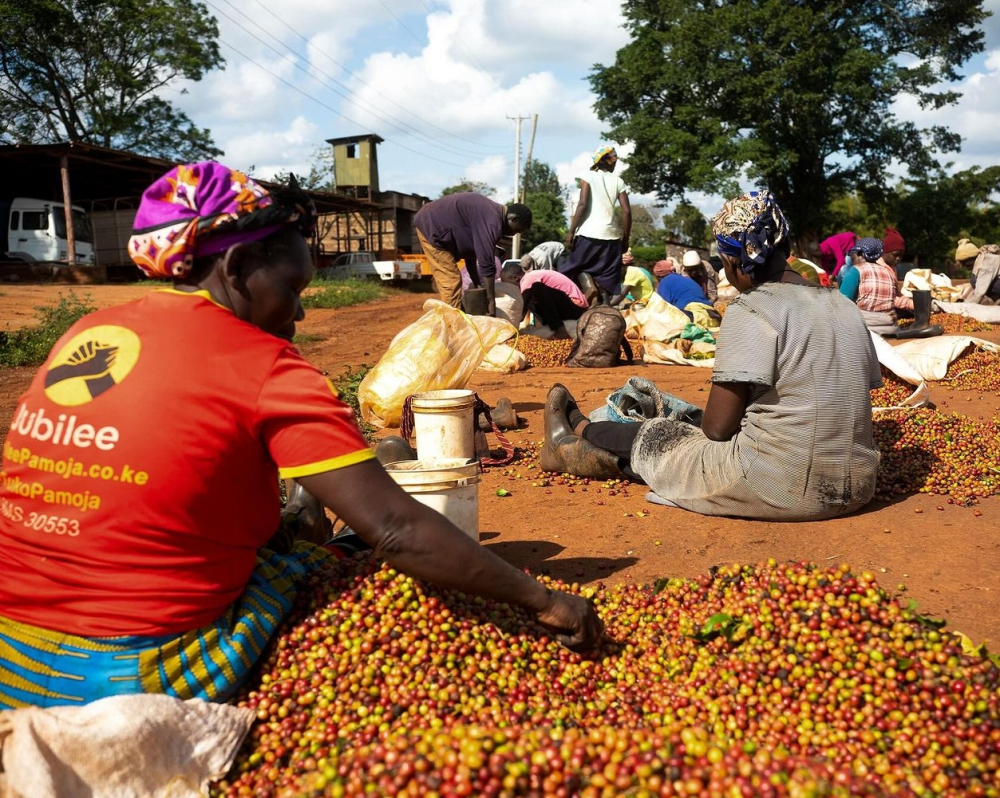
Finally, there’s the Kirinyaga region, adjacent to Nyeri. Its name comes from the Kikuyu word for “white mountain,” actually the former name (during British colonial times) for Africa’s second-highest peak—Mount Kenya (now called Mt. Kenya). This area is largely composed of small coffee farmers organized into cooperatives that manage centralized washed processing stations. Farmers deliver their harvested coffee cherries to these cooperative processing sites for standardized processing. Altitudes range from 1,300 to 1,900 meters, with harvesting schedules aligned with the other two regions, and no significant differences in variety selection. Cupping data shows that Kirinyaga’s washed coffee, while also berry-driven, offers a richer sweetness and, when cooled to room temperature, reveals distinct notes of roasted nuts (such as hazelnut and almond). The acidity is structured yet not sharp, resulting in a round and full-bodied mouthfeel with refined sweet undertones.
Synthesizing multiple cupping records (such as 72-hour washed processing from the 2020 new crop season with SL28/SL34 variety combinations), we can outline the flavor profiles of the three regions: Nyeri excels in bright berries, honey-like sweetness, and creamy finishes; Muranga emphasizes a berry foundation paired with light floral notes and subtle green tea hints; Kirinyaga presents a layered profile of berries, moderate sweetness, and cooling nuttiness. However, it’s important to note that regional flavors aren’t absolute formulas—even within Nyeri, beans grown at 1,200 meters and 2,000 meters can show significant differences in acidity vibrancy and body texture. Higher-altitude lots (above 1,800 meters) typically benefit from large diurnal temperature variations, allowing coffee cherries to ripen slowly and accumulate more flavor compounds, resulting in more pronounced and lingering acidity. Lower-altitude beans may mature more quickly, leading to duller acidity and relatively flatter sweetness.
Additionally, when brewing pour over, parameters should be adjusted according to regional characteristics: For high-altitude Nyeri beans, a medium-fine grind (e.g., 70% extraction through a Fuji R200 mesh sieve), water temperature of 90–91°C, and a pulse brewing approach (e.g., 30g coffee → 50g water → at 30 seconds → total brew time 2 minutes 10 seconds) are recommended to highlight bright acidity and layered complexity. For moderately altituded Muranga beans, a slightly coarser grind (65% R200 sieve extraction), water temperature of 89–90°C, and a slightly extended brew time of 2 minutes 20 seconds can balance berry character and potential astringency. Kirinyaga, on the other hand, suits a medium-coarse grind (60% R200 sieve extraction), water temperature of 88–89°C, and a shorter brew time of 2 minutes to avoid over-extraction that might mask its nutty sweetness.
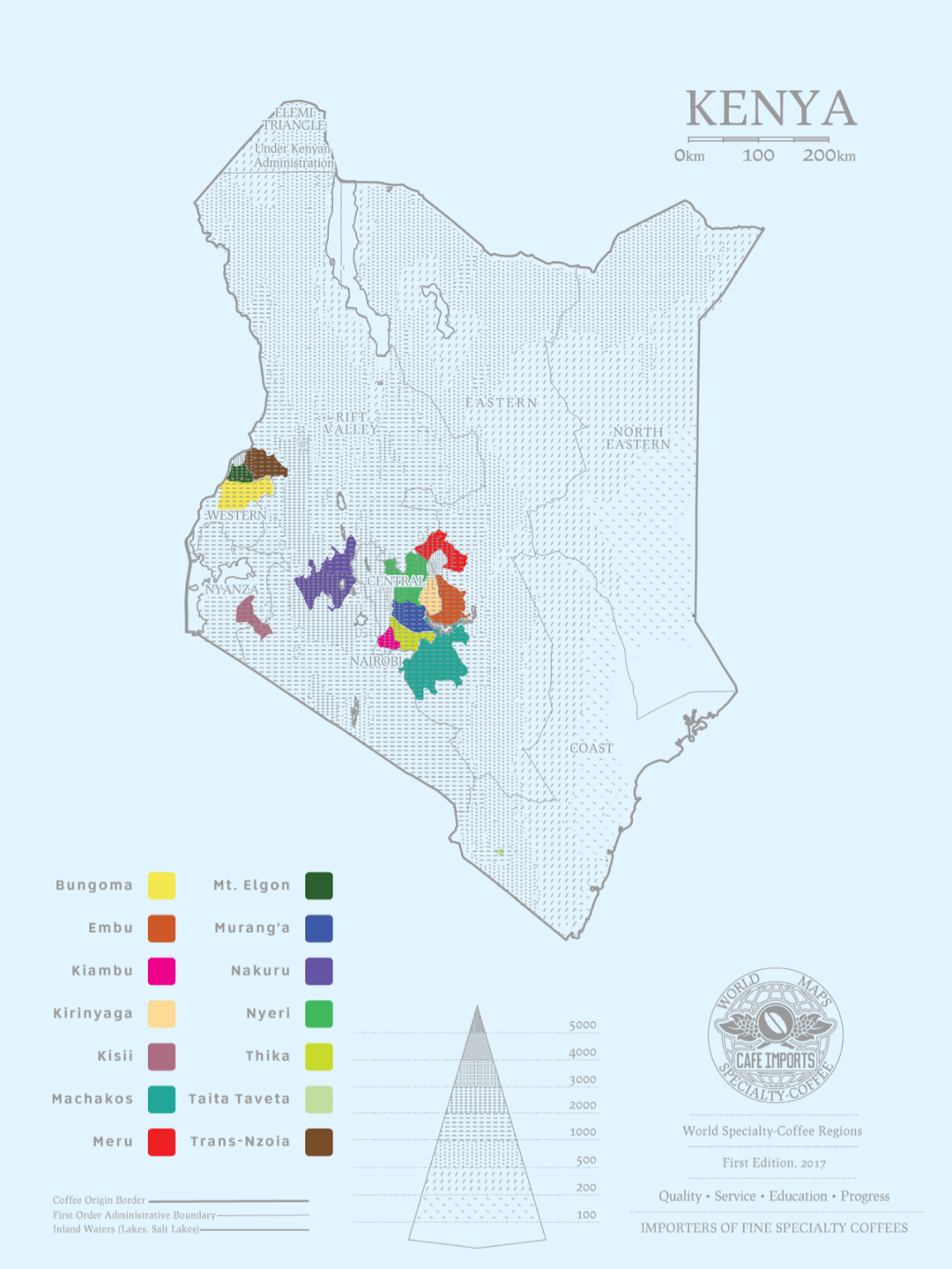
In summary, the charm of Kenyan washed coffee lies precisely in these subtle regional differences and flavor variations. The next time you taste a coffee labeled “Kenyan,” try paying closer attention to its acidity vibrancy, sweetness texture, and aftertaste characteristics—you might just discern the origin story behind it—be it the berries and creaminess of Nyeri, the floral notes and green tea hints of Muranga, or the nuttiness and rounded sweetness of Kirinyaga.
The above content is compiled by CoffeeHunters, a coffee news website.


