







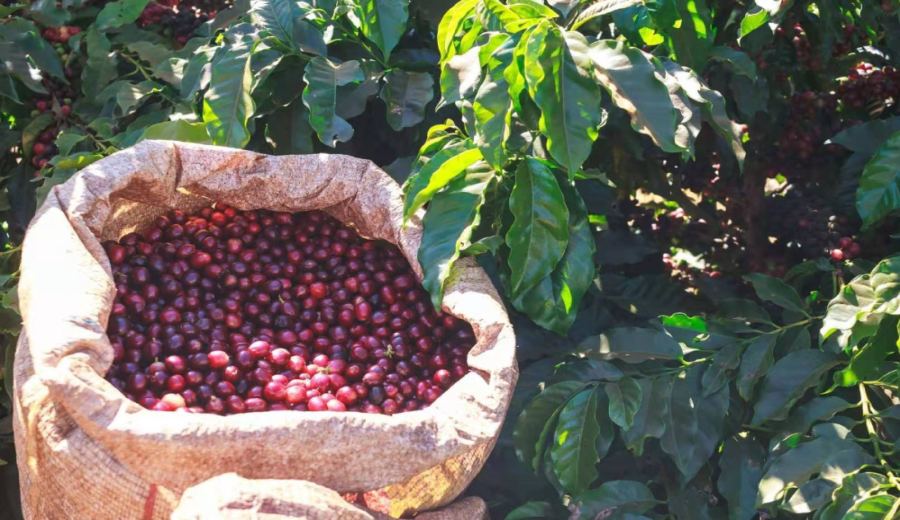
Introduction:An in-depth analysis of the geographical environment of Brazil’s Cerrado region, the characteristics of the Red Bourbon variety, and the NY.2 green bean grading standard. From the semi-washed processing method to cupping flavor scores, this guide fully breaks down the features of this classic commercial coffee bean. Also includes practical pour over recommendations and a summary of flavor profiles to help you better understand this high-value-for-money coffee bean commonly found in the global market.
Brazil has long ranked first in global coffee production. Among its regions, the Cerrado region in the central-western part of Minas Gerais is known for its stable output and mild flavor profile. Coffee beans from this area generally exhibit distinct notes of nuts, dark chocolate, and subtle creaminess, making them suitable as a base for blends, while also appealing to many who enjoy drinking them straight for their rich body. This article will systematically introduce the full significance behind ‘Brazil NY.2SC – 17/18 FC Cerrado’ by covering the region’s geography, varietal genetics, processing methods, grading standards, and actual cupping flavors. It also provides tested pour over parameters and a flavor profile to help you grasp the characteristics of this classic bean.
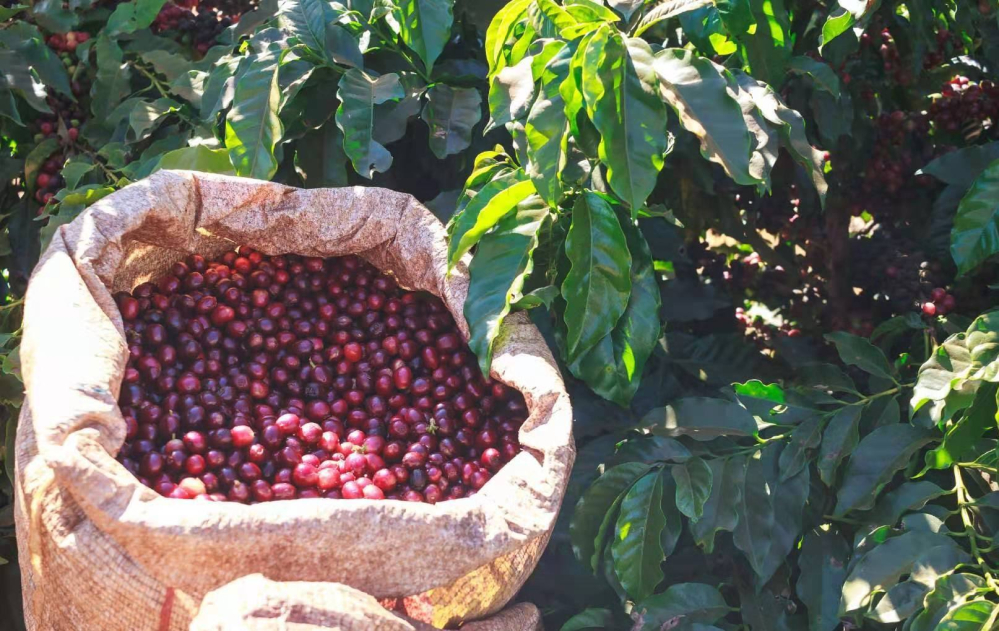
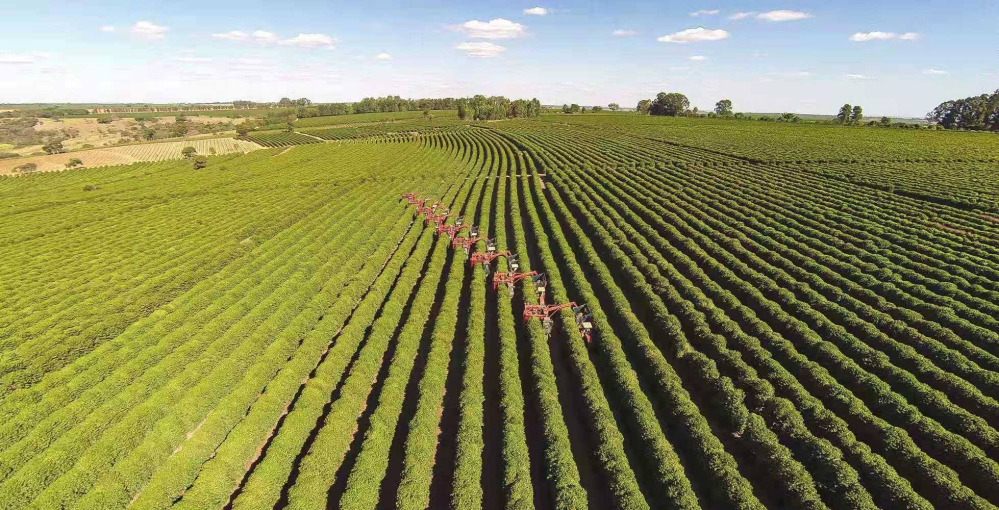
When it comes to Brazilian coffee, the foremost characteristic is its relatively low-altitude cultivation environment. Unlike Colombia or Ethiopia, where altitudes often exceed 1,500 meters, most Brazilian coffee farms are located between 600 and 1,200 meters above sea level, and Cerrado is no exception. This region lies in the inland Brazilian Highlands. Although called a savanna (Cerrado), only the high-quality blocks at elevations above 1,000 meters are officially included within the region’s boundaries. The terrain here is mostly flat or gently sloped, which is highly conducive to large-scale mechanized operations — including mechanical harvesting of entire coffee cherry bunches during the harvest season to improve efficiency and reduce labor costs.
Brazil has seven major coffee-producing regions, among which Minas Gerais not only has the highest total output but also hosts several well-known sub-regions. Cerrado is one of the historically significant and earliest commercialized ones. Decades ago, large-scale export-oriented coffee plantations were already established here, and it remains renowned for its stable quality and scalable supply. The Arabica coffee from the Cerrado region, especially the Red Bourbon variety, often displays rich caramel, nutty, and smooth chocolate notes when properly roasted, thanks to the high sugar content in the ripe cherries. These qualities make it a foundational component in many blend recipes.
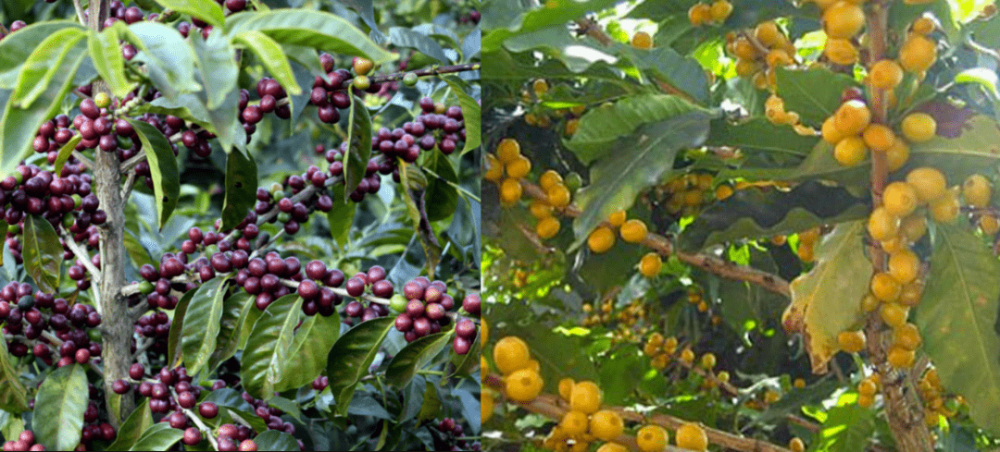
Speaking of varieties, the most widely planted in Brazil are still traditional old varieties such as Typica and Bourbon. Among them, Bourbon is favored by commercial growers for its wider leaves, approximately 30% higher yield per plant compared to Typica, shorter and rounder bean shape, and richer flavor complexity. Red Bourbon, a variant of the Bourbon family where the cherries turn red upon ripening, typically exhibits more pronounced berry notes and a creamy texture, with a relatively clear yet non-aggressive acidity — making it suitable for consumers who prefer a smoother taste. There are also other variants such as Yellow Bourbon on the market, but Red Bourbon remains the mainstream choice with both high market share and positive reputation.
Due to Brazil’s tropical climate with distinct wet and dry seasons, most coffee harvesting is concentrated during the dry season when the fruit moisture content is lower, making it very suitable for sun-drying or semi-washed drying methods. Traditional sun-drying often involves spreading the entire batch of coffee cherries directly on the ground to dry, which can easily absorb impurities and off-flavors, affecting the final quality. Since the 1990s, Brazil has gradually popularized the semi-washed process (also known as semi-dry or honey process). This method involves first using water tanks to remove unripe and defective cherries, then using a pulper to remove the pulp and part of the mucilage, followed by a brief wash to eliminate residues, and finally proceeding to the drying stage. This technique is not only more water-efficient and productive, but also significantly reduces the earthy or miscellaneous tastes often associated with crude sun-drying, leading to a notable improvement in the overall quality of Brazilian coffee.
To understand the grading system of Brazilian coffee, three key indicators must be considered: the ratio of defective beans, the screen size of the green beans, and the cupping flavor performance. First is the defective bean assessment. Brazil follows the New York grading standard (NY), which uses the number of defective beans found in every 300 grams of green beans as the basis for grading, employing a “deduction system.” Common grades include NY2, NY2/3, NY3, etc., where the smaller the number, the fewer the defects and the higher the quality. Among these, NY.2 is the market-recognized highest practical grade because NY.1 requires zero defects, which is extremely difficult to consistently achieve in large-scale commercial supply.
The second factor is the physical specifications of the green beans, graded using screens with 1/64-inch increments. Common ranges are from 14 to 20 mesh, with higher mesh numbers indicating wider and more uniform bean size. Although the market occasionally sees ultra-high specifications like 19 mesh, 17/18 mesh is generally regarded as the benchmark for specialty-grade beans, balancing appearance and internal quality.
The last element is the comprehensive evaluation during the cupping phase, which includes both taste and flavor aspects. Taste is divided into five levels based on mouthfeel smoothness: from ‘Strictly Soft (very smooth)’ to ‘Rioy (with iodine-like or rough notes)’; flavor is categorized into multiple grades such as Fine Cup (FC) and Good Cup (GC), with FC and GC being the most common premium evaluations. Combining these criteria, a package labeled ‘Brazil NY.2SC – 17/18 FC Cerrado’ indicates that the beans are from the Cerrado region, have a high specification of 17 to 18 mesh, a defect rate at the high NY.2 grade, and a cupping flavor score of FC (premium). It is a classic grade suitable for both commercial use and high-value specialty coffee.
The flavor profile of this Cerrado Red Bourbon coffee is dominated by a full body, low acidity, and distinct notes of nuts and roasted aromas. It is recommended to use a medium-dark roast to bring out its caramel sweetness and chocolate characteristics, and to pay attention to shelf life by choosing freshly roasted beans within one and a half months. Before brewing, allow 4 to 7 days of resting to let carbon dioxide fully dissipate so the flavors can fully develop. In practice, it is suggested to use a slightly lower water temperature (around 88°C), a coarser grind (e.g., 70% passing through a 20-mesh sieve), and brewing devices like the KONO filter that enhance body, helping to reduce the risk of over-extraction.
Recommended tested pour over parameters are as follows: 15 grams of coffee, a 1:15 coffee-to-water ratio, and a multi-pour method — the first pour is 30 grams of water for a 30-second bloom, the second pour is 95 grams of water poured in a steady circular motion from the center outward, and when the water level drops to two-thirds of the filter, pour the final 100 grams. Maintain a slow and steady flow throughout the entire process, with a total extraction time of about 2 minutes. These parameters help balance extraction efficiency, highlighting a rich nutty main note, a creamy smooth mouthfeel, and an aftertaste with black chocolate and subtle roasted notes, resulting in an overall rounded texture with distinct layers.
The above content is compiled by CoffeeHunters, a coffee news website.


