








Introduction:Yirgacheffe is renowned for its bright acidity and elegant floral notes, yet it often tastes dull and monotonous due to improper brewing. This article delves into Ethiopia’s coffee-growing traditions, analyzing the terroir and native variety characteristics of the Yirgacheffe region, while breaking down how the washed processing method shapes its refreshing style. It also provides professional-grade pour over parameters and a three-stage pouring technique to help you precisely capture the layered flavors of lemon, jasmine, and berries.
In the world of specialty coffee, Yirgacheffe has always been an introductory favorite for many coffee enthusiasts. Its unique bright acidity and captivating floral notes seem to encapsulate Ethiopia’s highland climate in a single cup of black coffee. However, many people brewing at home often only taste a sharp, singular acidity, struggling to recreate the richly layered flavors found in cafés. This article will explore the cultural roots of Ethiopian coffee, delve into the regional and varietal background of Yirgacheffe, and detail the key pour over extraction points for washed Yirgacheffe—including a three-stage pouring method and critical parameter settings—to help you more fully appreciate the unique charm of this classic coffee, where lemon, jasmine, and berries intertwine.

For many novice coffee drinkers, their first encounter with specialty coffee often begins with a pour over from Ethiopia. The balanced sweet-and-acidic profile, coupled with distinct fruity notes, leaves a deep impression, sparking strong interest in Ethiopian coffee. In fact, on café menus around the world, Ethiopian beans are almost indispensable. Taking our past experience as an example, we regularly offer up to eight different Ethiopian coffee bean options, with beans from regions like Yirgacheffe, Sidamo, and Guji having long been among the most popular choices.
As Africa’s largest coffee producer, Ethiopia is not only a vital global coffee supplier, but coffee is also deeply woven into the local culture and daily life. Here, coffee is not just a cash crop but also a key element of social interaction and rituals. Ethiopian coffee farming takes various forms, categorized into forest coffee, semi-forest coffee, garden coffee, and large plantations—with garden coffee being the most common, typically cultivated by each household on plots of at least four hectares. Due to the prevalence of smallholder farms with limited yields, numerous cooperatives and processing stations have emerged locally to collect coffee cherries from surrounding farmers for centralized processing and sales. These processed green beans are ultimately exported worldwide under the names of the processing stations.
Interestingly, although Ethiopia produces a large volume of coffee, a significant proportion is actually consumed domestically. Regardless of economic status, nearly every household owns a simple coffee-brewing setup. For Ethiopians, drinking coffee is as integral to daily life as tea is for us, serving not only as a necessity but also as an important social activity.
Another standout feature of Ethiopian coffee is its rich genetic diversity of native varieties. If you’ve ever observed Ethiopian coffee beans, you may notice considerable variation in shape and size—especially in natural-processed beans. This is because Ethiopia, as the birthplace of coffee, preserves tens of thousands of Arabica native varieties, making it a veritable genetic treasure trove for coffee. Since most coffee is grown by smallholders, varietal selection is often at the farmers’ discretion. During harvest season, processing stations directly purchase coffee cherries from nearby farmers before undertaking unified processing. Given the complex varietals and difficulties in identification—coupled with the Ethiopian government’s protective stance against disclosing specific varietal information—these coffees are generally referred to as ‘Heirloom (native varieties).’ In truth, a coffee’s flavor profile is closely tied to both its varietal and terroir, and the reason Ethiopian coffee can deliver such captivating aromas and fruity notes is largely due to its exceptional growing environment and the superior genetics of its native varieties.
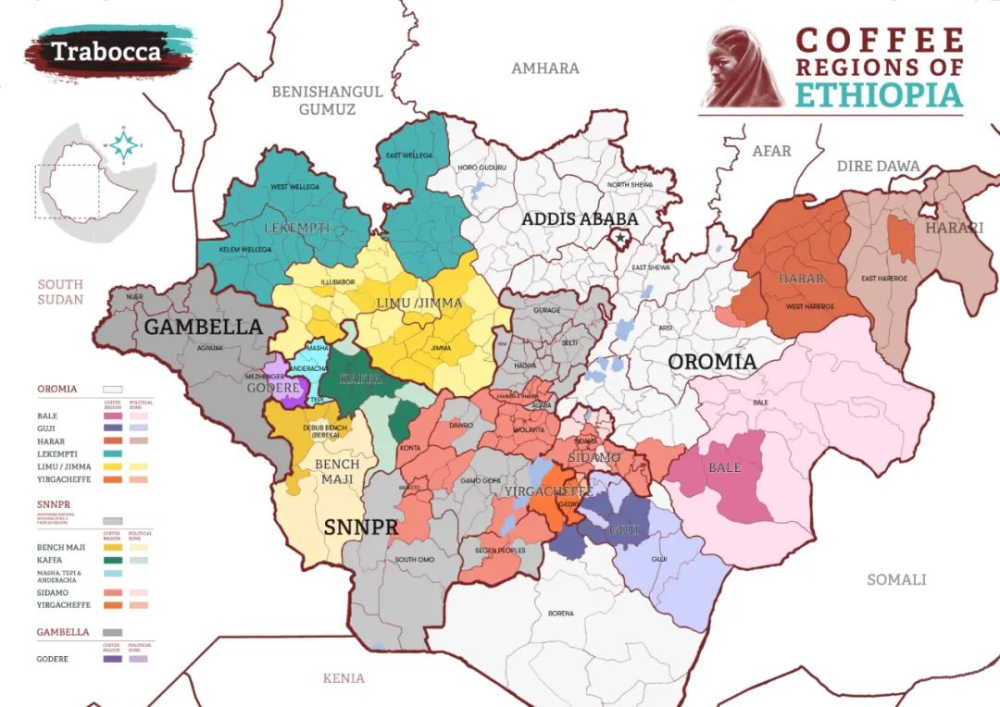
Yirgacheffe is a small town in Ethiopia, situated at an altitude of approximately 1,700 to 2,200 meters. The relatively low temperatures result in slower coffee growth, meaning the coffee cherries have more time to accumulate flavor compounds and nutrients. It is precisely because of the outstanding flavor performance and premium quality of the coffee produced here that many Ethiopian farmers take pride in their beans having the distinctive Yirgacheffe character.
The Yirgacheffe region was originally part of the Sidamo region but eventually gained independence due to its unique flavors and rising reputation, becoming the dedicated Yirgacheffe region. This town is often shrouded in fog, with a mild climate, spring-like seasons year-round, gentle breezes, and neither excessive heat nor humidity—even in winter, it does not suffer from severe cold, making it highly suitable for coffee, a crop with very demanding growing conditions.
In the global specialty coffee market, Yirgacheffe is regarded as one of the representative coffee-producing regions of Africa. Washed Yirgacheffe is famed for its bright acidity—not a vague citrus note, but the concrete aroma of yellow lemon—while its mouthfeel and aftertaste are exceptionally clean and refreshing. The formation of such a distinctive style is not only due to the region’s exceptional terroir but also largely credited to the washed processing technology introduced to Ethiopia from Central and South America in 1972.
The post-harvest processing of coffee beans is a highly specialized craft. Even those who know how to grow coffee may lack the expertise to process green beans. The production process for specialty coffee is intricate and meticulous, often requiring costly equipment and strict production oversight. Processing stations using the washed method must build dedicated washing tanks and ensure a stable supply of fresh water, resulting in relatively high production costs. Yet, it is precisely because of the multiple steps in washed processing that the proportion of defective beans is significantly reduced, while also imparting Yirgacheffe with its refreshing citrus notes and elegant white floral aromas, making the overall flavor brighter, more delicate, and cleaner—thus widely beloved by coffee enthusiasts worldwide.
A certain brand’s Yirgacheffe everyday coffee beans are processed using the washed method and medium-light roasting, perfectly showcasing the classic Yirgacheffe flavor profile and suitable for brewing via pour over, cold brew, or French press. This series of everyday beans is designed to allow newcomers to the coffee world to experience the foundational flavor characteristics of the region at an affordable price. The small packaging design also effectively prevents the beans from losing flavor due to prolonged storage. If you want to experience the most classic aromatic expression of Yirgacheffe, a pour over black coffee is undoubtedly the best way to highlight its traits.
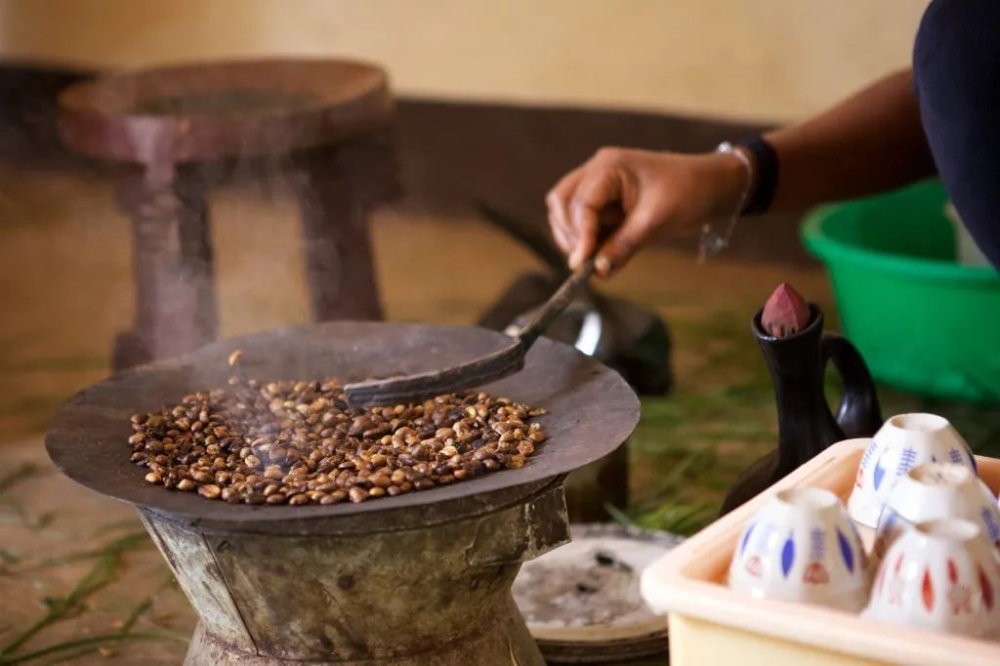
Although washed Yirgacheffe is widely popular, natural (sun-dried) processing still holds an important place in Ethiopian coffee. Compared to the past, today’s natural processing places greater emphasis on manual sorting and even drying. In one brand’s product lineup, in addition to classic washed beans, there are also offerings from the Gedeb Cooperative and meticulously sun-dried Red Cherry beans, the latter boasting more fermentation character and the rich flavors of tropical fruits.
For many coffee enthusiasts, a common issue when brewing Yirgacheffe is only tasting a singular acidity, without being able to recreate the rich aromas experienced in cafés. Below, we’ll share the correct extraction approach for Yirgacheffe from a professional barista’s perspective.
First, regardless of the brewing method used, the freshness of the coffee beans is a key factor influencing flavor performance. Coffee beans roasted more than two months ago have mostly lost their aromatic intensity, and even the most skilled extraction techniques can hardly restore their optimal flavors. To allow coffee lovers to enjoy coffee at its peak freshness, it is recommended to choose freshly roasted beans within five days of roasting and begin brewing immediately upon receipt.
For light-roasted beans like Yirgacheffe, which tend to be harder in texture, it is recommended to use water at 92°C to 93°C to effectively bring out their floral and fruity notes. In terms of grind size, a medium-fine grind is advised (with about 78% of the particles passing through a Chinese standard No. 20 sieve). Grinding too coarse may lead to under-extraction, resulting in a thin-tasting coffee, while grinding too fine can cause over-extraction at high temperatures, producing unwanted bitterness. Many people brewing at home who only taste acidity may simply be using water that’s not hot enough, preventing full release of the flavor compounds.
Actual cupping tests have shown that this Yirgacheffe exhibits different flavor characteristics at varying temperature stages. Therefore, it is recommended to use a three-stage pouring technique, allowing different flavor compounds to be gradually released as the temperature of the coffee bed changes. To enhance the bright and captivating aromatic expression of washed Yirgacheffe, it is recommended to use a V60 dripper. The spiral ridges of the V60 help with coffee grounds degassing, maximizing the volatilization and dissolution of acidic aromatic compounds.
Regarding brew ratio, it is suggested to use a coffee-to-water ratio of 1:15 to 1:16. If you prefer a stronger body, opt for a 1:15 ratio; if you wish to more clearly perceive the floral and sweet notes, a 1:16 ratio allows the flavors to unfold more gracefully.
Specific brewing parameters are recommended as follows:
Dripper: V60
Water temperature: 92-93°C
Coffee dose: 15g
Coffee-to-water ratio: 1:15
Grind size: Fine sugar-like (20号筛碗筛粉至78%)
Three-stage pouring steps:
1. First, wet the coffee bed evenly with twice the amount of water as coffee grounds (about 30g) to form a bloom, then let it degas for 30 seconds.
2. Next, pour water in small streams in a circular motion from the inside out. When the total water volume reaches 125g, perform the first pour break and wait for the coffee bed to descend to about half the height of the dripper.
3. Continue pouring the third stage with the same fine stream until the total water volume reaches 225g. Once all the coffee liquor has filtered through, remove the dripper.
4. Finally, pour the brewed coffee into a server, gently swirl to mix evenly, and start tasting from high temperature to gradually experience the flavor evolution of Yirgacheffe.
The brewed washed Yirgacheffe emits a delicate aroma of honey and jasmine even during grinding. As hot water is poured, berry aromas gradually emerge. Upon tasting, the first flavors to hit are the bright notes of lemon, citrus, and green tea, followed by a sweet finish of berries, cream, and sugarcane as the temperature cools—with a lingering aftertaste, a clean mouthfeel, and distinct layering.
The above content is compiled by CoffeeHunters, a coffee news website.


