







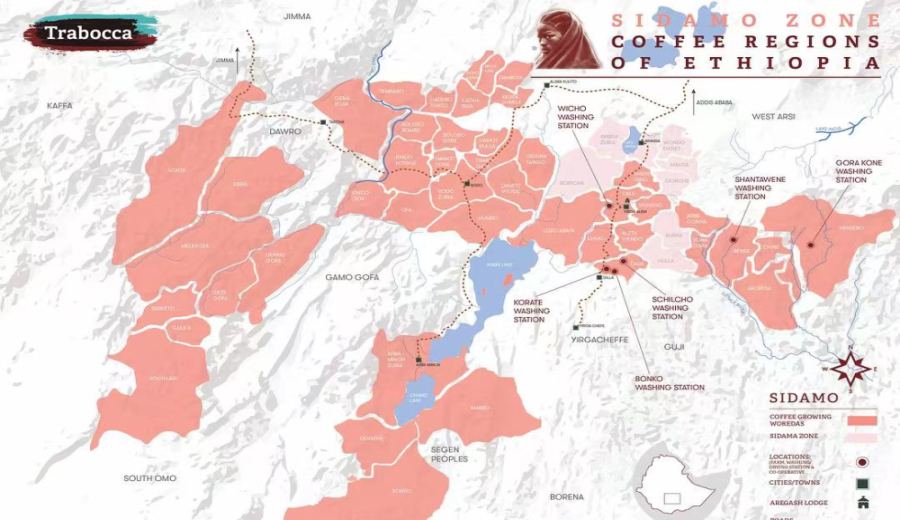
Introduction:Want to understand the unique charm of Sidamo coffee? This article provides an in-depth analysis of the Sidamo region’s background, name origin, COE competition performance, and highlights the high-altitude cultivation and natural sun-drying processing of the Bensa micro-region. From fruity gummy aromas to juice-like mouthfeel, this comprehensive guide will help you get to know this beloved Ethiopian G1 natural coffee bean. Whether you’re a beginner or a seasoned enthusiast, you’ll find practical inspiration for selecting your next favorite beans.
When it comes to specialty coffee from Ethiopia, Sidamo is undoubtedly an unforgettable name. This coffee, grown in the highland areas of the East African Rift Valley, is beloved by coffee lovers worldwide for its bright acidity, enchanting floral notes, and juice-like, smooth mouthfeel. Starting with the region’s background, this article will introduce you to the growing environment and natural processing characteristics of the Bensa micro-region, while analyzing the diverse flavor profiles of Sidamo coffee—helping you better understand how to choose a Sidamo G1 natural coffee bean that suits your taste.
The Sidamo region is located in the highland areas of southern Ethiopia, part of the East African Rift Valley. With elevations generally ranging between 1,500 to 2,300 meters, annual rainfall of about 1,550 to 2,220 millimeters, along with fertile soil and moderate temperatures, it provides ideal growing conditions for coffee trees. As one of Ethiopia’s three officially certified coffee regions, Sidamo is renowned for its diverse flavors, high quality, and richly layered profiles. Many experienced cuppers note that Sidamo coffee often exhibits pronounced acidity, silky mouthfeel, and a complex interplay of spice, floral, and fruit notes—making it a top choice for many pour over enthusiasts.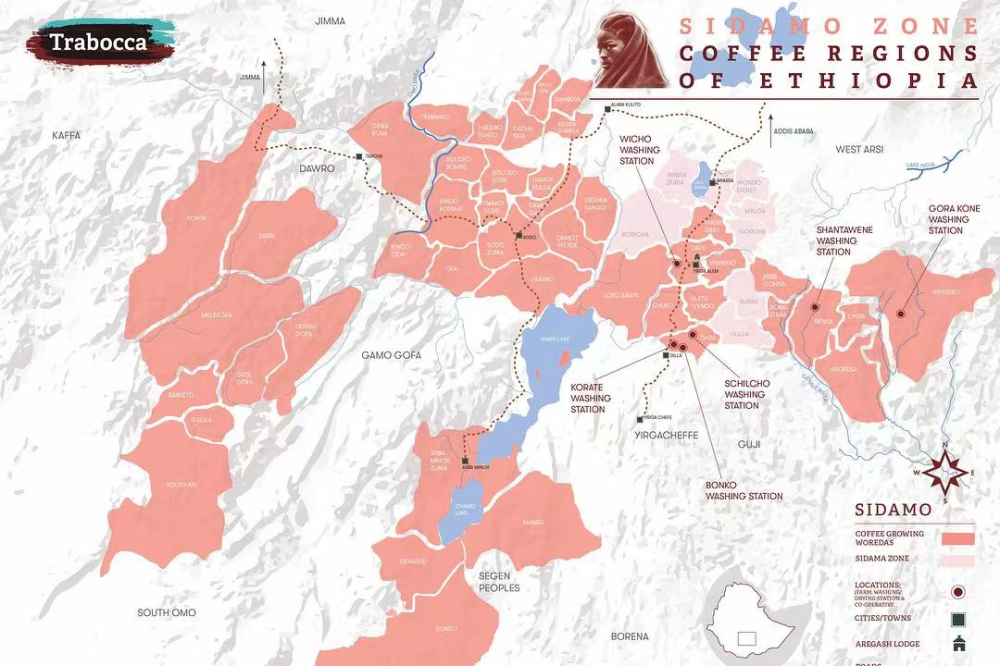
Interestingly, the name “Sidamo” actually stems from the phonetic evolution of the local indigenous group—the Sidama. The Sidama people have a deep cultural heritage, even celebrating a UNESCO-recognized traditional New Year festival called “Fiche Chambalala,” which attracts over five million visitors annually to the regional capital, Hawassa. However, between the 18th and 19th centuries, the region was invaded by foreign forces who mispronounced “Sidama” as “Sidamo.” Though this mispronunciation became widely used due to trademark registration and historical reasons, it still causes discomfort among some Sidama people. It wasn’t until the 1990s, when Ethiopia adopted a federal system, that the region officially reverted to the name “Sidama.” Nevertheless, since “Sidamo” had already spread across the world along with the aroma of its coffee, it remains widely recognized by consumers and is still the common international term for coffee from this region.
If you’ve followed the Cup of Excellence (COE) competitions, you’ll likely notice that the Sidamo region has consistently delivered impressive performances. Particularly during the 2020 and 2021 COE events held in Ethiopia, the nominated micro-regions within Sidamo were mainly concentrated in four geographically close highland towns: Arbegona, Bensa, Bura, and Bona Zuria. The 2021 competition was especially remarkable, with all five championship farms hailing from the town of Bensa—highlighting the region’s growing prominence in the specialty coffee world.
Bensa is situated in the Sidamo highlands, at elevations of approximately 1,800 to 2,300 meters. The high altitude slows the ripening process of coffee cherries, and the significant diurnal temperature variation helps the beans accumulate more aromatic compounds and sugars, resulting in a distinctive flavor profile. Coffee grown here often features intense fruit notes, with some batches even exhibiting a refreshing sweetness reminiscent of strawberries. For coffee enthusiasts who enjoy bright fruitiness and vibrant acidity, the natural-processed beans from the Bensa region are definitely worth trying.
The processing methods for Bensa coffee beans are quite diverse, including washed, natural, and red honey processes. Among them, washed Bensa coffee typically showcases bright acidity and clear fruit notes, making it suitable for those who prefer a clean and refreshing taste. Meanwhile, the natural process highlights its candy-like fruit aromas and sweetness. In Bensa, the natural processing procedure is meticulous: harvested coffee cherries are first rigorously sorted to remove unripe or defective beans, then the pulped beans are placed on elevated drying beds. During the initial drying phase, they are turned every 2 to 3 hours to ensure even heat distribution and prevent mold. The entire drying process, depending on weather conditions, usually takes 12 to 15 days, until the beans’ moisture content stabilizes at around 11.5%, after which they can be stored and exported.
It’s worth mentioning that the pronunciation of Bensa is similar to that of the traditional Cantonese herbal tea “Ban Sha,” but this coffee has absolutely nothing to do with the drink. On the contrary, it boasts a delicate and smooth mouthfeel, with a richly layered fruit aroma and a long-lasting finish—making it an excellent everyday choice for pour over or French press brewing. If you’re looking for an Ethiopian G1 natural coffee bean that combines aroma with complexity, Bensa region options are definitely worth adding to your coffee bean list.
In summary, what makes Sidamo coffee so captivating is not only its exceptional geographical environment, but also micro-regions like Bensa, which—through high-altitude cultivation and refined natural processing—impart unique aromas and flavors to the beans. From candy-like fruit aromas to juice-like, rounded mouthfeels, this coffee meets the needs of everyone from beginners to advanced enthusiasts. Whether you’re just stepping into the world of specialty coffee or looking to add a distinctively flavorful natural bean to your lineup, the G1 coffee beans from Sidamo’s Bensa region are a choice well worth exploring and savoring.
The above content is compiled by CoffeeHunters, a coffee news website.


