








Introduction:Ethiopia is hailed as the birthplace of Arabica coffee, renowned for its diverse growing regions, unique Heirloom varieties, and varied flavor profiles that never cease to amaze. This article will delve into the terroir characteristics of Ethiopia’s major specialty coffee regions—such as Yirgacheffe, Sidamo, and Guji—explore the differences between forest-grown and garden-grown coffee, and uncover the origins of the celebrated Heirloom native variety and numbered cultivars. This will help you fully grasp the essence of this coffee Mecca, deepening your bean selection and tasting experience.
As a vital genetic reservoir of global Arabica coffee, Ethiopia, with its exceptional geographical environment and diverse cultivation conditions, has nurtured countless iconic specialty coffees. From the ancient myths of the Kaffa Forest to the varied flavor profiles of renowned regions like Yirgacheffe, Sidamo, and Guji, this land has long been a sacred destination for coffee enthusiasts. This piece will guide you through the origins of Ethiopian coffee, the three main planting models, the terroir features of core regions, and the mysteries behind the Heirloom native variety and other special cultivars, allowing you to understand from origin to cup why these world-famous coffees are so captivating.

Ethiopia is widely recognized as one of the birthplaces of coffee, home to numerous internationally acclaimed specialty coffee regions such as Yirgacheffe, Sidamo, and Guji, each with its own distinctive flavor characteristics. From bright fruity acidity to rich, enchanting spice and wine notes, Ethiopian coffee always brings surprises. Below, we’ll break down the charm of this coffee homeland step by step.
Although Yemen has earlier trade records regarding the origin of coffee, Ethiopia’s coffee culture is equally ancient. Locally, coffee is not just a beverage but also a way of life. On the streets, it’s common to see people gathering to drink coffee and chat—it’s a deeply rooted daily ritual that makes coffee inseparable from Ethiopian life. The most famous legend originates from the Kaffa region around the year 900. It’s said that a shepherd named Kaldi noticed his goats becoming unusually energetic after eating red berries, so he tried them himself and felt an unprecedented vitality. Soon, these “red cherries” spread among the villages, and the word “coffee” in English is derived from “Kaffa.” Locally, coffee is called “Buna,” meaning “bean.”
Ethiopian coffee farming can generally be divided into three main types: forest coffee, garden coffee, and plantation coffee. Forest coffee typically refers to trees growing in wild environments, often found in the Kaffa forests of the southwest, surrounded by dense vegetation that provides good shade. These coffees are usually collected and sold by nearby residents, but due to complex varieties and minimal management, both quality and price can vary greatly. Semi-forest coffee involves slight human intervention through pruning and weeding, creating a more ideal growing environment and resulting in more stable yields.
Garden coffee is the most common farming model in Ethiopia, accounting for over half. Many farmers grow coffee alongside other crops in their backyards, a method that’s convenient for daily care and helps diversify economic risks. Plantation coffee accounts for the smallest share, typically operated by businesses aiming for large-scale and high-efficiency production. These coffee estates have professional teams handling seedling cultivation, fertilization, harvesting, and more, making their methods more similar to those in Central and South America.
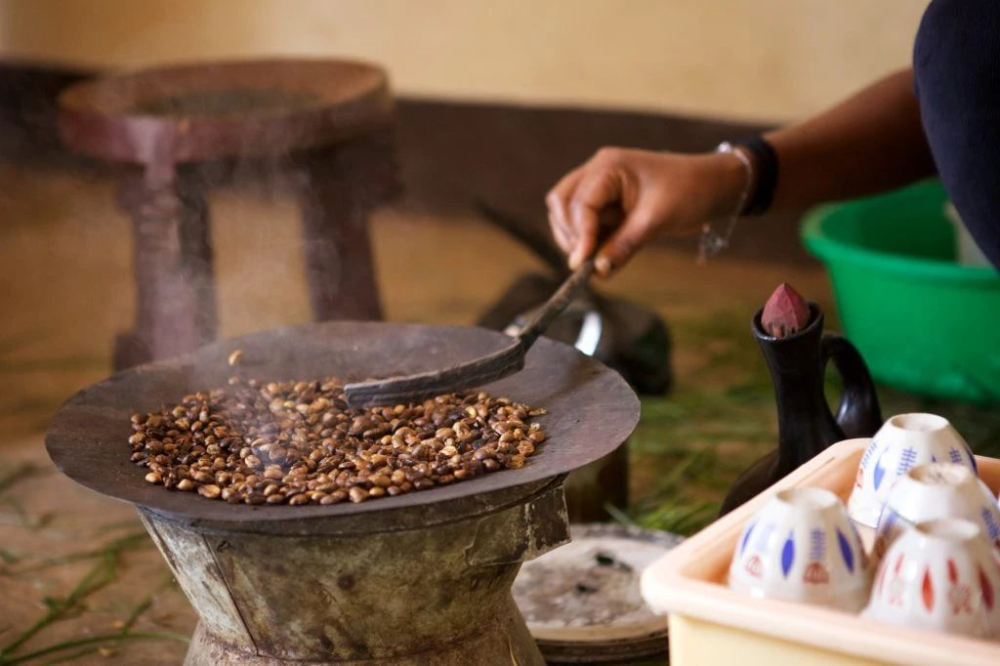
Ethiopia boasts many specialty coffee regions, with Yirgacheffe, Sidamo, Guji, Harrar, and Limu being the most well-known. These areas are mostly located in high-altitude tropical cloud forest zones, with cool, moist climates, annual rainfall of about 1000–2000 mm, and average temperatures between 15–30°C, making them highly suitable for coffee growth. The high altitude not only reduces pest incidence but also extends the ripening period of coffee cherries, aiding in the accumulation of flavor compounds.
Yirgacheffe is one of Ethiopia’s most representative specialty regions, situated in the Gedeb zone in the south, at elevations of about 1700 to 2100 meters. Coffee here is mostly grown on small family farms, following the garden coffee model. Though production is modest, the quality is consistent. The Yirgacheffe Coffee Farmers Cooperative Union (YCFCU) includes 28 cooperatives with over 40,000 participating farmers, among which the Kochere, Worka, and Konga cooperatives are especially notable. Coffees from this region are known for their bright acidity, jasmine floral notes, and citrus tones. The reason Yirgacheffe coffee is so beloved lies in its refreshing, tea-like floral and fruity aromas, showcasing the diverse flavor expression of coffee.
The Sidamo region spans both sides of the East African Rift, featuring diverse terrain and microclimates, leading to a rich and varied flavor profile. Well-known sub-regions like Bensa, Chire, and Aroresa each exhibit distinct characteristics: Bensa and Chire often present tropical fruit, fermented sweet-tartness, and layered wine-like notes, while Aroresa shows softer jasmine, sugarcane, and black tea aromas. Washed and natural processing methods are common in Sidamo, with the former highlighting bright acidity and the latter enhancing fruitiness and body.
The Guji region was formerly part of Sidamo but became an independent region due to differing geographical conditions and development histories. It features fertile black soil and high altitudes, averaging over 1800 meters, making it ideal for producing high-quality coffee. The Huakui coffee beans come from Guji’s Hambela sub-region, particularly the Buku processing station’s natural lots, which are celebrated for their intense passion fruit aroma, honey sweetness, and strawberry acidity, making them a classic favorite among many coffee lovers.
The Harrar region is famed for its natural-processed coffee. With a dry, hot climate and elevations between 1500 and 2400 meters, along with annual rainfall of only about 1000 mm, almost all coffee here is processed using the natural method. The coffee from this region features bold, complex flavors, often with notes of nuts, wine, and chocolate, delivering a daring and distinctive flavor profile.
The Limu region is primarily cultivated by smallholders, at elevations of about 1850 to 1900 meters, with the harvest season concentrated from October to February each year. Washed coffee from this area often has grassy and sandalwood notes, with delicate acidity, and is highly favored in European and American markets.
When it comes to Ethiopian coffee varieties, the most common is the so-called Heirloom “heirloom” native variety. Due to the vast number of coffee varieties in Ethiopia—most of which are natural hybrids and remain largely uncategorized—they are collectively referred to as Heirloom. These varieties vary in bean size and shape, contributing to the rich diversity of Ethiopian coffee flavors. Additionally, the numbered cultivars that stood out in the 2021 COE competition, such as 74165 and 74110, are disease-resistant strains developed by the Ethiopian government in the 1970s to combat coffee berry disease. These strains have undergone rigorous selection and offer strong disease resistance and stable yields.
In addition, the classic varieties Typica and Bourbon are also grown in Ethiopia. Typica trees have brown-tipped leaves, while Bourbon trees have green-tipped leaves; both are known for their elegant flavors. Kurume is a shorter, higher-yield variety mainly found in Yirgacheffe and Guji, characterized by floral, berry, and citrus notes, with bright acidity and prominent sweetness.
The above content is compiled by CoffeeHunters, a coffee news website.


