








Introduction:Kenyan coffee is renowned for its intense fruit acidity and rich berry flavors, making it an essential choice for specialty coffee enthusiasts worldwide. This article delves into the characteristics of Kenya’s six major growing regions, the auction and direct trade mechanisms, the origins of the AA/AB grading system, and provides a detailed breakdown of the three-stage fermentation process of the iconic K72 washed processing method. It also offers practical brewing recommendations and parameter settings to help you fully appreciate the unique charm of Kenyan black coffee.
Kenyan coffee is celebrated for its vibrant, high-toned acidity and full-bodied berry texture, making it one of the most distinctive offerings in the specialty coffee world. Its flavor profile is bold yet layered, with a sharp acidity paired with a juicy, berry-like mouthfeel that leaves a lasting impression.
This unique coffee flavor originates from Kenya’s exceptional geography and rigorous processing system. This article will comprehensively dissect the key elements of Kenyan coffee—from regional terroir and grading systems to the classic K72 washed process—and include practical pour-over suggestions to help you master every step, from bean selection to brewing.

Although Kenya’s coffee cultivation history is not as long as that of neighboring Ethiopia, its development speed and quality control are remarkable. In the early 20th century, during British colonial rule, the colonial government actively promoted coffee farming to boost foreign exchange earnings. This coffee was eventually shipped to London for trade, laying the foundation for Kenya’s entry into the international market.
Established in 1922, the Scott Agricultural Laboratories (Scott Labs) marked a milestone in Kenya’s coffee varietal improvement. Researchers selected SL28 and SL34 from over 40 varieties—two high-quality cultivars that still dominate Kenya’s coffee industry today, accounting for approximately 90% of the nation’s planted area.
The Kenyan government has also maintained strict oversight of the coffee industry. As early as 1931, it established the Coffee Growers Cooperative Union and the Kenya Coffee Board, driving industry development through both grassroots and official efforts. The Nairobi Coffee Exchange, launched in 1937, and the grading system introduced in 1938, provided Kenya’s coffee with a solid framework for quality and trade.
Kenyan coffee is primarily grown on volcanic red soil plateaus at altitudes of 1,400 to 2,000 meters, where the soil is loose, fertile, and highly draining. The high-altitude environment results in significant day-night temperature variations, slowing the ripening process of coffee cherries. This leads to denser beans with more concentrated and intense flavors. Coffee trees typically flower 3 to 4 months after the rainy season, with the main harvest occurring from May to July and some regions seeing a second harvest from September to October.
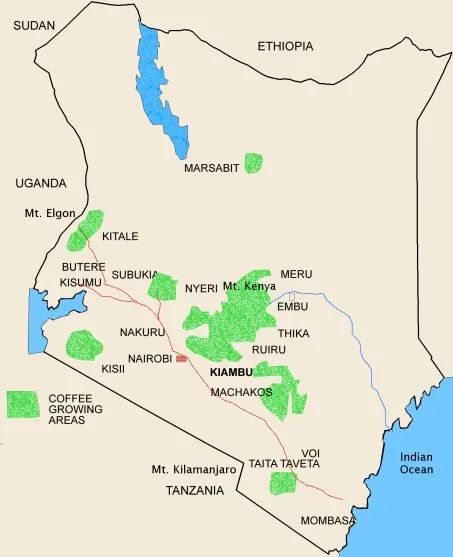
Kenya’s coffee-growing regions can be divided into six major zones: Thika, Kirinyaga, Mt. Kenya West, Nyeri, Kiambu, and Muranga. The main harvest seasons in these regions are from October to December and a secondary season from June to August.
Though close to the capital, Nairobi, Thika boasts a unique microclimate. Around 2,000 local coffee farmers here predominantly grow SL34 and SL28 varieties, producing coffees known for their bright acidity, rich berry notes, and honey-like sweetness. The altitude ranges between 1,550 and 1,750 meters, providing ideal growing conditions.
Located on the slopes of Mount Kenya near Nyeri, Kirinyaga is a globally recognized specialty coffee region. The area is composed of numerous smallholder farmers who collectively operate cooperative washing stations, ensuring consistent quality. Kirinyaga coffees are celebrated for their vibrant acidity, delicate sweetness, and substantial body, with altitudes ranging from 1,300 to 1,900 meters.
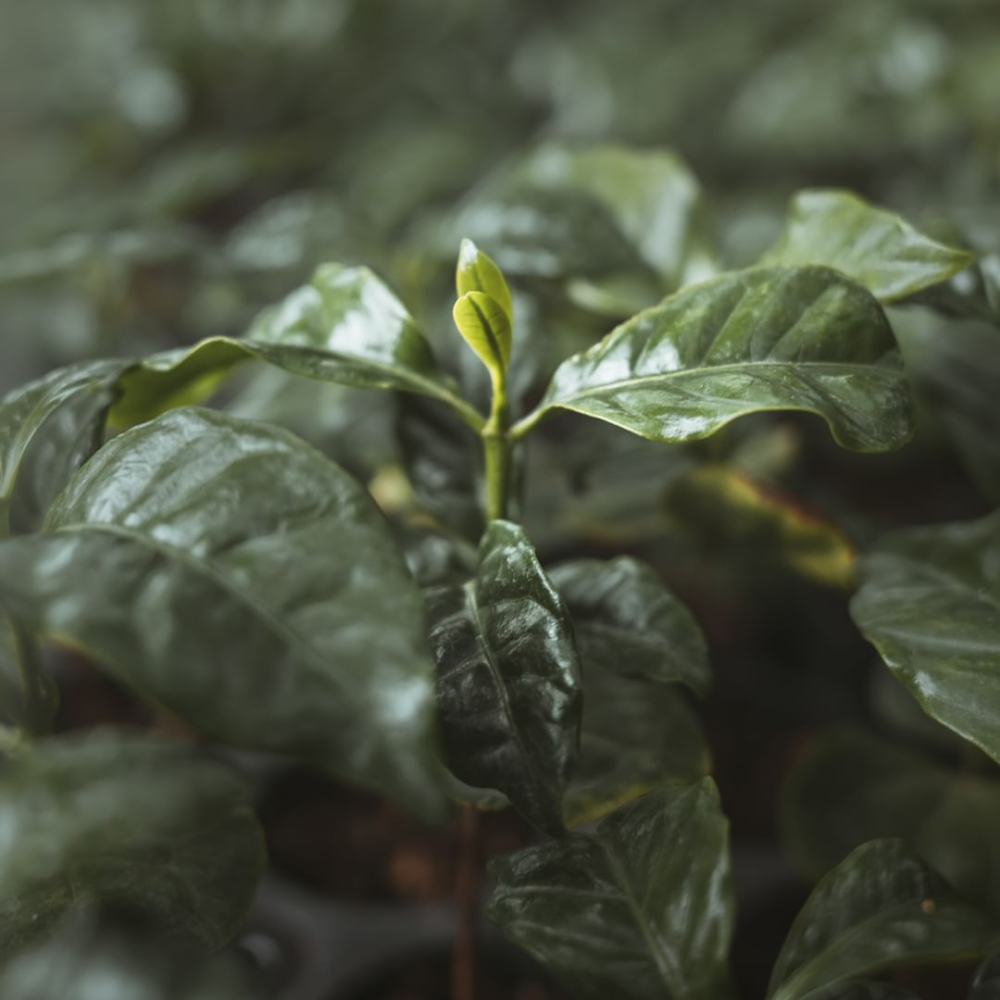
The Nyeri region, situated in central Kenya, features fertile volcanic red soils and diverse microclimates. Most of its coffee is produced by small cooperatives, with peak quality often achieved during the main harvest season. Nyeri coffees are known for their lively berry tones, citrus aromas, and floral nuances, making it one of the key regions that put Kenyan coffee on the global map. Altitudes here range from 1,200 to 2,300 meters.
Kenyan coffee is primarily sold through auctions held at the Nairobi Coffee Exchange. Every Tuesday, qualified traders cup sample lots before bidding on the green beans they wish to purchase. This system, considered a precursor to competitions like COE, is known for its transparency and effectively incentivizes farmers to improve quality.
However, the auction system has limitations, including excessive intermediaries that reduce farmer profits and incomplete traceability. To address this, the Kenyan government has gradually relaxed direct trade restrictions, allowing certified agents to sell high-quality beans directly to international roasters, ensuring more equitable returns for producers.
Kenya’s coffee bean grading system has a long history, dating back to 1938. Traditional grading is primarily based on bean size: AA (the largest, 17–18 mesh), AB (slightly smaller, 15–16 mesh), and PB (peaberry, a rare round bean variety). While many assume AA beans are superior in flavor, cupping results show both grades can achieve exceptional quality, with differences often stemming from origin and processing methods.
Beyond traditional size-based grading, Kenya also employs a modern comprehensive scoring system that evaluates green bean appearance, roasted bean condition, and cupping performance. Coffees are ultimately ranked from 1 to 10, with 1 being the highest quality. This system incorporates more quality metrics, enabling a more precise assessment of a coffee’s overall profile.
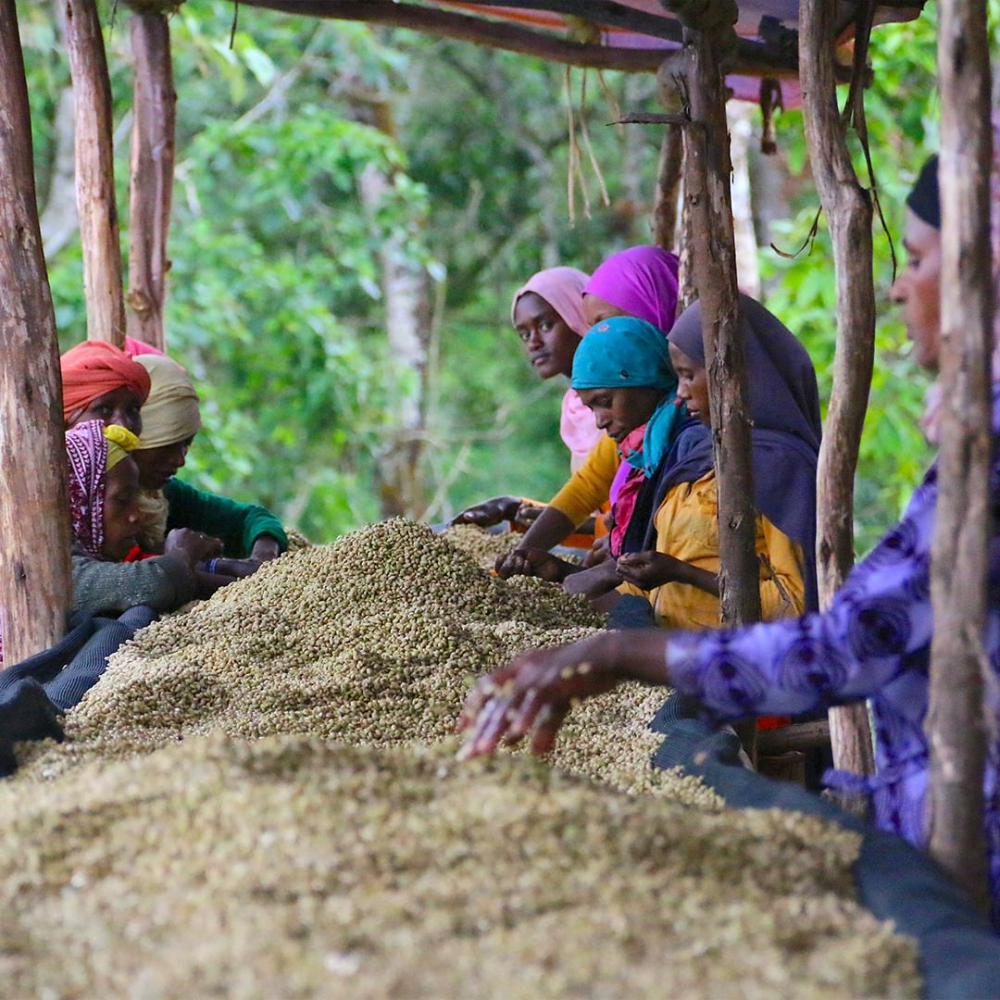
Kenya’s most famous processing method is undoubtedly K72 washed. This technique involves three 24-hour fermentation and washing cycles, totaling 72 hours of fermentation, to fully develop the coffee’s acidity and aromatic complexity. On harvest day, farmers first use water density sorting to select dense, high-quality cherries, then remove the skins and begin the first fermentation.
The first fermentation lasts about 24 hours, primarily to break down the mucilage layer and enhance acidity. After fermentation, the beans are thoroughly washed with clean water, followed by a second identical fermentation and washing cycle. This repeated fermentation process allows the beans to develop a more intricate and refined flavor structure while maintaining bright, clean acidity.
After fermentation, the beans are dried on raised beds for 5 to 10 days, depending on weather conditions. Though time-consuming and labor-intensive, this method produces the distinctive bright acidity and rich berry flavors that define Kenyan coffee—a classic profile beloved by specialty coffee enthusiasts.
When brewing Kenyan coffee, it’s recommended to use medium-light roasted beans, paired with higher water temperatures and fast-flowing filters. For example, a V60 filter with a 1:15 coffee-to-water ratio (15g coffee to 225ml water) and a water temperature around 91°C can effectively highlight its bright acidity and juicy character.
Grind size should be adjusted to that of fine sugar (approximately 80% passing through a #20 sieve). Begin with a 30-second bloom using 30g of water, followed by incremental pours totaling 225g. Pay attention to flow rate and water level changes. These parameters help balance acidity and sweetness, showcasing the most captivating aspects of Kenyan coffee’s flavor profile.
The brewed Kenyan coffee delivers an initial burst of tartness reminiscent of black plums and cherry tomatoes, followed by a mid-palate rich in juiciness and clear sweetness, with a lingering finish of berry aroma and smooth brown sugar notes. It’s a layered and memorable specialty coffee experience.
The above content is compiled by CoffeeHunters, a coffee news website.


