








Introduction:Want to brew a well-balanced, flavorful espresso at home, but often encounter issues like unstable flow rate or unbalanced acidity and bitterness? In fact, there’s no one-size-fits-all extraction parameter — adjustments need to be made flexibly based on bean condition and equipment setup. This article takes an in-depth look at the six key elements: dose, coffee-to-water ratio, extraction time, flow rate, pressure, and water temperature. It will help you tailor the ideal extraction parameters according to the characteristics of your specific blend, and teach you how to use espresso concentration and extraction yield — based on the Golden Cup Theory — to guide your adjustments, step by step, to brew the perfect shot that suits your taste.
Many coffee enthusiasts face challenges when brewing espresso at home, such as unpredictable flow rates or flavors that swing between overly sour and overly bitter. The truth is, there’s no universal standard for espresso extraction that works in all scenarios. The beans’ condition on a given day, grinder burr performance, espresso machine pressure output, and water temperature control can all significantly affect the outcome. This article will systematically guide you through mastering the art of customizing extraction parameters for your own blend, focusing on the six core dimensions: dose, coffee-to-water ratio, extraction time, flow rate, pressure, and water temperature. Real-life examples and the Golden Cup Theory will assist in interpretation, helping you fine-tune accurately and ultimately brew the ideal shot you’ve been aiming for.
 How do you adjust to the most suitable espresso extraction method based on the characteristics of your current blend? The key lies in a deep understanding of how each parameter interacts. Below, we’ll break down the essential elements one by one, helping you build a systematic approach to making adjustments.
I. Coffee Dose: Setting the Foundation for Extraction
The choice of dose is primarily related to the capacity of the portafilter basket. It is generally recommended not to use significantly less or more coffee than the basket’s designed capacity, as this will directly affect the density of the coffee puck. When the dose is too low, the puck tends to be loose, allowing water to pass through too quickly, which often leads to under-extraction. Conversely, if the dose is too high, the puck becomes overly compacted, increasing water resistance, which not only slows the flow rate but may even prevent coffee from dripping through properly. In practice,a single shot is recommended to use 7 to 9 grams of coffee, while a double shot is around 18 to 20 grams, with minor adjustments possible depending on the freshness of the beans and grind setting on any given day, in order to maintain stable extraction performance.
II. Coffee-to-Water Ratio: Determining Strength and Flavor Balance
The coffee-to-water ratio refers to the weight ratio of coffee grounds to the final extracted coffee liquid. Common ranges are from 1:1.5 to 1:2.5, with the most widely used standard ratio being 1:2. For example, using 17 grams of coffee to extract 34 grams of liquid fits this golden ratio. If the ratio is too low (e.g., below 1:1.5), the espresso becomes overly intense and heavy, often accompanied by over-extracted bitterness. If the ratio is too high (e.g., above 1:2.5), the flavor becomes weak and thin, and may also exhibit under-extracted sharp acidity.
III. Extraction Time: Controlling the Overall Rhythm
Extraction time refers to the total duration from the moment the portafilter is locked in and extraction begins until it finishes. This parameter is mainly influenced by grind size and coffee-to-water ratio. Generally speaking, the higher the ratio, the more water needs to be extracted, thus naturally lengthening the time. Similarly, the finer the grind, the denser the puck, and the harder it is for water to pass through, also extending the extraction time. However, if the extraction time is too long, it can lead to over-extraction, with flavors becoming bitter and astringent. If the time is too short, under-extraction may occur, resulting in sour, flat, and one-dimensional flavors.
IV. Flow Rate: A Direct Reflection of Extraction Status
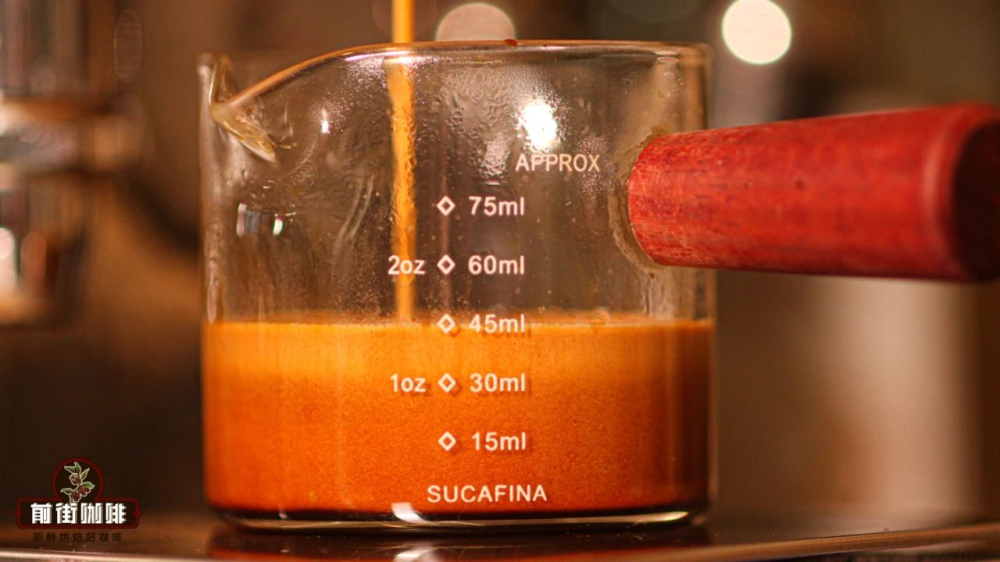
Flow rate refers to the speed at which coffee liquid flows out of the puck, serving as the final visible outcome of your extraction parameter adjustments. Ideally, once you start the extraction, coffee should begin dripping at around the 5-second mark and continue to flow at a steady, even pace. In practical operation, if you’re using 18–20 grams of coffee to extract 35–40 milliliters of liquid, it’s recommended to aim for an extraction time of 27–30 seconds. A flow rate that’s too fast usually indicates a grind that’s too coarse or a dose that’s too low, which can lead to prominent acidity. On the other hand, a flow rate that’s too slow may suggest a grind that’s too fine or a dose that’s too high, resulting in overly intense or even burnt and bitter flavors.
For example, when extracting 40 grams of coffee using 20 grams of coffee (a 1:2 ratio), if the total time is under 20 seconds, it indicates the flow is too fast and the coffee may taste sour — in this case, consider adding 0.5 to 1.0 gram of coffee or slightly fine-tuning the grind to be finer. If the time exceeds 35 seconds and the coffee tastes noticeably bitter, then reduce the dose or adjust the grind to be coarser to avoid over-extraction.
V. Pressure and Water Temperature: Key Influences from Equipment Performance
Most home or commercial espresso machines are designed to operate at around 9 bar of extraction pressure, which is a common reference value for optimal extraction. Too low a pressure leads to incomplete extraction and insufficient flavor release; too high a pressure can result in over-extraction and unpleasant off-flavors. Additionally, water temperature is another critical factor —it is recommended to keep the water temperature between 90 and 94 degrees Celsius. Higher temperatures accelerate the release of flavor compounds but can also bring out excessive bitterness. Lower temperatures may lead to under-extraction, resulting in undesired sharp acidity.
VI. Fine-Tuning Extraction Parameters: Starting with Flow Rate and Bean Condition
When you find that your espresso’s flow rate is either too fast or too slow, it’s advisable to troubleshoot and adjust from multiple angles. First, examine the current condition of the coffee beans, including roast level, freshness, and degassing status, all of which can impact flow rate. Then confirm whether the dose, extracted liquid volume, and tamp pressure are appropriately set. You can start by adjusting the coffee-to-water ratio (i.e., increasing or decreasing the dose) to alter the flow rate, as this is the most direct and effective method. Once these basic elements are confirmed to be in order, further fine-tune the grind size to more precisely control the extraction rhythm.
VII. Espresso Concentration and Extraction Yield: Using the Golden Cup Theory for Evaluation
The “concentration” of espresso refers to the proportion of extracted coffee substances in the overall liquid, with an ideal value typically ranging between 8% and 12%. The “extraction yield” is the ratio of extracted coffee substances to the weight of the coffee beans used, with the generally accepted optimal range being 18% to 22% — also known as the “Golden Cup range.” These two metrics can be measured using professional tools, helping to more scientifically determine whether the extraction falls within the desired range.
Specifically,measuring concentration requires first calibrating the instrument, then stirring the extracted liquid and taking a sample from the center for testing; whereasextraction yield can be calculated using the formula: “extraction yield = concentration × coffee liquid weight ÷ coffee bean weight”. For instance, if you use 19 grams of coffee to extract 40 milliliters of liquid and measure a concentration of 8.97%, then the extraction yield is (8.97 × 37) ÷ 19 ≈ 18.44%, which falls within the ideal Golden Cup range.
However, it’s important to note that even if the values fall within the Golden Cup range, it doesn’t guarantee that everyone will enjoy the flavor. Tasting coffee is inherently subjective, and the true joy of brewing espresso lies in continuously experimenting and adjusting to discover the combination that best suits your personal palate.
The above content is compiled by CoffeeHunters, a coffee news website.


