







Introduction:Golden Mandheling is hailed as the finest among Sumatran coffees. With its rigorous selection process and official certification from PWN, it delivers a rich, full-bodied flavor with distinctive layered notes. This article will take you deep into the differences between Golden Mandheling and regular Mandheling, how to identify authentic beans, and provide practical dark roast pour over recommendations — including resting time, coffee-to-water ratio, water temperature, and three-stage pouring techniques — so you can easily brew a top-tier cup at home with a sweet aftertaste and aromatic richness.
Among the many Indonesian coffees, Mandheling is undoubtedly the most representative variety. However, not all coffee from Indonesia can be called Mandheling. In fact, only Arabica coffee grown on the island of Sumatra qualifies for this name. Among the various types of Mandheling, “Golden Mandheling” stands out as the representative of the richest taste and most stable quality, thanks to PWN’s strict quality control procedures and four rounds of manual sorting.
Indonesia’s coffee cultivation history dates back to the 17th century, when Dutch colonists introduced it, initially developing on Java Island before expanding to Sumatra and other regions, laying the foundation for the country becoming a major global coffee producer. Among Indonesia’s many producing regions and coffee varieties, Mandheling is widely popular for its bold, full-bodied character, but authentic Mandheling is limited to Arabica produced solely on Sumatra.
There’s an interesting story behind the name “Mandheling.” It’s said that a Japanese soldier stationed in Indonesia during his service drank an unforgettable coffee. After the war, he returned to the area looking for it and asked locals about the coffee’s name. Due to a language mix-up, the locals, referring to the local inhabitants (“Mandailing”), were misunderstood to have said “Mandheling,” and the name stuck ever since.
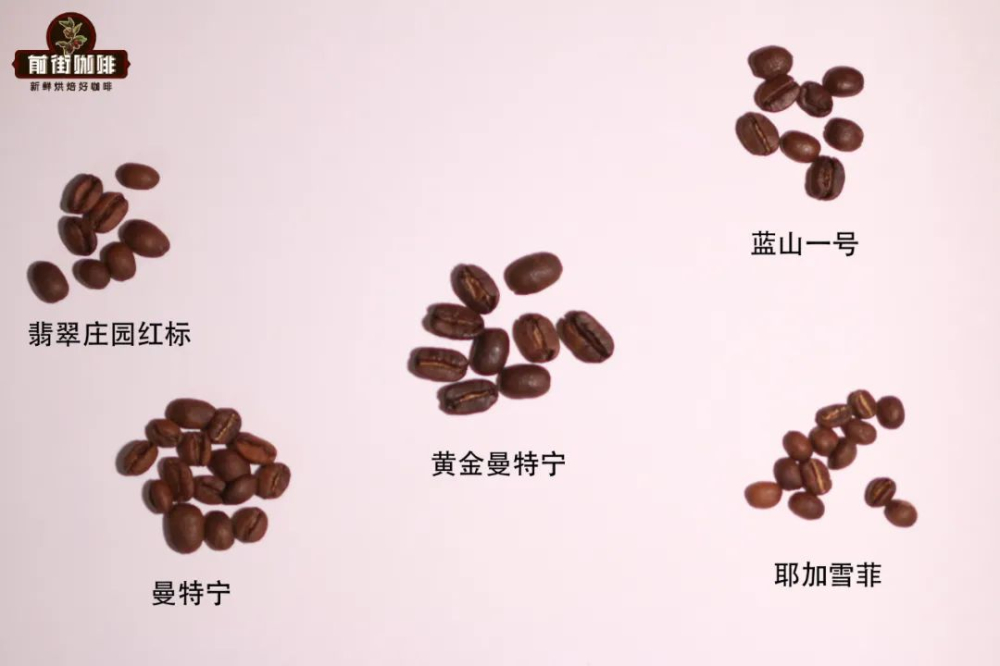
Mandheling is actually a broad classification. Common market varieties also include aged Mandheling, Tiger Mandheling, and Horse Face Mandheling, but the most well-known and beloved by specialty coffee enthusiasts is “Golden Mandheling.”
When talking about “Golden Mandheling,” one must know about PWN (Pwani Coffee Company). This company is responsible for carefully selecting premium coffee cherries locally in Indonesia and is the main supplier of Golden Mandheling. PWN controls nearly the best-producing resources in Indonesia, so its Golden Mandheling not only has stable quality but also possesses all the characteristics of specialty coffee.
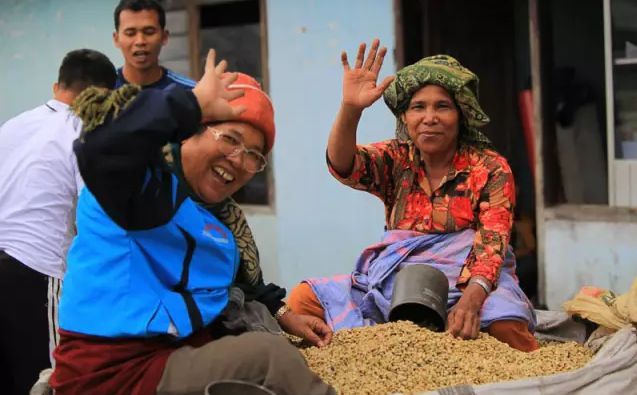
Golden Mandheling is a high-grade product within the Mandheling category, representing higher processing standards and stricter selection processes. For this reason, Golden Mandheling often commands a significantly higher price in the specialty coffee market than regular Mandheling. Its coffee beans are all hand-picked and processed using the semi-washed method, with green bean size reaching 19 mesh. After undergoing four rounds of manual sorting, defective beans are thoroughly removed to ensure each bean is plump and uniformly sized.
Due to its high-standard selection process, the yield of Golden Mandheling is relatively limited — only the top-tier, flawless beans qualify for the “Golden” grade. More importantly, only Golden Mandheling produced by PWN can be considered the authentic “Golden Mandheling.” Therefore, consumers should pay attention to relevant certifications or source proof when purchasing to avoid buying products passed off as genuine but actually made from ordinary G1 Mandheling.
For the average consumer, the simplest way to identify authenticity is to check whether the packaging or burlap sack comes with PWN certification. This certificate is an important proof of Golden Mandheling’s authenticity and an effective way to avoid counterfeits.
In terms of flavor profile, compared to regular Mandheling, Golden Mandheling offers a richer, fuller body, with a pronounced but well-layered bitterness and lower acidity — making it especially suitable for drinkers who enjoy dark roast flavors. After deep roasting, Golden Mandheling often exudes herbal, pine, and even subtle smoky aromas. Upon tasting, it leaves a notable sweet aftertaste, accompanied by intense chocolate and nutty tones, with a long-lasting and memorable finish.
If you want to brew a flavorful cup of Golden Mandheling at home, here are some practical pour over tips: First, since Golden Mandheling is usually dark roasted, it’s recommended to let the beans rest for about 7 days after roasting to degas excess CO₂, which helps stabilize extraction later. The optimal flavor typically emerges within 45 days post-roast. It’s advised to buy whole beans and grind them fresh before brewing to preserve the fullest aroma and flavor.
For equipment, it’s recommended to use a Kono filter cone, which enhances body and smoothness. If unavailable, a V60 filter cone is also a good alternative. Use 15 grams of coffee per serving, and allow the beans to rest for 4–7 days (counting the roast date as day 1) before brewing.
Regarding grind size, because it’s a dark roast, aim slightly coarser than light roasts, with about 70% passing through a #20 sieve. Too fine may lead to over-extraction and burnt bitterness, while too coarse can result in under-extraction and a flat flavor. Water temperature should be set between 87–88°C — too high may amplify bitterness, too low may make the coffee taste thin.
The recommended coffee-to-water ratio is 1:15, which strikes a good balance between intensity and layering. Though some brewing methods may suggest a smaller ratio (like 1:13) for higher strength, this might sacrifice the subtlety of the aftertaste. As long as you control water temperature and grind size well, 1:15 can better showcase the full flavor characteristics of Golden Mandheling.
For brewing technique, it’s recommended to use a three-stage pouring method: first, pour 30 ml of hot water to bloom, allowing the coffee grounds to fully expand and release CO₂; second, pour 100 ml, which brings out the golden crema and primary flavors; finally, slowly pour another 95 ml using a center-focused pour to enhance sweetness and overall body, highlighting caramel, chocolate, and nutty undertones in the aftertaste for a richer, more balanced cup.
The above content is compiled by CoffeeHunters, a coffee news website.


