







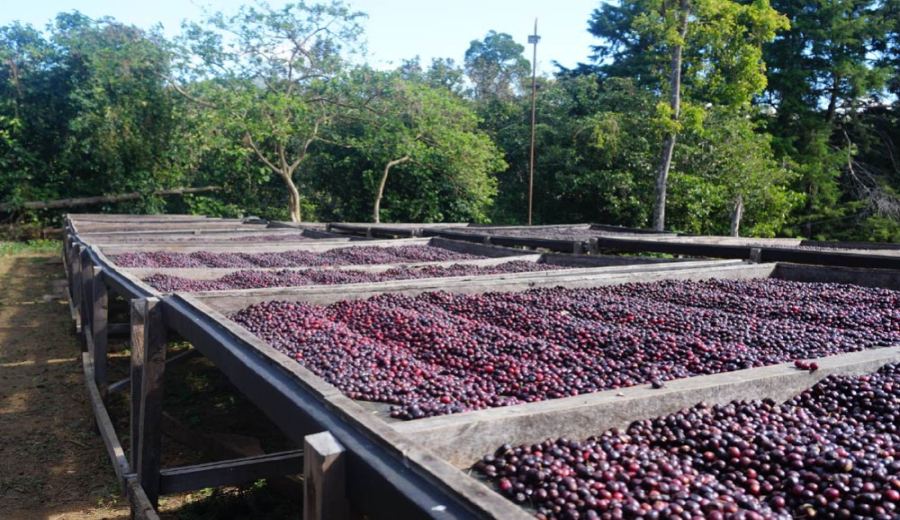
Introduction:Yirgacheffe is the most representative specialty coffee region in Ethiopia, renowned for its bright, floral, and fruity flavor profile. This article delves into the background of the Yirgacheffe region, the differences between washed and natural processing methods, and explores how medium-to-light roasting preserves its distinctive citrus and floral notes. With practical three-stage pour over techniques and extraction parameters, it provides a comprehensive guide to appreciating and brewing this classic coffee.
Yirgacheffe is a small town in the northwestern part of Ethiopia’s Sidamo region and is considered a flavor holy grail among global specialty coffee enthusiasts. The coffee produced here is celebrated for its vibrant citrus acidity, delicate floral aromas, and refreshing finish, winning the hearts of consumers worldwide. This article will fully dissect the charm of Yirgacheffe, covering everything from regional environment, coffee farming practices, processing method differences, roasting strategies, to hands-on pour over extraction.
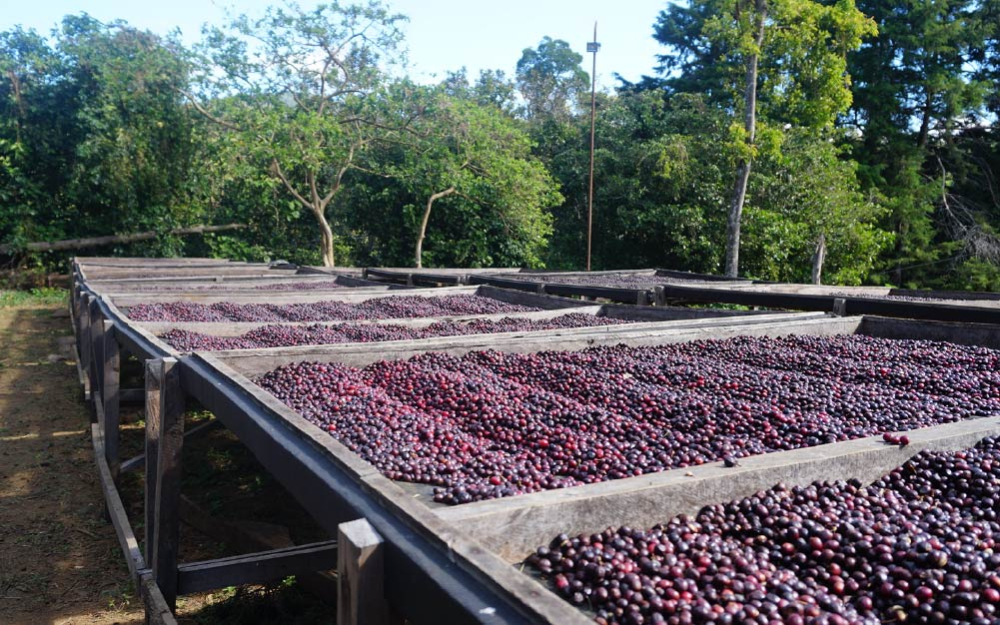
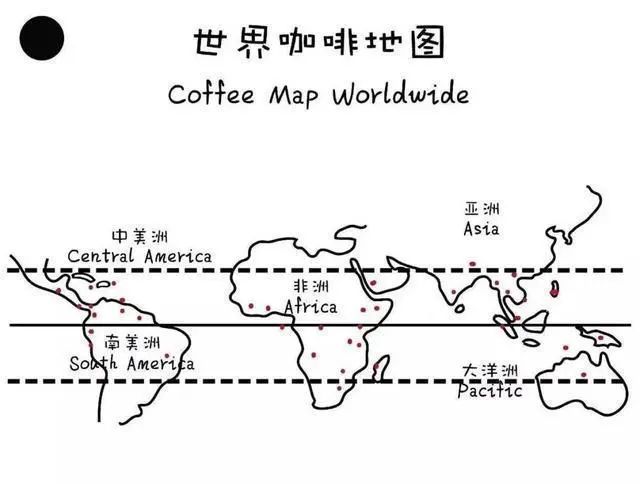
Ethiopia is regarded as the birthplace of coffee. Long before other regions had any contact with coffee, the local Oromo people had already begun cultivating and enjoying coffee cherries. The country’s coffee-growing areas are mainly concentrated in the west and south, with over 90% of coffee coming from small-scale family farms. Around 1.2 million smallholder farmers in Ethiopia rely on coffee for their livelihoods. Most of this coffee is processed centrally by cooperatives or processing stations and then sold under the name of these processing facilities, with Yirgacheffe being one of the representative regions of this system.
Located at an altitude of 1,700 to 2,100 meters, Yirgacheffe enjoys a cool, humid climate with year-round fog, providing an ideal environment for coffee trees. Originally part of the Sidamo region, it eventually became an independent, dedicated region due to its outstanding flavor profile. Local smallholders often practice garden-style coffee farming, intercropping coffee trees with other crops on family land. This approach helps maintain biodiversity but also presents certain challenges for harvesting and subsequent processing.
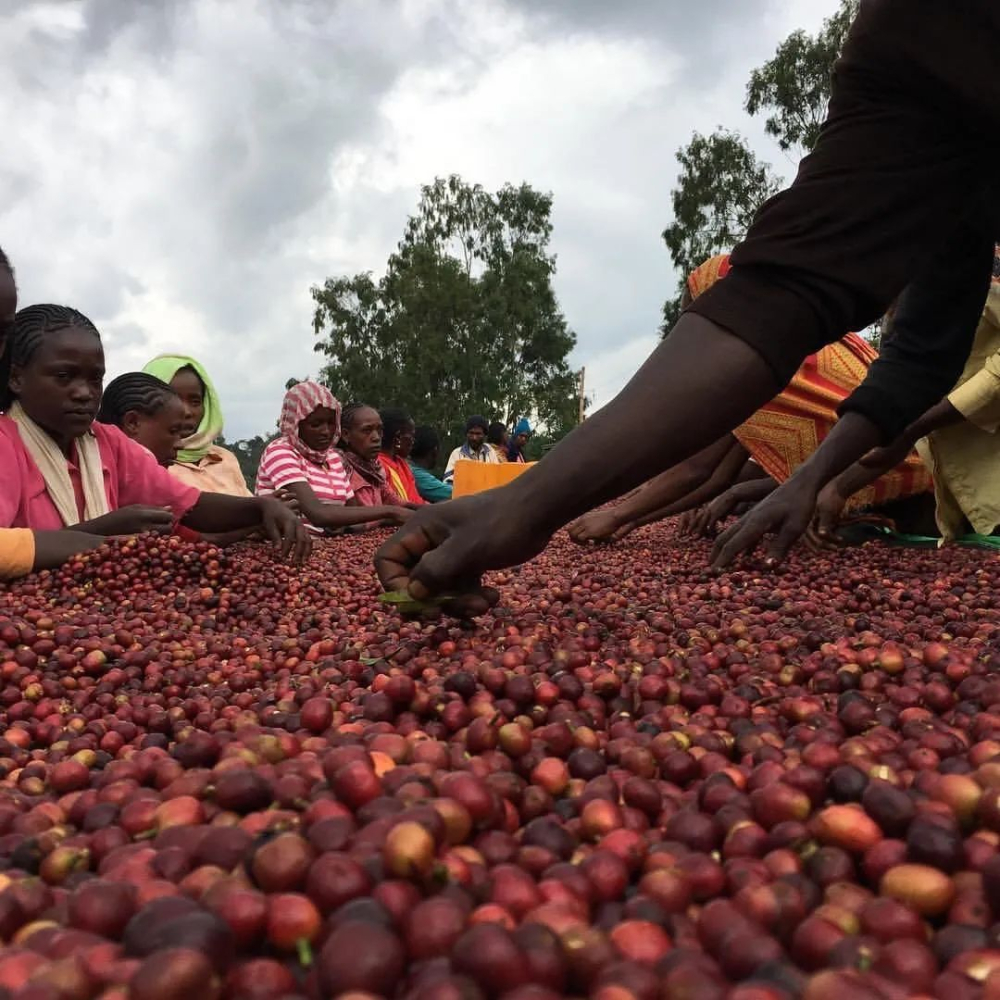
Ethiopia is home to numerous native coffee varieties, collectively referred to as “Ethiopia Heirloom.” Due to efforts to protect wild varieties, the country does not strictly classify coffee varieties. Instead, multiple types are interplanted and harvested together. As a result, Ethiopian coffee beans often feature varied sizes and shapes, which is also part of their unique charm.
In terms of processing methods, washed and natural are the two most common techniques in Yirgacheffe, both having a significant impact on the final flavor. In 1972, the Ethiopian government introduced washed coffee technology from Central and South America, significantly raising processing standards. The washed method relies on a stable water source and processing facilities. It involves fermentation, washing, and repeated rinsing to remove pulp and impurities, resulting in a lower defect rate and a cleaner, brighter flavor.
The washed process gives Yirgacheffe distinct citrus notes and white floral tones, with a fine and layered acidity. In contrast, the natural method, while more traditional, has seen significant improvements in modern techniques. Through stricter sorting and even drying processes, it can bring out richer tropical fruit and fermentation aromas. The popular Guji Dingding cooperative coffee is a classic example of washed Yirgacheffe, while Red Cherry Coffee represents the refined natural process, showcasing intense berry and honey flavors.
In roasting strategy, Yirgacheffe is best suited to medium-to-light roasting to preserve its celebrated acidity and fruity, floral aromas. Washed Guji Dingding cooperative coffee is typically roasted lightly to enhance citrus and berry notes, while natural Red Cherry Coffee is often medium-to-light roasted to bring out rich berry and honey sweetness. A high-quality cup of Yirgacheffe can exhibit clear fruit acidity, delicate floral notes, and a long-lasting finish in cupping.
Cupping records show that the dry aroma of washed Guji Dingding cooperative coffee features passionfruit, citrus, and berry acidity. Upon tasting, the citrus acidity is prominent, accompanied by berry sweetness and almond notes, with a honeyed finish. Meanwhile, the natural Red Cherry displays intense berry sweetness and acidity, with prominent tropical fruit fermentation character and a soft, honey and black tea-like finish.
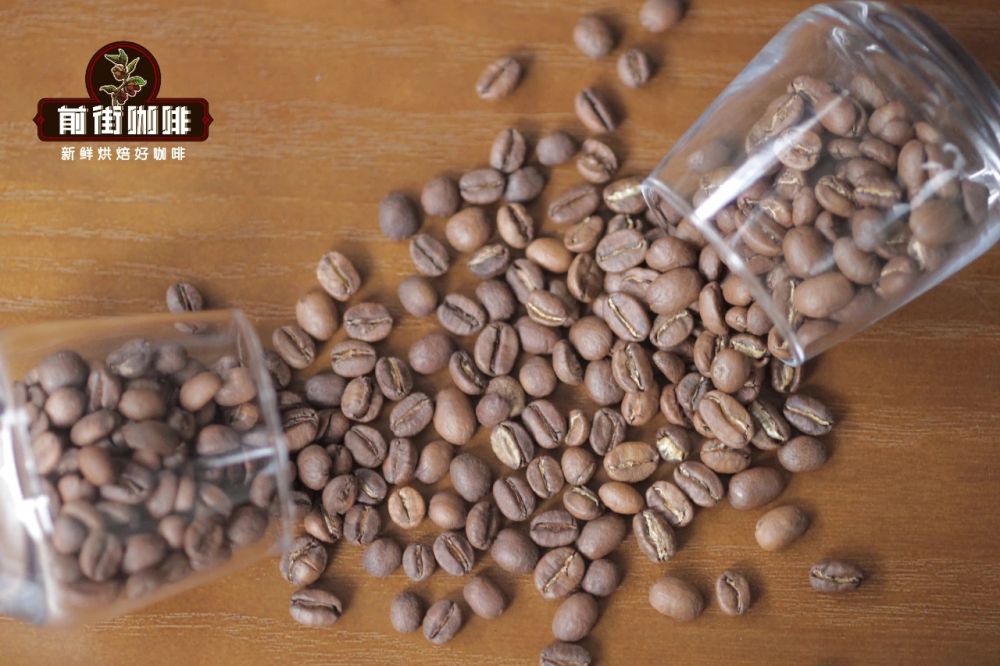
For pour over enthusiasts, the key to brewing Yirgacheffe lies in water temperature, grind size, and pouring technique. It is recommended to use hot water at 92–93°C, paired with a medium-fine grind (approximately 78% through a #20 sieve) to fully release its aroma and acidity. An overly coarse grind may lead to under-extraction and a thin flavor, while an overly fine grind could cause over-extraction and bitterness.
It is recommended to use a V60 filter cone for a three-stage pour over. Its spiral ridges help with gas release and aromatic expression. The general coffee-to-water ratio is 1:15 to 1:16, which can be adjusted based on personal taste: prefer a stronger brew? Choose 1:15. Looking for more floral and sweet notes? Opt for 1:16. The specific steps are as follows:
1. Start by pouring double the coffee dose (e.g., 30g water for 15g coffee) for a 30-second bloom;
2. Then, pour water in small streams in a circular motion from the inside out up to 125g for the first pour;
3. Once the water level drops to about half the filter cone, pour again up to 225g until dripping is complete, with a total brew time of around 2 minutes.
Master these tips, and you can also brew a cup of Yirgacheffe with vibrant flavors and balanced acidity and sweetness at home, experiencing the unique charm of Ethiopian coffee.
The above content is compiled by CoffeeHunters, a coffee news website.


