







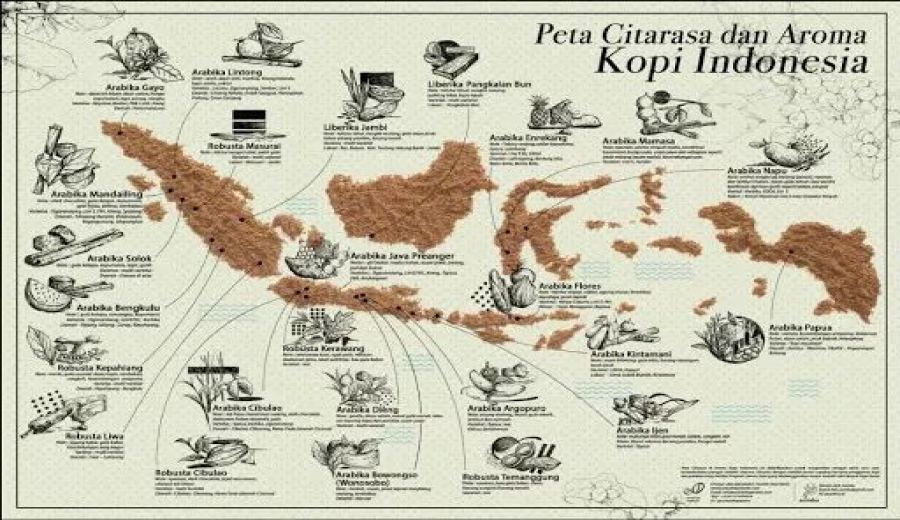
Introduction:As a globally significant coffee-producing country, Indonesia’s diverse range of coffee varieties often confuses many. This article delves into the main coffee varieties in Indonesia, including the historic Typica, the disease-resistant Robusta, and the localized varieties Catimor and Jember, explaining their flavor profiles and major growing regions. It also provides practical information to help coffee enthusiasts understand the diversity of Indonesian coffee and the stories behind it.
Indonesia plays a pivotal role in the global coffee supply chain, yet due to its long and complex cultivation history, local coffee varieties exhibit a high degree of hybridization. This often puzzles many coffee lovers when selecting or tasting. This article will introduce in detail the main coffee varieties in Indonesia, including Typica originating from the 17th century, Robusta widely planted for its disease resistance, and later extensively cultivated varieties such as Catimor and Jember, enabling readers to more comprehensively grasp the characteristics of Indonesian coffee varieties and their corresponding growing regions.
Typica can be considered one of the oldest Arabica varieties in Indonesia, dating back to the late 17th century when Dutch colonists introduced it from India to Java Island, and it gradually expanded to Sumatra. Due to its long adaptation to the region’s unique climate and soil, Sumatran Typica has developed a distinct flavor profile characterized by low acidity, high sweetness, and herbal and earthy aromas. Notably, locals usually do not directly refer to it as "Sumatran Typica," but rather use regional names such as Bergendal, Sidikalang, or Rambung, many of which are natural variants of Typica and form an important foundation of the traditional Mandheling flavor.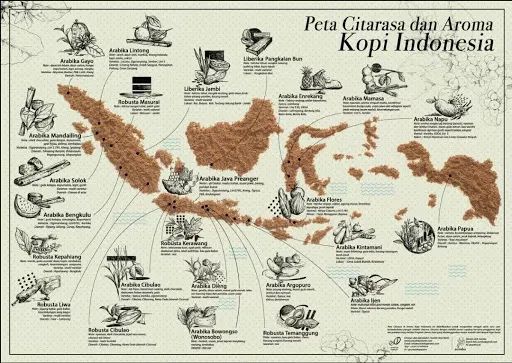
However, the major leaf rust epidemic of 1877 almost destroyed most of Indonesia’s Typica plantations. To sustain the coffee industry, authorities began introducing more disease-resistant varieties. Robusta was introduced from Africa at this time, and with its high resistance to diseases and relatively stable yield, it quickly became one of the dominant varieties in Indonesian coffee-growing regions. In addition to being suitable for low-altitude cultivation, Robusta’s bold flavor and high caffeine content have made it popular in instant coffee and espresso blends, despite its distinctly different flavor profile compared to Arabica.
Another widely cultivated variety in Indonesia is Catimor, which originated in 1959 in East Timor. It was developed by Portuguese breeders who crossed Brazilian Caturra (a Bourbon mutation) with the Timor variety, which has Robusta lineage. Catimor not only boasts extremely high disease resistance, but also yields about three times that of Typica, making it the preferred choice for many smallholder farmers. Interestingly, in the 1980s, seeds introduced by the Indonesian government from East Timor accidentally included Catimor varieties. These seeds later took root in Aceh in northern Sumatra and gradually became known locally as Ateng, specifically referring to varieties from central Aceh.
Thanks to its outstanding disease resistance and high yield potential, Ateng gradually gained favor among coffee farmers and spread from Aceh to areas around Lake Toba. Although early Catimor varieties had stronger, even harsher flavors, years of local adaptation and selection have resulted in Ateng grown in Aceh today offering a more balanced taste, making it one of the key foundational varieties for premium Indonesian products like Golden Mandheling.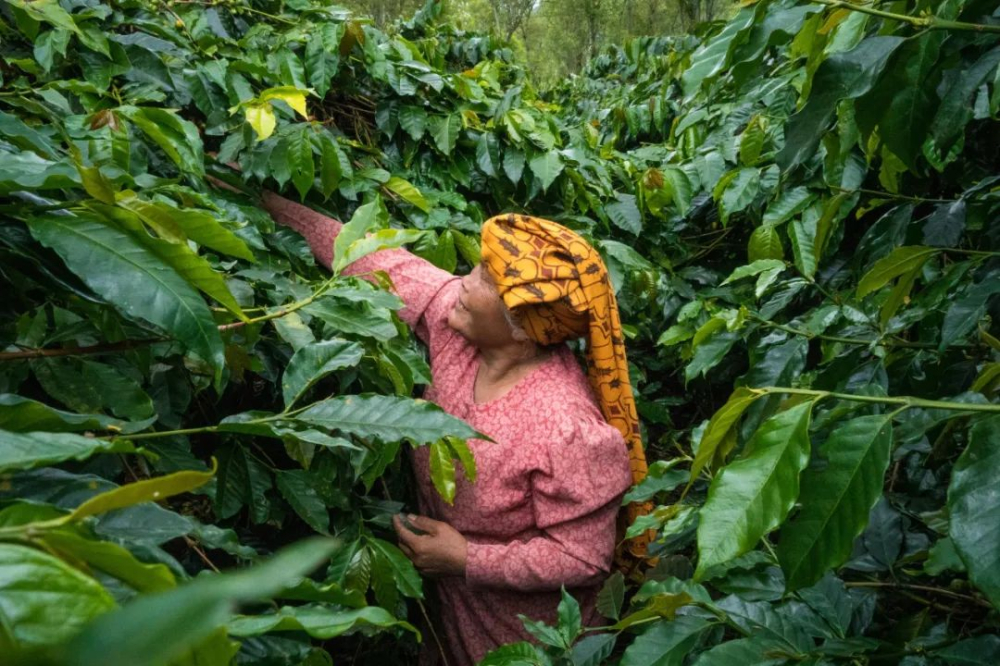
Jember is the local name in Indonesia for the Indian S795 variety, which was first introduced by the Jampit Coffee Research Center in East Java and promoted to local farmers for cultivation. The S795 tree originates from S288, which itself was a hybrid developed in India in 1946. Its background is complex—it initially attempted to combine Typica and Liberica varieties, but issues such as earthy flavors arose during the hybridization process. Later, through multiple crosses with Typica and Kent varieties, S795 was eventually formed. This variety’s beans have a distinctive bluish-green color, not only offering good disease resistance but also exhibiting a certain level of flavor expression, particularly suited to Indonesia’s hot and humid growing conditions.
Currently on Java Island, Jember (i.e., S795) remains one of the main planting varieties for many small farms. Its flavor profile typically features soft sweetness and fruity notes, making it suitable for consumers who prefer moderate body and refreshing characteristics. Some finely processed Jember beans, such as those from the West Java’s Aimanie Estate processed via honey method, can even showcase tropical fruit flavors like mango, red wine, peach, and jackfruit, providing a taste experience distinctly different from traditional Indonesian coffee.
In summary, the diversity of Indonesian coffee varieties stems from the combined influences of historical efforts to combat diseases, the smallholder farming economy, and the region’s unique geographical environment. From Mandheling in North Sumatra and traditional varieties on Java Island to Toraja in Sulawesi, each region has its representative varieties and processing styles. Understanding the historical background and characteristics of these varieties not only helps consumers make choices that better suit their tastes, but also allows for a deeper appreciation of the cultural and technical heritage behind Indonesian coffee.
The above content is compiled by CoffeeHunters, a coffee news website.


