







Introduction:Blue Mountain coffee has long been hailed as the pinnacle of the coffee world, not only because of its rare and precious origin and high price, but also due to the romantic symbolism of love associated with it, making it widely beloved. However, the market is flooded with various imitations, and genuine Jamaican Blue Mountain No. 1 coffee is actually extremely scarce. This article delves into the history and flavor profile of Blue Mountain coffee, and explains how to identify authentic products through official certification and packaging details. It also provides professional roasting recommendations and pour over parameters to help you fully experience the richness and balance of Blue Mountain coffee.
As one of the first premium specialty coffees to enter the Chinese market, Blue Mountain coffee has become many people’s first impression of high-end coffee, thanks to its high price and romantic connotation. However, many consumers often only know the name but not the true nature of Blue Mountain. What exactly qualifies as real Blue Mountain coffee? And why has Japan long monopolized the market? Now let’s comprehensively analyze this legendary coffee from Jamaica—from its history, origin, and flavor, to its traditional methods of purchase.
The reason Blue Mountain coffee is so precious lies in its extremely unique growing environment, limited exclusively to regions of theJamaican Blue Mountains at elevations above666 meters. This area boasts a cool climate with significant day-to-night temperature variations, along with fertile volcanic soil, all of which create a unique coffee flavor. However, due to the limited suitable planting areas, production has always been scarce. Coupled with the fact that Japanese companies historically held long-term control over most purchasing rights, this has made its global circulation even more limited, keeping prices consistently high.
In the early days, another major reason for the high price of Blue Mountain coffee, aside from its scarcity, wasthe agreement signed between Japan and Jamaica in 1972, which granted Japan priority purchasing rights and partial ownership of certain estates—around 90% of Blue Mountain coffee was sold to the Japanese market. It wasn’t until 2008 that the Jamaican government terminated Japan’s priority purchasing system, gradually opening up Blue Mountain coffee to the global market and allowing more coffee enthusiasts to taste this classic brew.
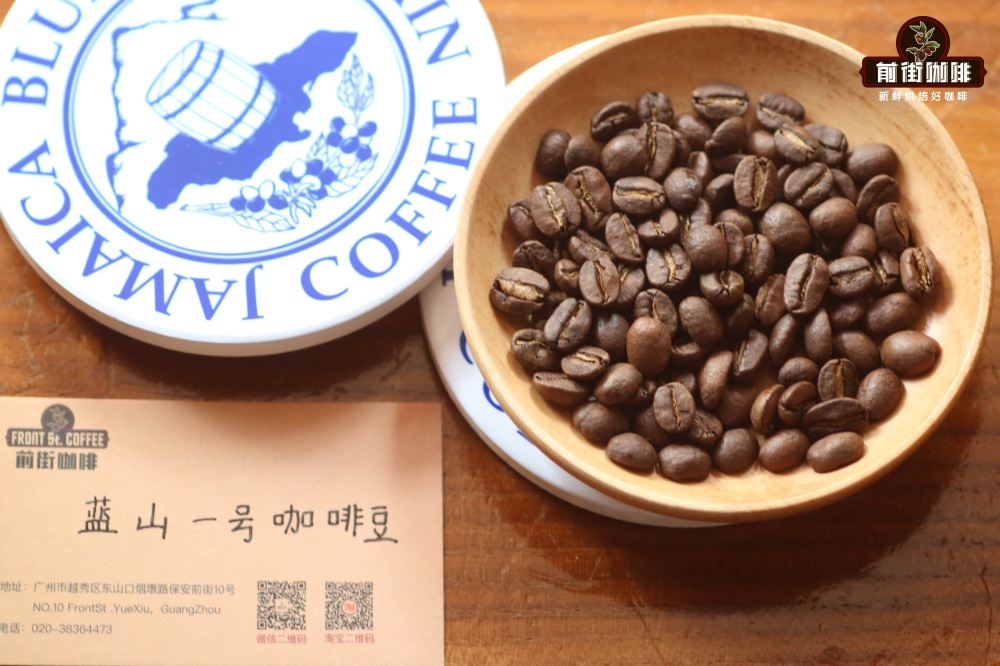
But how can you confirm that what you’ve bought is authentic Blue Mountain No. 1? First, **real Blue Mountain green coffee beans are transported in wooden barrels**—a practice unique to Jamaica and found nowhere else in the world. Additionally, each exported batch of Blue Mountain coffee comes with an **official certification issued by the Jamaican government’s Coffee Industry Board**, which serves as a key identifier of authenticity. Take the Clifton Estate as an example: this estate is not only one of the oldest coffee-growing regions in the Blue Mountains, having started producing coffee around1750, but it is also **the world’s only Blue Mountain coffee estate certified by the Rainforest Alliance**. Its wooden barrels are also stamped with the famous green frog logo.
Many wonder why the Clifton Estate has become representative of Blue Mountain coffee. Aside from its long history, its geographical location is also highly advantageous. The estate’s coffee-growing areas are located atan elevation of 1310 meters—well above the basic standard for Blue Mountain coffee—allowing the beans to receive more abundant sunlight and a mild misty environment during growth. Coupled with mountain shade and mineral-rich soil, these conditions produce a more delicate and complex flavor profile.
The enduring popularity and deep appreciation among coffee lovers for Blue Mountain coffee mainly stem from itsexceptionally balanced and rich flavor profile. It features gentle acidity, pronounced sweetness, and natural nutty and chocolatey aftertastes, with an overall rounded flavor that retains layers of complexity. To fully highlight these characteristics, many professional roasters opt for a **medium-dark roast level**, achieving the optimal balance between aroma and taste.
When you purchase authentic Blue Mountain coffee beans, you will typically receive themwithin five days after roasting. But remember, freshly roasted coffee beans still contain a large amount of carbon dioxide inside, and brewing them immediately can affect extraction uniformity and flavor expression. It is recommended to let unopened coffee beans sit in a **cool, dry place for 5 to 6 days**, allowing some of the carbon dioxide to escape through the one-way degassing valve in the packaging, before proceeding with pour over to truly savor the richness and finesse of Blue Mountain coffee.
For specific pour over parameters for Blue Mountain coffee, it is recommended to usewater at 88°C, a coffee-to-water ratio of 1:15, and about 15 grams of coffee, grinding the beans to a fineness where70% to 75% of particles pass through a #20 sieve—equivalent to a medium-fine grind—which can fully bring out the aroma and complexity of Blue Mountain coffee. For brewing technique, it’s recommended to use a cone-shaped filter dripper with paper filters and employ a three-pour method: the first pour involves adding30 grams of water for blooming, for about 30 seconds; the second pour adds water up to about125 grams, and when the coffee liquid drops to half, proceed to the third pour up to225 grams, with the total extraction time controlled at around2 minutes and 10 seconds. This will yield a cup of Blue Mountain pour over coffee with balanced flavor and distinct layers.
The above content is compiled by CoffeeHunters, a coffee news website.


