







Introduction:Want to understand the differences between the two renowned coffee beans, Huacai (Hua Kui) and Geisha? This article provides an in-depth analysis of Huacai from Ethiopia and Geisha from Panama—from their origins and variety characteristics to pour over brewing parameters and actual flavor profiles—to help you grasp the unique traits of each and find the coffee and brewing method that suits you best.
In the world of specialty coffee, both Huacai and Geisha are highly representative and immensely popular coffee beans. They not only boast rich floral aromas and bright fruit acidity, but also showcase distinctly different personalities in their flavor profiles due to their unique origins and processing methods. This article will start with the Ethiopian heritage of Huacai, compare it with the variety characteristics of Panamanian Geisha, and detail their recommended pour over brewing conditions and actual tasting experiences, guiding readers to deeply appreciate the charm of these two classic beans.
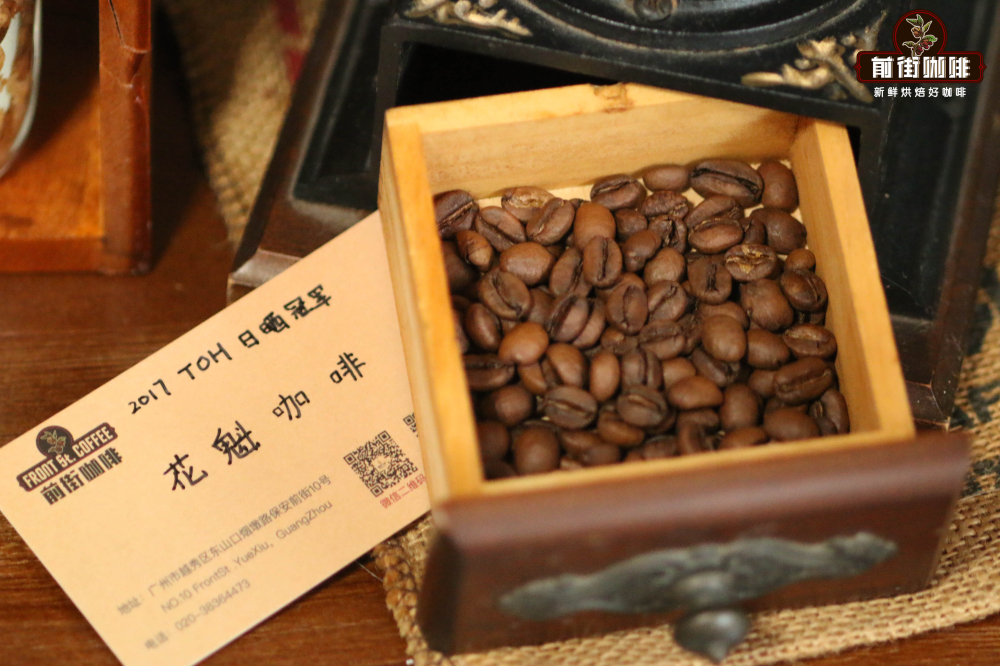
First up is the Huacai coffee bean from Ethiopia, officially named Ethiopia Guji Hambela Buku Abel. When this bean was initially introduced to the domestic market by a green bean supplier, it was given the name "Huacai" with the aim of competing with the well-known Panamanian Geisha. A certain coffee brand used a light roast on this bean, and when brewed using the pour over method, it highlights delicate pink floral notes while delivering a clear juice-like sensation of tropical fruits such as peach, passion fruit, and mango. With a balanced acidity and sweetness and distinct layers, it has been favored by coffee lovers who enjoy a fresh flavor profile.
The origin of Huacai coffee, Hambella, is geographically located between the Sidamo and Guji regions, administratively part of the Guji zone. It faces the famous Yirgacheffe Kochere across a mountain range with an altitude of up to 3,200 meters, making it one of the highest-altitude coffee-growing sub-regions in Ethiopia. The climate here is cool with significant day-night temperature variations, allowing the coffee cherries to accumulate richer flavor compounds during their long maturation period. Although Hambella belongs to the Guji region, its geographical and microclimatic conditions share many similarities with Sidamo, making it particularly suitable for cultivating high-quality Arabica coffee.
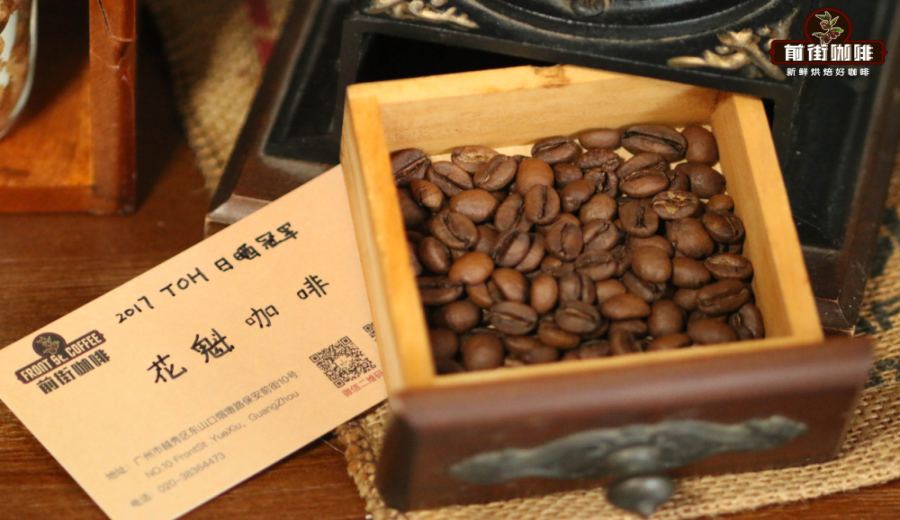
Huacai made its first appearance in the 2017 Ethiopian National Taste of Harvest Competition (TOH), where it was submitted by the DW company and ultimately won the championship, instantly gaining widespread fame. This bean comes from the Buku Abel washing station in the Guji region and is a typical natural (sun-dried) processed coffee. The washing station purchases ripe coffee cherries from surrounding farms and centrally processes and sells them.
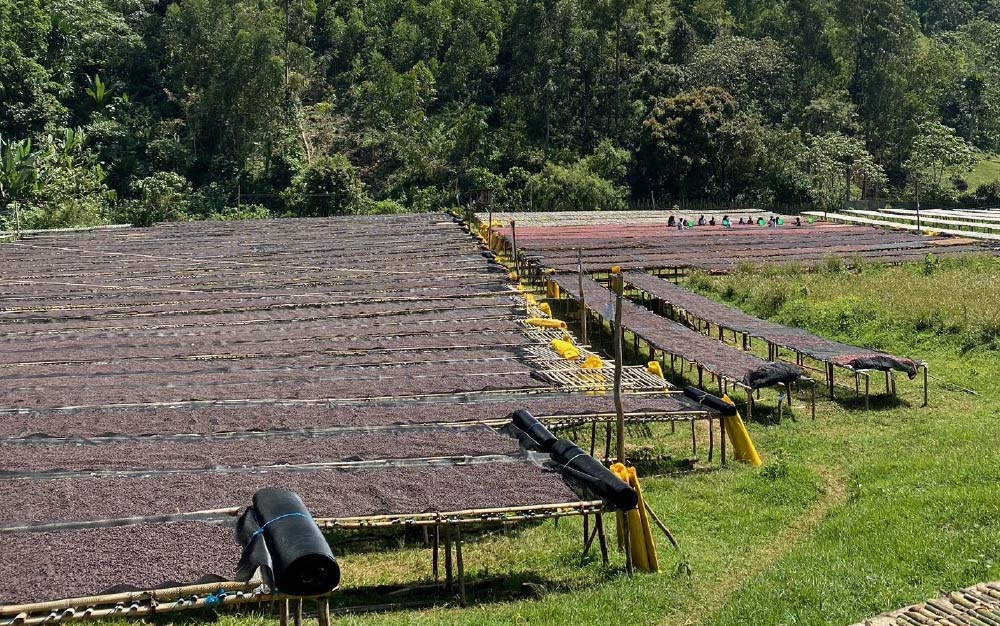
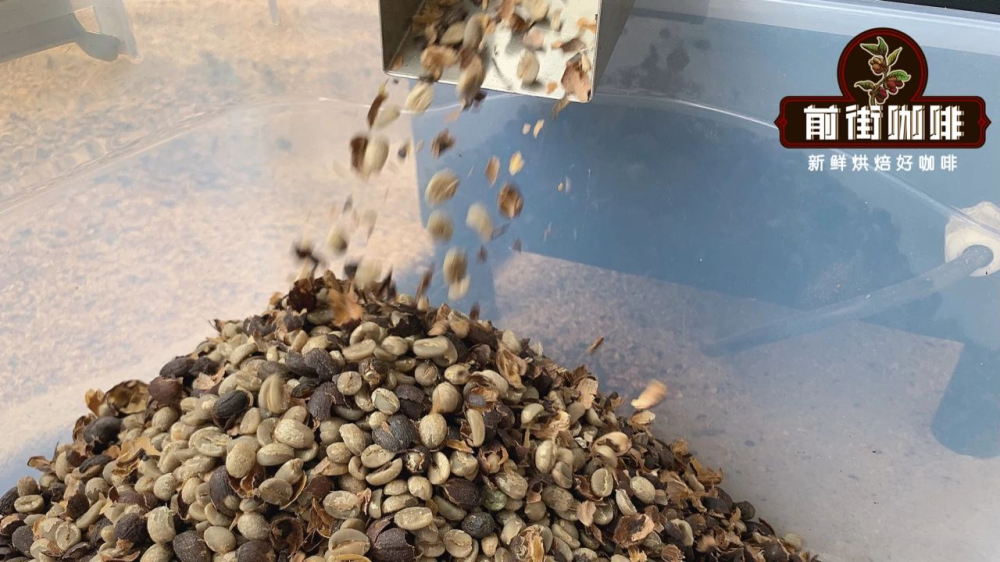
Speaking of the natural processing method, it is the oldest traditional technique in Ethiopia. The main harvest season runs from December to January each year, and the Buku washing station selects only fully red and ripe cherries with a sugar content of 30 or higher. These cherries are evenly spread out on African raised beds for drying. Due to the large day-night temperature differences in the area, they partially shield the cherries from sunlight during midday to avoid over-fermentation, and cover them with plastic sheets at night to protect against rain. The entire drying process takes about 18 days until the moisture content of the green beans drops to around 13%, after which the beans are hulled.
Compared to other processing methods, the natural process extends the fermentation period, enabling more complex chemical reactions between the microbes and sugars in the fruit pulp—especially the production of more esters and other volatile aromatic compounds. During subsequent roasting, these compounds transform into enchanting floral and tropical fruit aromas through Maillard reactions and caramelization, while also imparting a rounder sweetness and fuller body to the coffee.
So, what exactly is the difference between Huacai and Geisha? Geisha is a coffee variety originating from the Gesha Mountains in Ethiopia. It was first introduced to Kenya in the 1930s, and subsequently spread to Uganda, Tanzania, and Costa Rica, before being brought to Panama’s Hacienda La Esmeralda in the 1970s. This variety is extremely particular about its environment and requires cultivation in high-altitude, foggy, shaded areas with fertile soil to express its distinctive delicate floral and fruity aromas and tea-like aftertaste.
In contrast, Huacai is an Ethiopian Heirloom, a general term encompassing many local varieties. Due to Ethiopia’s extremely high coffee genetic diversity and limited classification technology, many varieties have not been individually named and are thus collectively referred to as Heirloom. Though numerous in variety, most possess strong floral aromas and the potential for bright fruit acidity. Especially under suitable processing methods and origin environments, they can exhibit remarkably rich flavor layers.
In cupping tests conducted by a certain brand, it was found that Panamanian Geisha, regardless of the processing method used, typically exhibits high-toned white floral notes, citrus acidity, and a tea-like aftertaste, resulting in a refreshing and delicate flavor profile. On the other hand, Ethiopian Huacai, due to its natural processing, not only retains the floral and fruity aromas of the Heirloom variety but also gains additional sweetness from fermentation along with intense juice-like flavors such as dried mango, jackfruit, and passion fruit, along with a notable berry tone, and a tea-like, mellow aftertaste.
For these two beans, a certain brand recommends using a medium-light roast to preserve the delicate texture and vibrant acidity brought by their high altitudes. For pour over brewing, it suggests using a V60 dripper, with water temperature controlled at 91–92°C, a coffee dosage of 15g, a brew ratio of 1:15, and a grind size of approximately 80% passing through a #20 sieve—roughly similar to the coarseness of fine sugar. Use a three-stage pouring method: the first stage involves blooming with 30g of water for 30 seconds, followed by the second stage pouring 95g, then adding the final 100g once the coffee bed has settled. Maintain a small water flow and even circular stirring throughout the entire process to avoid over-extraction or uneven extraction.
With such parameter settings, the unique flavors of both beans can be fully expressed: Panamanian Geisha showcases bright citrus and bergamot acidity at higher temperatures, a creamy smooth mouthfeel in the middle, and a honey and green tea sweetness in the aftertaste; whereas Ethiopian Huacai begins with intense fruit aromas, offering a blend of various tropical fruits upon entry, gradually revealing layers of peach and berries as the temperature drops, with a tea-like sweet aftertaste. Overall, it delivers a rich and balanced performance.
The above content is compiled by CoffeeHunters, a coffee news website.


