








Introduction:Brazilian coffee is known for its rich and balanced profile, and the Yellow Bourbon from Fazenda Rainha is a standout among classics. This article begins with the origin of the Yellow Bourbon variety, delves into the high-altitude cultivation and refined natural processing methods of Fazenda Rainha, and provides a complete pour over parameter guide for medium-dark roasts. This includes the selection of the KONO filter, grind adjustment, water temperature control, and a three-stage pouring rhythm—helping you precisely recreate this “Brazilian-style” cup.
When it comes to Brazil, many people first think of football, but for coffee enthusiasts and professionals, it is one of the world’s key origins for specialty coffee. Brazilian coffee is celebrated for its rich and balanced flavors, and the Yellow Bourbon from Fazenda Rainha is a highly representative specialty bean variety. This article will start with a trace of the variety, systematically introduce the growing background and processing methods of this coffee, and then cover pour over techniques under medium-dark roasting—to help you master the brewing secrets of an authentic Brazilian flavor.

Yellow Bourbon belongs to the Bourbon family, a variety that originated on the east coast of Africa on Bourbon Island (now Réunion Island) and was introduced by the French in the 18th century. In 1860, Brazil brought the round-seeded Bourbon back to the country, which later spread across Central and South America, becoming a major planting variety in many countries. Bourbon coffee cherries are shorter and rounder, with higher density—especially when grown at higher altitudes, they exhibit notable sweetness, bright acidity, and excellent flavor performance. Compared to Typica, Bourbon not only has stronger resistance to rust but also higher requirements for the growing environment, particularly needing appropriate shading to fully develop its flavor.
The color variation of Bourbon cherries is the basis for its naming, typically changing from green to red, yellow, or pink. The variety that turns yellow upon ripening is called Yellow Bourbon. This mutation, when grown at high altitudes, often features more refined and brighter flavor layers, and has even won top honors multiple times at Brazil’s Cup of Excellence (CoE). Fazenda Rainha is located in Brazil’s Mogiana region, focusing on cultivating and producing high-quality Yellow Bourbon coffee.
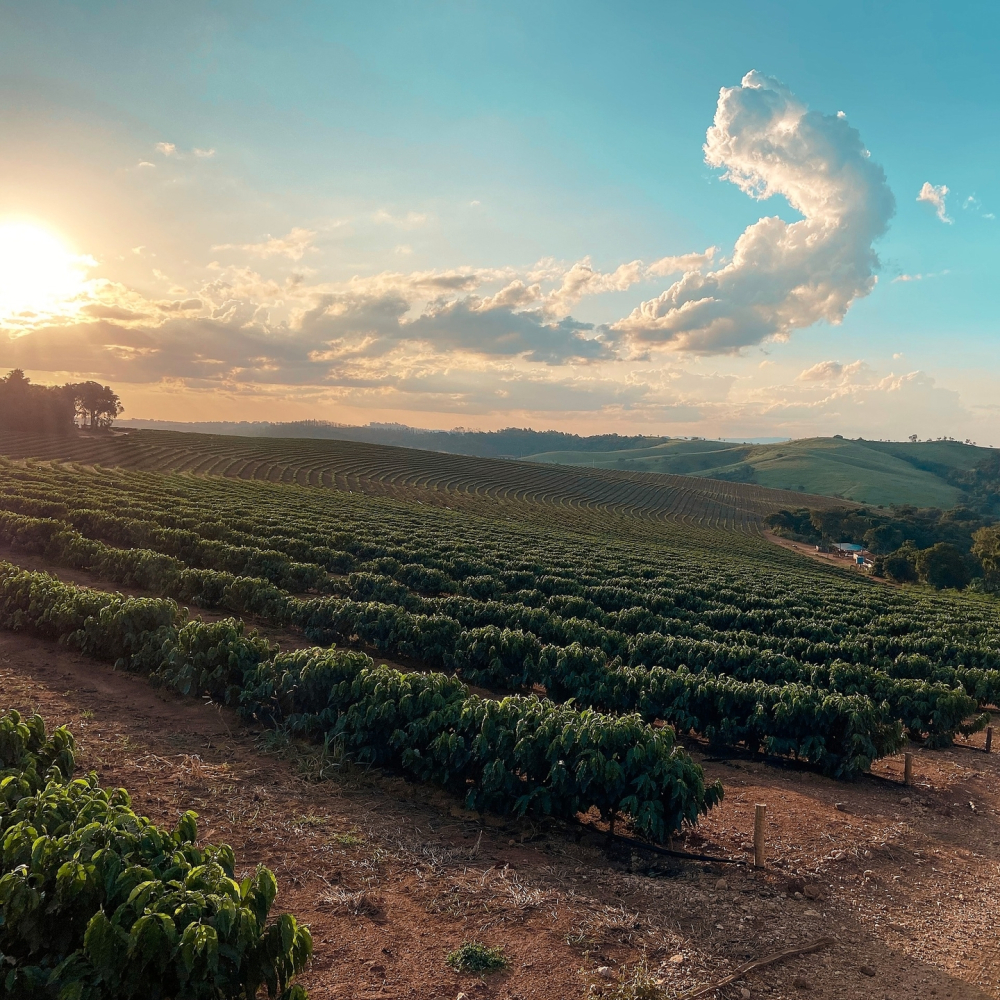
Unlike Brazil’s traditional large-scale flatland planting model, Fazenda Rainha is situated in a hilly area with higher altitude and superior climate conditions, resulting in Yellow Bourbon beans with rich mucilage layers and particularly prominent sweetness. In terms of processing, the farm has abandoned the rough practice of traditional concrete-floor sun drying, and instead adopts a more refined process: after harvest, the coffee cherries undergo floatation to remove unripe ones, then are spread on African raised beds for sun drying. They are regularly turned to ensure even drying, reduce the risk of earthy flavors and over-fermentation, thereby maintaining the purity of the coffee’s flavor.
To highlight the regional characteristics of Fazenda Rainha’s Yellow Bourbon, we opt for a medium-dark roast to emphasize its rich chocolate base. Cupping tests show that this coffee exhibits noticeable sweetness, so a three-stage pouring method is used during pour over to better present its multi-layered flavor structure.
It’s worth noting that coffee beans are usually at their best for consumption between the 4th and 7th day after roasting. If more than about a month and a half has passed, the aroma may gradually fade, and undesirable flavors such as woody notes may emerge. Therefore, we recommend choosing freshly roasted coffee beans to ensure the best flavor experience.
For pour over equipment, medium-dark roasted coffee typically shows a round and mellow mouthfeel. To fully showcase this characteristic, we recommend using a KONO filter, which has a slower flow rate. The upper part of the KONO is a smooth curved surface, while the lower part features about one-third guiding ribs. This design allows the filter paper to fit tightly against the filter cup, slows down the upward airflow, encourages the hot water to penetrate downward, and creates an extraction effect similar to a siphon—helping to more fully release the aromatic compounds in the coffee grounds.
Regarding grind size, since medium-dark roasted coffee beans are relatively loose in texture, grinding too finely can lead to over-extraction, resulting in woody or harsh bitter tastes. Therefore, we adjust the grind to a medium level, approximately equivalent to about 70% passing rate through a Chinese standard No. 20 sieve. This ensures sufficient extraction efficiency while avoiding over-extraction issues.
In terms of water temperature, while medium-light roasted coffee usually benefits from higher temperatures to enhance aroma, for medium-dark roasted Brazilian coffee, overly high temperatures can easily bring intense, burnt, or bitter flavors. Therefore, we control the water temperature at87~88℃—this range brings out rich layers without being overly harsh.
Suggested pour over parameters are as follows: use15 gramsof coffee grounds,with a 1:15 coffee-to-water ratio, aiming to extract about200mlcoffee liquid, suitable for 1 to 2 people. Use the KONO filter, maintain water temperature at87~88℃, and a medium grind (approximately 70% passing rate through a Chinese standard No. 20 sieve).
The specific brewing steps are as follows: Start with about twice the weight of the coffee grounds in hot water (about 30ml) for a 30-second bloom to awaken the coffee. Then, pour with a small stream in a circular motion from the inside out. When the water volume reaches125 grams, perform the first pour break. Once the coffee bed drops to the middle of the filter, continue pouring with the same fine stream until you reach225 grams, completing the full extraction. The entire process takes about2 minutes. This effectively controls the extraction rhythm, preventing over-extraction in the early stage or under-extraction in the later stage.
The final pour over coffee made from Fazenda Rainha’s Yellow Bourbon offers fresh aromas of lemon, nuts, and peanuts. On the palate, it presents rich flavors of nuts, dark chocolate, and caramel, with noticeable sweetness and a creamy-smooth mouthfeel. The overall flavor is rounded and layered, making it a highly representative classic Brazilian-style coffee.
The above content is compiled by CoffeeHunters, a coffee news website.


