







Introduction:Turkish coffee is renowned for its uniquely intense flavor and the traditional brewing method that retains coffee grounds, and it has even given rise to the mysterious culture of coffee ground divination. This article delves into the history of Turkish coffee, the detailed steps for brewing with a Cezve, and how to interpret future fortunes through the patterns at the bottom of the cup—allowing you to grasp both the drink and its culture in one go.
Turkish coffee is one of the oldest ways of drinking coffee in the world, not only famous for its strong flavor but also unique for being unfiltered, with the coffee grounds consumed along with the brew. This traditional coffee, originating from the Ottoman Empire, still retains an ancient sense of ritual and has evolved into a highly entertaining coffee ground divination culture. Below, we will take you through a comprehensive understanding of the principles behind brewing Turkish coffee, the authentic steps, and how to interpret the meanings behind the mysterious patterns at the bottom of the cup.
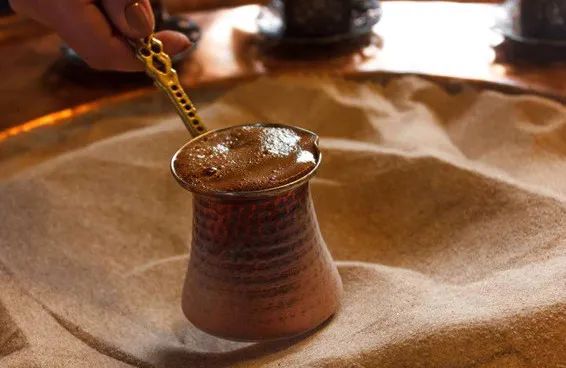
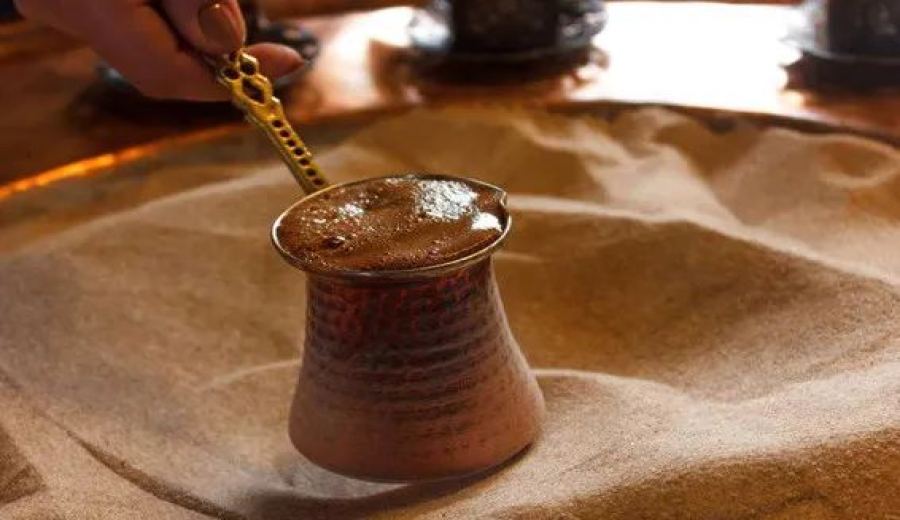
Walking the streets of Turkey, it’s common to see vendors heating copper coffee pots in hot sand. When the coffee begins to boil and is about to overflow, they quickly pour some of it into a cup, then return the pot to the heat source to continue boiling, repeating this action about three times to complete the process. This method of using hot sand for even heating is the most iconic brewing technique of Turkish coffee. This coffee is not exclusive to modern-day Turkey but is a classic beverage passed down from the Ottoman Empire. Initially, Arabs used similar Dallah pots to brew coffee that was almost like raw beans, and later Turks switched to the slender-handled Cezve pot, which has evolved into what it is today.
It is worth noting that Turkish coffee is not made using modern filter cones or paper filters, but rather by boiling extremely finely ground coffee powder with water and then pouring it directly into the cup to drink. The Cezve pots used are often handcrafted from copper, with wall thicknesses of about 1 to 1.5 millimeters, offering good thermal conductivity and durability. The pot is tall and slender with a single handle, designed for stable heating on a heat source.
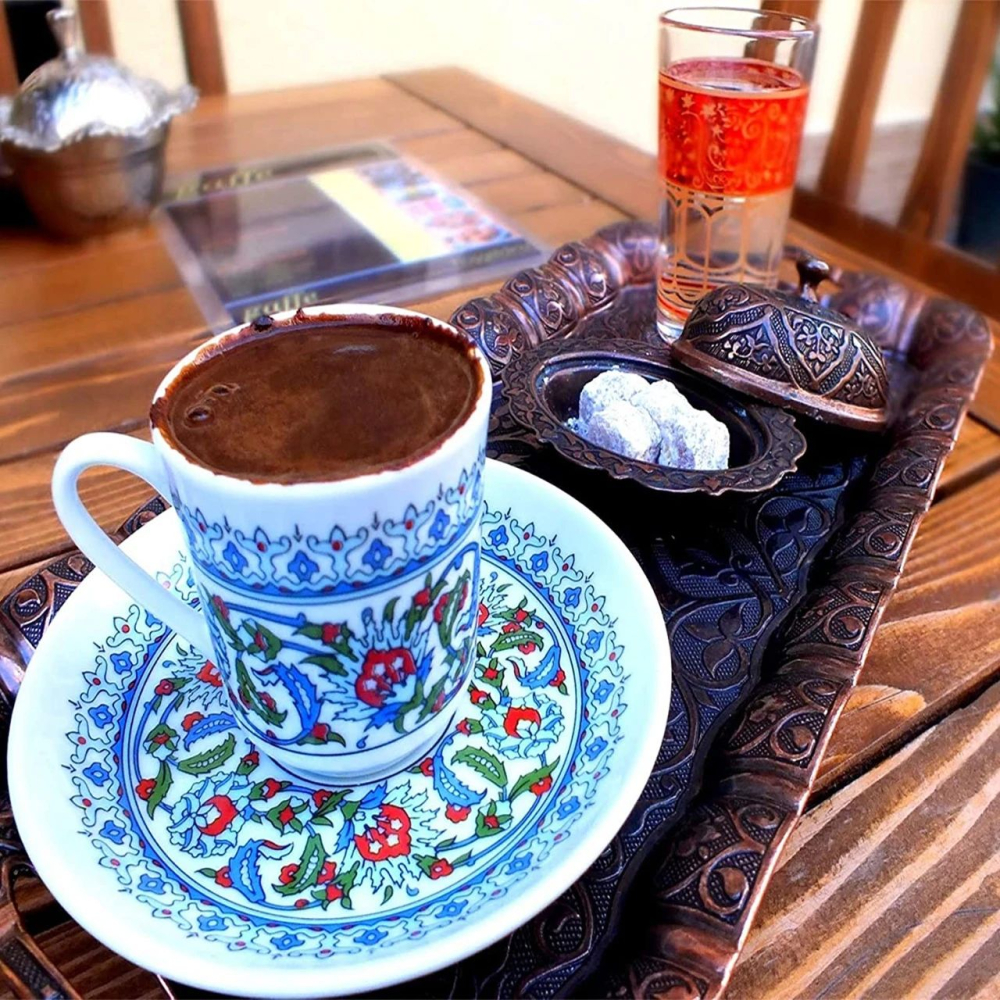
Traditionally, Brazilian beans are mostly used for Turkish coffee, which has led to mixed reviews about its flavor. However, nowadays more and more shops are beginning to use high-quality single-origin Arabica beans to enhance the overall flavor profile. Grind size is one of the key factors—the coffee grounds for Turkish coffee must be ground extremely fine, almost to the fineness of flour, even finer than that of regular espresso. This allows enough flavor and oils to be released in a short period of time. For heating, traditionally around 200°C hot sand is used, but modern households can also use gas or electric stoves instead. The basic recipe is 12 grams of coffee powder per cup, paired with 120 to 180 grams of cold water, adjusted according to cup size.
There are three common methods for brewing Turkish coffee. The most classic “three-boil method” involves placing the Cezve pot in hot sand to heat. When the coffee begins to bubble and is about to overflow, the heat source is removed to let the foam settle, then the pot is returned to heat. This is repeated about two times, and after the third boil, the coffee is immediately poured into cups. Another method is to first pour about one-third of the coffee into each cup, then continue boiling the remaining coffee before distributing it, ensuring each cup retains an even layer of foam. Regardless of the method, no filtration is used throughout the process, and the coffee grounds naturally settle at the bottom of the cup. It is recommended to sip slowly to avoid inhaling too much sediment at once.
Beyond its unique brewing method, the most enchanting aspect of Turkish coffee is arguably the coffee ground divination culture that follows. After drinking the coffee, a plate is placed over the cup opening, which is then gently inverted to let the coffee grounds naturally flow out and solidify. The fortune is then read based on the patterns formed at the bottom of the cup and along the rim of the plate. While this is an entertaining tradition, it also carries the Turkish people’s beautiful hopes for life.
Among the common patterns, the “full moon shape” is believed to represent extreme luck, suggesting that success is achievable with effort; the “half-moon shape” indicates that things will progress smoothly, possibly with unexpected gains; the “crescent shape” serves as a reminder that minor setbacks may occur and mindset adjustments are needed; while the “new moon shape” advises caution and a calm approach to challenges. Other shapes such as a “heart shape” symbolize the arrival of love, a “ring” may foretell an engagement or wedding, a “bird shape” represents good news on the way, an “eye” pattern warns to beware of jealousy or ill-intentioned people, a “rectangle” relates to wealth—with larger ones indicating better opportunities. Additionally, various forms such as letters, numbers, animals, and tubular shapes all have different interpretations, enriching the diversity and fun of divination.
The above content is compiled by CoffeeHunters, a coffee news website.


