







Introduction:Want to delve deeper into the unique charm of Yunnan coffee? This article takes you on a journey starting with two popular Starbucks Reserve beans, systematically analyzing the characteristics of Yunnan’s four major producing regions, the differences between key cultivated varieties such as Catimor and Typica, and the impact of processing methods like washed processing on flavor. Whether you’re a beginner or a seasoned coffee enthusiast, you’ll find practical guidance for bean selection and tasting.
In recent years, Yunnan coffee has gained increasing visibility in the specialty coffee scene. Not only have domestic brands established exclusive Arabica plantations in Baoshan, but international chains like Starbucks have also launched multiple single-origin Yunnan Reserve beans since 2017. Products like the newly released Pu’er Baoshan Blend and Qingkai Farm are the best proof of Yunnan coffee’s potential. This article will explore the regional advantages, four main producing areas, century-long cultivation history, common varieties, and key processing techniques of Yunnan coffee, starting from the flavor profiles of these two beans. It also includes detailed information on two single-origin Yunnan estate beans to help you fully grasp the essence of Yunnan coffee.
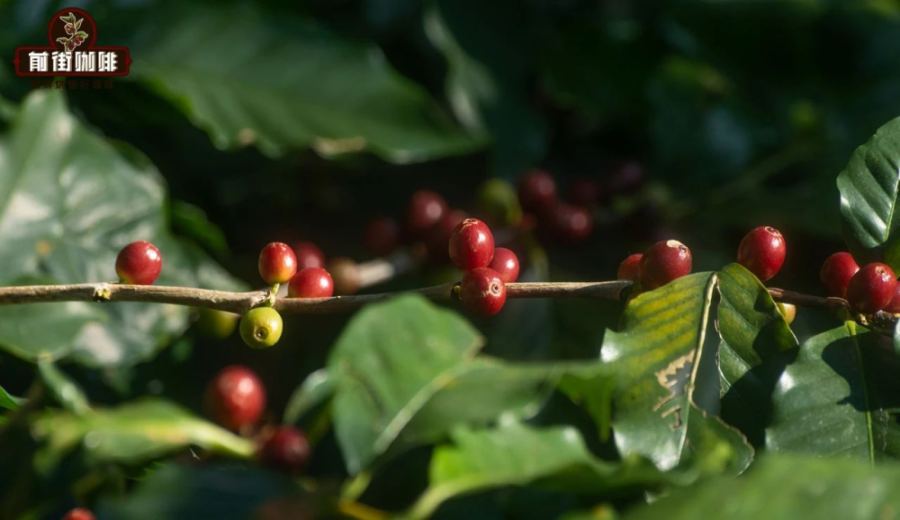
Take Starbucks’ ‘Qingkai Farm Reserve Coffee Beans’ as an example. These beans, produced at Qingkai Farm in Pu’er, undergo machine drying, effectively reducing the risk of mold caused by overlapping rainy and harvest seasons, ensuring quality stability during the sun-drying process. Its flavor profile is quite appealing, offering a silky chocolate-like richness with delicate notes of herbs like sage and thyme.
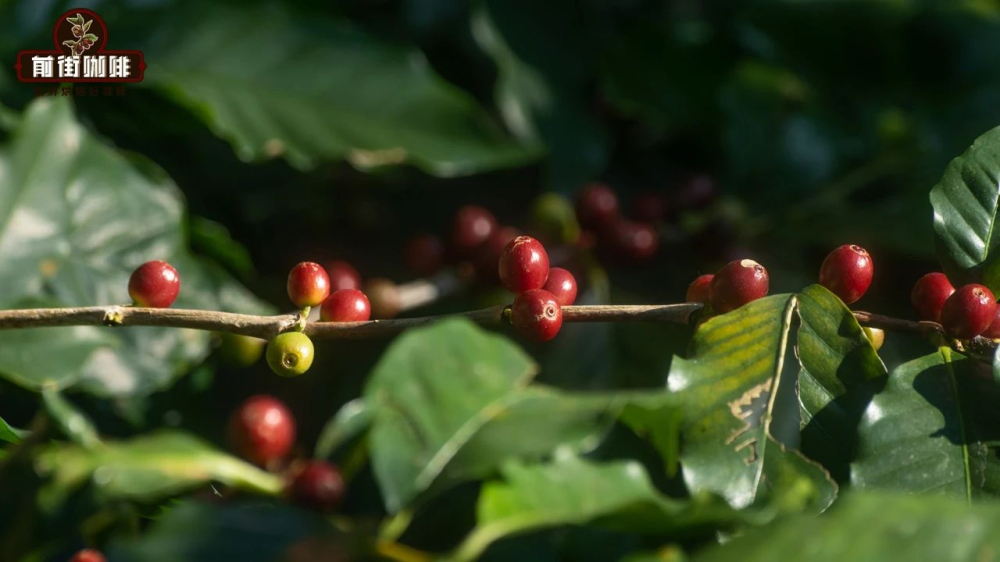
The other bean, ‘Pu’er Baoshan Blend Coffee Beans,’ is Starbucks’ first single-origin Yunnan Reserve blend tailored for the Chinese market. It combines beans from Baoshan Zuoyuan Coffee and the Jinping County Jinshan Coffee Cooperative in Pu’er. Though the two regions are nearly a thousand kilometers apart, both are processed using the washed method. This is also Starbucks’ first attempt at a ‘light and elegant roast curve’ for a Reserve coffee bean in its domestic market, using a light roast to highlight the beans’ subtle qualities. Its flavor blends the bright notes of sweet pepper with the fruity acidity and layered sweetness, delivering a syrupy mouthfeel and a long-lasting finish.
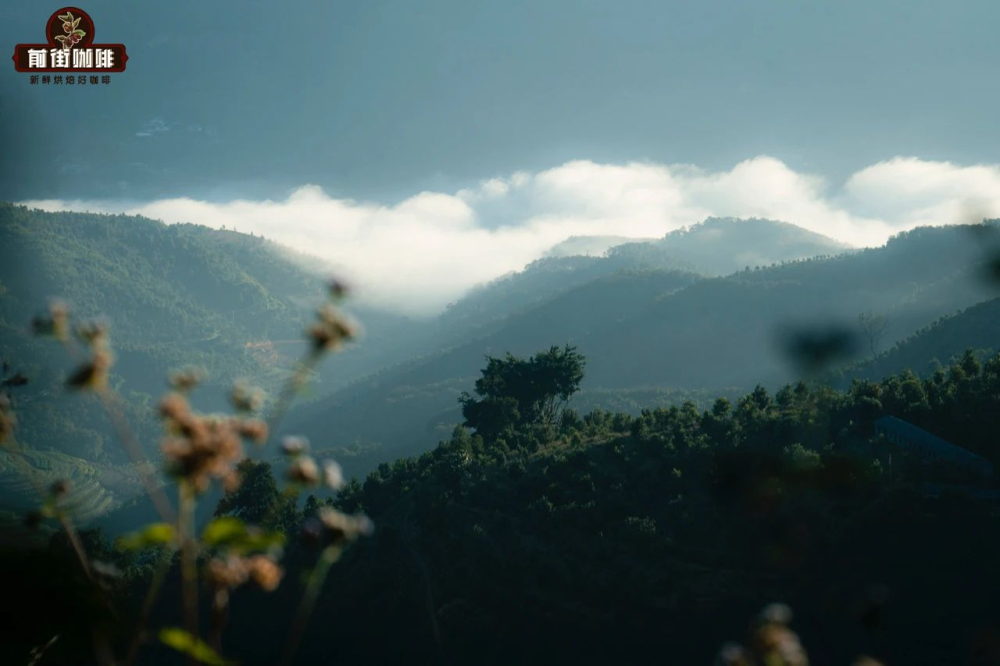
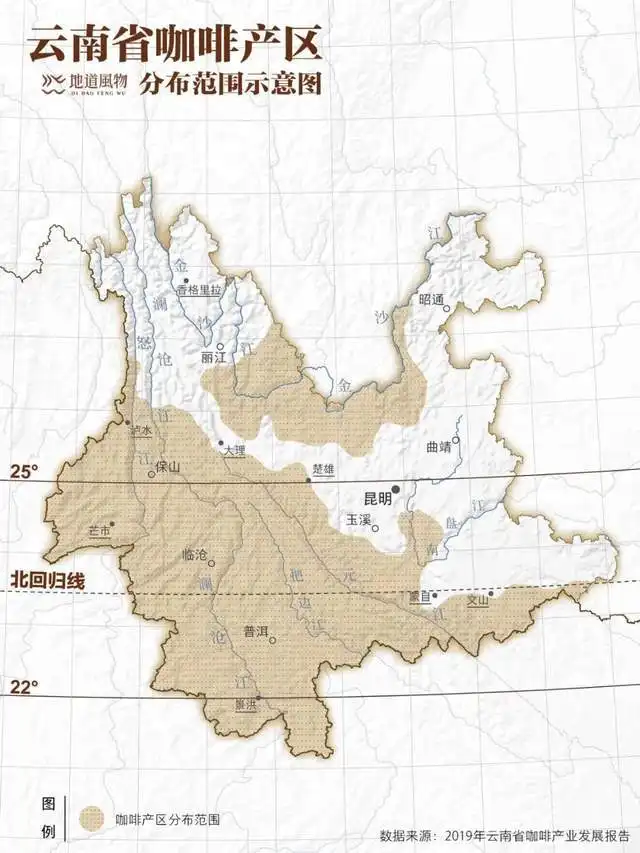
These two Starbucks Yunnan Reserve beans not only demonstrate the brand’s confidence in Yunnan coffee’s quality but also reflect the region’s exceptional growing environment. Located in southwestern China, Yunnan is crossed by the Tropic of Cancer in the south and is predominantly mountainous and plateau. The mid-altitude zone, ranging from 1,000 to 3,500 meters above sea level, accounts for about 90% of the province’s area. It features a typical subtropical highland monsoon climate with large diurnal temperature variations and abundant rainfall—conditions highly suitable for coffee growth, yielding plump coffee cherries with concentrated flavors. As a result, Yunnan has become a powerhouse of China’s coffee production, accounting for over 98% of the national market and almost representing the entirety of China’s coffee cultivation industry.
Yunnan’s coffee cultivation is mainly concentrated in the southern and western regions, with Pu’er, Baoshan, Dehong, and Lincang being the four renowned producing areas. A certain brand’s Yunnan estate is located in Baoshan. Based on practical experience, the coffee beans produced here boast rich flavors without being overly bitter, with pronounced aromas that are not excessively sharp, showcasing strong regional distinctiveness. Here’s a brief introduction to the characteristics of these producing areas: Dehong is known as the ‘Hometown of Chinese Coffee,’ with planting altitudes generally exceeding 1,000 meters. About 30,000 acres are even located at elevations above 1,600 meters. Coupled with the frequent use of organic fertilizers and low-pesticide management, the coffee produced here is of exceptional quality, making it one of the few high-quality producing regions globally.BaoshanCoffee cultivation in Baoshan dates back to the mid-1950s, when the first coffee seedlings were introduced from Southeast Asia by overseas Chinese Mr. Liang Jinshan. The small Arabica coffee from the Luxi Dam has long been renowned, beloved by consumers in Europe, America, the Middle East, and Hong Kong and Macau. In 2010, it was certified as a China National Geographical Indication Product.LincangDue to its unique geography and climate, Lincang has attracted several coffee companies to establish nursery bases, such as the seedling projects in Mengding Town, Gengma County, and the Lincang Happiness Farm.Pu’eris not only a famous tea region but also has over 150 years of coffee cultivation history. Since the early 1990s, it has actively promoted the coffee industry as a key project for increasing farmers’ income.
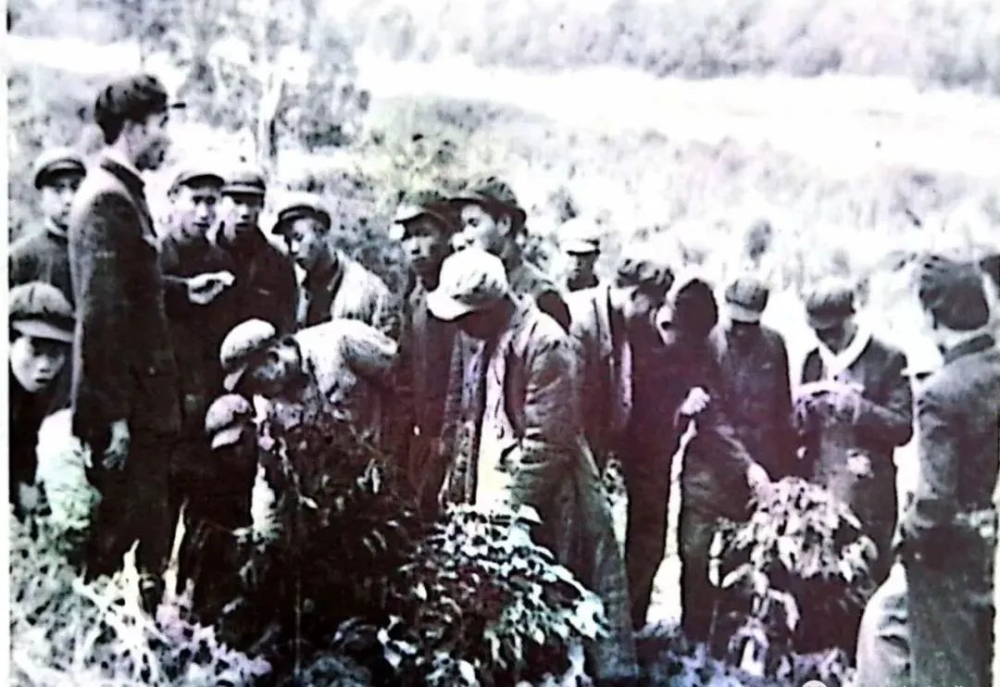
Although Yunnan coffee’s development in the specialty market is relatively recent, its cultivation history is actually quite long, roughly divided into four stages: The first stage began in the late 19th century after the Sino-French War, when Mengzi became a trading port, attracting foreign businesses. The second stage was in 1902, when French missionary Tien Defeng introduced coffee from Vietnam to Zhukula Village, Binchuan County, Dali. Descendants of those coffee plants still exist today. The third stage occurred in 1952, when experts from the Yunnan Academy of Agricultural Sciences distributed 80 kilograms of coffee seeds to Luxi Dam in Baoshan and guided large-scale cultivation, primarily to meet the demands of the Soviet market. The fourth stage began in 1988 when Nestlé entered Yunnan to establish a joint venture, launching a planting project and setting up a coffee agriculture department. They continuously guided variety improvement and purchased beans based on international market prices. To this day, international brands like Nestlé and Starbucks have a presence in Yunnan, while local enterprises have also grown steadily.
These developments have established Yunnan as a ‘small Arabica coffee’ producing region. Currently, the main variety planted in the region is Catimor, though small amounts of Typica and Bourbon are also grown. Though all three belong to the Arabica species, they each have unique flavors and characteristics.Typicais the oldest original Arabica variety. Though it boasts elegant flavors and a clean taste, it is a fragile plant with poor disease resistance and low yields. It is now mostly found in high-altitude regions of Central and South America. A certain brand’s Baoshan estate has chosen to cultivate this variety for its ability to showcase the purest clean flavors and high balance.Bourbonis a mutation of Typica, where green fruits ripen to red. It has broader leaves and slightly higher yields than Typica, yet it is also a low-yield variety. However, it offers wine-like acidity and a captivating sweet aftertaste.Catimoris a hybrid of Arabica Typica and Robusta, inheriting 25% of Robusta’s genes. As a result, it has strong resistance to leaf rust, high yields, and rich crema. Though it is often considered inferior in flavor compared to traditional varieties, its potential has gradually gained international recognition—for example, the 2020 batch of Indonesia’s PWN Golden Mandheling used the Catimor variety.
In terms of processing methods, Yunnan coffee beans have experimented with various techniques, but the current mainstream approach is washed processing. This method maximizes the beans’ original flavors, resulting in a cleaner, brighter taste with fewer off-flavors, allowing coffee enthusiasts to experience the most authentic expression of the region’s terroir.
Only by considering the growing environment, variety characteristics, and processing techniques can one fully interpret the flavor profile of a single-origin Yunnan coffee bean. A certain brand has also shared information on two single-origin beans from its own Yunnan estates for coffee lovers’ reference: ‘Brand 2013 Typica Coffee Beans,’ produced in Baoshan, Yunnan, at altitudes of 1,450–1,550 meters, undergoes washed processing. Its flavor profile includes citrus, nuts, plums, and melon aromas, with brown sugar sweetness and black tea texture. ‘Yunnan Small Arabica Coffee Beans,’ also from Baoshan, are grown at 1,200 meters and are of the Catimor variety. After washed processing, they present layers of herbal, nutty, chocolate, and caramel notes.
We hope this comprehensive analysis helps you gain a deeper understanding of the diverse facets of Yunnan coffee, enabling you to find the perfect choice that matches your taste preferences when selecting beans in the future.
The above content is compiled by CoffeeHunters, a coffee news website.


