








Introduction:Explore how Yunnan coffee has transformed from a source of instant coffee beans into a dark horse in the specialty coffee scene. This article delves into the cultivation characteristics and flavor profiles of the four core producing regions—Lincang, Baoshan, Pu’er, and Dehong—while also showcasing the efforts of a certain coffee brand to plant traditional Typica in Lincang, along with professional brewing recommendations for their naturally processed beans to help you unlock the full flavor potential of this domestic specialty coffee.
With the rise of the specialty coffee trend, Yunnan’s small-grain coffee has gradually shaken off its past stereotype as merely a source for instant coffee. Thanks to advancements in cultivation techniques, varietal improvements, and refined processing methods, it has emerged as a rising star in the global specialty coffee market. This article will take you through the century-long development of Yunnan coffee since its introduction in 1904, detailing the geographic conditions and varietal traits of major producing regions such as Lincang, Baoshan, Pu’er, and Dehong, while analyzing the unique flavor profiles of coffees from each area. Additionally, we’ll focus on a certain coffee brand’s efforts to establish an estate in Lincang, replant traditional Typica, and the flavor characteristics and practical brewing parameters of their “2013 Yunnan Typica Coffee Beans” with a natural process.
 In recent years, there has been a noticeable increase in consumers purchasing coffee beans from the Yunnan region, a trend that reflects the significant breakthroughs Yunnan coffee has made in quality and flavor. Today’s Yunnan small-grain coffee is no longer synonymous with instant coffee ingredients but has carved out a place in the specialty coffee arena with its balanced acidity and sweetness, as well as rich aromatic layers. What are the key factors driving this transformation? How can consumers identify and appreciate this specialty coffee with local character? The following will analyze these questions one by one.
The history of coffee cultivation in Yunnan dates back a hundred years. In 1904, a Catholic priest named Tian arrived in Yiping, Yunnan via the Yunnan-Vietnam Railway. While building a church in Zhugula Village, he introduced a batch of small-grain coffee trees—which were later genetically identified as the Typica variety. Although these coffee trees successfully took root, due to the deeply rooted tea culture in China at the time, coffee did not gain favor among farmers, and cultivation remained limited in scale.
The turning point came in the spring of 1952, when researchers from the Mangshi branch of the Yunnan Agricultural Experimental Station brought back about 70 kilograms of fresh coffee cherries from Longxianzhai and began trial planting in the Ludian Dam area of Baoshan City. This batch of seedlings demonstrated excellent adaptability and quality, laying the foundation for subsequent large-scale cultivation. By the 1960s, to repay Soviet loans, the state vigorously promoted coffee cultivation. Leveraging its existing infrastructure, Yunnan expanded rapidly, establishing planting areas in Baoshan, Xincheng, Dehong, Ruili, Wanding, Wenshan, Tianbao, and others, with the total area at its peak exceeding 50,000 mu. However, after the loans were repaid, coupled with insufficient domestic demand and the ravages of coffee leaf rust, the coffee trees died off en masse, prompting farmers to switch to other crops, reducing the planting area to just over 2,000 mu.
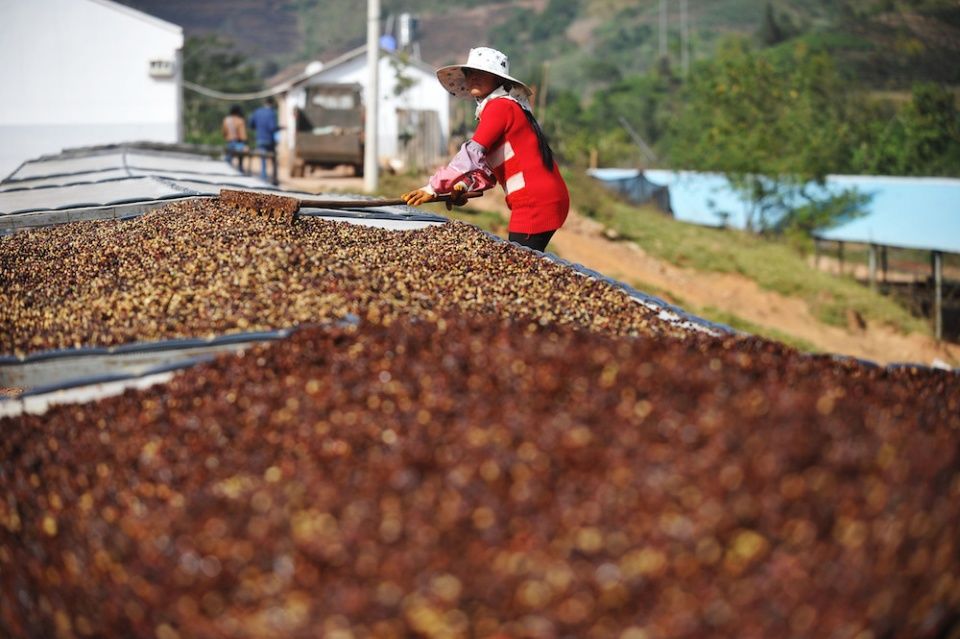 The revival of Yunnan’s coffee industry hinged on the involvement of Nestlé. To address the coffee leaf rust issue, Nestlé introduced the disease-resistant Catimor variety, which helped revive local cultivation. While this variety solved the problem of stable yields, its Robusta lineage often resulted in flavors described as monotonous and unpleasantly astringent, leading to a long-standing public perception of Yunnan coffee as being on par with instant coffee.
Over the past decade, Yunnan coffee has encountered a turning point for transformation. With the scientific advancement of cultivation techniques, innovations in green coffee processing, and the rapid growth of domestic specialty coffee demand, the flavor potential of Yunnan’s small-grain coffee has gradually been unlocked. Industry experts point out that the fundamental way to improve Yunnan coffee’s flavor lies in varietal selection—the Robusta gene, while conferring strong disease resistance, often leads to unpleasant bitterness due to its high chlorogenic acid content. To this end, a certain coffee brand began leasing mountain land in Lincang in 2013, establishing a dedicated estate focused on planting traditional Typica with a small amount of Bourbon. Through high-altitude cultivation, careful varietal selection, and sustainable farming practices, the brand is committed to elevating the specialty level of the Yunnan producing region.
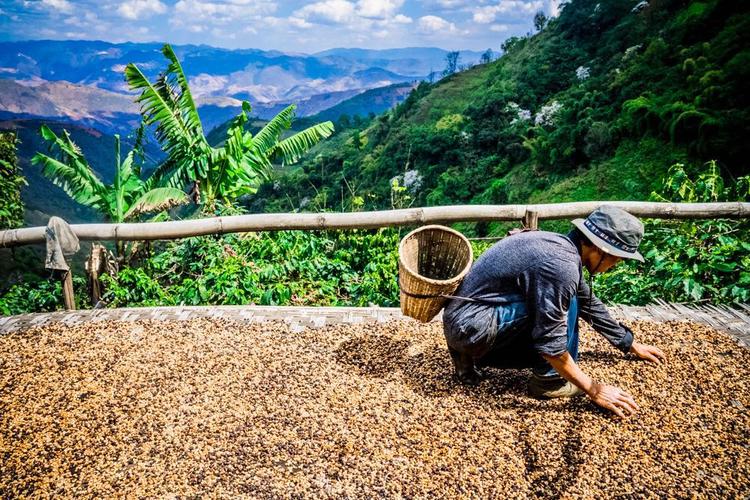
Since 2018, the brand’s Lincang estate has successively harvested its first batches of “2013 Yunnan Typica Coffee Beans.” The 2020/21 harvest season saw only 200 kilograms of green beans released for tasting by loyal customers, receiving positive feedback. By the 2021/22 season, Typica yields increased to 600 kilograms, and the beans are now available for purchase both in physical stores and on e-commerce platforms. These Typica beans, processed using the traditional natural method, showcase a complex flavor profile of plum, berries, brown sugar, black tea, and nuts, with a balanced acidity and sweetness and an elegant tea-like finish.
To fully highlight its characteristics, it is recommended to use a medium roast and brew with a V60 dripper via pour over. Specific parameters are set as follows: a coffee-to-water ratio of 1:15, a grind size roughly the size of coarse sugar (75% extraction rate through a Chinese No. 20 standard sieve), with water temperature controlled at 88–89°C. The brewing steps are as follows: the first pour involves adding 30 grams of water for a 30-second bloom; the second pour uses a slow circular motion to add water up to 125 grams, then after the coffee bed level drops by about half, continue pouring to a total of 225 grams. The entire extraction process takes approximately 2 minutes and 10 seconds. These parameters help preserve the coffee’s bright acidity and layered aromas while avoiding over-extraction that could lead to bitterness.
The above content is compiled by CoffeeHunters, a coffee news website.


