








Introduction:In 2021, the sudden discontinuation of the popular Emerald Estate’s Blue Label Geisha caused quite a stir among coffee enthusiasts. Why was the Blue Label discontinued? Where did the original affordable Geisha flavors go? This article takes an in-depth look at Emerald Estate’s three major growing regions, the Geisha grading system, and the differences between washed and natural processing methods. It also details the flavor profile and brewing recommendations of the 2020 debut natural Blue Label Geisha, and finally reveals the backstory of the Blue Label’s return under the new brand Las Rocas, providing a comprehensive reference for those seeking high-value Panamanian Geisha.
During the 2020 coffee harvest season, a well-known estate made a surprising move in the market by launching the first natural-processed Blue Label Geisha. This affordably priced Geisha allowed consumers to experience the distinctive floral and fruity notes and delicate layers unique to Panamanian Geisha at a more accessible price point. A coffee retailer (Front Street Coffee) was among the first to introduce this particular lot that season, offering customers the chance to taste and compare. However, by 2021, the estate suddenly announced the cancellation of the Blue Label grade, sparking widespread discussion within the industry.
In fact, prior to 2020, Emerald Estate only offered natural versions of the Red Label and Green Label Geisha. The newly added natural Blue Label in 2020 undoubtedly provided the market with a fresh alternative. So why was this once-popular Blue Label Geisha discontinued? Can the original flavor still be experienced through other means? This article will comprehensively outline Emerald Estate’s plot distribution, the Geisha grading system, and the details of washed and natural processing techniques, along with practical roasting and pour-over recommendations, to help you gain a deeper understanding of the story behind this classic coffee.
Emerald Estate is quite meticulous in planning its Geisha-growing blocks, which can be mainly divided into three core regions: Jaramillo, Canas Verdes, and El Velo. These three blocks not only vary in altitude but also have differing microclimates, further subdivided into multiple smaller plots to precisely control coffee quality.
Jaramillo is located at a high altitude, with an annual rainfall of up to 4,000 millimeters and significant day-night temperature variations—averaging 19–25°C during the day and 11–15°C at night, at elevations of approximately 1,600–1,700 meters. This area is further divided into five smaller plots: Mario, Noria, Reina, Bosque, and Buenos Aires.
Canas Verdes has a similar altitude, around 1,600–1,800 meters, with slightly lower annual rainfall of about 3,500 millimeters, and day-night temperatures ranging from 16–23°C during the day and 10–15°C at night. This region includes nine smaller plots: Lino, Coronado, Fundador, León, Montaña, Trapiche, Chinta, Cabaña, and Tumaco.
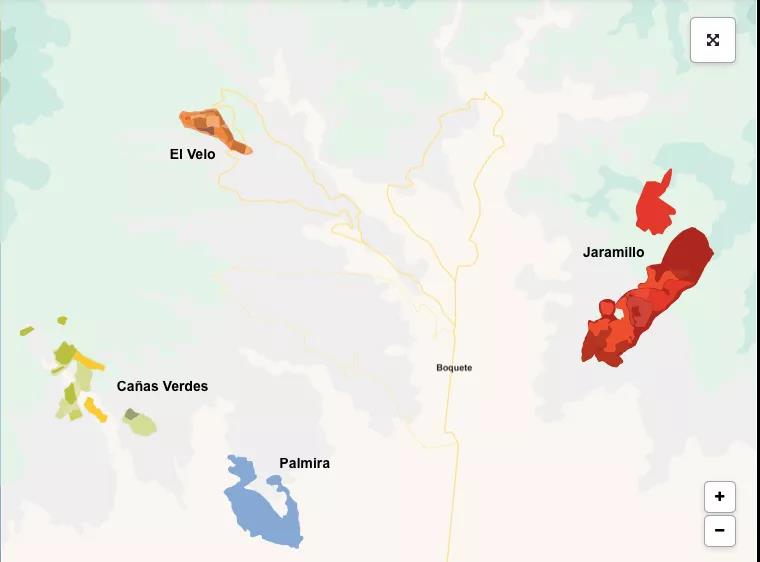
The youngest El Velo region is a recently expanded plot of Emerald Estate, situated at an even higher altitude of 1,700–1,900 meters. In addition to Geisha and Catuai, this area has also experimented with planting some exotic varieties such as Laurina, Pacamara, Mocha, and SL28, showcasing greater varietal diversity. El Velo is divided into seven smaller plots: Guabo, Portón, Durazno, Higo, Buena Vista, and Guila.
Emerald Estate classifies its Geisha into three major grades based on planting altitude and cupping scores, ensuring that consumers with different budgets and preferences can find a suitable option.
The top-tier Esmeralda Special, commonly known as the Red Label Geisha, is grown at altitudes of 1,600–1,800 meters, often scoring above 90 points in cupping tests. It is available only from the Jaramillo and Canas Verdes regions and exclusively through global auctions. The Red Label offers both washed and natural processing methods and is the top choice for collectors and coffee connoisseurs.
The next tier, Private Collection, commonly referred to as the Green Label, does not participate in auctions but maintains excellent quality. The Green Label is also grown at high altitudes of 1,600–1,800 meters and blends lots from various smaller plots, so its flavor is sometimes very close to that of the Red Label. The Green Label also includes both washed and natural processing, featuring the classic floral, fruity, citrusy notes and rich body of Geisha.
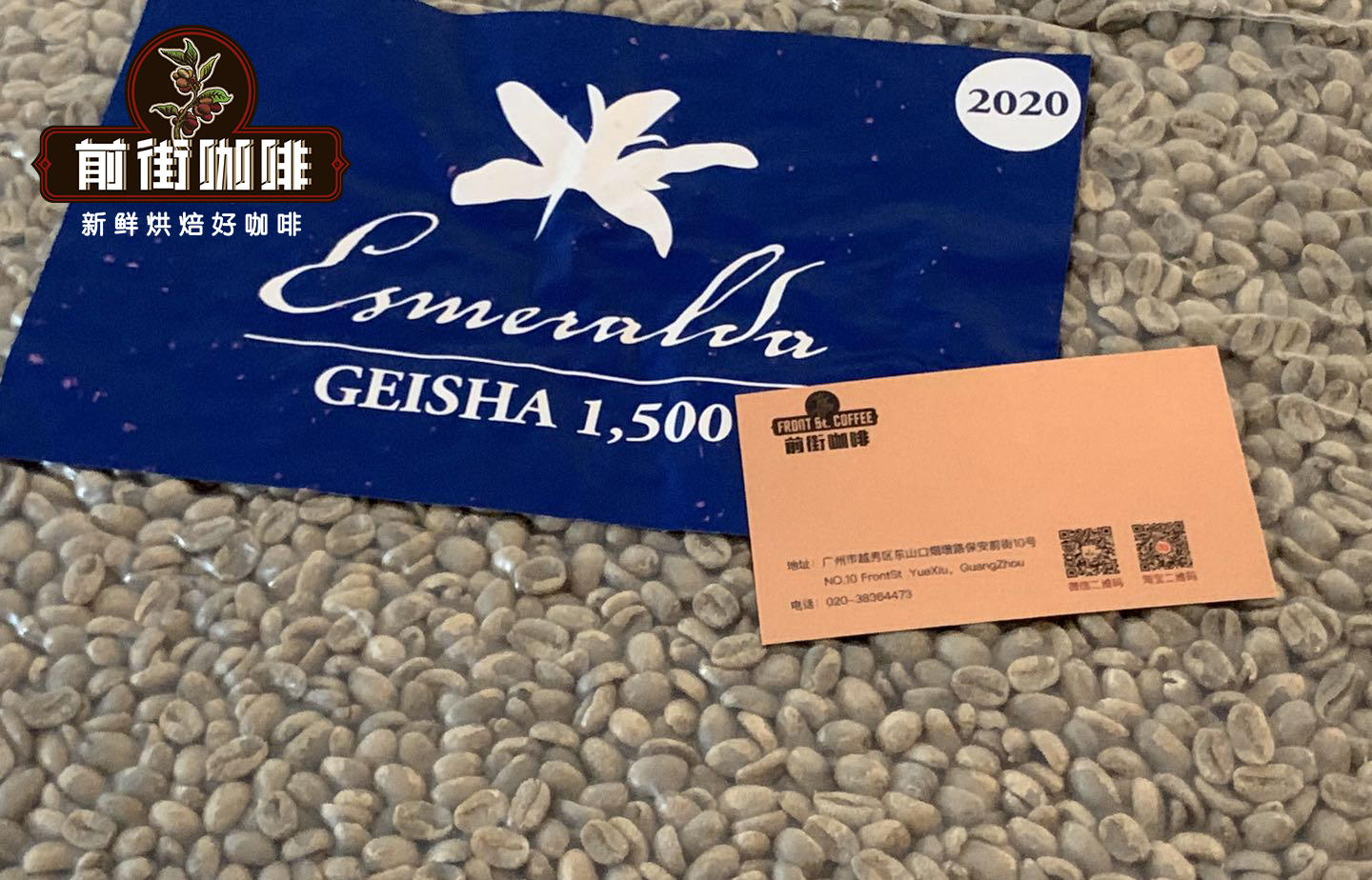
As for the widely recognized Blue Label Geisha (Geisha1500), it is grown at altitudes between 1,400–1,500 meters and is the most affordable among the three grades. The Blue Label is a blend of Geisha beans from Jaramillo, Canas Verdes, and El Velo. Previously only available in washed processing, it was not until 2020 that the natural version was introduced for the first time, offering consumers a different flavor experience.
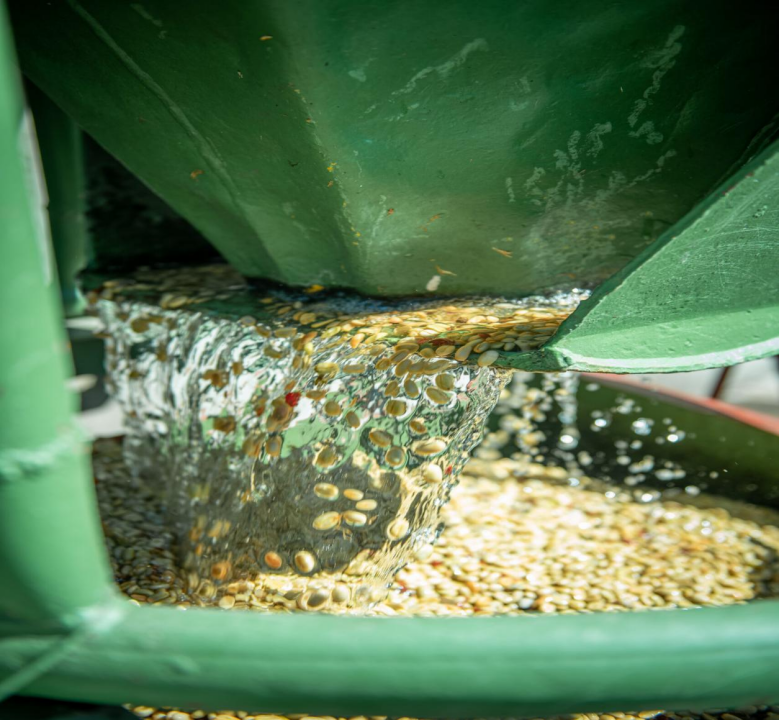
Emerald Estate’s washed processing is quite meticulous. First, a pulper is used to remove most of the fruit pulp, then the parchment-covered beans are soaked in water tanks for fermentation to remove residual mucilage. After fermentation, water flow is used to float and remove unripe and defective beans, followed by depulping to remove the skin, leaving mucilage-covered beans. These are then left to rest in fermentation tanks for 1 to 2 days to further break down the mucilage. Finally, the beans are rinsed with clean water, and the parchment-covered green beans are dried until their moisture content drops to 12%, after which the parchment is removed prior to storage and export.
In contrast, natural processing involves placing the entire coffee cherry directly under sunlight to dry slowly, allowing the beans to fully absorb aromatic compounds from the fruit pulp. Typically, the cherries are evenly spread out on concrete patios, turned daily, and exposed to about 8 hours of sunlight per day for 3 to 5 days (depending on weather). Once the moisture content stabilizes, they are moved to a Guardiola dryer and dried by rotation for 72 hours to prevent over-fermentation. After drying, the outer fruit layers are mechanically removed, and the beans are stored in nylon bags for 30 to 45 days (commonly referred to as “eposo”) to stabilize the flavor and enhance extraction performance.

In terms of roasting, the Blue Label Geisha is usually roasted to a medium-light level to preserve its bright acidity and vibrant floral and fruity aromas. Taking the practical operation of a well-known coffee shop as an example, their recommended roasting curve is as follows: charge at 180°C, initial heat at 130, air at 3; the turning point is around 1 minute 32 seconds, and when the temperature drops to 104°C, adjust the air to 4; when the bean surface turns yellow and the grassy aroma disappears (around 151.6°C), it enters the drying phase; at 7 minutes 56 seconds, when wrinkles and dark spots appear on the bean surface, it is about to enter the pre-first crack stage; at 8 minutes 30 seconds, first crack begins, at which point the air is adjusted to 5, and the coffee is allowed to develop for 1 minute 28 seconds after first crack, finally dropping at 190°C.
As for pour-over recommendations, using 15 grams of coffee, a 1:15 brew ratio, fine grind (approximately 80% through a #20 sieve), and water at 91°C, a three-stage pouring method is advised: the first pour adds 30 grams of water for a 30-second bloom; the second pour adds 100 grams in a circular motion, waiting patiently for the water level to drop by half; the final pour adds 95 grams just before the coffee bed is exposed, totaling 225 grams of water, with a total brew time of about 2 minutes.
In terms of flavor, the Red Label natural version often exhibits pronounced notes of rose, citrus, berries, apricot, and honey, with a rich and layered mouthfeel; the Green Label washed version showcases jasmine flower, citrus, cream, cantaloupe, and green tea tones, with a refreshing aftertaste; the Blue Label washed version starts with lemon and grapefruit acidity, and as it cools slightly, reveals sweetness reminiscent of oolong tea, honey, and cane sugar, overall clean and bright. If you opt for the natural Blue Label, you can enjoy an intense tropical fruit and melon juice-like sweetness, with a more expressive flavor.
Unfortunately, in 2021, Emerald Estate announced that the Blue Label Geisha would not be released that year, retaining only the Red Label and Green Label while further specifying regional origins. Many consumers worried that they would no longer be able to access high-value Panamanian Geisha at an affordable price. However, in October of the same year, a Geisha coffee bean from Panama’s Boquete region, named Las Rocas, quietly hit the market. After thorough investigation, it was confirmed that these beans were indeed produced by Emerald Estate, processed using washed methods by the estate’s team, filling the market gap left by the former Blue Label. For coffee lovers who loved the Blue Label flavor but had no way to access it, this was undoubtedly exciting news.
The above content is compiled by CoffeeHunters, a coffee news website.


