







Introduction:The three-pour method is a popular technique in pour over coffee for balancing flavor and complexity. By controlling water temperature, volume, and timing in stages, it precisely highlights the acidity, sweetness, and bitterness of the coffee. This article uses 15 grams of Yirgacheffe as an example to explain blooming techniques, the logic behind water distribution in each stage, and hands-on steps with the V60, helping you master this classic brewing method from parameters to execution.
The three-pour method is a highly regarded classic extraction technique in the pour over community. Its core lies in dividing the total brew water into three stages, with two pauses in between to adjust the flavor expression in the early, middle, and late stages of the cup. This approach not only helps balance overall mouthfeel but also makes flavor layers clearer. Next, we’ll delve into the key role of blooming, the logic of water distribution across stages, and demonstrate the full operation and parameter settings of the three-pour pour over using 15 grams of washed Yirgacheffe with a Hario V60 filter.
Simply put, the three-stage extraction divides the total brew water used in the entire pour over process into three infusions: one bloom pour and two subsequent extraction pours. This method is also often referred to as the "three-pour technique" or "three-slash flow." Throughout the process, there are two pauses where pouring stops—these are called “pauses” or “breaks.” Brewers adjust the water ratio in each stage to change the proportion of early, mid, and late flavor contributions in the overall cup, ultimately achieving a more balanced and harmonious coffee experience.
Why choose segmented pouring? Observing professional brewers, you’ll notice they often pause after pouring to a certain level, waiting for the water level in the filter to drop naturally before continuing. This is the practical application of segmented extraction. The initial pour usually has a smaller volume, mainly to wet the coffee grounds and allow CO₂ trapped inside to escape, preventing interference with later extraction. This step is known as "blooming." A common practice is to use double the weight of coffee grounds in water—for example, 30 ml of water for 15 grams of coffee—with a bloom time of around 30 seconds. This is also the easiest blooming formula for beginners. The key to identifying segmented pouring is: if the remaining water (plus the bloom) is poured in three stages (bloom + two pours), it’s the three-pour method; if all remaining water is poured at once after the bloom, it’s the single-pour (or “one-slash”) method.
Brewers favor segmented extraction because different compounds in coffee dissolve at different rates when hot water is applied. The general order is acids first, then sweetness, and finally bitterness. With segmented pouring, under the same brew ratio, more stages mean relatively less water per stage, which increases the agitation and disturbance of the coffee bed, thereby improving extraction efficiency. At the same time, more stages extend the overall brew time, allowing more diverse flavor compounds to be extracted at each stage, resulting in a richer layering effect. However, experts also caution that too many stages can prolong the process and increase the risk of over-extraction—especially in later stages where larger molecules are more likely to be released, potentially muting sweetness. Therefore, properly distributing water volume across stages becomes especially important.
Based on practical brewing experience, the three-pour method is a safer choice for beginners. It helps extract flavor compounds more fully and enhances taste complexity while avoiding over-extraction due to excessive steeping time. For example, using 15 grams of coffee at a 1:15 brew ratio (225 ml total water), the three pours can be distributed as: first pour 30 ml (for blooming), second pour 95 ml, third pour 100 ml—corresponding to scale readings of 30 g, 125 g, and 225 g.
This demonstration uses washed Yirgacheffe coffee beans (origin: Gedeo Cooperative) brewed with a Hario V60 filter. The V60’s spiral ridges help the coffee bed release gases smoothly, better promoting the volatilization and dissolution of acidic aromatic compounds. Since this Yirgacheffe is lightly roasted with firmer beans, it's recommended to use water at 92–93°C to fully bring out its floral and fruity characteristics.
For grind size, medium-fine is recommended (about 78% through a 20-mesh sieve by Chinese standards), roughly the texture of fine sugar. If ground too coarse, fuller and rounder flavor compounds may not extract well, leaving the coffee tasting thin. If ground too fine, high temperatures can lead to over-extraction and unwanted bitterness.
Regarding brew ratio, 1:15 to 1:16 are both reasonable ranges. For a stronger cup, choose 1:15; if you prefer a clearer expression of floral and sweet notes, try 1:16 for a more expansive flavor. In practice, first place the folded filter in the V60 and press it tightly against the walls, then add the 15 grams of ground coffee, and reset the scale to zero.
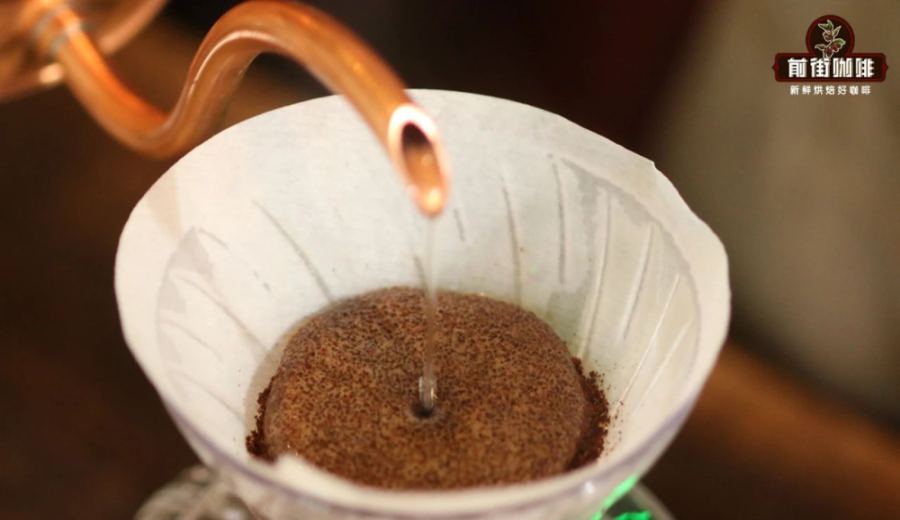
The first stage involves pouring 30 grams of water for blooming. Start the timer as you pour, using a small stream of water and circling from the center outward to ensure even saturation of the coffee bed.
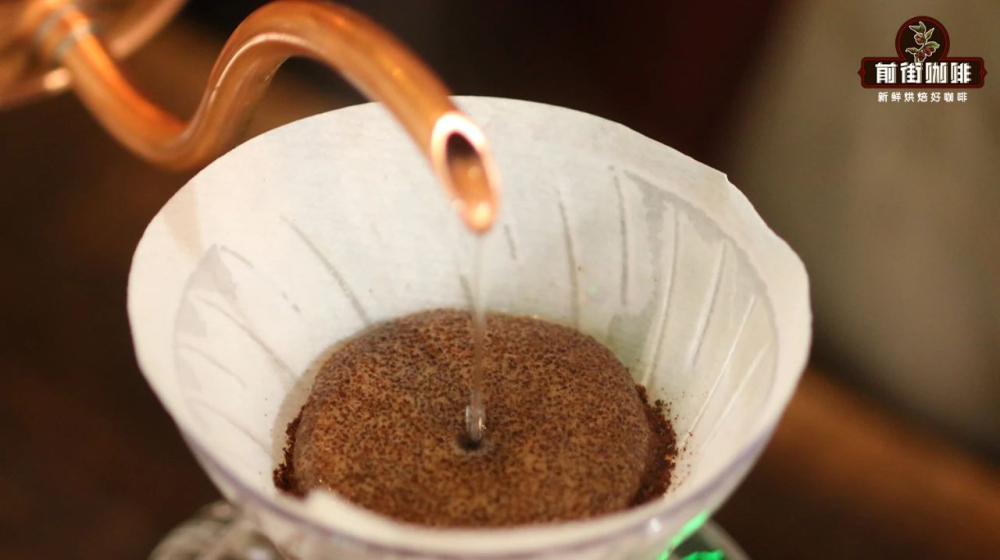
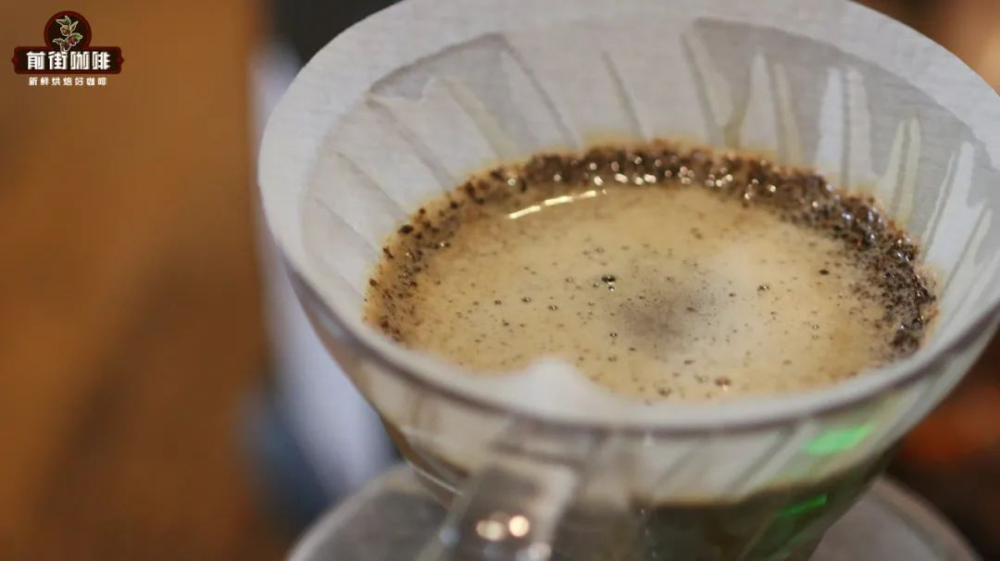
After 30 seconds, slightly increase the water flow and steadily pour the second 95-gram pour. This stage aims to lift the coffee bed. Keep the water column vertical and even. At this point, the scale should read around 125 grams, and this pour is typically completed in about 55 seconds.
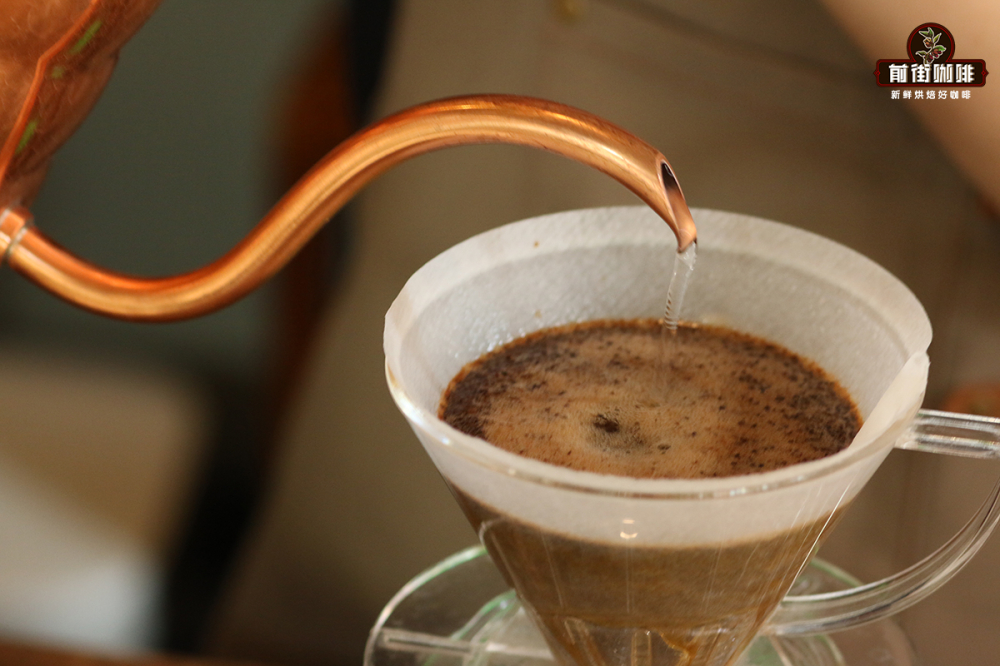
When the liquid level drops to about half, switch to a small stream and reduce the circle size to pour the third 100-gram pour. Be careful to control the water flow to avoid large circles that could disturb or disperse the coffee bed, affecting extraction uniformity. The total brew water is 225 grams, and the dripping should finish in about 2 minutes. After removing the filter, gently swirl the coffee in the server and enjoy.
Please note that the pour amounts for each stage are not fixed and can be flexibly adjusted based on your brewing experience and understanding of the coffee beans. The beauty of pour over lies in the fact that through continuous practice and fine-tuning of parameters, everyone can find their own unique flavor path. With willingness to learn and practice, mastering the key parameters of pour over isn’t difficult at all.
The above content is compiled by CoffeeHunters, a coffee news website.


