







Introduction:Jamaican Blue Mountain coffee is hailed as a legend in the coffee world, with Blue Mountain No. 1 being an especially rare treasure. This article delves into the cultivation history of Blue Mountain coffee, how Japan’s quota system affects its market price, and how it has become more accessible in China in recent years. It also provides a detailed breakdown of practical pour over parameters used by a certain café for Blue Mountain No. 1—including filter choice, water temperature, and brew ratio—and gives a comprehensive overview of its flavor profile to help you better understand this classic cup.
Blue Mountain coffee has long been a dream for many coffee enthusiasts, yet its high price often deters potential buyers. Why is Blue Mountain coffee so expensive? And how did it evolve from a crop on a small Caribbean island into a symbol of the world’s finest coffee? This article starts with the origins of Jamaican Blue Mountain coffee cultivation, taking you through its historical background, regional conditions, and the profound impact of Japan’s quota system on supply and demand. It also explains how consumers can now more easily purchase Blue Mountain No. 1 and shares expert pour over recommendations along with flavor characteristics.
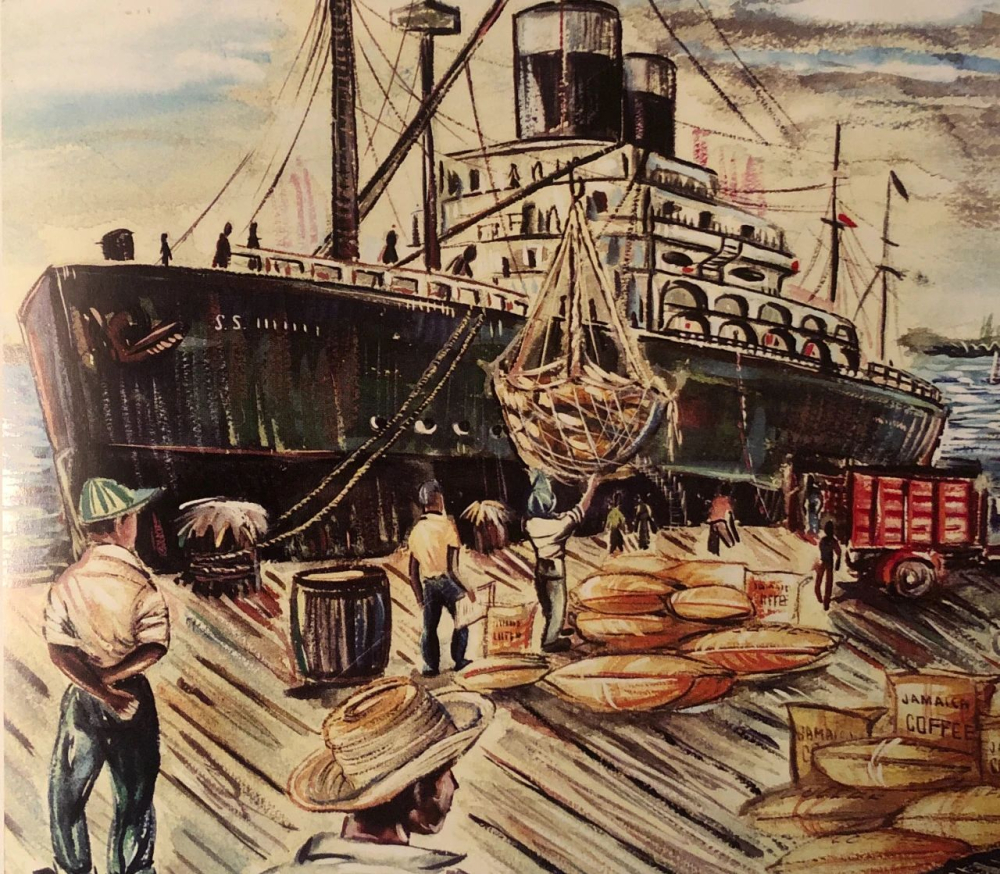
The history of coffee cultivation in Jamaica dates back to 1728, when Sir Nicholas Lawes introduced the first coffee seedlings from Martinique, marking the beginning of coffee farming in the country. Though small in size, Jamaica’s Blue Mountain region benefits from exceptional geographical conditions—towering mountains, diverse microclimates, year-round cloud cover, abundant rainfall, cool temperatures, and mineral-rich volcanic soil—all of which create ideal growing conditions for coffee. Notably, local farmers often intercrop coffee trees with banana trees, which helps maintain ecological balance and provides suitable shade.
By the end of the 18th century, Jamaica had over 600 coffee farms, with annual production reaching as high as 15,000 tons by 1814. However, following the abolition of slavery, labor shortages led to the abandonment of many plantations, and the coffee industry quickly declined. It wasn’t until 1891 that the government stepped in, providing technical guidance to improve cultivation and green bean processing standards. In 1950, the Jamaica Coffee Industry Board (CIB) was established to develop and enforce strict quality control measures—one of the key reasons why Blue Mountain coffee remains among the best in the world.
Before the 1960s, Blue Mountain coffee enjoyed widespread market acclaim and commanded relatively high prices. However, Hurricane Gilbert in 1969 severely damaged Jamaica’s economy and agriculture, including the Blue Mountain region. At this time, Japan’s UCC company provided financial and technical support to promote scientific cultivation and sustainable management of Blue Mountain coffee. In return, the Jamaican government signed a 30-year agreement with Japan, reserving 80% of the annual Blue Mountain coffee production quota for the Japanese market, with the remaining 10% allocated to Europe, America, and other regions. While this arrangement ensured the quality and market positioning of Blue Mountain, it also made it difficult for consumers elsewhere to access this prized coffee.
Thanks to the boost from the Japanese market, Blue Mountain coffee gradually gained immense prestige across Asia. Coffee lovers in Singapore, South Korea, Taiwan, and Hong Kong began to encounter this premium coffee through Japanese traders. By around the year 2000, the “Blue Mountain craze” spread to mainland China, leading to supply shortages and soaring prices. After the 2008 global financial crisis, the agreement expired, and Jamaica opened up more of its Blue Mountain coffee quotas to the global market. In 2010, the Hangzhou Coffee & Western Food Industry Association signed a cooperation intent with Jamaica, and in 2011, Blue Mountain coffee was officially introduced to mainland China. Today, many domestic retailers can directly import Blue Mountain coffee, allowing consumers to enjoy this classic without paying exorbitant prices.
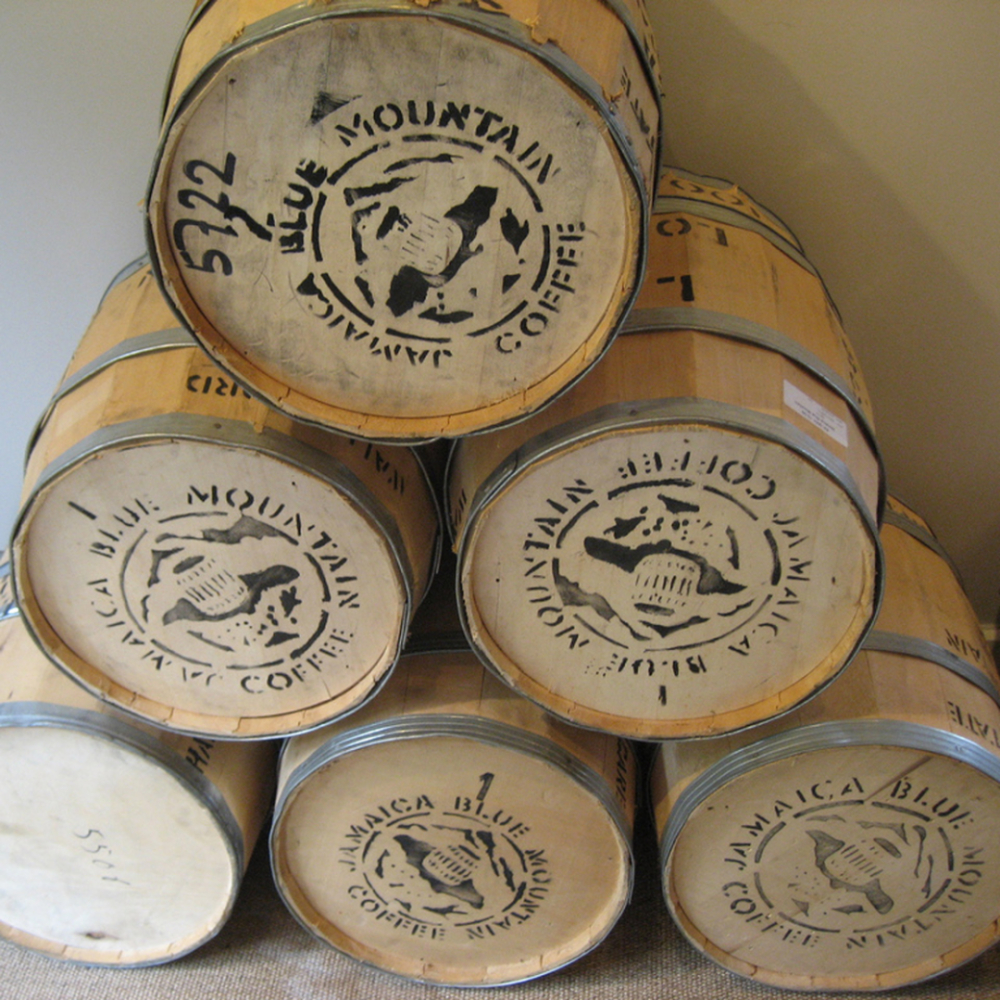
It’s worth noting that Blue Mountain coffee is one of the few regions that ships its green beans in wooden barrels rather than the more common jute sacks. These handcrafted wooden barrels not only help regulate humidity but also preserve the coffee’s aroma, ensuring stable quality during long-distance transport. Additionally, the rainforest frog logo on the barrels indicates that the beans come from the Clifton Estate, one of the most renowned farms in the Blue Mountain region, and that they are certified under the Sustainable Agriculture Network (SAN) standards, holding Rainforest Alliance certification, which emphasizes environmental friendliness and sustainable cultivation.
Currently, the Blue Mountain coffee available on the market is divided into several grades, with Blue Mountain No. 1 being the highest. It is produced exclusively in specific areas of the Blue Mountains at elevations between 910 and 1700 meters, predominantly from the Typica variety. According to the regulations of the Jamaica Coffee Industry Board, Blue Mountain No. 1 green beans must be 17 mesh or larger, with a defect rate no higher than 2%, moisture content maintained between 10% and 12.5%, and exhibit an excellent balance of acidity, sweetness, bitterness, body, and aroma in cupping. A certain supplier sources its Blue Mountain No. 1 from the historic Clifton Estate, one of the most prestigious farms in the Blue Mountain region.
The flavor profile of Blue Mountain No. 1 is known for its richness and balance, featuring prominent notes of dark chocolate, roasted nuts, and caramel. Its acidity is gentle yet layered, with an overall mouthfeel that is smooth, full-bodied, and deeply nuanced. To fully highlight these qualities, a certain café employs a medium-dark roast, which brings out subtle roasty aromas while retaining moderate acidity and fruity tones. When brewing, it is recommended to use freshly roasted coffee beans, ideally within five days of roasting, to achieve the best flavor expression.
In terms of the actual brewing process, start by wetting the KONO filter with hot water and attaching it tightly to the filter paper. Discard the water in the server, then add 15 grams of coffee grounds. Perform a 30-second bloom with 30 grams of water. After the bloom, pour water in small streams from the center outward to reach 125 grams. Once the first stage is complete, wait briefly as the coffee bed settles slightly, then continue pouring to reach 225 grams. Once all the brewed liquid has dripped through, remove the filter to finish the brew.
The final cup of Blue Mountain No. 1 delivers a rich profile of dark chocolate sweetness and caramel notes, with a soft and delicate acidity. The overall mouthfeel is silky and full-bodied, with all flavor elements harmoniously balanced, making it an excellent choice for experiencing the classic taste of Blue Mountain. If you’ve always been curious about Blue Mountain coffee, now is the perfect time to explore and savor it.
The above content is compiled by CoffeeHunters, a coffee news website.


