







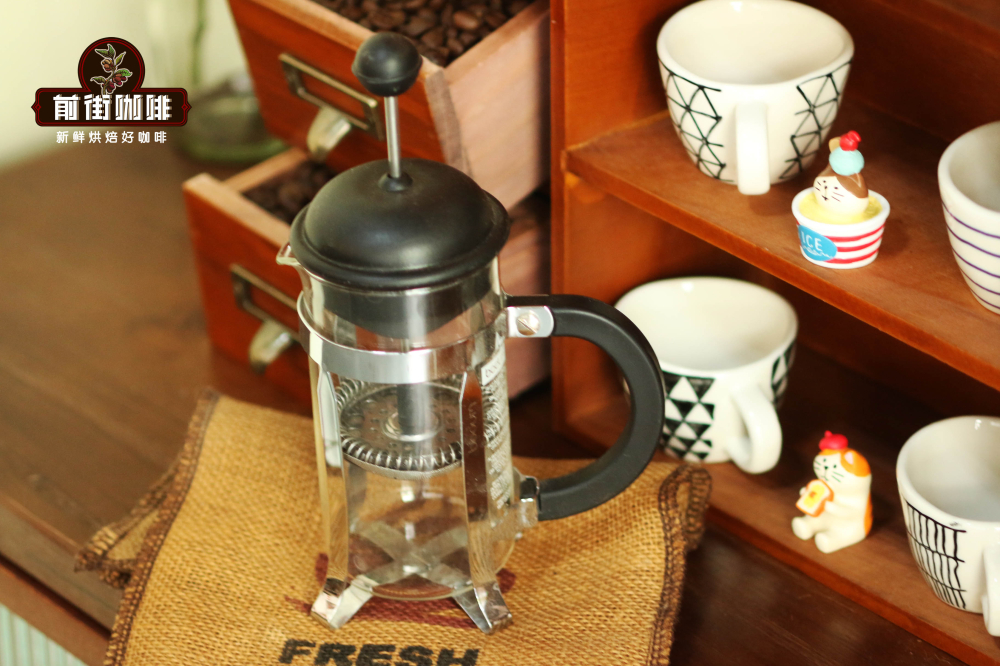
Introduction:Due to its simplicity and ease of use, the French press has become the go-to tool for many coffee beginners entering the world of specialty coffee. However, precisely because it has a low barrier to operation, many often overlook the three key variables—grind size, water temperature, and coffee-to-water ratio—resulting in suboptimal extraction. This article delves into the historical background and working principles of the French press, highlights three common operational misconceptions, and offers practical parameter recommendations. It also helps you adjust extraction strategies according to different roast levels. Finally, it demonstrates a complete brewing process using the Huakui coffee beans, so you can brew rich and layered coffee at home.
Among various home coffee brewing devices, the French press remains consistently popular. Whether it's an average household that drinks coffee occasionally or enthusiasts who pursue certain flavor profiles, almost everyone has come into contact with this classic device featuring a metal filter and glass carafe.
Some beginners have shared with professionals that although they want to savor the subtle layers in coffee, they hesitate due to a lack of control over pouring techniques. In such cases, in addition to gradually practicing hand control, the French press also serves as a great alternative, extracting the full flavor of coffee in a simpler way.
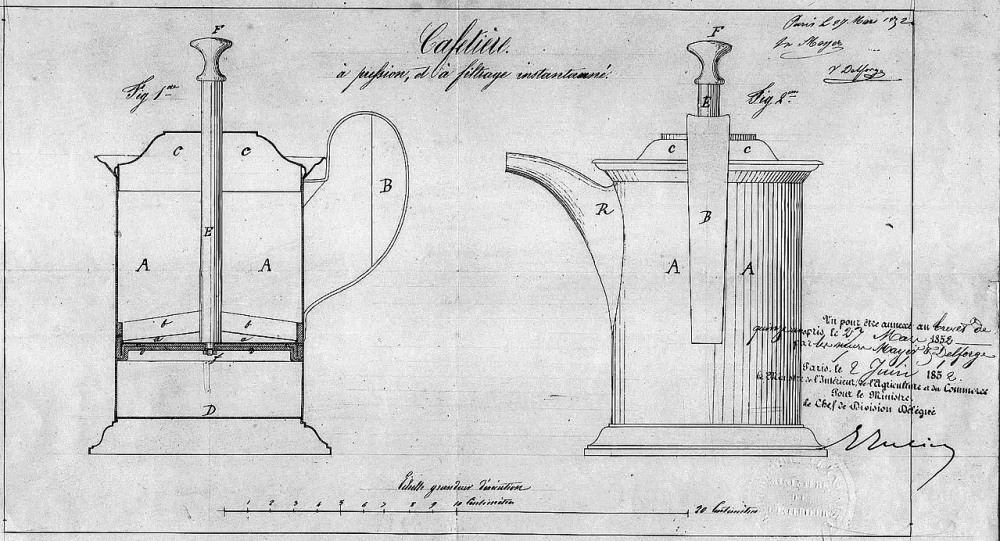
The history of the French press dates back to 1852 when two Frenchmen filed an early design patent, but due to ineffective sealing, subsequent designs continued to evolve. It wasn’t until 1929 that an Italian inventor officially obtained a patent for what became the prototype of the modern French press. This device, combining immersion and filtration functions, gradually took shape. Today, it can be found in most homes—the borosilicate glass is heat-resistant and transparent, the metal filter effectively blocks coffee grounds, and the operation requires almost no learning curve, making it extremely beginner-friendly.
The operation principle of the French press is quite intuitive: simply place ground coffee into the pot, pour hot water to steep and extract, then after a set period, use the metal filter at the bottom and the plunger to easily separate the coffee liquid from the grounds. This immersion-style extraction fully releases the coffee’s rich body and oils, making it ideal for those who prefer a bold flavor.
However, just because the French press is easy to use, many tend to overlook the three key elements—grind size, water temperature, and coffee-to-water ratio—during actual brewing, leading to uneven extraction or loss of flavor. The following will address these three common mistakes and offer optimization suggestions.
[Grind Size: Neither Too Coarse Nor Too Fine]
The French press uses immersion brewing, so it’s recommended to use a coarser grind than pour over, but if it’s too coarse, it affects flavor release, and if it’s too fine, fine particles may pass through the filter, resulting in a rough or even gritty mouthfeel. It’s suggested to use a grind size where 70% to 75% passes through a Chinese standard No. 20 sieve. This retains a rich body while effectively filtering out most coffee grounds.
Note that different grinders and burr conditions may vary slightly in actual grind results. It’s advisable to fine-tune based on sieve passing rate to achieve optimal extraction balance.
[Water Temperature: Adjust According to Roast Level]
Water temperature is one of the key factors affecting coffee extraction efficiency. Generally speaking, dark roast beans, due to their looser structure and faster water absorption, are recommended to be brewed with slightly lower temperatures (around 86–88°C) to avoid over-extraction of bitterness and burnt flavors. On the other hand, light roast beans retain more acidity and aromatic compounds, so it’s advised to use higher temperatures (around 90–93°C) to fully bring out their unique characteristics.
In practice, water temperature can be fine-tuned according to personal taste preferences, but it’s recommended to stay within the above range for more stable extraction results.
[Coffee-to-Water Ratio: Recommend 1:15 as a Baseline for Adjustment]
The so-called “Golden Cup” extraction refers to a coffee concentration between 1.15% and 1.35%, with an extraction yield of 18% to 22%—the ideal range. Multiple experiments have found that a 1:15 coffee-to-water ratio can more easily achieve this ideal zone. Of course, individual drinking habits should also be considered: those who prefer stronger flavors can try 1:13 to 1:14, while those who prefer lighter tastes can adjust to 1:16 or even 1:17, or even refer to the cupping standard of 1:18.
[Practical Demo: French Press Brewing Process with Huakui Coffee Beans]
This time, we’re using Huakui coffee beans from the Sidamo region of Ethiopia as an example. These beans won the TOH Ethiopia Regional Sun-Dried Division Championship, featuring intense berry tones and a creamy aftertaste. They are best presented with a medium-light roast to highlight their fruity acidity.
Equipment: French press
Water temperature: 90°C
Coffee dose: 15 grams
Coffee-to-water ratio: 1:15
Time: 4 minutes
Here’s a brief outline of the steps: First, preheat the French press. Add coffee grounds ground to 75% passing through a No. 20 sieve. Then, pour 90°C hot water at a 1:15 ratio. Put the lid on but do not press down yet. Let it steep for four minutes. Once the time is up, slowly press the plunger down to about a quarter of the way, then pour out the coffee and enjoy.
Brewed with these parameters, the Huakui delivers an immediate burst of berry aroma and juiciness, complemented by a subtle orange blossom note. The mouthfeel is silky and rich, with an overall balanced and layered profile.
The above content is compiled by CoffeeHunters, a coffee news website.


