







Introduction:Indonesian Mandheling is renowned worldwide for its deep, rich body and woody aroma, standing in stark contrast to the bright fruity acidity typical of African beans. This article delves into Mandheling’s wet-hulling processing method, the stringent selection criteria and variety background of Golden Mandheling, and offers practical pour-over brewing tips along with a three-stage pouring technique—suitable for beginners to advanced enthusiasts alike—to fully grasp the flavor essence of this classic Southeast Asian coffee.
When it comes to Indonesian coffee, Mandheling is undoubtedly one of the most representative offerings. Its flavor profile is distinguished by intense bitter notes and a solid body, forming a sharp contrast with the bright acidity commonly found in African beans. This article begins with Mandheling’s core processing method—the wet-hulling process—and further explores the grade definition and varietal background of Golden Mandheling. It also provides professional pour-over recommendations and precise extraction parameters tailored to its dark roast characteristics, helping coffee lovers fully understand and experience the potential of this classic bean.
Unlike the bright citrus and berry notes often associated with African coffees, Indonesian Mandheling has chosen a different flavor path—one that emphasizes a heavy, steady bitterness and a full body, with a flavor profile generally leaning toward the deep and layered. For such a coffee bean with a strong personality, how to bring out its best performance through appropriate brewing methods has become a key focus for many coffee enthusiasts. To understand the brewing logic behind Mandheling, we must first start with its unique wet-hulling process.
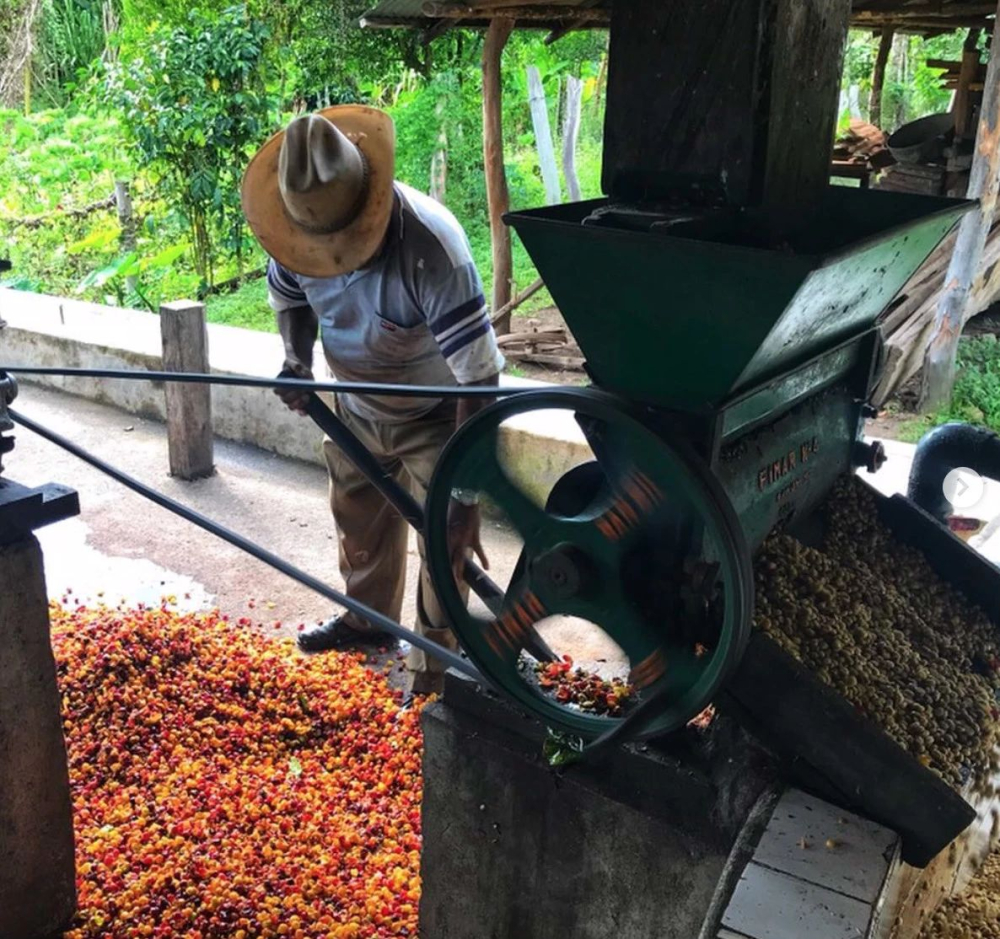
The origins of Indonesia’s wet-hulling method can be traced back to the Dutch colonial period in 1699. At that time, coffee was introduced as an important cash crop, but traditional sun-drying or washed processing methods took two to three weeks—time-consuming for local farmers and risking mold due to prolonged humid weather. To solve this problem, the wet-hulling method emerged. This process is similar to the washed method in the initial stage: first, the coffee fruit’s pulp is removed, and the beans undergo about three hours of fermentation, followed by rinsing off the mucilage. At this point, the green beans are still wrapped in parchment, but have only undergone two to three days of preliminary drying, with moisture content maintained between 20% to 24%, considered semi-dried. Next, the parchment layer is directly scraped off, and drying continues until the moisture content drops to around 13% before packaging.
Because the friction between the parchment and the green bean during hulling is significant, it often causes surface damage to the beans, especially at the ends, where fine cracks or chips are common—these beans are commonly referred to as “elephant ear beans.” With the parchment layer removed early, the exposed green beans dry quickly in a humid environment, also making it easier for microbes to thrive, thereby fostering the unique woody, spicy, and herbal aromatic profile of Indonesian coffee—also known as the “regional character.”
If you’re new to the flavor of Mandheling, it’s recommended to start with an entry-level wet-hulled Lintong Mandheling, whose flavor profile clearly showcases Mandheling’s classic characteristics and is very suitable for home brewing. For more experienced coffee drinkers who want to explore the pinnacle of Mandheling, Golden Mandheling is undoubtedly a more representative choice.
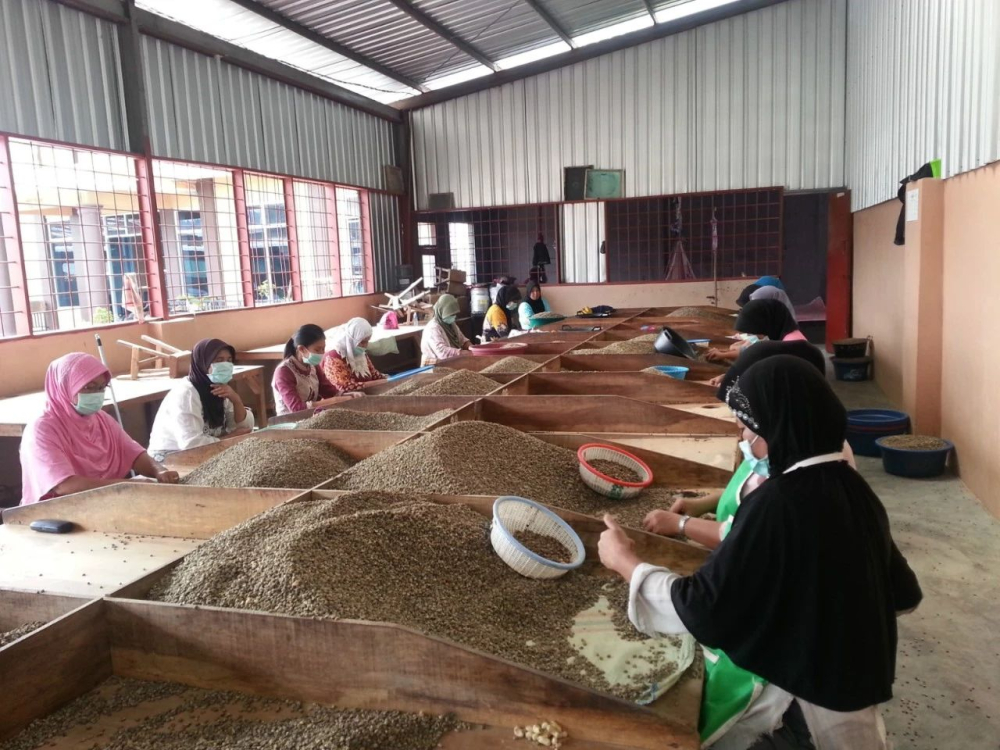
The term “Golden Mandheling” originates from the history of Pwani Coffee Company (PWN) successfully introducing it to the Japanese market. As one of the few Indonesian suppliers specializing in high-quality Mandheling, PWN controls the country’s finest producing regions, and its Mandheling has consistently enjoyed high acclaim in the market. The reason Golden Mandheling stands out lies in its stricter selection process: in addition to basic mechanical screening, it undergoes three rounds of manual hand-picking, ensuring a defect rate far lower than the standard G1 grade. To meet Golden Mandheling standards, green beans must satisfy the following conditions: screen size of 18–19 or above, fewer than 3 defects in a 300g sample, G1 grade, dark green color, uniform size, and regular shape.
Before officially launching each coffee bean offering, producers typically conduct cupping to evaluate its flavor performance. Based on cupping results, typical wet-hulled Mandheling often exhibits rich nutty tones, with a honeydew melon aroma in the aftertaste. As the temperature drops, herbal notes gradually emerge, resulting in a full-bodied mouthfeel and robust aroma. Golden Mandheling goes a step further, offering not only black chocolate, nut, and caramel aromas but also a complex blend of herbal spices and pine. The black chocolate finish is long-lasting, with a clean overall profile—even after cooling, subtle fruity acidity can be detected.
In terms of variety, Indonesia’s coffee cultivation history has seen the introduction of various disease-resistant varieties. The Typica variety, initially brought by the Dutch, was excellent in flavor but largely withered after the leaf rust outbreak in 1877. To supplement yield and disease resistance, Indonesia later introduced Robusta, which remains the country’s main variety to this day. Additionally, hybrid varieties such as Tim Tim, Bor Bor, and the Catimor series (Ateng)—crosses between Robusta and Arabica—have gradually become mainstream due to their adaptability to Sumatra’s local terroir and strong disease resistance. Currently, Ateng and Tim Tim account for 70% of Sumatra’s coffee plantings. Most commercially available Lintong Mandheling beans are blends of Tim Tim and Ateng, while Golden Mandheling is mostly selected from the Ateng variety, commonly known as Catimor.
To fully experience Golden Mandheling’s complex aromas and full body, it’s recommended to use freshly roasted beans. Generally, coffee beans enter their optimal flavor window four to seven days after roasting, while beans over a month and a half old tend to lose aroma and develop woody off-flavors. To ensure flavor performance, it’s advised to choose beans roasted within five days and pair them with appropriate brewing parameters to fully unlock their potential.
Due to the loose structure of dark-roasted Mandheling beans, they absorb water quickly. Using too high a water temperature or too fine a grind can easily lead to over-extraction, resulting in prominent bitterness and astringency. Therefore, it’s recommended to use a slightly coarser grind and a slightly lower water temperature for extraction. Suggested parameters are: water temperature 87–88°C, 15g coffee grounds, 1:15 coffee-to-water ratio, and medium grind (approximately 70% passing through a 20-mesh sieve according to Chinese standards).
For pour-over techniques, the three-stage pouring method is recommended, as it helps gradually highlight flavors and control even extraction. The first step is the bloom: pour 30ml of hot water to allow the coffee grounds to fully absorb water and release CO₂. The second step involves pouring 100ml, during which you can observe the expansion of the coffee bed and the formation of golden crema, while lifting the coffee bed to promote even extraction. The third step is to slowly pour 95ml in the center. Finally, once the coffee has completely dripped through, remove the filter and gently swirl the coffee in the server to ensure balanced flavor.
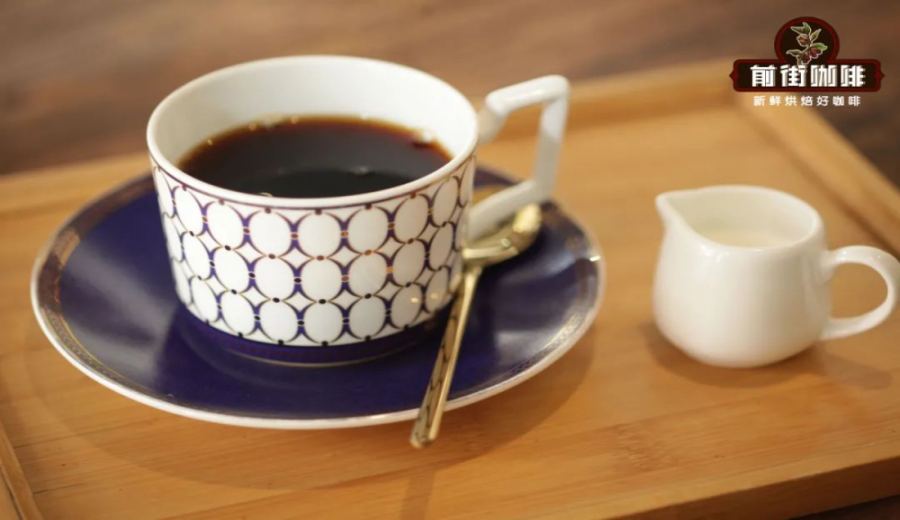
The finished Golden Mandheling boasts a richly layered flavor profile, with pronounced spicy and herbal notes, a solid body accompanied by caramel sweetness, and an aftertaste that lingers with black chocolate and nutty notes. It’s a classic Southeast Asian coffee worthy of savoring.
The above content is compiled by CoffeeHunters, a coffee news website.


