







Introduction:The grading labels of Geisha coffee often cause confusion — what exactly is the difference between Gold Label, Red Label, and Green Label? This article delves into the variety background, origin characteristics, and grade positioning of the Gold Label Geisha from Ethiopia’s Gesha Village, and explains in detail the connection between Gesha 1931 and Panamanian Geisha. It also provides professional pour over recommendations and flavor profiles to help coffee enthusiasts fully grasp the essence of this top-tier bean, from selection to brewing.
In the world of specialty coffee, Geisha is undoubtedly one of the most celebrated varieties, yet its grading system often puzzles newcomers. Common terms like Gold Label, Red Label, and Green Label actually reflect differences in origin, quality, and flavor. What do these “labels” really mean? How does Gesha Village’s Gold Label Geisha differ from the renowned Red Label from Panama’s Hacienda La Esmeralda? This article will take you from the basics to an in-depth understanding of the grading logic, varietal heritage, and brewing essentials of Gold Label Geisha.
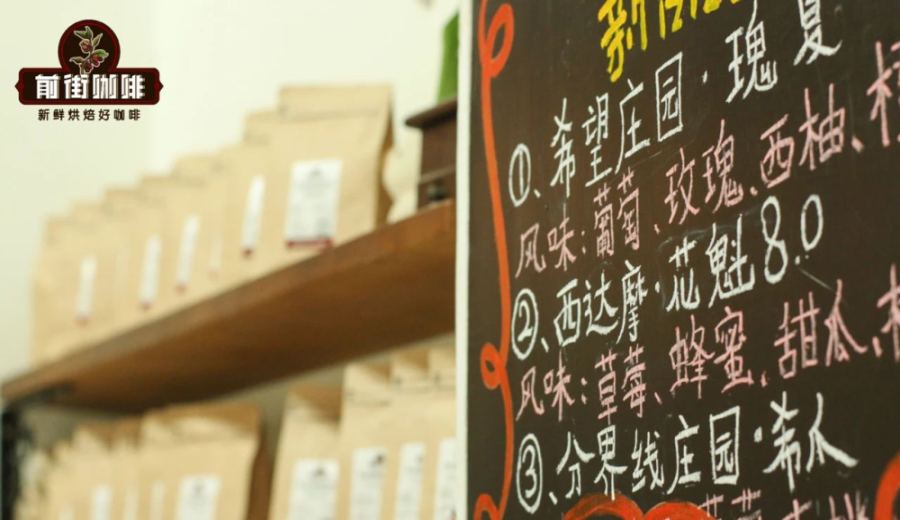
Many customers in coffee shops often wonder what “Gold Label” written on the chalkboard means. In fact, these color-coded Geisha designations are mainly popular in the Chinese market and are used to differentiate between grades of Geisha coffee. Whether it's Red Label, Gold Label, Green Label, or Blue Label, the colors typically originate from the packaging or trademark background, not from an official grading standard. For example, Hacienda La Esmeralda’s Red Label is officially called “Esmeralda Special,” representing the estate’s top-tier Geisha product, which must score above 91 in cupping and comes with detailed origin information for each batch. Gesha Village’s Gold Label, known in English as “Rarities,” meaning “rare treasures,” is the estate’s highest-grade Geisha aside from auction lots, accounting for approximately10%of the total production, with each batch also providing plot traceability information.
Gesha Village is located in Ethiopia’s Bench Maji region in the southwest, near the border with South Sudan, and covers nearly 500 hectares of planted area. The region features typical highland terrain,with elevations no lower than 1900 meters. The high altitude allows coffee cherries to ripen slowly in cooler temperatures, accumulating richer flavor compounds. Bench Maji is one of the 14 zones under Ethiopia’s Southern Nations, Nationalities, and Peoples' Region (SNNPR), home to various ethnic groups including the Bench people, where most coffee is still grown using traditional forest cultivation methods. Gesha Village is not only the largest coffee farm in the region but also operates its own washed processing facility, laboratory, and systematic farming management system. Every plot is numbered for detailed flavor tracking.
When it comes to the variety of Gold Label Geisha, we must go back to the origins of Geisha itself. In 1931, Geisha was first discovered in the Kaffa forests of southern Ethiopia during efforts to find disease-resistant varieties and was named after the nearby Geisha Mountain. Later, it was introduced to Kenya, Uganda, Tanzania, and other regions, and arrived at CATIE research center in Costa Rica in 1953, where it was catalogued as T2722. Due to its low yield and fragile branches, Geisha was long overlooked until it was brought to Panama in the 1960s. In 2004, the Geisha from Panama’s Hacienda La Esmeralda gained fame at the BOP competition and was later confirmed to be the CATIE T2722 variety.
The variety of Gesha Village’s Gold Label Geisha is called “Gesha 1931.” Led by Willem Boot, it was selected by referencing the appearance and flavor traits of Panamanian Geisha, identifying similar varieties in the Kaffa forests and naming it after the year of discovery. It’s important to note that although Panamanian Geisha originates from T2722, Gesha Village’s “Gesha 1931” was selected based on visual and flavor similarities, and there is no proof that it shares the same lineage as Panamanian Geisha. Additionally, Gesha Village also grows varieties such as Gori Gesha and IIIubabor Forest, where Gori Gesha and Gesha 1931 share genetic ties with Panamanian Geisha but are not the same variety, while IIIubabor Forest is a disease-resistant strain.

Gesha Village’s production area is divided into multiple plots, including OMA, SURMA, SHEWA-JIBABU, etc., with elevations ranging from 1900 to 2069 meters, among which SHEWA-JIBABU has the highest average elevation. Different plots, due to variations in altitude, soil, and shade conditions, are suited for planting different varieties to express unique flavors. The Gold Label Geisha procured from this region comes from the Oma plot, processed via natural drying method, with the Gesha 1931 variety exhibiting complex cupping notes such as citrus, berries, cream, caramel, melon, and honey.
For coffee enthusiasts who enjoy pour over, special attention should be paid to parameters and techniques when brewing Gold Label Geisha. It is recommended to use beans roasted within7 to 30 daysto fully showcase their aroma and flavor. The Gold Label Geisha offered by this region is shipped within 5 days of roasting to ensure freshness. Lightly roasted Geisha beans are harder in texture, so it is advised to use a water temperature of91–92°Cand a grind size similar togranulated sugar (sifted through a #20 sieve to 80%), with a 1:15 coffee-to-water ratio (15 grams of coffee to 225 milliliters of water). The V60 dripper is recommended, using a three-stage pouring method: the first pour adds 30 grams of water for a 30-second bloom, the second pour adds 95 grams of water, waiting until the coffee bed drops halfway, then the third pour adds 100 grams of water. Use a small stream of water and circle around the center to avoid over-extraction or uneven extraction.
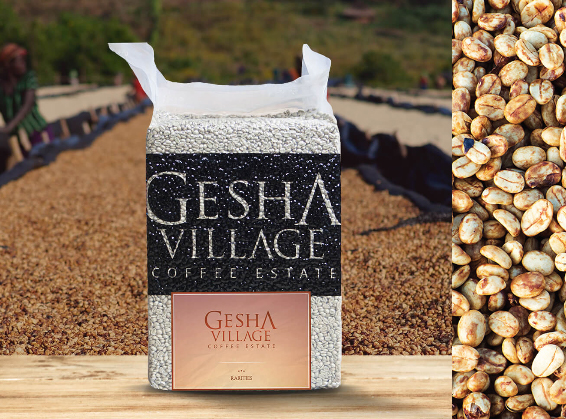
In summary, Ethiopia’s Gesha Village Gold Label Geisha is renowned for its rarity and high quality, making it ideal for coffee lovers seeking premium flavors. From understanding its varietal background and origin characteristics to mastering the correct brewing methods, each step allows you to experience more deeply the unique charm of this specialty coffee.
The above content is compiled by CoffeeHunters, a coffee news website.


