







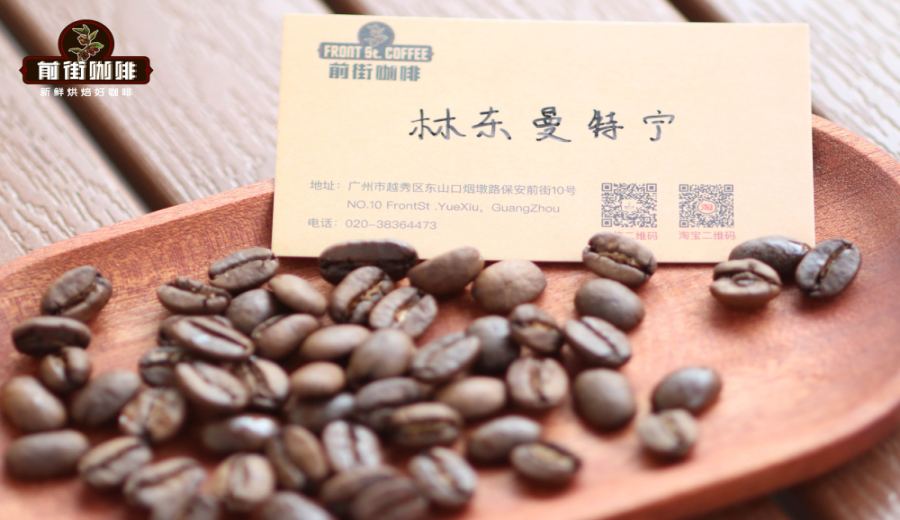
Introduction:Indonesian Mandheling coffee is renowned for its rich, bold body and distinctive herbal and woody notes, qualities that stem largely from its unique "wet hulling" processing method. This article delves into each step of the wet hulling process, explores how Indonesia’s humid climate influences the adoption of this technique, and analyzes its impact on coffee flavor and defect rates. It also provides practical pour over recommendations, including grind size, water temperature, brew ratio, and a three-stage pouring technique to help you brew a vibrant, characterful Mandheling at home.
Wet hulling, known locally in Indonesia as Giling Basah, is a distinctive green coffee processing method widely used in Indonesian coffee-growing regions, especially Sumatra. This technique imparts a bold, heavy mouthfeel and highly regional “terroir” flavors such as wood, herbs, and spices to Mandheling coffee. This article will walk through the actual workflow of wet hulling, explain why Indonesian farmers prefer this method in the country’s rainy, humid environment, and discuss its effects on green bean quality, defect rates, and final cup profile. Additionally, it details how to pour over a classic Indonesian Mandheling, mastering key parameters to highlight its body and sweetness.
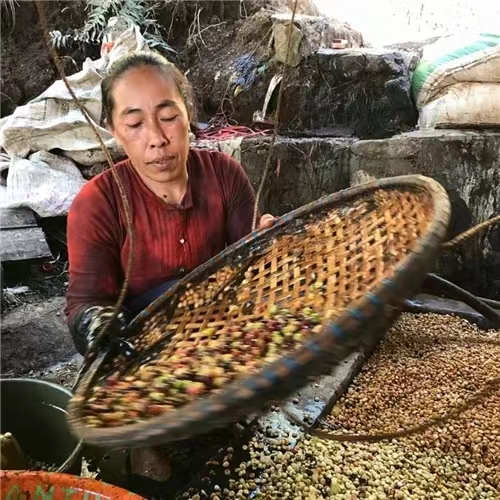
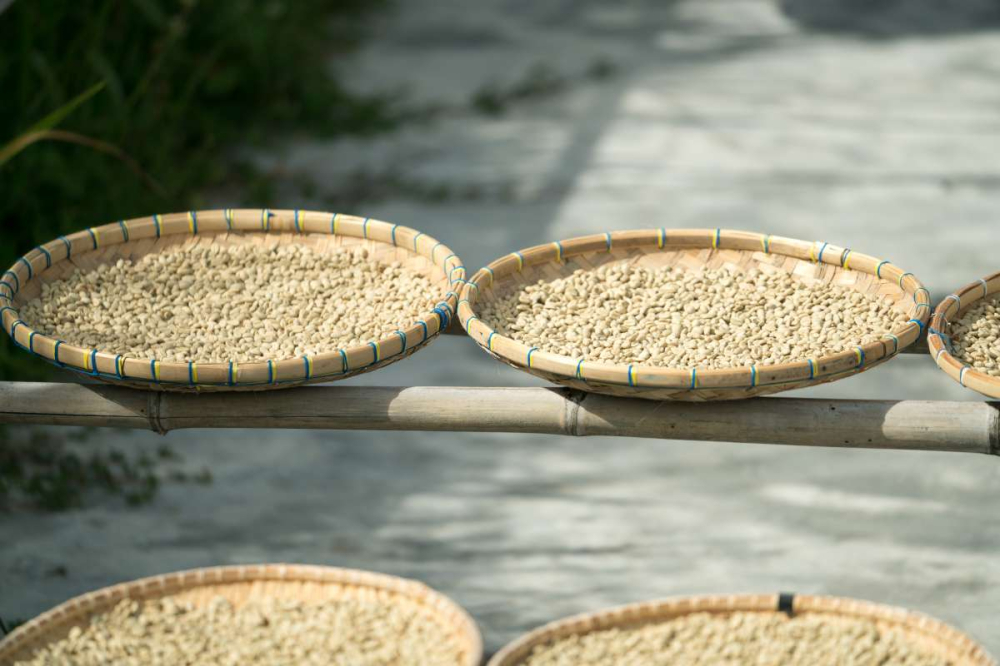
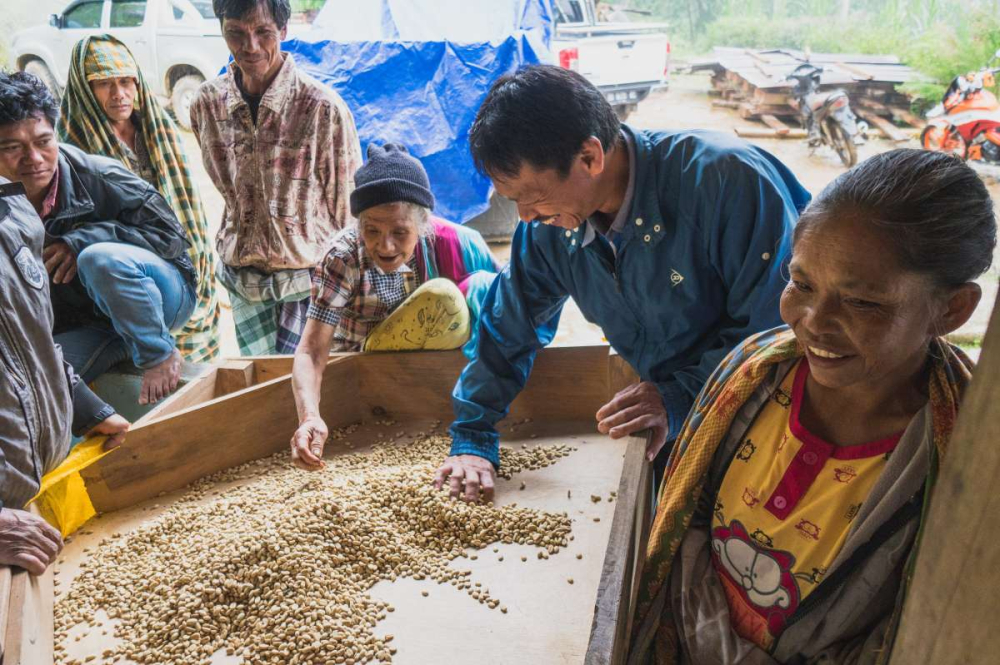
As the name suggests, wet hulling involves removing the coffee bean’s outer husk while the bean is still relatively moist. The overall process can be divided into seven main stages: first, the coffee cherry's skin and pulp are removed, leaving behind the parchment and mucilage; next, the beans undergo water tank fermentation to remove residual mucilage; then the mucilage is washed away, and the parchment-covered beans are sun-dried for about 2 to 3 days until their moisture content drops to 20% to 24%. At this point, the beans are transferred to a specialized wet mill to remove the parchment layer — a step that causes surface friction, damaging the bean and releasing white or greenish slime. Subsequently, the beans are quickly dried without the protection of the parchment to a moisture level of 12% to 13%, after which they are prepared for export.
The primary difference between wet hulling and the standard washed process lies in the removal of the parchment layer before full drying, causing the beans to dehydrate rapidly in high humidity and direct sunlight. Without the protective parchment, not only does drying happen faster, but the beans are also more susceptible to external factors such as mold contamination and uneven drying, which can lead to spotting on the bean surface and inconsistent heat absorption during roasting. Additionally, the high heat generated during friction tends to accelerate bean aging — this is also why many Mandheling coffees processed with wet hulling often exhibit pronounced woody and earthy tones.
So why is wet hulling so prevalent in Indonesia? The answer lies in its climate. With year-round humidity levels of 70% to 90% and annual rainfall in some areas exceeding 2,000 millimeters, the environment is highly unfavorable for coffee processing methods that require long drying times. The traditional washed process involves prolonged drying of parchment-covered beans, but in Indonesia’s humid climate, this process is not only slow but also prone to mold growth. Wet hulling dramatically shortens the drying period by removing the parchment early on, making it roughly 2 to 3 times faster than the traditional washed method, thus allowing farmers to consistently produce flavorful beans even in adverse weather conditions.
Indonesian Mandheling, including the regular lots from the Lintong region and the Golden Mandheling produced by PWN, are classic representatives of the wet hulling method. Among them, PWN Golden Mandheling, due to its rigorous bean selection and four rounds of manual sorting — choosing only the highest grade G1 green beans (i.e., less than 3 defects per 300 grams sample, with beans all above eighteen mesh) — manages to maintain a relatively clean flavor profile despite the higher defect rates typically associated with wet hulling. It also showcases a more pronounced body and sweetness. These beans undergo special processing and strict screening before export to ensure consistent flavor and quality.
In terms of roasting, to fully highlight Mandheling’s bold body and low acidity, many roasters opt for a medium-to-dark roast to bring out aromas of dark chocolate, caramel, and nuts. For pour over enthusiasts, understanding how to adjust brewing parameters according to this roast level is key to brewing great Mandheling. It is recommended to use a KONO filter cone, whose unique smooth curve and reduced venting design allow for more even saturation and extraction of the coffee grounds, resulting in a rounder, fuller-bodied cup — particularly well-suited for medium-to-dark roasted Mandheling.
For medium-to-dark roasted Mandheling beans, whose internal structure is relatively loose and water absorption rate is fast, it is advised to set the grind size to medium-coarse and use a slightly lower water temperature for pour over to avoid over-extraction, which can lead to prominent bitterness. In practice, you can use a Chinese No. 20 sieve for testing, aiming for a passing rate of around 70% — compared to 75% to 80% for medium-light roasts — to better prevent the release of excessive large-molecule bitter compounds. The water temperature is recommended to be set at 87 to 88°C, slightly lower than the 91 to 93°C used for light roasts, helping to maintain extraction balance.
For pour over, it is recommended to use a three-stage pouring technique to fully bring out the bold body and sweetness of Mandheling. First, perform a 30 ml bloom pour to wet all coffee grounds and release CO₂; next, in the second stage, pour 100 ml, during which you may observe bubbles rising from the coffee bed, helping to improve overall extraction efficiency; finally, finish with a gentle 95 ml center pour to enhance sweetness and caramel notes, while creating a full and substantial mouthfeel structure. This pouring rhythm effectively balances the often-heavy and woody characteristics of Mandheling, making the flavor profile more dimensional.
The above content is compiled by CoffeeHunters, a coffee news website.


