







Introduction:To precisely master the flavor balance of pour over coffee, you can't rely solely on intuition (手感)! The Golden Cup extraction theory provides scientifically-based references for extraction yield and concentration, helping you understand the golden ratio of coffee extraction. This article explains in simple terms the two methods for calculating extraction yield: the traditional dry weighing method and the practical technique of back-calculating using TDS instruments, while also reminding you of the key correction point regarding coffee grounds' water absorption during drip filtration, so that every pour over you make gets closer to the ideal extraction range.
How should the flavor of pour over coffee actually be evaluated? In the past, most people relied on the "intuition" cultivated through repeated practice, but with extraction science becoming increasingly refined today, we can more objectively assess the quality of a cup of coffee through concrete data. Among these, the Golden Cup extraction theory serves as a classic reference framework. Although some parameter ranges in Version 1 no longer fully align with modern roasting and brewing trends, its core logic for calculating extraction yield and concentration remains practically valuable to this day.
This article will start by discussing the development background of the Golden Cup criteria, then go into detail about the two mainstream methods for calculating extraction yield: the traditional method that requires time-consuming drying and weighing, and the more efficient approach that uses a TDS detector to back-calculate extraction yield based on concentration. At the same time, we’ll clarify the definitional differences between concentration and extraction yield, their conversion relationship, and especially remind you not to overlook the critical correction detail of coffee grounds absorbing water during drip-style brewing, ensuring you can more accurately evaluate your pour over results.
Going back to the 1950s, the National Coffee Association (NCA) of the United States commissioned MIT-trained chemist Dr. Lockhart to conduct systematic scientific research on coffee. Lockhart found that about 30% of the components in coffee beans can be extracted, while the remaining 70% consists of insoluble fibrous solids. He further pointed out that whether a cup of coffee tastes good depends on the balance between two metrics: "extraction yield" and "coffee liquid concentration (TDS)."
Between 1952 and 1960, Lockhart’s team conducted sampling surveys among the American public and statistically determined that people generally preferred coffee with an extraction yield between 17.5%–21.2% and a concentration in the range of 1.04%–1.39%. This formed the initial prototype of the American Golden Cup criteria. Later, in collaboration with the Midwest Research Center of the U.S. military, and through data analysis combined with expert cuppings, the optimal extraction range was adjusted to an extraction yield of 18%–22% and a concentration of 1.15%–1.35%. This standard later became the foundation of the SCAA (Specialty Coffee Association of America) and the subsequent SCA Golden Cup theory after the merger.
It’s worth noting that from today’s perspective, even if either the extraction yield or concentration slightly deviates from the Golden Cup range, it’s still possible to brew coffee with outstanding flavor. Therefore, strictly adhering to specific numerical values is no longer absolutely necessary. But the key calculation formulas left behind by the Golden Cup criteria remain an indispensable tool for coffee enthusiasts who want to scientifically adjust their brewing parameters.
The so-called "coffee extraction yield" refers to the proportion of soluble substances that are actually released from coffee beans (or grounds) after brewing. To calculate this value, the most basic method is through dry weighing — although the steps are more cumbersome, it allows for an intuitive understanding of the principle.(Image location: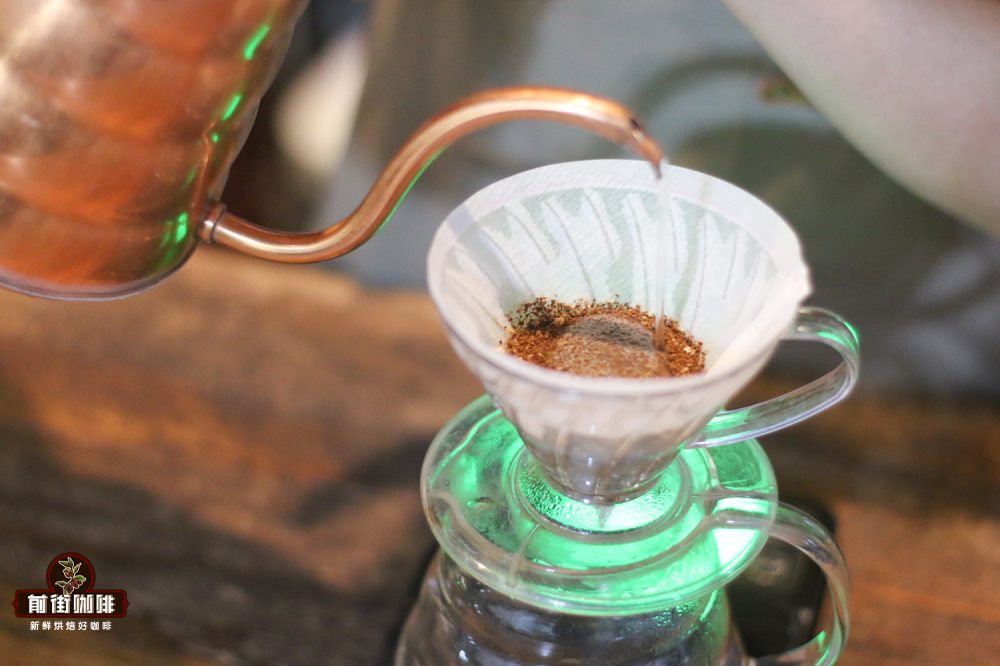 )
Since coffee grounds release soluble substances into the water when they come into contact with it, this means that the "weight of dissolved substances" is equal to the "weight lost by the coffee grounds." In practice, you just need to thoroughly dry (or roast) the brewed coffee grounds, weigh their final weight, and then subtract the dried grounds weight from the original coffee grounds weight — the difference is the weight of the extracted coffee substances. The calculation formula is:Extraction yield = (Original coffee grounds weight - Dried coffee grounds weight) ÷ Original coffee grounds weight.
For example: If you use 15 grams of coffee grounds for brewing, and after brewing the coffee grounds are completely dried and weighed at 12.3 grams, this means the weight of the substances dissolved in the water is 2.7 grams (15 - 12.3). The extraction yield of this cup of coffee is then 2.7 ÷ 15 = 0.18, which is18%.
However, this method has clear limitations: first, it is time-consuming (you have to wait for the coffee grounds to completely dry), and second, there are accuracy issues — during the drying process, slight losses may occur due to environmental humidity or handling methods, and since most electronic scales are only accurate to 0.1 gram, a 0.1-gram error could lead to a deviation in extraction yield calculation of up to 0.7%, affecting judgment accuracy.
Therefore, the more commonly used practical method nowadays is to back-calculate the extraction yield using "concentration" data, provided you have a TDS (Total Dissolved Solids) detector.
First, let’s clarify two key concepts:"Concentration"refers to the proportion of "extracted coffee substances" in the total weight of the brewed coffee liquid; while"extraction yield"refers to the proportion of "extracted coffee substances" in the total weight of the original coffee beans (or grounds). Simply put, the "denominator" for concentration is the coffee liquid, while the "denominator" for extraction yield is the coffee beans (or grounds).
Based on these definitions, the following formulas can be derived:Coffee liquid concentration = Weight of extracted coffee substances ÷ Weight of coffee liquid,Coffee extraction yield = Weight of extracted coffee substances ÷ Weight of coffee beans (or grounds). By combining these two formulas, you can derive a practical formula for calculating extraction yield:Coffee extraction yield = Coffee liquid concentration × Coffee liquid weight ÷ Weight of coffee beans (or grounds).
In actual operation, you just need to use a TDS instrument to measure the concentration of the coffee liquid (in %), along with the recorded amount of water poured, to quickly calculate the extraction yield. But one thing to pay special attention to is:During drip-style brewing, the coffee grounds themselves will absorb approximately twice their own weight in water(for example, 15 grams of coffee grounds will absorb about 30 grams of water), and this portion of water does not end up in the final coffee liquid. Therefore, the correct formula for calculating "coffee liquid weight" is:Coffee liquid weight = Water poured - 2 × Weight of coffee beans (or grounds). Mastering this correction point is essential to avoid inaccuracies in extraction yield calculations due to ignoring water absorption.
The above content is compiled by CoffeeHunters, a coffee news website.


