







Introduction:Many people assume that simply storing coffee beans for a long time turns them into aged beans, but in reality, true aged coffee requires long-term storage under strictly controlled temperature and humidity to develop a rich, mellow aftertaste akin to Pu-erh tea. This article delves into the definition, storage conditions, and flavor evolution of aged coffee beans, compares them with monsooned coffee and regular old beans, and provides practical roasting and pour-over parameters to help you better understand the secrets of this unique coffee.
In the world of coffee, the term "aged" is often misunderstood. Many consumers believe that any coffee bean stored long enough will become an aged bean, but that’s not the case. True aged coffee beans must be stored in an environment where both temperature and humidity are strictly controlled for at least three to five years, with regular turning and inspection, to develop a rich, mellow aftertaste reminiscent of Pu-erh tea.
What sets aged coffee beans apart from ordinary old beans lies in the meticulous management during their storage. These coffee beans are typically kept in well-ventilated warehouses with specific temperature and humidity regulation, and the bags are turned at intervals to ensure uniform dryness. Only through such long-term, careful nurturing can the acidity of the beans gradually transform, ultimately yielding a deep, intense, and layered flavor profile.
The history of aged coffee dates back to the Dutch colonial era. At that time, Sumatra, as one of the world’s major coffee-producing regions, stockpiled large quantities of coffee beans to ensure stable supply for the European market. However, due to factors like sea breeze during long-distance transport, these beans unexpectedly developed unique flavors upon arrival in Europe, winning the favor of European coffee enthusiasts.
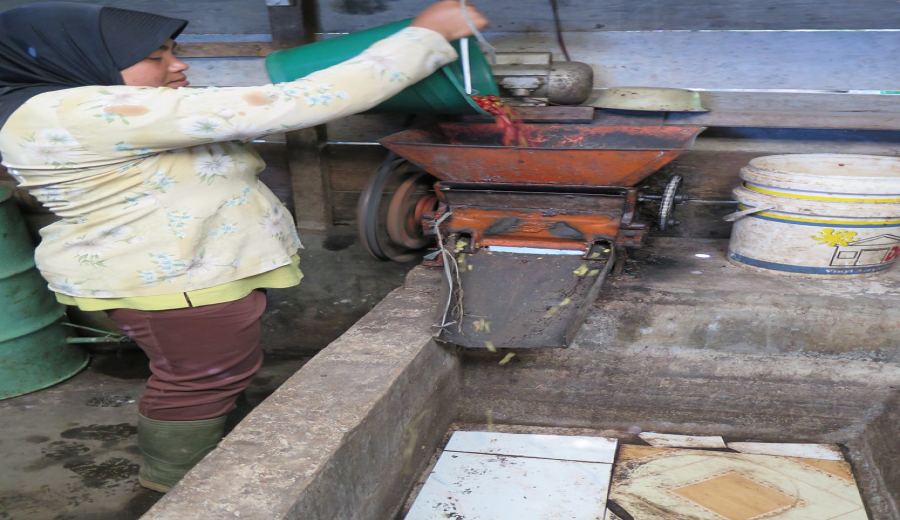
Today, aged Mandheling from Indonesia is one of the most representative examples of aged coffee. These beans are usually processed using the wet-hulled method after harvest. This process involves sun-drying the beans with their parchment layer intact for two to three days during the standard washed process, reducing moisture content to 20–24%, then removing the parchment and continuing to dry until the moisture level reaches about 12–13%. The resulting green beans are then stored in cool, ventilated warehouses and regularly turned to prevent mold, a process that typically lasts two to three years.
During the aging process, the acidity of the coffee beans gradually diminishes and transforms into richer sugars, resulting in a more rounded and full-bodied flavor. At the same time, the beans’ color darkens over time, often taking on a yellowish-brown or dark brown hue, which is a distinct characteristic of aged coffee. Additionally, aged coffee generally has a thicker mouthfeel, pronounced sweetness, and may be accompanied by honey-like aromas.
However, it’s worth noting that not all coffee beans are suitable for aging. Generally, only green beans from tropical rainforest regions with dense, hard beans possess the potential to become high-quality aged coffee. Sumatra Mandheling, Sulawesi, and Java in Indonesia are common premium choices. In contrast, Hawaiian Kona, though it also has limited aged beans, receives less attention due to its less mainstream flavor profile.
There is a fundamental difference between aged coffee beans and Indian monsooned coffee beans. Monsooned coffee involves exposing green beans to monsoon conditions, accelerating aging through rapid moisture loss over a short period, typically just three to four months. In contrast, aged coffee undergoes slow and delicate natural aging over a much longer period. Moreover, aged coffee differs from regular old beans that have simply been sitting for years, as the optimal flavor retention period for ordinary coffee beans in natural environments is only about twelve months; beyond that, the flavors typically deteriorate significantly, losing their drinking value.
In terms of roasting, taking aged Mandheling as an example, many professional roasters opt for a medium-dark roast. This level of roasting fully highlights the herbal and spicy notes inherent in Mandheling beans while also accentuating the distinctive mellow richness of aged coffee, delivering a steady and substantial taste experience to drinkers.
For pour-over, it’s recommended to use a KONO filter cone, whose design effectively restricts airflow, prolonging the water absorption time of the coffee grounds, thereby enhancing extraction evenness and body. Specific parameters can be referenced as follows: water temperature around 87–88°C, grind size with 70–75% passing through a #20 sieve, and a coffee-to-water ratio of 1:15. When brewing, start with a 30-second bloom using 30 grams of water, then pour in small circles until reaching 125 grams for the first pour, wait for the water level to drop, then continue pouring to 225 grams, with a total brew time of approximately 2 minutes.
This brewing method makes the flavor characteristics of aged Mandheling more pronounced, including woody, malty, and caramel aromas. In terms of taste, it showcases low acidity, a full body, and a delicate texture, similar to the flavor of aged Pu-erh tea, along with notes of caramel, herbs, and chocolate, offering a sweet and satisfying cup—perfect for coffee lovers who enjoy deep, complex flavors.
The above content is compiled by CoffeeHunters, a coffee news website.


