







Introduction:As the representative of Indonesian coffee, Mandheling boasts a diverse flavor spectrum. This article delves into five classic types—Lintong, Golden, Tiger, Aged, and Natural Mandheling—analyzing their origins, altitudes, varieties, processing methods, and flavor profiles. It also includes key steps of the wet-hulling process and recommended pour-over parameters to help coffee enthusiasts systematically understand the differences and charm of these classic flavors.
When it comes to Indonesian coffee, Mandheling is undoubtedly the most iconic representation. However, Mandheling is not a single flavor; it encompasses multiple flavor profiles, ranging from classic bold and rich styles to those with unique processing characteristics. Each type has its own distinct personality. This article will thoroughly explore the origin, variety traits, processing methods, and flavor expressions of Lintong Mandheling, Golden Mandheling, Tiger Mandheling, Aged Mandheling, and Natural Mandheling, taking you deep into how Sumatra’s wet-hulling method shapes the unique character of Mandheling.
Sumatra, as an important coffee-producing region in Indonesia, has a coffee cultivation history dating back to 1696. At that time, Dutch colonists chose Java Island as the starting point to expand coffee cultivation. However, over time, Sumatra gradually became synonymous with Indonesian coffee, especially the Mandheling variety. Interestingly, much of the Java coffee shipped to Europe in the early days actually originated from Sumatra, and Mandheling is a product of Sumatra. This has given Sumatra a pivotal position in Indonesia’s coffee map.
There is an interesting anecdote about the origin of the name “Mandheling.” It is said that after the Japanese military ended its colonization in Indonesia, they couldn’t forget the delicious local coffee and entrusted local people to purchase high-quality coffee beans through trade partners, including the beans that later became known as Mandheling. Due to the inconvenience of disclosing commercial channels, the locals casually responded with “Mandheling,” and this name serendipitously became the official term for these coffee beans. This local person was none other than the head of Indonesia’s PWN company, mentioned later in the article.
One of the most distinctive features of Mandheling coffee is its widespread use of Sumatra’s unique wet-hulling process. Due to the region’s perennially rainy climate and frequent typhoons, which are unsuitable for the stable weather required for sun-drying, and economic constraints that make the high cost of the washed process difficult to adopt, this highly regional processing method was developed. The wet-hulling process mainly consists of two stages: first, a wooden pulper is used to remove the skin and pulp, followed by a 3-hour fermentation and then drying to reduce the moisture content to a semi-dry state of 30% to 50%; next, the mucilage and parchment layers are removed, and the final drying is completed, taking 2 to 4 days in total, with the final moisture content reduced to 12% to 13%. This process not only influences the coffee’s flavor but also gives Mandheling beans their characteristic “elephant ear” shape—the semi-hard, semi-soft wet beans are prone to being damaged and cracked when the mucilage and parchment layers are removed, resulting in a shape resembling an elephant’s hoof. However, this is a normal phenomenon, not a defect.
Additionally, there is a special aged wet-hulling method. The coffee beans are first processed using the conventional wet-hulling method, then stored in a cool, ventilated warehouse for 2 to 3 years, with regular turning to prevent mold. During this process, acidity gradually transforms into sweetness, the color darkens to yellowish-brown or dark brown, and ultimately, a uniquely flavored Aged Mandheling is formed.
Lintong Mandheling is produced in the Lintong mountainous area in central-northern Sumatra, near Lake Toba, at an altitude of 1100 to 1600 meters. The main varieties are Typica and Catucai, and the processing method uses standard wet-hulling. Its flavor profile includes toasted bread, nuts, caramel, pine, and herbs, with low acidity and high body. Due to the wet-hulling process, semi-hard, semi-soft wet beans are prone to being damaged, forming the distinctive “elephant ear beans,” one of the hallmark features of Mandheling. Lintong Mandheling has relatively loose screening and lower processing precision, which may result in inconsistent quality, but this does not affect the popularity of its rich body.
Typica is an ancient Arabica variety with bronze-colored top leaves and an oval or slender bean shape. It has an elegant flavor but is delicate, with poor disease resistance and low yield. Catucai is a natural mutation of the Bourbon variety, discovered in Brazil in 1937. It has a shorter tree height, weaker disease resistance than Bourbon, but higher yield. These two varieties form the foundational flavor of Lintong Mandheling.
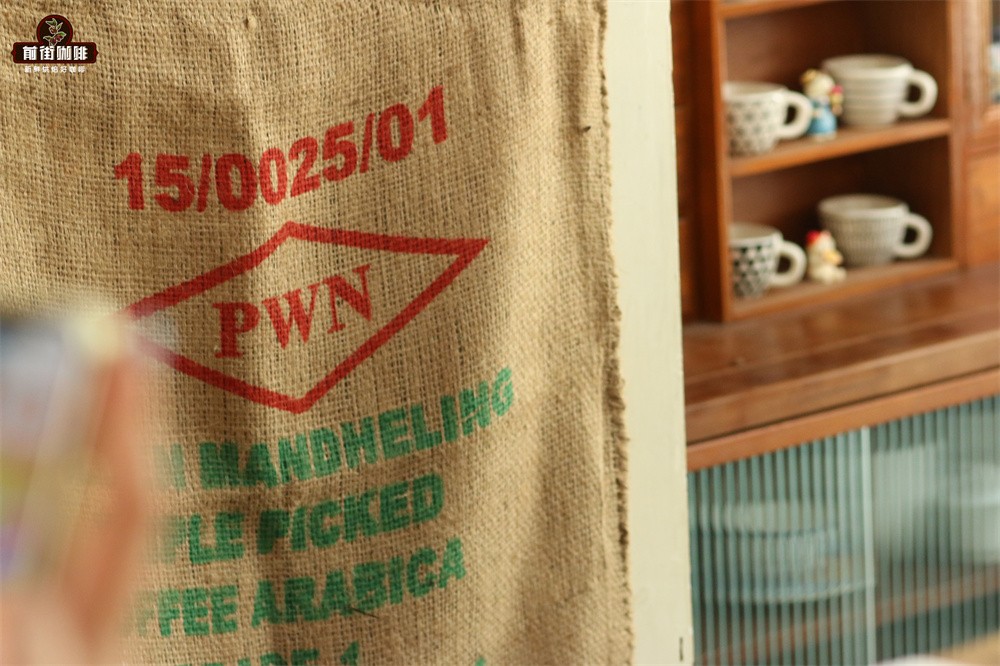
Golden Mandheling is produced in Gayo Mountain, Aceh, Sumatra, at an altitude of 1100 to 1600 meters. The variety is Ateng (a hybrid of Arabica and Robusta, belonging to the Catimor group), graded as G1 and hand-sorted three times. The processing method is also wet-hulling. Its flavor profile includes spices, herbs, caramel, pine, nuts, and chocolate. Japanese buyers, in collaboration with local green bean traders, established a strict screening system. The green beans undergo density sorting, color sorting, and multiple manual picks, resulting in a product with uniform color and consistent bean shape. It is said that under sunlight, Golden Mandheling emits a golden shimmer, hence its name. Golden Mandheling is specified as over eighteen screens, with fewer than 3 defects (in a 300g green bean sample), and is classified as the highest grade, G1. The color is dark green, and the beans are flat and well-formed. After strict screening, its earthy flavors are significantly reduced, resulting in a cleaner, brighter taste with stronger sweetness.
It is worth noting that the trademark for Golden Mandheling is not registered by a Japanese company but is held by Indonesia’s PWN company, which was involved in the early export cooperation. The Japanese company registered the name “Gold Top Mandheling” (Ding Shang Golden Mandheling). The flavor profiles of the two are not significantly different, but differences in branding and marketing strategies may influence market perception.
Tiger Mandheling is produced in Sumatra at an altitude of 1500 meters. The varieties include Catucai, Typica, and Sidikalang, and the processing method is wet-hulling. Its flavor is dominated by nuts, cream, dark chocolate, caramel, and pine, with a relatively balanced taste. This Mandheling emphasizes the richness of flavor layers, making it suitable for drinkers who enjoy a rich body and balanced sweetness.
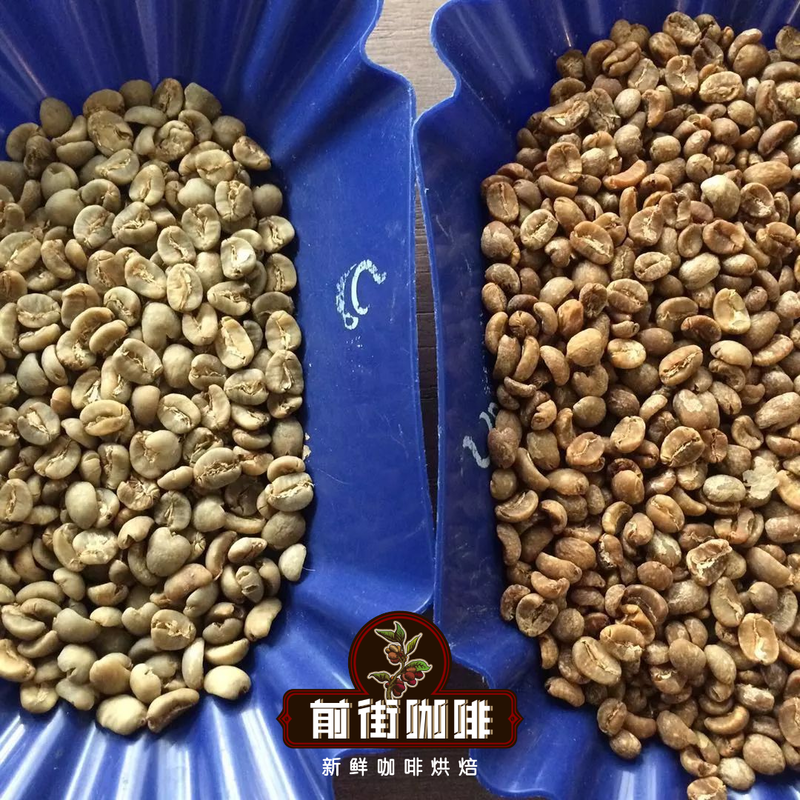
Aged Mandheling is also produced in Sumatra at an altitude of 1500 meters. The varieties are Catucai and Typica, and the processing method is wet-hulling. Its flavor profile includes ripe pu-erh, caramel, herbs, and chocolate, with low acidity. The unique flavor of Aged Mandheling is not deliberately crafted but stems from historical factors: during the Dutch colonial period in Indonesia, to ensure a stable supply of coffee beans, beans were stored for long-distance transport to Europe. Due to the long transport time and exposure to sea breezes, the beans developed a distinctive aged flavor upon arrival in Europe, unexpectedly winning the favor of European colonists. The modern processing of Aged Mandheling is now quite mature: it is first processed using the wet-hulling method, then stored in a cool, ventilated warehouse for 2 to 3 years, with regular turning to prevent mold. The acidity gradually transforms into sweetness, the color turns dark brown, and the flavor becomes rounder and deeper, similar to the mellow sedimentation of pu-erh tea.
Natural Mandheling is produced in the Wahana Estate in the Lake Toba region of Sumatra, at an altitude of 1000 to 1700 meters. The varieties are Bourbon and Typica, and the processing method is natural (sun-dried). Its flavor profile includes melon, fermentation notes, mango, tropical fruits, and peach, with moderate acidity and pronounced sweetness. The Wahana Estate was established in 2005, located in the Sidikalang district, at an altitude of 1200 to 1500 meters, with annual rainfall of 2000 to 3000 mm and a diurnal temperature variation of over 10°C. The red fruit sugar content generally exceeds 13%. The estate uses plot isolation to grow different varieties separately, harvesting and processing them individually to ensure each variety’s potential is fully realized.
Regarding roasting and pour-over parameters, different processing methods and roast levels of Mandheling require adjusted brewing strategies: for Natural Mandheling with medium-light roasts, it is recommended to use a V60 dripper, with a 1:15 coffee-to-water ratio, 90°C water temperature, and 20-number standard sieve 80% extraction rate grind size. Bloom for 30 seconds, then brew in stages. For medium-dark roasted Lintong, Golden, Tiger, and Aged Mandheling, the Kono dripper is suitable, with a 1:15 coffee-to-water ratio, 88°C water temperature, and 20-number standard sieve 70-75% extraction rate grind size. Bloom, then brew in stages. Mastering these details can more fully showcase the unique flavors of each type of Mandheling.
The above content is compiled by CoffeeHunters, a coffee news website.


