







Introduction:Geisha coffee is highly praised for its unique floral and fruity aroma and rich complexity, but many coffee enthusiasts often feel overwhelmed by the various grading categories such as Auction, Gold, Red, Green, and Blue. This article systematically dissects the grading logic of Geisha from Ethiopia’s Gesha Village and Panama’s Hacienda La Esmeralda, detailing the classification criteria, production ratios, and flavor profiles of each grade. It also includes practical brewing parameters and recommendations to help you select and extract the ideal flavors with precision.
In recent years, Geisha coffee has sparked a craze in the global specialty coffee market. Its distinctive jasmine, citrus, and tropical fruit notes leave an unforgettable impression. However, when faced with multiple grading labels such as Auction, Gold, Red, Green, and Blue, consumers often struggle to discern the quality differences behind them. This article will delve into the origins and characteristics of these grades, focusing on two renowned origins—Ethiopia’s Gesha Village and Panama’s Hacienda La Esmeralda—to provide a comprehensive understanding of the Geisha grading system, along with useful brewing tips to help you better appreciate this “top diamond of the coffee world.”
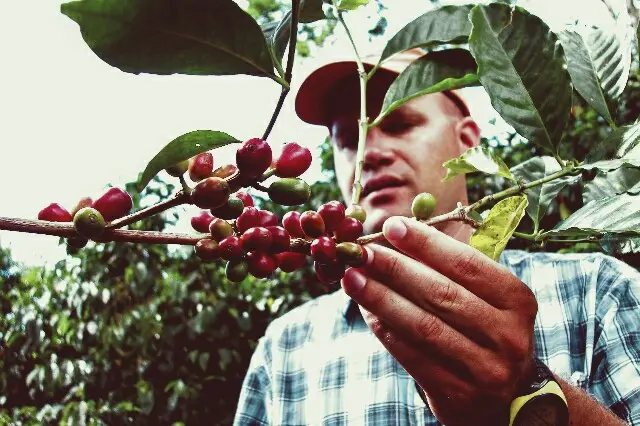
To discuss the origins of Geisha, we must go back to 1931. At that time, a team of botanists discovered a unique coffee variety with tall trees and large fruits in the Bonga area of southwestern Ethiopia—an unknown species that would later become what we now know as Geisha. The researchers took seeds to Kenya, Uganda, and Tanzania for cultivation, and they were eventually introduced to Costa Rica by a research institution in 1953. It wasn’t until 1963 that Pachi Serracin, the former owner of Panama’s Hacienda La Esmeralda, brought Geisha to Central America. With careful nurturing at the estate, it won the prestigious Best of Panama (BOP) competition in 2004 thanks to its exceptional flavor, and has since become world-renowned. Geisha coffee, with its jasmine aroma, peach sweetness, and bergamot acidity, has become the dream coffee for enthusiasts.
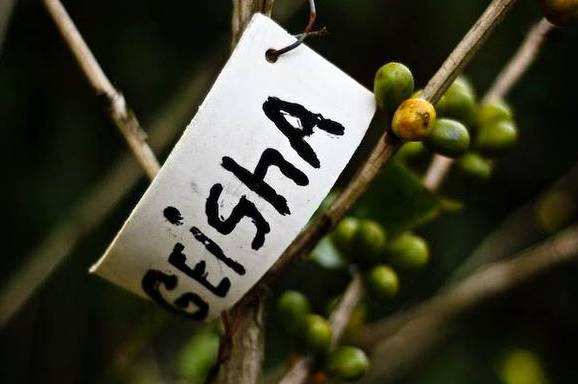
To deeply understand the grading of Geisha, we must start with its place of origin—Gesha Village in Ethiopia. In 2007, documentary filmmakers Adam Overton and his wife Rachel Samuel, while filming a coffee documentary for the Ethiopian government, visited the native forest of Geisha for the first time. Inspired by the charm of the local coffee, the couple, upon expert advice, traveled to the Gori Gesha Forest in the Bench Maji region in 2011 to search for the most original Geisha variety. They discovered precious heirloom plants among wild coffee trees and, based on these, established the nearly 500-hectare Gesha Village Coffee Estate nearby.
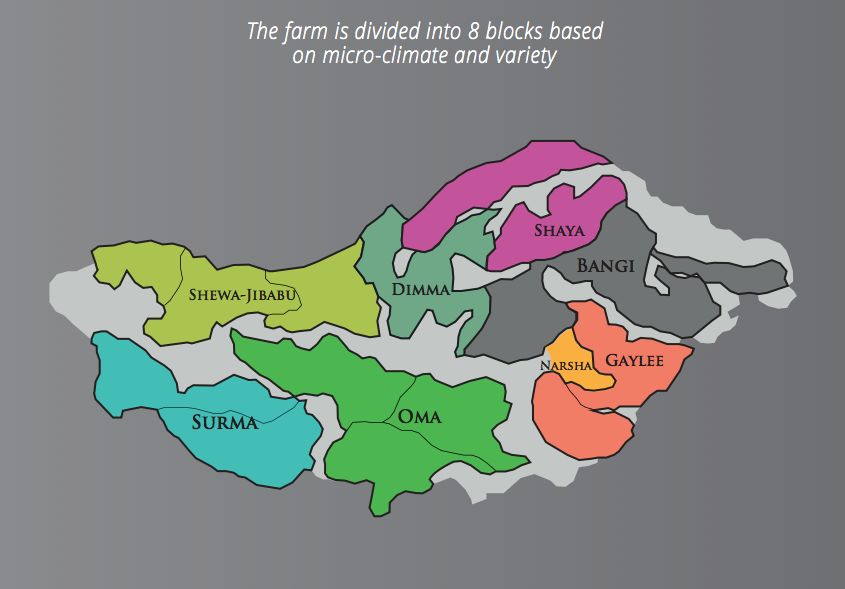
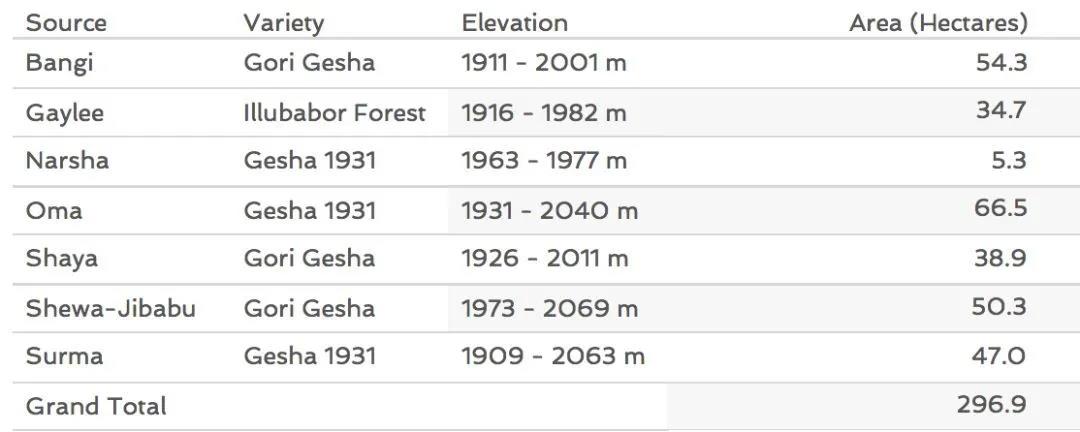
Unlike Ethiopia’s common smallholder model, Gesha Village Coffee Estate operates on a large-scale farm basis, with its own washed processing facility and lab, focusing exclusively on growing the Geisha variety. The estate is divided into multiple plots with distinct microclimates, such as OMA, SURMA, and SHEWA-JIBABU, located between altitudes of 1900 and 2069 meters. Depending on altitude, soil, and shade conditions, different batches of Geisha are planted, with a strict grading system implemented to ensure each batch showcases unique flavors.

In the estate’s grading system, Auction lots are at the top of the pyramid, accounting for only 3.7% of annual production. These must be obtained through auctions, with each bean undergoing multiple screenings and representing the highest quality. Gold lots make up about 10% and are the choice of many competition brewers and demanding roasters. Not only do they offer complex flavors, but they also come with detailed plot and processing information, making them ideal for coffee lovers seeking ultimate taste. The Gold lots purchased by this brand come from the Oma plot, at an altitude of 1900–2040 meters, processed naturally, and present flavors of citrus, berries, cream, caramel, melon, and honey, with outstanding cupping scores.
Red lots account for about 15%, requiring a cupping score of 88 or above and also come with complete traceability information, offering great value for money. The brand’s Red Geisha comes from the Shewa-Jibabu plot, at an altitude of 1973–2069 meters, naturally processed to highlight flavors of lemon, plum, citrus, tropical fruits, and floral tea, suitable for consumers who enjoy classic Geisha profiles. Green lots are entry-level batches from single plots and single varieties, without a cupping score requirement, offering basic traceability, such as the Bangi plot’s naturally processed Gori Geisha, at an altitude of 1911–2001 meters, suitable for those new to Geisha. Additionally, the CHAKA lot blends various plots and varieties across the estate, including Geisha 1931, Gori Geisha, and Illubabor, representing a diverse range of flavors throughout the year.

Another major hub for Geisha is Panama’s Hacienda La Esmeralda. Located in the Boquete region, the estate benefits from volcanic soil and significant day-night temperature variations, producing Geisha coffee with intense flavors. After winning the BOP championship with Geisha in 2004, Hacienda La Esmeralda further refined its Geisha cultivation and management, categorizing it into several brands according to quality and origin, including Esmeralda Special (Red), Private Collection (Green), and Geisha 1500 (Blue), each corresponding to different market positions and consumer needs.
The Hacienda La Esmeralda Auction lots are a new high-end auction series launched in 2022, selected from the top beans of the Red lots. Their auction prices have reached new highs each year and are a focal point for Geisha enthusiasts. Red lots (Esmeralda Special) are grown at altitudes of 1600 to 1800 meters, with cupping scores exceeding 90, processed either naturally or washed, showcasing rich floral notes and complex fruit acidity and sweetness, representing the estate’s top tier. The Red lots purchased by this brand come from the Canas Verdes plot, at an altitude of 1700+ meters, with flavors of lemon, honey, berries, orange peel, mango, and cream, all distinctly layered.
Green lots (Private Collection) do not participate in auctions but also come from high-altitude plots, as multi-region blends. Washed processing brings brighter fruit acidity and floral notes. For example, the Green lots from the Canas Verdes plot, at an altitude of 1700 meters, feature flavors of jasmine, ginger flower, sweet orange, lemon, and honey, balanced and easy to drink. Blue lots (Geisha 1500) were originally grown at 1400 to 1500 meters but have now shifted to being exported as volcanic rock Geisha, with flavors turning lighter toward floral notes and fruit acidity and sweetness, offering a refreshing taste suitable for consumers who prefer lighter profiles.
After understanding the grading of Geisha, how to brew it to achieve the best flavor is also key. It is recommended to use freshly roasted beans within 7 to 30 days, and opt for medium-light roasting to preserve floral and fruity acidity. The brand suggests using a V60 filter, with water temperature controlled at 91–92°C, 15g of coffee, a 1:15 coffee-to-water ratio, and grind size about the size of fine sugar (sifted through a #20 sieve to 80%). Use a three-stage extraction method: first, pour 30g of water for a 30-second bloom; then add 95g of hot water; once the coffee bed drops, add the final 100g. Maintain a small, centered stream of water throughout to avoid over-extraction.
Take the Gesha Village Red lot as an example: its Gori Geisha offers notes of tropical fruit, bergamot, and lemon, with a creamy sweetness and subtle fermentation aroma in the aftertaste. As the temperature cools slightly, the jasmine floral notes become more pronounced. Meanwhile, the Hacienda La Esmeralda Red lot Geisha delivers a burst of rich fruit and delicate floral flavors, with a berry-sweet aftertaste and long-lasting finish. Mastering these details allows you to enjoy a professional-grade Geisha coffee experience at home.
The above content is compiled by CoffeeHunters, a coffee news website.


