








Introduction:Colombian coffee is renowned for its balanced flavor profile and diverse taste characteristics. This article delves into six representative single-origin coffees, from washed Huila to double anaerobic Cauca, analyzing how altitude, variety, and processing methods influence aroma and taste. Whether you prefer nutty, chocolatey profiles or love fruity, floral notes like berries and cherry blossom, you’ll find suitable pour-over options along with V60 extraction recommendations.
As one of the world’s top Arabica coffee producers, Colombia benefits from its exceptional climate and rugged mountainous terrain, yielding beans with delicate textures and rich aromas. Based on hands-on cupping experiences, this article systematically explores the natural conditions of key regions such as Huila, Cauca, and Santander, while examining the distinctive traits of mainstream varieties like Caturra, Castillo, and Typica. It also dissects the flavor profiles of various processing methods—washed, anaerobic natural, double enzyme washed, and barrel fermentation—helping coffee enthusiasts understand the diversity of Colombian coffee from multiple dimensions.
Among the classic six Colombian single-origin coffees, each showcases unique regional characteristics and the essence of its processing technique. Based on medium roasting, these beans generally exhibit clear layers of fruit acidity while retaining the signature full-bodied aftertaste of Colombian coffee. Whether you’re drawn to the traditional black chocolate and nutty tones or seek innovative flavors like strawberry jam, peach, and cherry blossom, you’ll discover your ideal choice. The article concludes with practical V60 pour-over parameters to help you replicate professional-grade flavors at home.

The outstanding performance of Colombian coffee stems from its strategic location near the equator and complex microclimates. The country’s terrain includes the main ranges of the Andes Mountains, coastal plains along the Pacific and Caribbean, and three major mountain ranges stretching north to south, creating a diverse array of microclimate zones. This geographical advantage not only ensures year-round coffee harvesting (main harvest season from October to January, secondary season from April to July), but also allows specific altitude regions to cultivate adapted varieties. Notably, since the introduction of Typica in the 16th–17th centuries, though its elegant floral notes and bright acidity laid the foundation, its relatively low yield gradually led to its replacement by more disease-resistant, higher-yield modern varieties. However, it remains planted in some specialty farms as a distinctive cultivar.
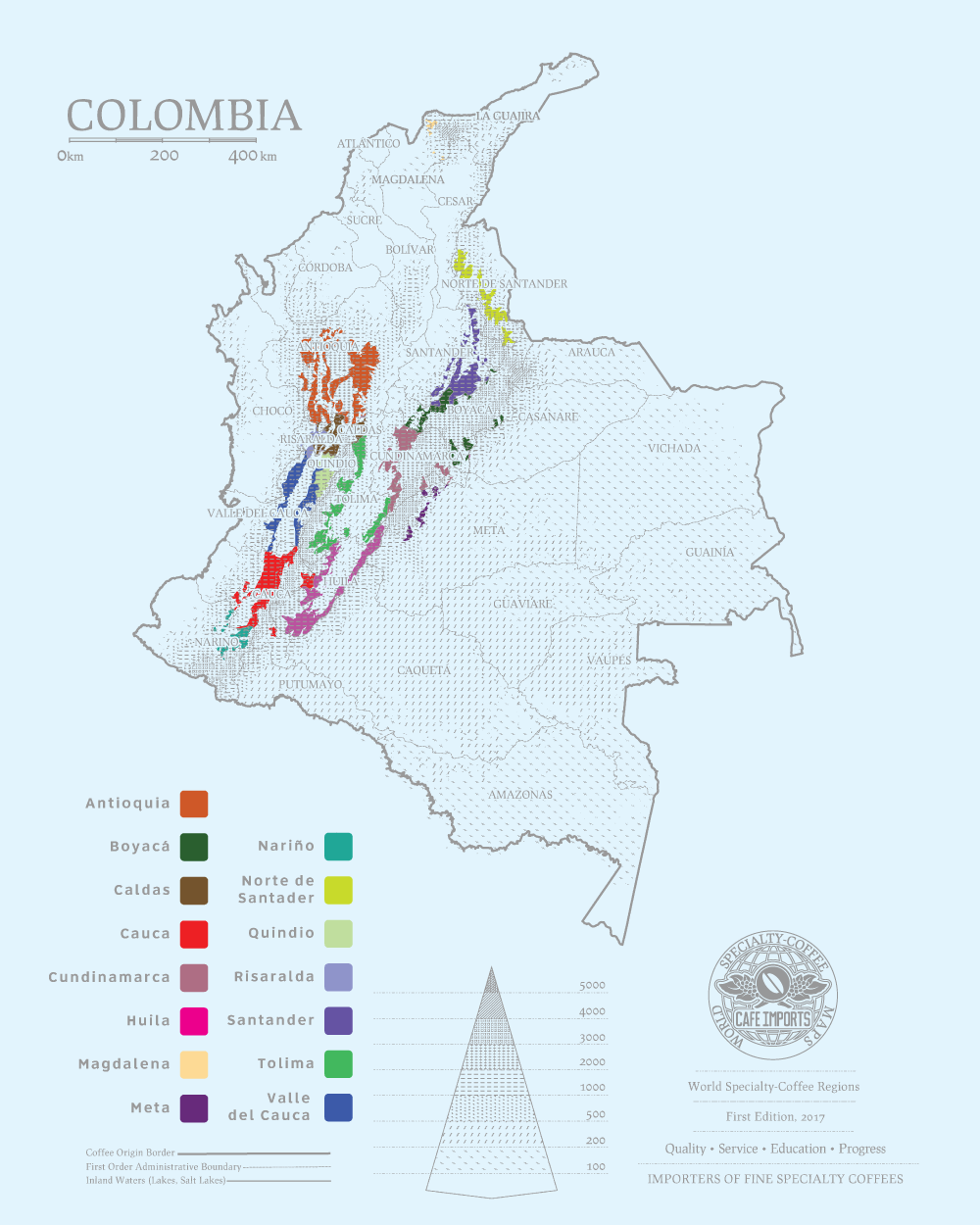
Focusing on core regions, the “MAM” triangle (Medellín, Armenia, Manizales) has long been known for its stable quality, while the highlighted Huila, Cauca, and Santander in this article are frequent contenders in recent international competitions. Huila is located in the southern section of the Central Cordillera, with elevations generally exceeding 1,500 meters. Its undulating mountains and intersecting rivers create abundant rainfall and diffused sunlight, offering an ideal growth environment for coffee trees. Cauca, known for its high mountain coverage of up to 80% and significant diurnal temperature variations, features volcanic soil rich in minerals, producing beans with vibrant acidity and prominent sweetness. The Grand Tree Estate in the Santander region, with over 20 years of planting experience, showcases a unique peach note in its Caturra variety.
The top recommendation from the Huila region—Colombian Huila Coffee—is crafted from the Caturra variety grown at high altitudes of 1,500–1,800 meters using traditional washed processing. It perfectly embodies the classic balance characteristic of Colombian coffee. The cup opens with intense black chocolate and roasted nut notes, accompanied by smooth caramel sweetness, and finishes with delicate citrus acidity. The overall flavor profile is clear and well-layered.This coffee is recommended to be medium roasted, preserving fruity vibrancy while enhancing body, making it ideal for those who prefer traditional styles.
For a more experimental experience, try Colombian Moonlight Coffee from Hacienda El Socorro in Huila. Using anaerobic natural processing, harvested coffee cherries are placed in sealed containers and undergo slow fermentation at low temperatures for 15–20 days, extending sugar conversion time and unlocking latent aromas. This technique imparts rich strawberry jam and fermentation aromas, paired with deep chocolate sweetness, while post-drying water activity control extends storage stability.Note: Adjust the brewing flow rate to avoid over-extraction caused by particle swelling from water absorption.
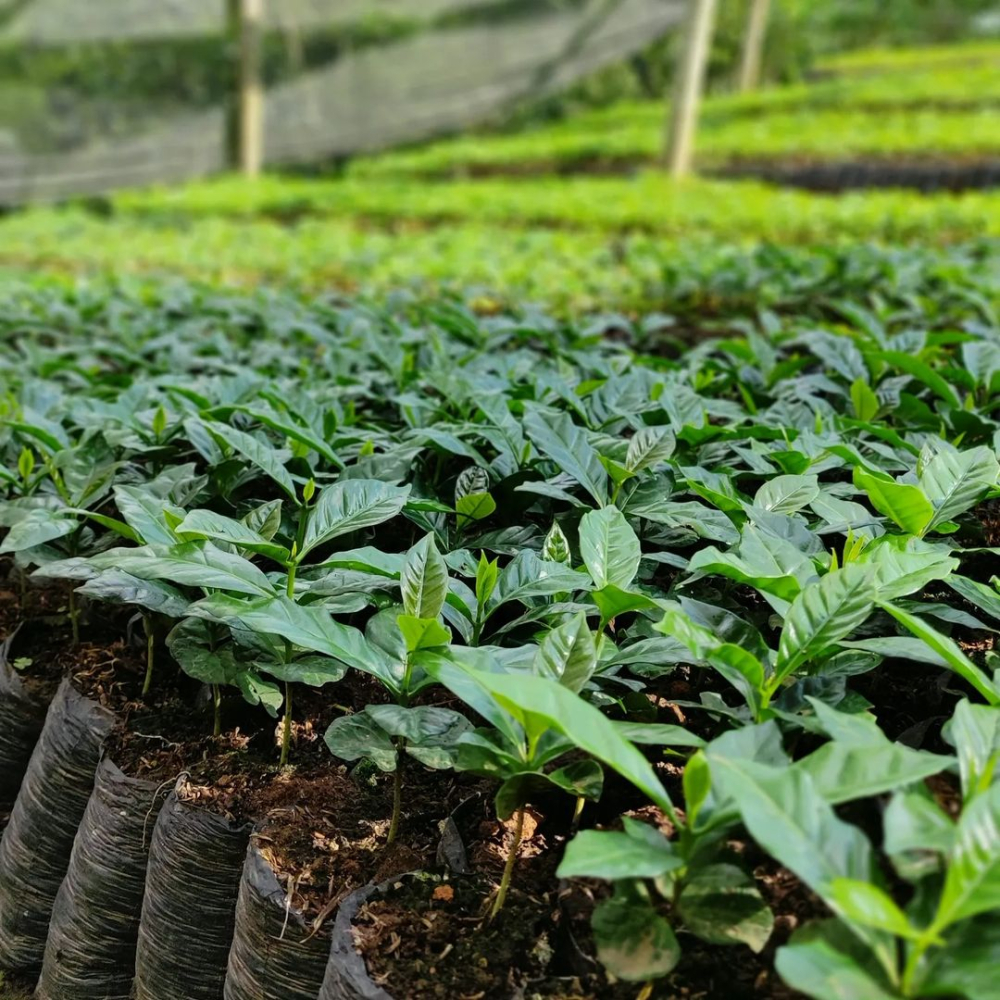
The Colombian Rose Valley Coffee from Granja La Esperanza in the Santander region demonstrates an innovative application of anaerobic double enzyme washed processing. The Caturra variety (a natural Bourbon mutation known for high yield and balanced flavor) is first floated to remove defects and stripped of pulp and mucilage, then placed in a CO₂-rich sealed environment. Anaerobic fermentation slows the pH drop, enhancing the extraction of flavor compounds from the mucilage layer. The result is a strong fruity profile, notably featuring distinct peach aroma, paired with a subtle grassy freshness in the aftertaste, breaking away from traditional Colombian coffee impressions.
At an altitude of 2,050 meters, the Cielo Alto Estate in Cauca produces Colombian Cherry Blossom Coffee, a high-altitude specialty. Using the disease-resistant Castillo variety combined with double anaerobic washed processing (first anaerobic fermentation followed by conventional post-processing), it releases sweet aromas of cherry blossom, osmanthus, and passionfruit, with a rounded mouthfeel and lingering finish.The hallmark of this processing method lies in controlling fermentation rates through anaerobic environments, reducing unwanted impurities while amplifying fruity and floral notes. It’s suited for drinkers who prefer bright acidity and floral themes.
For decaf needs, Colombian Huila Decaf employs the Swiss Water decaffeination process. Selected from Typica, Caturra, and Castillo varieties, it removes 99.9% of caffeine via activated carbon filtration while maximizing the retention of the foundational flavor profile—black chocolate, caramel, and nuts.This process leaves no chemical solvent residues, but note that brewed flavor intensity may be slightly lower than regular beans.
Finally, Colombian San José Estate Coffee uses rum barrel fermented washed processing. Depulped coffee cherries are fermented in aged oak barrels at low temperatures, imparting unique aromas of rum, liqueur chocolate, and tropical fruits, combined with maple-like sweetness to create a layered experience akin to craft beer.The Castillo variety itself offers a smooth mouthfeel and lemony acidity, which becomes even more complex with barrel fermentation.
For brewing, use a Hario V60 dripper with 90°C water, a 1:15 coffee-to-water ratio (15g coffee), and grind size passing 80% through a 20-mesh sieve (approx. EK43s #10). Follow a three-step pouring method: first pour 30g water for a 30-second bloom, then pour to 125g, and finally to 225g, with total extraction time controlled at 2 minutes. Pay special attention when brewing specialty processed beans (e.g., anaerobic or barrel-fermented)—adjust the pouring speed to avoid over-extraction due to their water absorption characteristics.
The above content is compiled by CoffeeHunters, a coffee news website.


