








Introduction:Kenyan coffee is renowned for its bright acidity and distinctive fruity aromas, with its K72 washed processing method and rigorous grading system serving as benchmarks in the specialty coffee industry. This article delves into the geographical advantages of Kenya’s coffee-growing regions, the characteristics of its main coffee varieties, and provides a detailed breakdown of the fermentation techniques in the K72 process. It also offers practical insights into the flavor profiles, roasting suggestions, and pour-over parameters for both AA and PB grade beans, helping you grasp the essence of this exceptional African coffee.
Kenyan coffee has long been celebrated for its bold, full-bodied acidity and unique flavors reminiscent of cherry tomatoes and plums, standing alongside Ethiopia’s Yirgacheffe as one of Africa’s two flagship coffee origins.
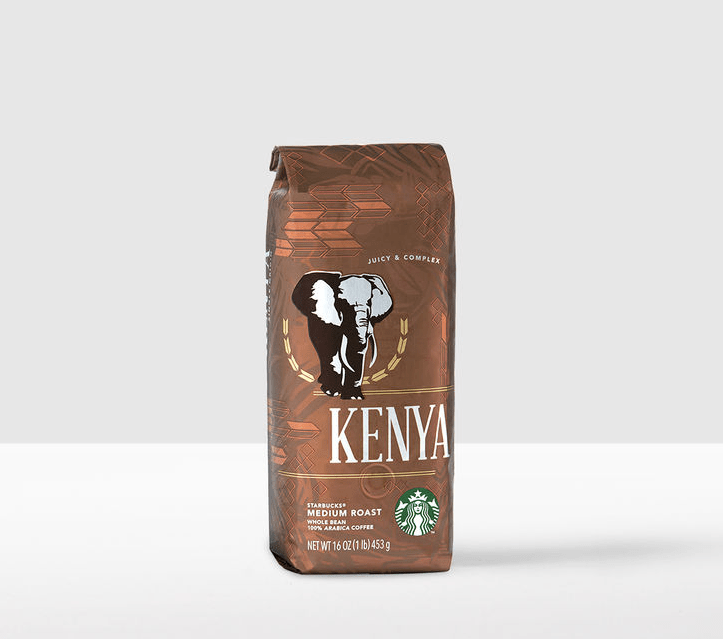
Starbucks has offered Kenyan coffee since 1971, with the iconic elephant emblem on its packaging becoming a classic symbol. This article will comprehensively analyze the factors behind Kenya’s coffee flavor profile—from regional growing conditions and variety traits to the K72 washed process and the coffee grading system—while sharing detailed information, roasting parameters, and brewing recommendations for AA-grade Kenyan "little tomatoes" and PB-grade beans, helping coffee enthusiasts gain a deeper understanding of this premium origin.
Have you heard of the Kenyan coffee beans launched by Starbucks? These beans come from Kenya’s growing regions, processed using a double-washed method, typically cultivated at altitudes around 1500 meters, roasted to a medium-to-medium-dark level, and sold in 250g packs for approximately 85 RMB.
First-time tasters of Kenyan coffee are often captivated by its distinctive flavor profile—particularly its standout cherry tomato and plum-like acidity—making it a truly top-tier product. What unique characteristics does Starbucks’ own Kenyan coffee offer? Let’s explore them one by one.
The Backstory of Starbucks Kenyan Coffee
As we all know, Kenya is located on the African continent, and when people think of Africa, vast savannas and herds of elephants often come to mind. That’s why the packaging of Starbucks Kenyan coffee features a highly symbolic African elephant. The launch of this coffee also has an interesting history—it was first introduced in 1971, and the elephant image on the packaging has since become deeply ingrained in the public consciousness, serving as an iconic symbol of Kenyan coffee.
As a result, many people like to compare the flavor profile of Kenyan coffee beans to that of African elephants—bold and full-bodied acidity, which is distinctly different from the citrusy, lemony acidity of Ethiopian coffee. This is also one of the reasons why Kenyan coffee can stand shoulder-to-shoulder with Ethiopia’s Yirgacheffe as a representative of African coffee. So, what factors contribute to the exceptional flavor of Kenyan coffee? Let’s unveil the answer.
Growing Conditions in Kenya’s Coffee Regions
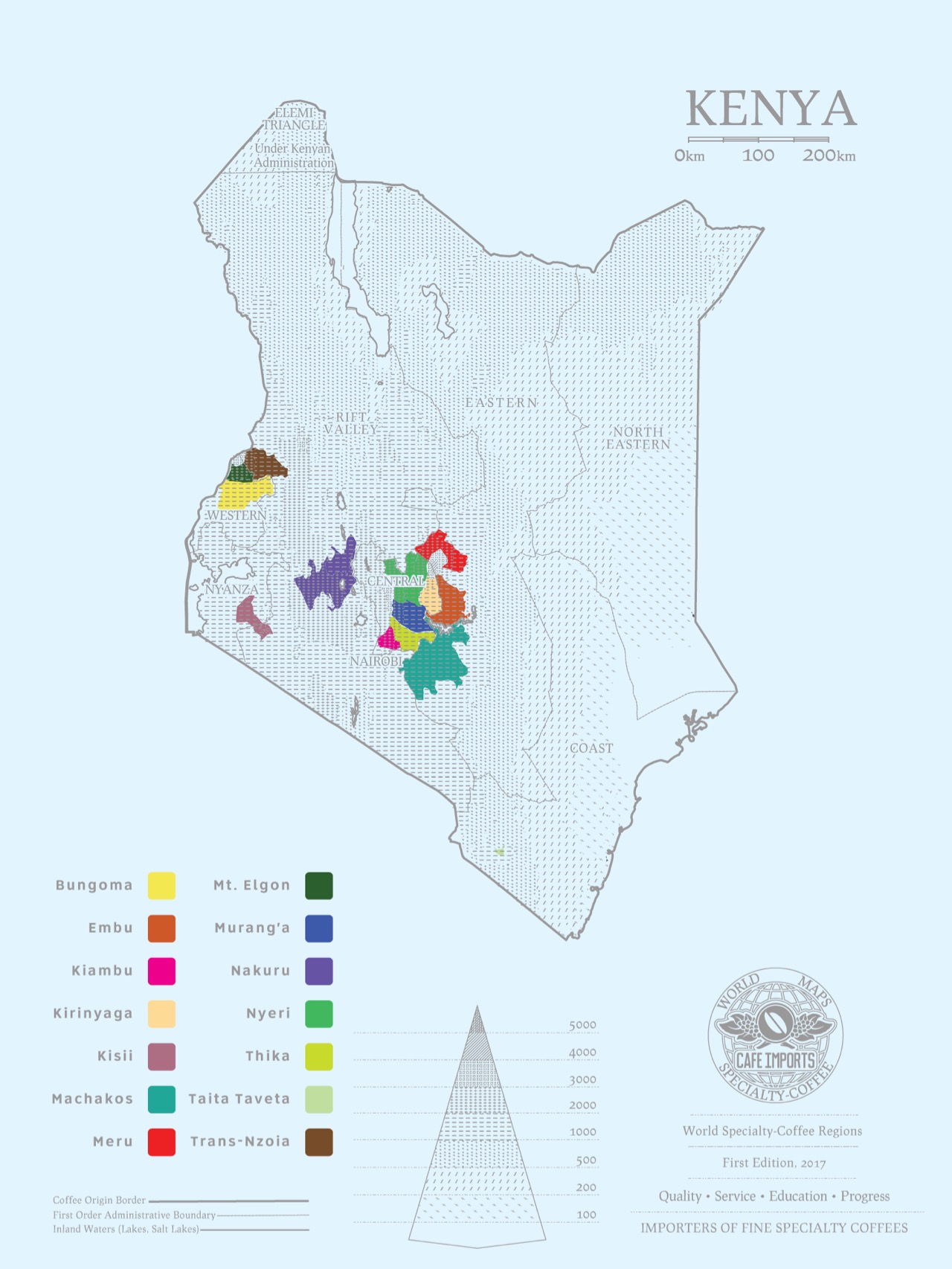
The flavor profile of a coffee bean is primarily influenced by three factors: the region’s growing conditions, the coffee variety, and the processing method. Among these, the region and variety determine the foundational flavor direction, while the processing method refines and enhances it. Kenya is located in East Africa, with the equator running through its central region and the East African Rift Valley stretching from north to south. It borders Somalia to the east, Tanzania to the south, Uganda to the west, and Ethiopia and Sudan to the north, with the Indian Ocean to its southeast. The country is predominantly highland terrain, with an average elevation of about 1500 meters. Its central Mount Kenya (also known as Kenya Mountain) reaches an elevation of 5199 meters, with snow-capped peaks year-round, making it the second-highest peak in Africa. Due to the equator crossing its territory, Kenya lies within the tropics, north and south of the 10th parallel, enjoying two rainy seasons annually. As a result, coffee can be harvested twice a year, with 60% of the yield concentrated between October and December, and the remaining 40% between June and August.
Most Kenyan coffee is grown in the fertile, loose, acidic volcanic red soils of the highlands north and east of Nairobi. This region enjoys abundant sunlight and excellent drainage, with elevations ranging from 1400 to 2000 meters. The higher the altitude, the greater the diurnal temperature variation, leading to a longer maturation period for Kenyan coffee compared to lower-altitude regions—resulting in denser beans and more intense flavors.
From the above analysis, it’s clear that Kenya’s coffee-growing regions possess natural advantages for cultivating high-quality beans. Under such exceptional conditions, the resulting coffee beans are naturally of outstanding quality. Additionally, Kenya primarily cultivates Arabica varieties, which are renowned as one of the highest-quality coffee types globally. A key characteristic of Arabica is that the higher the cultivation altitude, the richer the acidity—a major reason why Kenyan coffee boasts such delightful acidity.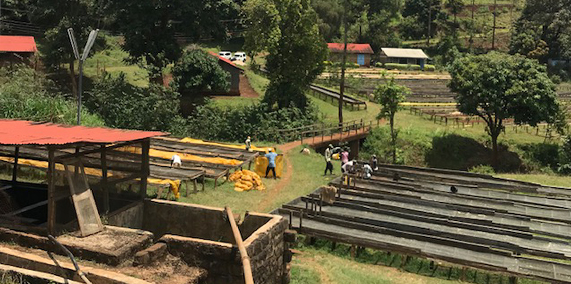
Kenyan Coffee Varieties
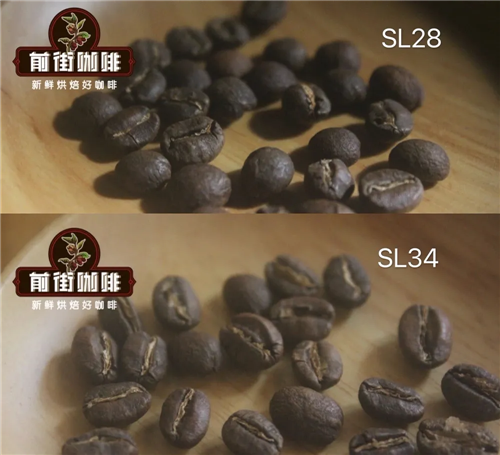
In Kenya, commonly cultivated varieties include SL28, SL34, Batian, and Ruiru11. These varieties were all independently developed and bred by the Kenya Coffee Research Station, underscoring the Kenyan government’s strong emphasis on the coffee industry—an factor that also distinguishes the acidity of Kenyan coffee from that of neighboring countries.
SL28: Historical records indicate that senior coffee officers at the Scott Laboratories (A.D. Trench) noticed a variety in the Moduli region of Tanzania that appeared resistant to drought, pests, and diseases. Seeds were collected and brought back to Scott Laboratories, where their drought resistance was confirmed. Recent genetic testing has also verified that SL28 belongs to the Bourbon genetic group, which explains its similar appearance to Bourbon varieties—round and full-bodied. Its flavor profile showcases complex, multifaceted acidity and exceptional sweetness.
SL34: Originally selected from the "French Mission" (Bourbon variety) at the Loresho Estate in Kabete. However, research reveals that genetic testing has now confirmed the presence of Typica genetic group traits in this variety, with plant characteristics resembling those of Typica. As such, it’s believed that SL34’s lineage originates from Typica. Due to its similarity to Typica, SL34 beans are slender and oval-shaped, appearing somewhat flattened when viewed from the side.
Ruiru11: The Ruiru variety emerged after SL28 and SL34. In the 1970s, the Ruiru station began experimenting with breeding CBD-resistant and rust-resistant varieties, culminating in Ruiru11, which was officially released in the 1980s. It boasts high yields while also offering CBD and rust resistance, seemingly solving all of Kenya’s coffee production challenges in one go.
Batian: The Batian variety was launched on September 8, 2010, by the Coffee Research Institute (CRI), making it Kenya’s newest variety to date. It builds upon the lessons learned from Ruiru11 and improves upon them. Genetically, it is essentially a backcross selection derived from SL28 and SL34, with closer ties to SL28 than Ruiru11—thus eliminating problematic Robusta elements and enhancing cup quality.
Kenyan Coffee Processing Method – K72 Washed Process
Additionally, Kenya has pioneered a unique approach to green coffee processing: its domestically developed K72 washed process. The specific steps are as follows: mature, fully ripe coffee cherries are thoroughly washed, depulped, and undergo a 24-hour dry fermentation. They are then washed again, followed by another 24-hour dry fermentation, repeated once more for a total of three 24-hour fermentation cycles—accumulating 72 hours of intensive fermentation. After washing, the beans are soaked in clean water tanks overnight before being transferred to drying beds the next morning. The name "K72" comes from this 72-hour fermentation process.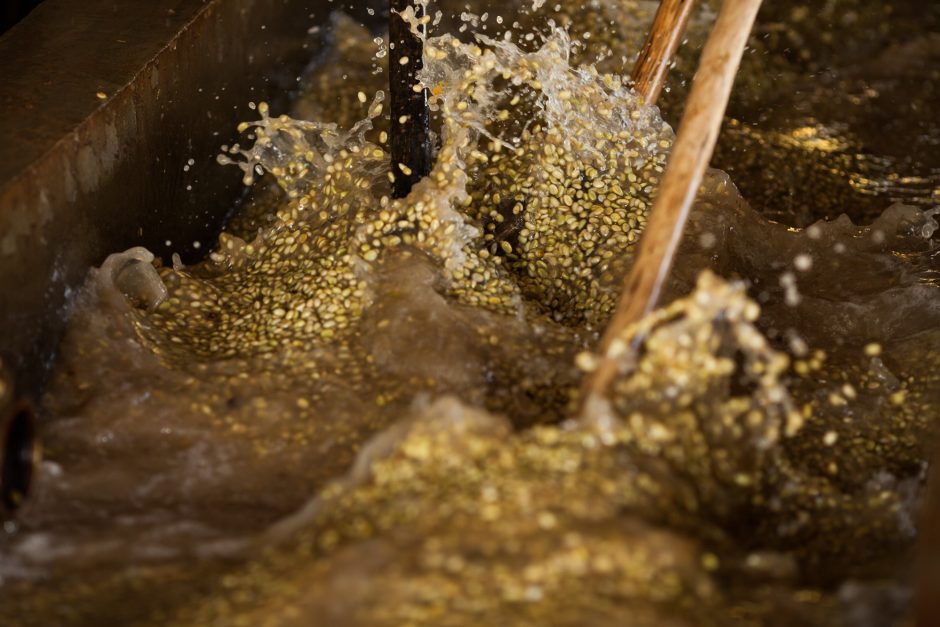
Kenyan Coffee Grading System
Kenya also maintains extremely high standards for coffee quality, implementing a comprehensive coffee bean grading system. For example, AA-grade beans are considered the highest quality. But does the term "grading" mean AA is necessarily better-tasting than AB? What criteria does this grading system actually use?
According to available information, Kenya’s coffee grading standards are primarily based on bean size. The difference between AA and AB grades lies solely in size. As for taste quality, cupping results determine the outcome: whether AA or AB-grade Kenyan coffee beans, both are exceptionally delicious. Regional taste differences may stem more from factors like origin, altitude, and growing conditions. But AA and AB-grade Kenyan coffee are undoubtedly among the most reliably high-quality options.
In summary, these grades are merely distinctions based on bean size. Kenya’s most famous processing method is the K72 washed process, so the country’s finest coffee beans are predominantly washed. Washed Kenyan coffees are generally divided into eight grades:
E: Elephant Bean (also called Elephant Ear), flat beans larger than 19 mesh.
AA: 17 to 18 mesh in size.
AB: 15 to 16 mesh in size, making up the majority of production.
TT: Lighter-weight beans sifted out from AA and AB grades using an air classifier.
C: Smaller than AB in screen size (14 mesh or below), too small to qualify as specialty-grade.
T: Lighter-weight beans sifted from C-grade beans (14 mesh or below) using an air classifier—too small and too low-density to be considered specialty-grade.
PB: Peaberry, classified not by size but by shape, unrelated to flavor or weight, accounting for about 10% of total production.
UG: Beans that do not meet any of the above criteria.
There are also lower-quality natural (sun-dried) coffee grades, which are not processed using the Kenyan washed method due to poorer quality and are generally reserved for domestic consumption. These beans are classified as M'buni.
Additionally, it’s worth emphasizing that this long-standing "green bean grading system" standard was established by government authorities in 1938—predating the concept of "specialty coffee" by 40 years. While Kenya has since adopted new coffee grading concepts, the size-based grading system remains the most commonly used today.
Here is Kenya’s current updated coffee grading standard:
Kenyan coffee institutions and local industry players typically use a quality grading procedure developed by the Kenya Coffee Research Institute, evaluating beans based on three comprehensive factors: green bean quality, roasted bean quality, and cupping quality.
Green Bean Quality: Subcategories include appearance size, color, and defects.
Roasted Bean Quality: Subcategories include center cut condition, roasted bean condition, and defective beans.
Cupping Quality: Scored based on acidity, body/texture, flavor, and negative defects.
Combining scores from all three categories, coffee beans are graded from 1 to 10, with 1 being the best and 10 the worst.
As seen above, the difference between AA, AB, and PB grades lies primarily in size. Generally speaking, larger-sized beans have lower defect rates, resulting in cleaner flavors and higher prices.
This Kenyan "Little Tomato" Coffee Bean
Country: Kenya
Region: Asali (Honey Processing Factory)
Altitude: 1550-1750m
Variety: SL28, SL34
Processing Method: 72-hour washed process
Flavor: Asian pear, dark plum, brown sugar, cherry tomato, plum
Roasting Parameters from This Coffee Shop
Kenyan Asali Coffee Beans: These beans have a plump, round shape. To fully showcase their bright and rich acidity, they are roasted to a light degree.
Yangjia 800N semi-direct-fire roaster, charge weight 480g: Charge at 160°C, fan setting 3, heat 120. Turnaround point: 1’28”. Temperature reaches 130°C, fan setting 4. Roast to 6’00”, temperature 154.6°C, beans turn yellow, grassy notes fully dissipate, dehydration complete. When beans show ugly wrinkles and black spots, and the toastiness clearly transitions to coffee aroma, it marks the prelude to first crack. Listen closely for the first crack onset—at 9’28”, first crack begins. Fan setting unchanged, first crack development time 2’20”, drop at 193.8°C.
Brewing Recommendations from This Coffee Shop
Filter: V60 or Kalita Wave
Water Temperature: 91-92°C
Coffee-to-Water Ratio: 1:15
Grind Size: Fine (80% through a 20-mesh sieve, Chinese standard)
Brewing Technique: Pulse pouring
Bloom with 30g water for 30 seconds, then pulse pour with small streams to 124g, pause when water level nears bed, continue pouring to 228g and stop. Wait until water level nears bed again, then remove filter. (Timing starts at bloom.) Total brew time: 1’55”.
Asali Coffee Bean Flavor:
Wet aroma features ripe tomato and floral notes. On the palate: cherry tomato and dark plum flavors, bright acidity, clean and complex mouthfeel, prominent sweetness in the mid-palate with juicy character, lingering notes of berry, brown sugar, and subtle green tea aroma.
Saside Coffee Bean Flavor:
Aroma includes floral notes. On the palate: cherry tomato, citrus, and nutty acidity, creamy notes in the mid-palate, brown sugar finish, lingering cocoa and oolong tea texture. Complex flavor layers with pronounced floral notes.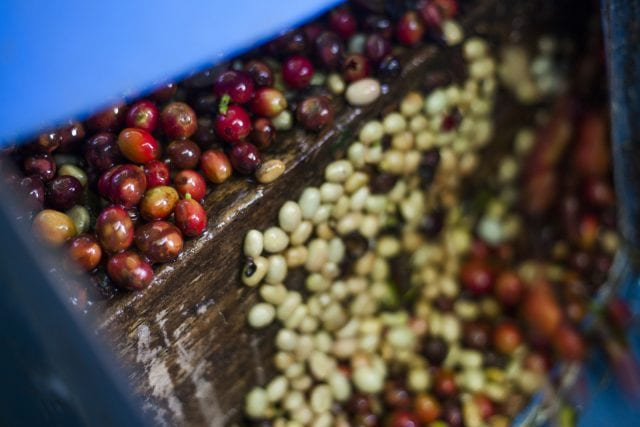
The above content is compiled by CoffeeHunters, a coffee news website.


