







Introduction:Did you know that Mandheling is not actually a place of origin, but a misreading of an ethnic group name? This article delves into the origins of the name “Mandheling,” traces its roots back to the encounter between Japanese soldiers during World War II and Indonesia’s PWN company, and analyzes how the two major producing regions of Sumatra have cultivated distinct flavor profiles of Mandheling. It also focuses on the high-standard selection process of PWN’s Golden Mandheling—from G1 grade, triple hand-picking, to defect control—as well as the impact of the wet-hulled (Giling Basah) processing method on flavor. Practical pour-over parameters and three-stage pouring suggestions are provided to help you extract a rich yet clean classic Mandheling flavor.
In the world of coffee, the name “Mandheling” can be quite varied—there’s Lintong Mandheling, Tiger Mandheling, Horse Face Mandheling, Emerald Mandheling, and even a well-known café’s offering of PWN Golden Mandheling, among many others, making the variety dazzling. But in fact, Mandheling does not refer to a specific origin, port, or variety; it originates from a phonetic misinterpretation of the name of the Mandailing ethnic group in Indonesia. This interesting misunderstanding actually stems from the encounter between a Japanese soldier and Indonesian coffee during World War II.
It is said that at the time, a Japanese soldier drank a cup of coffee with a rich aroma at a local café and, amazed, asked the shop owner the name of the coffee. Due to the language barrier, the shop owner misunderstood the question as being about his background and answered “Mandailing” (the Mandailing ethnic group). After the war, this Japanese soldier commissioned a local broker to ship 15 tons of this coffee back to Japan, where it received great acclaim and indirectly led to the establishment of the PWN coffee company (N.V. Pawani Medan company, abbreviated as PWN)—with that broker being the founder of PWN.
So-called Mandheling coffee actually broadly refers to higher-quality Arabica beans from the Indonesian island of Sumatra. Sumatra is located in the western part of Indonesia and has eight provinces, among which Aceh in the north and North Sumatra are the main regions for high-quality coffee production. Both areas are home to famous lakes—the Tawar Lake in Aceh and Lake Toba in North Sumatra—where the main coffee-growing regions are located.
There are many classifications of Mandheling, such as Lintong Mandheling, Tiger Mandheling, Golden Mandheling, Aged Mandheling, etc., each named differently based on origin, processing mill, or even processing method. At a well-known coffee shop’s bean menu, you’ll often find “Lintong Mandheling” as a daily drinking option, along with a higher-tier “a certain brand’s PWN Golden Mandheling” for more advanced tasting.
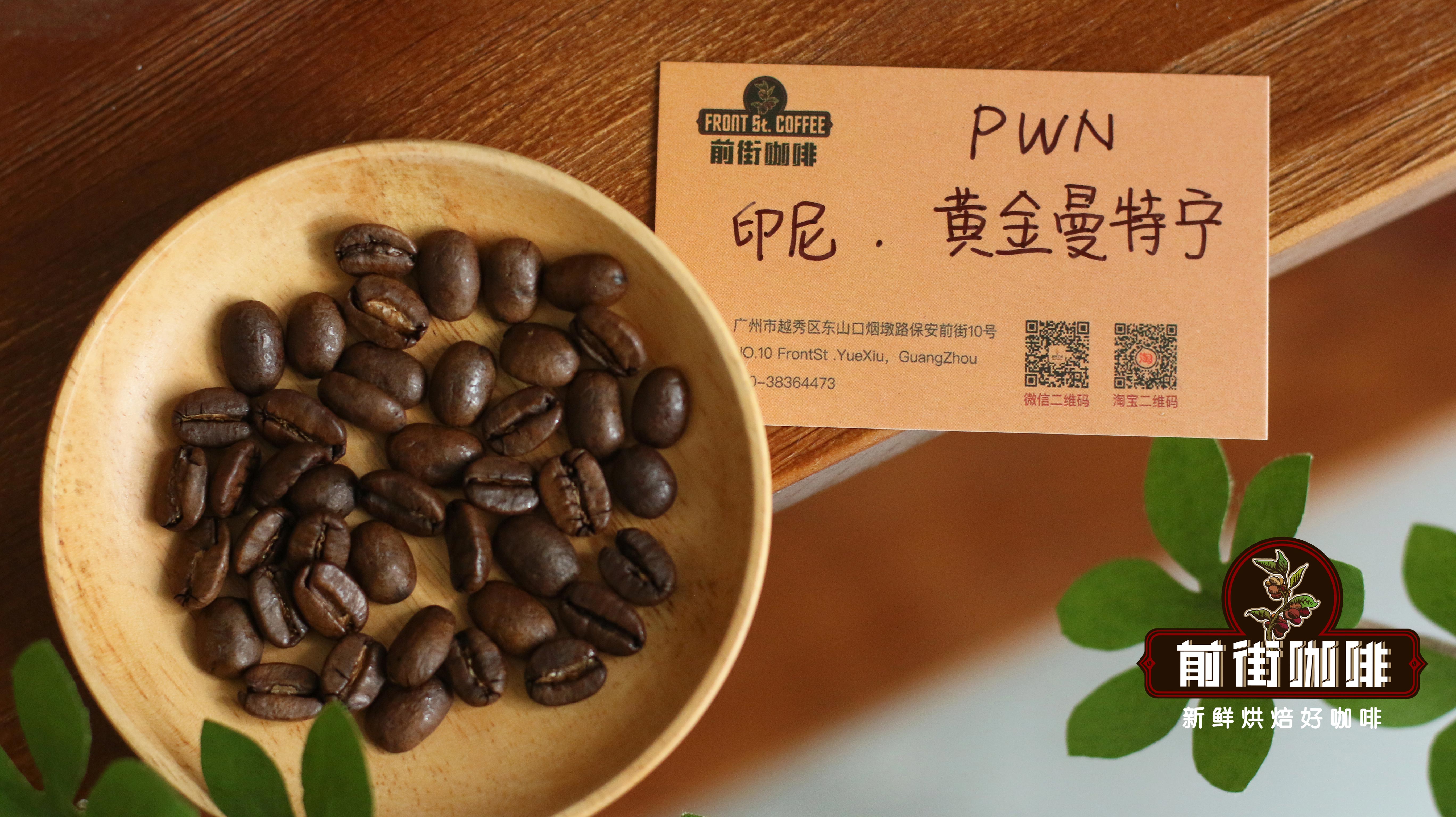
The PWN company mainly selects high-quality batches of Mandheling green beans locally, producing only specialty-grade coffee. Their “Golden Mandheling” is a classic flagship product. The Japanese market has long purchased large quantities of Sumatran coffee but found inconsistent quality, so PWN began establishing stricter selection standards. From the beans’ density, size, shape, to color, all are included in quality control, and multiple rounds of manual picking are used to remove defective beans, ensuring each bean is large, uniform, and vibrant in color, while also greatly reducing earthy and grassy flavors. It is said that under sunlight they gleam golden, hence the name “Golden Mandheling.”
PWN’s Golden Mandheling uses onlybeans of 18 mesh size or larger, meetingG1 grade, andwith no more than 3 defective beans per 300g sample. These green beans undergoone mechanical screening plus three rounds of manual picking, ensuring uniformity in shape, size, and color of each bean. Compared to regular Mandheling, PWN Golden Mandheling offers a cleaner, richer taste with a more pronounced sweetness.
As the specialty Mandheling market has grown, PWN has also been highly conscious of trademark protection, being the first to register “Golden Mandheling” as an exclusive English trademark. As a result, only PWN-produced beans can be called the authentic “Golden Mandheling”; other versions, such as the Japanese one, had to be renamed “Dingshang Mandheling.” Consumers can identify genuine products through the PWN logo on the packaging and the official origin certification, details of which are usually visible on the package or in the café’s display area.
When talking about Sumatran Mandheling, one cannot overlook the “wet-hulled method” (Giling Basah). This processing method removes the parchment layer from the bean’s surface using a hulling machine before drying. However, because the beans are only semi-dry at this stage and their structure is fragile, they are prone to damage and friction, leading to a relatively high defect rate. Nevertheless, it is precisely this unique processing method that gives Mandheling its distinctive herbal, spicy, and woody aromas. In addition, due to the historical preference of the Japanese market for dark roasts, most Mandheling is roasted in this direction to mask potential defects and highlight a rich body.
To present the most classic and balanced flavor of Mandheling, a well-known café chooses to usemedium-dark roastingfor its Lintong Mandheling and PWN Golden Mandheling. If you’d like to brew a Mandheling at home with clear, rich, and smooth flavors, here are expert-level pour-over recommendations.
It is recommended to use aKONO filter, whose smooth inner wall and minimal flow-guiding ribs are designed to extend the contact time between water and coffee grounds, creating an immersion-like extraction effect that results in a rounder and more focused coffee flavor. Paired with87°C water temperature,1:15 coffee-to-water ratio, andcoarse sugar-level grind (70% passing rate through a Chinese No. 20 sieve), this setup effectively avoids over-extraction while highlighting aroma and sweetness.
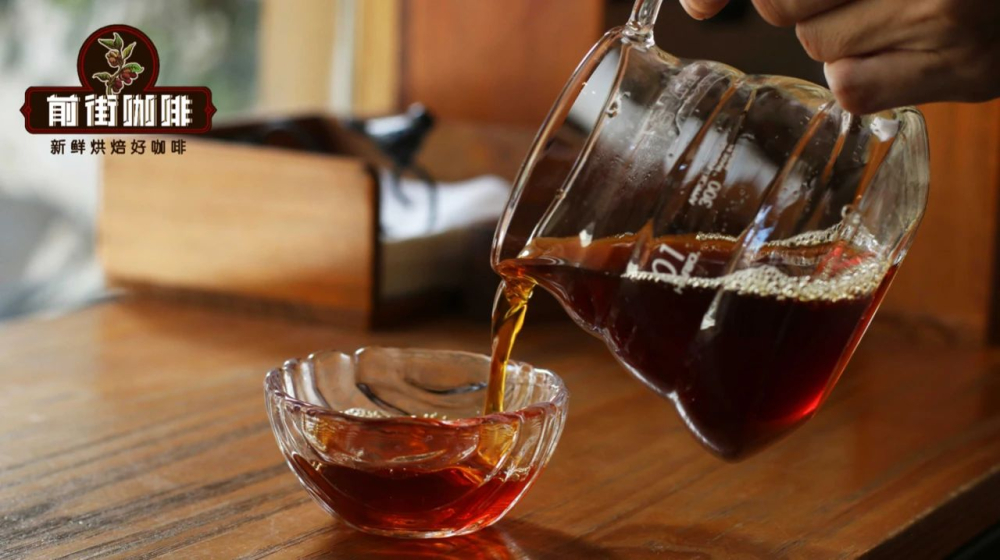
For the pour-over steps, it is suggested to usea three-stage pouring method: first, pour a small stream in circular motions around the center to add30g of water for a 30-second bloom; then, use a slightly larger stream to pour95g of water, lifting the coffee bed and promoting even extraction. At this point, the total water volume is about125g, taking roughly55 seconds; finally, when the liquid level drops to half, pour a small stream in tight circles to add100g of water, for a total of225g of water, keeping the total extraction time around2 minutes. Once done, gently swirl the coffee in the server before serving.
The resulting PWN Golden Mandheling from a certain brand will showcase a rich black chocolate aroma, accompanied by layers of roasted hazelnut, caramel, and melon, with distinct spicy notes on the palate. The overall flavor is rich yet clean, with a long-lasting aftertaste—a superb interpretation of classic Mandheling character.
The above content is compiled by CoffeeHunters, a coffee news website.


