








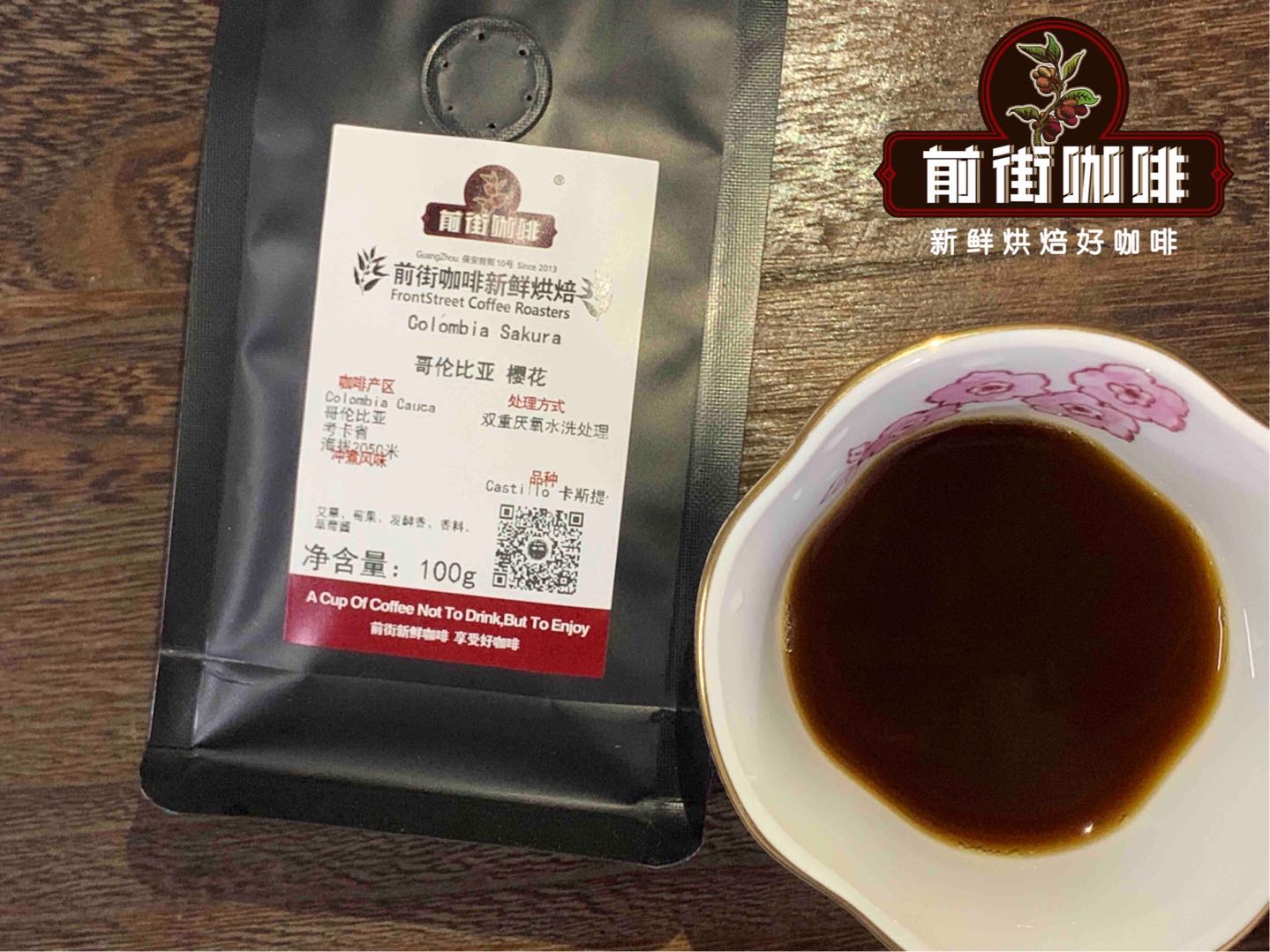
Introduction:This "Sakura" coffee bean from Colombia's Paradise Estate, renowned for its double anaerobic washed process and the Castillo variety, boasts unique flavors of mugwort and berries. This article will break down the logic behind its flavor profile step by step — from the growing region, varietal characteristics, processing method to the optimal pour over recipe — and provide practical roasting and extraction parameters to help coffee enthusiasts fully grasp the potential of this SOE.
The launch of Luckin Coffee’s “Little Black Cup” featuring the Paradise Estate SOE quickly made this Colombian Cauca bean a sensation. In fact, Paradise Estate had already made a name for itself in the specialty coffee scene back in 2019 with its special processing methods, among which the Strawberry and Sakura series are collector favorites. The "Sakura" coffee bean we’re focusing on this time uses a double anaerobic washed process and the Castillo variety. In cupping, it exhibits a complex flavor profile of mugwort, berries, fermentation notes, and strawberry jam — making it an excellent example for understanding modern processing techniques and varietal traits.
Paradise Estate is located in Cauca, Colombia, and has been managed by Mr. Diego Samuel since 2008. Originally just a 2.5-hectare family farm, it has gradually developed stable specialty-grade flavor profiles through continuous investment in cultivation research.It won its first regional competition in 2015, establishing its status in the industry. Currently, the estate grows a diverse range of varieties including Bourbon, Geisha, and Typica, with the Castillo used in the "Sakura" playing a key role.
Castillo is a disease-resistant variety promoted by Colombia’s coffee research institution in 2005, developed through five generations of hybridization between Timor and Caturra.Timor is a natural cross between Arabica and Robusta, characterized by tall plants and leaf rust resistance; Caturra is a natural mutation of Bourbon, known for its excellent cup quality and high planting density per unit area. Castillo combines the strengths of both — offering the bright acidity of Caturra along with the robust disease resistance of Timor — making it one of the mainstream cultivated varieties in Colombia.
For roasting, one roaster opted for a medium-light profile to highlight the fruit sweetness and layered complexity brought by the processing method.Using a Yang family semi-direct-fire 800N roaster and 300g of green beans as an example: the charge temperature is 190°C, with a flame power of 140 and air vent setting at 3; at the 1 minute 42 second turnaround point, adjust the air vent to 4. When the temperature drops to 151.8°C and the beans turn yellow, reduce flame power to 120. A critical stage occurs at 8 minutes 38 seconds when wrinkles and dark spots appear — closely monitor the first crack (around 9 minutes 07 seconds). After the first crack, extend roasting for 2 minutes 10 seconds, and drop the beans at 195°C to preserve fruity aromas while balancing body.
For pour over, it’s recommended to use a V60 filter, with a water temperature of 90–91°C, 15g of coffee, a 1:15 brew ratio, and a medium-fine grind (78% passing through a #20 sieve).Freshly roasted beans (within 5 days of roasting) can showcase the best flavors, with peak flavor development typically occurring after 4–7 days of rest. The actual brew follows a three-stage pour: start with a 30g bloom for 30 seconds, then pour in small streams centered up to 125g, and once the water level drops, increase flow to reach 225g. Total extraction time should be controlled between 2 minutes 00 seconds and 2 minutes 10 seconds. These parameters effectively highlight a balanced expression of spice-tea notes, citrus acidity, and light floral tones.
Regarding the use of this bean as an SOE, its fresh and distinctive character suits Americano preparation well, bringing out rich aromatic notes; however, when used in an SOE latte, milk aroma may mask some subtle details.Overall, the Paradise Estate Sakura bean, with its special processing and varietal traits, is worthy of a spot on any coffee enthusiast’s try-list — whether you’re into pour over or keen to explore the evolution of processing techniques.。
The above content is compiled by CoffeeHunters, a coffee news website.


