







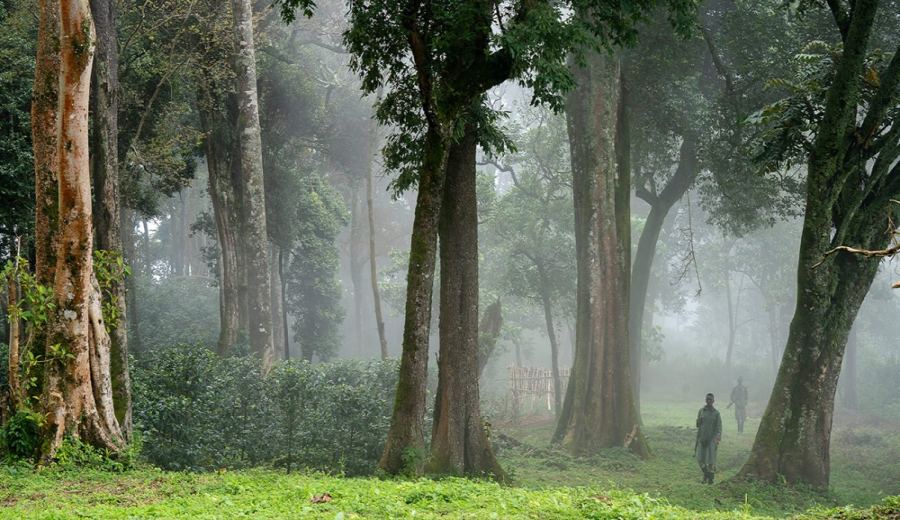
Introduction:The Gold Label coffee beans from Ethiopia’s Gesha Village Estate account for only 3.7% of the annual production, making it an extremely rare and premium lot. This article will take you on a journey to explore the geographical environment of Gesha Village, the characteristics of its eight growing areas, its rigorous grading system, and provide a detailed guide to brewing techniques and flavor profiles of the Gold Label Gesha — offering a complete resource from bean selection to brewing.
Located in the Bench Maji region of Ethiopia, Gesha Village Estate has become a focal point in the specialty coffee world in recent years. Its Gesha variety coffees have repeatedly won international competitions, helping Ethiopian coffee reclaim its position at the top. The estate categorizes its coffee into different grades based on quality: Auction, Gold Label, Red Label, Green Label, and Chaka. Among these, the Gold Label lot makes up only about 3.7% of the annual production, making it exceptionally rare and exceptional in flavor.
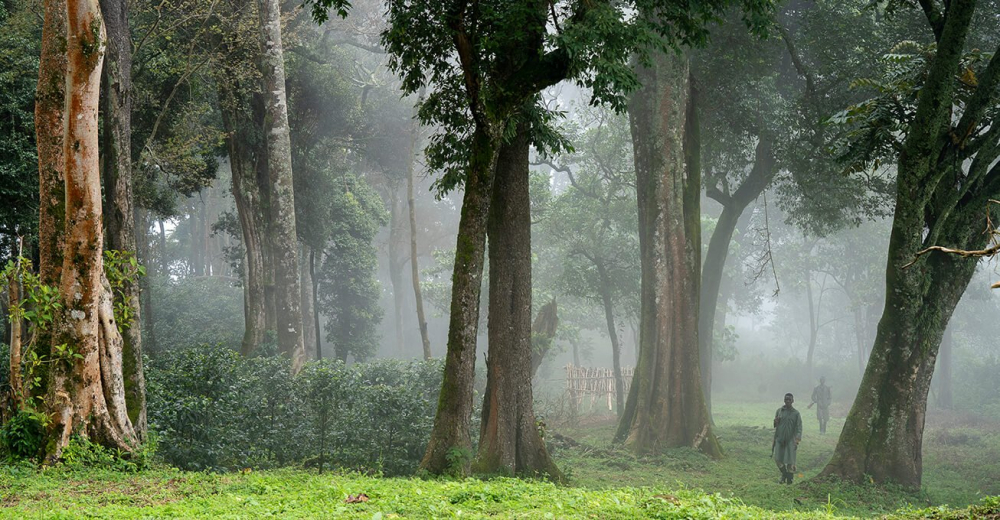
Gesha Village Estate is situated in the Bench Maji region in western Ethiopia, surrounded by dense virgin forests, with a pleasant climate and stunning landscapes. In 2007, Adam and Rachel were commissioned to film a coffee documentary here, which gradually inspired the idea of establishing their own estate. In 2009, they met coffee expert Willem Boot, which marked the beginning of the Gesha Village project. In 2011, they returned to Bench Maji and ventured deep into the forested area considered the birthplace of Gesha, officially founding Gesha Village Estate.
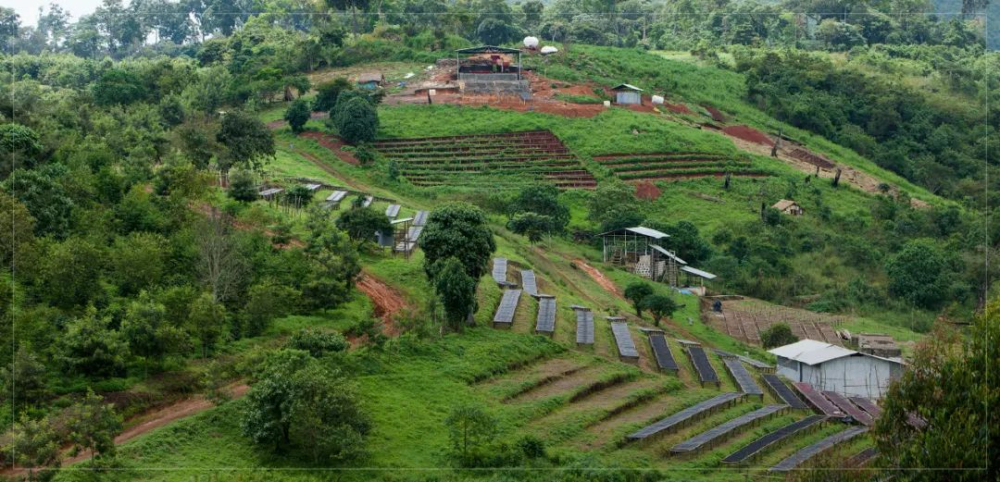
The total area of Gesha Village Estate is approximately 471 hectares, of which 320 hectares are dedicated to coffee cultivation. The soil is nutrient-rich reddish-brown loam, with a planting density of about 7,000 plants per hectare. All coffee trees are planted at altitudes above 1,900 meters. The high elevation slows down fruit growth, aiding the accumulation of flavor compounds. The estate is further divided into eight plots, each exclusively planted with a single variety, so the coffee produced from each plot represents the unique flavor of that specific variety.

The Bangi plot, located on the eastern side of the estate, sits between 1,911 and 2,001 meters above sea level, and mainly grows Gori Gesha, covering an area of about 54 hectares. Its flavors often feature notes of honeysuckle and spices, blended with layers of dark chocolate, black tea, red fruits, and blackcurrant. The Dimma plot, located in the center of the estate, ranges from 1,966 to 2,019 meters in altitude and is planted with the Iruabe variety, spanning 28.7 hectares. Cupping profiles are dominated by stone fruits and coffee flower aromas, complemented by bright citrus notes.
The Gaylee plot, adjacent to Dimma, also grows the Iruabe variety at altitudes between 1,916 and 1,982 meters. Its flavor profile includes fruit, spice, and herbal notes such as lemongrass and jasmine. The Oma plot, situated in the south, ranges from 1,931 to 2,040 meters in altitude and is planted with the Gesha 1931 variety, covering an area of 67.6 hectares. It is known for its intense jasmine aroma and sweet fruit notes such as peach, apricot, preserves, and melon, with a honey-like sweetness in the aftertaste.
The Narsha plot spans only 5.3 hectares and is adjacent to Gaylee, also growing Gesha 1931. Its flavor profile includes honeysuckle, yellow fruits, green lime, and dark chocolate, with a clean acidity and bergamot-like finish. The Surma plot, located in the southwest, ranges from 1,909 to 2,063 meters in altitude and covers 45.9 hectares, focusing solely on Gesha 1931. Flavors are dominated by jasmine and rose, accompanied by strawberry, watermelon, apple, and delicate spices.
The Jibabu plot (also known as Shewa-Jibabu), located in the northwest at 1,973 to 2,069 meters, grows Gori Gesha across 48.5 hectares. Its flavor profile combines spices, strawberry, peach, papaya, and dark chocolate, along with notes of bergamot and orange. The Shaya plot, located in the north and covering 36.5 hectares, also grows Gori Gesha. Its cupping profile features jasmine, bergamot, orange, as well as bold flavors of dark chocolate, cherry, molasses, berries, and apple.
Gesha Village’s grading system is rigorous, with cupping and selection carried out according to SCA standards. The grades are divided into AUCTION (auction grade), RARITIES (Gold Label), GROWERS RESERVE (Red Label), SINGLE-TERROIR (Green Label), and CHAKA (Chaka grade). Among them, the Gold Label lot, although accounting for only about 10% of the production (note: the original text mentioned only 3.7% as “the rarest outside of auction,” but this article consolidates information based on official definitions), is the highest grade besides auction lots. It offers complex flavors with high recognizability, is often chosen as competition beans, and comes with full traceability.
This season’s Gold Label Gesha on the market mostly comes from the Oma plot, using the Gesha 1931 variety and undergoing a lengthy 32-day natural sun-drying process, showcasing ultimate tropical fruit and floral flavors. The Gesha 1931 variety has been determined, through plant morphology, bean characteristics, and cupping results, to be the variety closest to the original Panamanian Gesha parent.
The new-season Gold Label Gesha features cupping notes of rich berries, melon, citrus acidity, chamomile floral aromas, and tea-like aftertastes. Its flavor profile is both diverse and layered. It is recommended to use a medium-light roast to preserve bright acidity and delicate aromas. Due to the lower structural density of high-altitude beans, shorter roasting times make it harder for compounds to be released, so attention should be paid to brewing parameters.
It is recommended to use a medium-fine grind (approximately 80% passing through a Chinese No. 20 sieve, similar in coarseness to coarse sugar), with 15 grams of coffee grounds. Use a V60 filter cone, with water temperature controlled at 90–91°C, and a brew ratio of 1:15. The brewing steps are as follows: first wet the filter paper and preheat the equipment, then pour 30 grams of water for a 30-second bloom. Next, pour water in small circular motions until reaching 125 grams for the first pour. When the water level drops and is about to expose the coffee bed, continue pouring to 225 grams, then stop and let it drain (total extraction time is about 2 minutes). This method fully highlights the berry sweetness, chamomile, and red berry flavors of the Gold Label Gesha, with an aftertaste of melon and tea, delivering a rich and layered mouthfeel.
The above content is compiled by CoffeeHunters, a coffee news website.


