







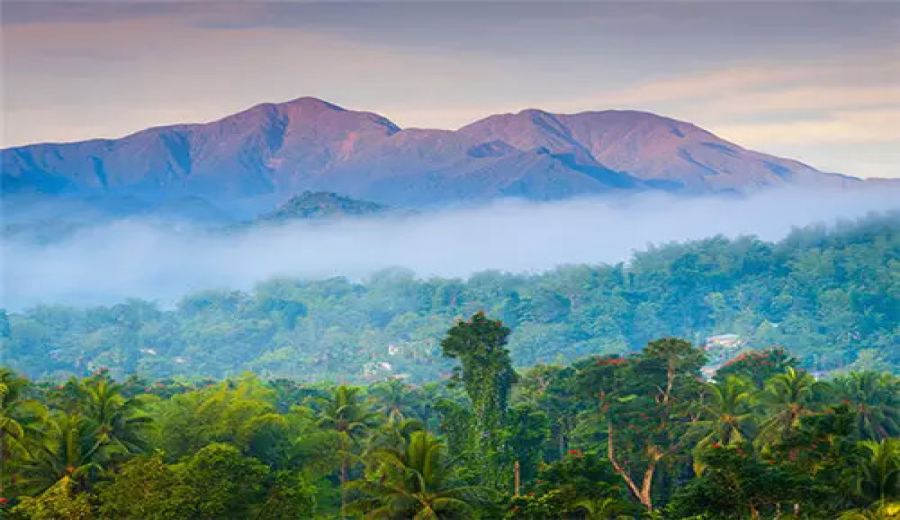
Introduction:Although both originate from the Blue Mountains of Jamaica, Blue Mountain coffee and High Mountain coffee differ greatly in flavor and market positioning due to variations in altitude and grading. This article will detail their altitude classification standards, bean size specifications, wooden barrel packaging features, and provide practical flavor descriptions and pour over parameters to help you gain an in-depth understanding of the true characteristics and tasting essentials of this world-renowned coffee.
Although both are produced in the Blue Mountains of Jamaica, Blue Mountain coffee and High Mountain coffee are not the same thing. The biggest difference between the two stems from altitude — only coffee beans grown at elevations between 900 and 1700 meters qualify as Blue Mountain coffee; those grown at altitudes between 450 and 900 meters are collectively referred to as High Mountain coffee. As for coffee grown below 450 meters, it is usually classified as Jamaican Prime Coffee, which is of a lower grade.
Blue Mountain coffee is further subdivided into three grades based on bean size. This grading system primarily focuses on the physical characteristics of green beans and also serves as an important basis for determining their market value.Blue Mountain No. 1is the highest grade, requiring at least 96% of the beans to be 17 mesh (approximately 8 mm) in size, with a defect rate not exceeding 2%. As a result, it is the most expensive.Blue Mountain No. 2requires 96% of the beans to be 16 mesh, with the defect rate also controlled within 2%;Blue Mountain No. 3requires 96% of the beans to be 15 mesh, with the same defect rate standard. This rigorous grading method ensures the high-quality image of Blue Mountain coffee in the market.
How to identify genuine Blue Mountain coffee? The foremost characteristic is its unique wooden barrel packaging. Unlike the common use of burlap sacks or vacuum packaging for regular coffee beans, Blue Mountain coffee still maintains the tradition of being packed in wooden barrels. This traditional practice not only carries symbolic significance but also effectively balances humidity and protects the beans. The wood used for the barrels is specially treated to prevent the green beans from being crushed or absorbing odors, helping to maintain the purity of the coffee’s flavor.
Each barrel of Blue Mountain coffee is stamped with an official certification seal and comes with a certificate of authentication issued by the Jamaican government, ensuring the accuracy of the origin and grade. These certifications are not only symbols of quality but also enhance the prestige of Blue Mountain coffee. The exterior of the barrels often features the estate name and special markings, such as the green frog logo of the Clifton Estate, which serve as important indicators for authenticity. In earlier years, many Taiwanese traders even held grand barrel-opening ceremonies upon acquiring Blue Mountain green beans as a sign of respect for this rare coffee.
Blue Mountain coffee may not necessarily be the “tastiest” coffee on the market, but its flavor balance is universally recognized as top-tier. To showcase the smooth, rich, and multi-layered characteristics of Blue Mountain coffee, it is generally recommended to use a medium-dark roast. When brewing, the water temperature should be kept between 88 to 89°C, as too high a temperature can lead to over-extraction, compromising its delicate taste.
The recommended grind size is similar to that of coarse sugar, approximately equivalent to 70% of the particle size passing through a Chinese No. 20 standard sieve. This ensures proper extraction without being too fine, which could lead to over-extraction or filtration difficulties. It is recommended to use a Kono filter with shorter ribs, as this design extends the coffee extraction time and helps fully release the aroma and richness of Blue Mountain coffee.
Here are the recommended practical pour over guidelines: Use 15 grams of coffee grounds with a 1:15 coffee-to-water ratio, for a total of about 225 grams of water. First, pour 30 grams of water for a 30-second bloom. Then proceed with the second pour to around 125 grams. When the coffee liquid has drained halfway, do the final pour to reach 225 grams, with a total brew time of about 2 minutes and 10 seconds. This three-stage pouring method helps stabilize the flow rate, improving overall extraction stability and flavor consistency.
The brewed Blue Mountain No. 1 coffee typically exhibits intense aromas of dark chocolate and nuts, with a velvety-smooth mouthfeel and a well-balanced acidity, sweetness, and bitterness. The aftertaste is long-lasting and mellow, often regarded by many coffee enthusiasts as the very definition of “balance.” Whether as a daily drink or an entry point into exploring high-altitude coffee, Blue Mountain coffee is definitely worth trying.
The above content is compiled by CoffeeHunters, a coffee news website.


