







Introduction:Do you know the origin of the name “Hua Kui” coffee? What is its connection and how does it differ from the globally popular Geisha (also known as Artisan or Gesha) coffee? This article starts with the 2017 Ethiopian green bean competition champion and provides a comprehensive analysis of the naming background, regional characteristics, natural processing method, and the evolution logic of various vintages of Hua Kui. It also compares the key differences between Hua Kui and Geisha in terms of flavor profiles and pour over brewing parameters, offering practical brewing suggestions and tasting references.
Many coffee enthusiasts have noticed that Ethiopian coffees are typically named after their producing regions, such as the famous “Yirgacheffe Red Cherry” or “Yirgacheffe Kochere” from the Yirgacheffe region. So why is Hua Kui coffee, which also comes from Ethiopia, not named “Guji” as per convention, but instead called “Hua Kui”? There’s actually an interesting history behind this.
At first glance, the name “Hua Kui” may evoke images of intense floral aromas, but upon actual tasting, its fruit-forward notes—such as passionfruit, strawberry, mango, jackfruit, and citrus—are even more prominent. It’s understood that Hua Kui was originally named “Hambella,” being a natural processed G1 coffee from the Buku Abel farm in the Hambella area of Ethiopia’s Guji Region, introduced to China by a local green bean importer in February 2017. This particular lot won the championship at the 2017 Ethiopian Green Bean Competition, marking the first time a coffee broke Geisha’s long-standing dominance in these competitions.
Speaking of variety, due to Ethiopia’s extremely rich and diverse native coffee gene pool, local farmers often plant mixed varieties, making it difficult to clearly distinguish specific cultivars. In addition, the government, aiming to protect native coffee genetic resources, has not fully disclosed variety information. As a result, most Ethiopian coffees are labeled simply as “Heirloom” in the variety field, and Hua Kui is no exception.
When it comes to Geisha (also translated as Artisan coffee), its name originates from Ethiopia’s Geisha Mountain. However, due to its phonetic similarity to the Japanese traditional Geisha, it is often mistakenly associated with Japanese culture. In reality, Geisha originally comes from the southwestern part of Africa, Ethiopia. It was introduced to Costa Rica in 1963 by Don Pachi Serracin and later discovered for its potential in the 1970s by Daniel Peterson, owner of Panama’s Hacienda La Esmeralda. At that time, he noticed that some overlooked Geisha trees at higher altitudes on the farm produced coffee with remarkable citrus and floral notes. It then participated in the Best of Panama green bean competition in 2004 and rose to fame, subsequently becoming a leader in the global specialty coffee market.
So, what is the fundamental difference between Hua Kui and Geisha? Simply put, Geisha is a distinct coffee variety that can be cultivated in a variety of environments, while Hua Kui is a specific natural processed G1 coffee produced by the Buku Abel processing station in Ethiopia’s Guji Region, Hambella area. Its name was given by a domestic trading company, not an official varietal designation—and that is the most essential distinction between the two.
Hua Kui coffee is produced in Ethiopia’s Guji Zone, one of the country’s largest coffee-producing regions, which includes several sub-regions such as Shakiso, Uraga, and Kercha. Among them, Hambella is located in the northeastern part of Guji, not only at a high altitude but also separated from Yirgacheffe Kochere by a highland barrier about 3,200 meters above sea level and 30 kilometers wide, giving it unique geographical conditions. Hambella is not only the origin of Hua Kui, but also one of Ethiopia’s highest-altitude coffee sub-regions.
Since Hua Kui’s championship win in 2017, to meet the global market demand for this natural-processed coffee, DW Company expanded several coffee processing stations in Hambella Wamena Wereda, including Buku Abel, Buku Saysay, Haro Soresa, Tirtiro Goye, and Seke Bokosa—all concentrated in the core producing area around Dimtu Town. According to statistics, the annual production scale of “Hua Kui” under DW now reaches several thousand tons, making it a popular representative of Ethiopian natural-processed coffee in the market.
As the years have progressed, starting from the 2018 harvest season, the flavor profile of Hua Kui has begun to show subtle changes. Based on cupping observations, although the 2018 and 2019 versions of Hua Kui still retained some of the initial edition's characteristics, they were slightly inferior in terms of body and aftertaste compared to the original 2017 version. To differentiate between batches of different vintages, domestic green bean trading companies adopted the “X.0” naming system—for example, 2018 became “Hua Kui 2.0,” followed by “Hua Kui 3.0” and “Hua Kui 3.1” in 2019, and so on, up to “Hua Kui 7.0” in 2024. This allows consumers to identify the coffee’s vintage and characteristics based on the batch number.
A significant part of Hua Kui coffee’s unique flavor is attributed to its traditional natural processing method. During the annual coffee harvest season (approximately December to January), natural processing only begins when the sugar content of the red coffee cherries reaches above 30. In the first two days of processing, it is necessary to maintain appropriate moisture in the red cherries to promote fructose fermentation. The high-altitude environment causes nighttime temperatures to drop to around 12°C, helping control the fermentation speed and avoid over-fermentation or undesirable off-flavors. During the day, shading is applied as needed to prevent excessive sun exposure, and at night precautions are taken against sudden rainfall, hence thick plastic sheets are often used for coverage.
After approximately two weeks of sun drying, the moisture content of the green coffee beans is reduced to around 13%. They are then moved to a warehouse where temperature is controlled between 12–22°C and humidity maintained at 45–55% for about 50 days of resting and further dehydration until the moisture content stabilizes at 11%. Only then are the beans hulled, sorted, and prepared for sale. This process helps enhance Hua Kui’s sweetness and juiciness, and is a key reason for its rich and layered flavor profile.
For brewing recommendations, in order to fully showcase the flavor characteristics of both Hua Kui and Geisha, it is advised to use freshly roasted coffee beans (preferably within 5 days post-roast) and allow a 4–7 day resting period. Below are general pour over brewing parameters suitable for both coffees, provided for coffee enthusiasts’ reference:
Filter: Hario V60
Water temperature: 90°C
Coffee dose: 15 grams
Coffee-to-water ratio: 1:15
Grind size: Medium-fine (80% passing through a standard Chinese No. 20 sieve)
Brewing steps: It is recommended to use a pulse pouring method. Start with a 30-second bloom using double the coffee dose (about 30 grams) of water to allow the coffee grounds to degas. Then pour in a small, circular motion until reaching 125 grams for the first pour, followed by pouring up to 225 grams before stopping. Allow the dripping to finish before removing the filter. Total brew time is approximately 2 minutes. Finally, swirl the coffee and pour into your cup for tasting.
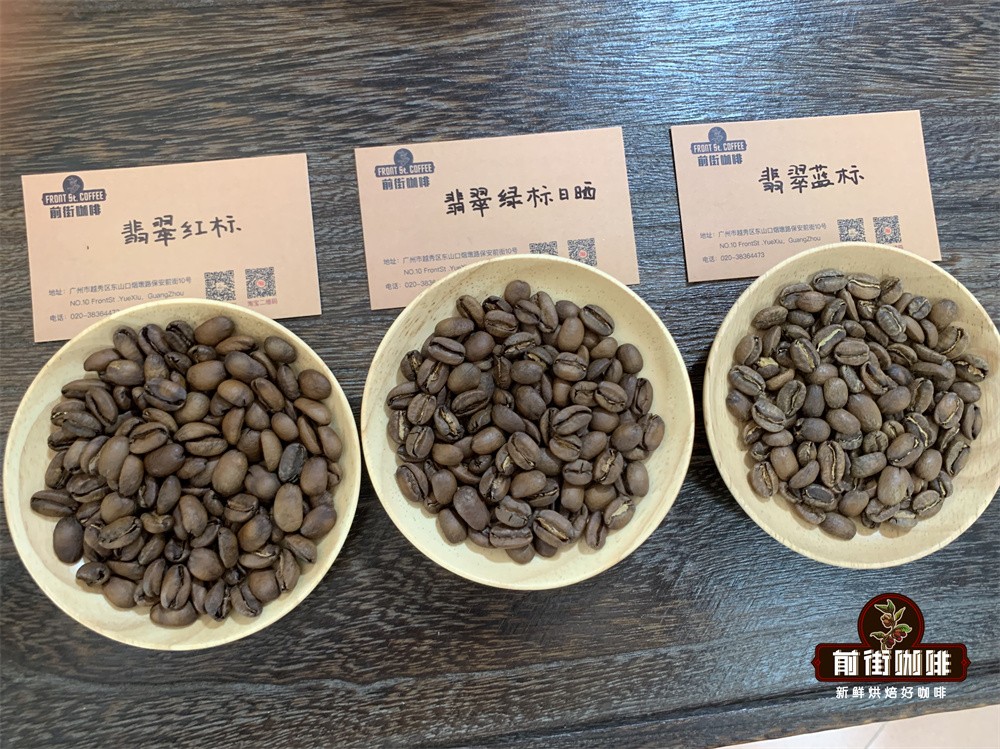
In terms of flavor profile, the Hua Kui Natural (Red Label) often features bright notes of rose and citrus, accompanied by complex fruit tones such as rice, berries, and apricots, with a pronounced honey-like sweetness, a full body, and a long-lasting aftertaste. The Washed Green Label highlights jasmine floral notes as the main theme, paired with high sweetness, citrus, berries, and a creamy texture, with a tea-like and citrusy freshness in the finish. The Washed Blue Label has a softer acidity dominated by lemon and grapefruit, revealing oolong tea and honey aftertastes as the temperature drops, resulting in a clean and refreshing mouthfeel. The Natural Blue Label is bursting with tropical fruit and sweet melon aromas, delivering an overall juice-like, sweet, and refreshing profile.
The above content is compiled by CoffeeHunters, a coffee news website.


