







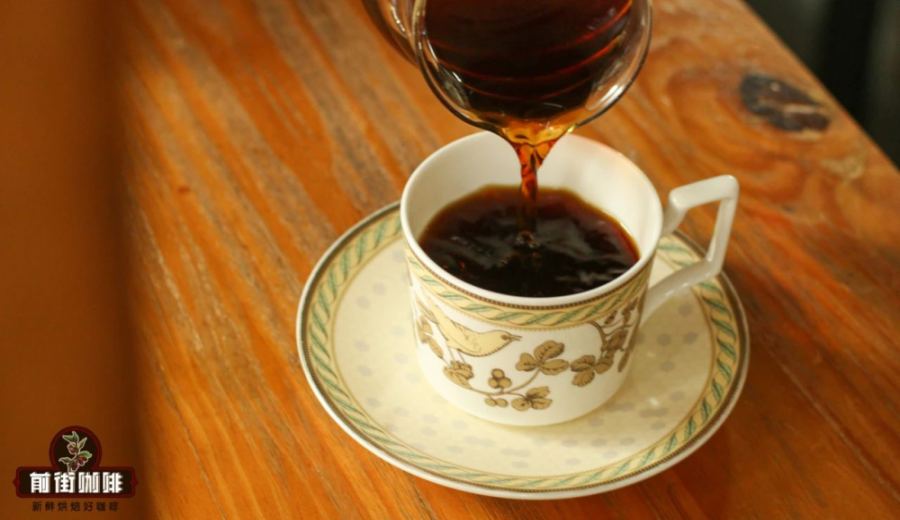
Introduction:Jamaican Blue Mountain coffee is renowned for its delicate balance, yet many pour over enthusiasts often find their home-brewed versions overly acidic or lacking in flavor. This article delves into the background of one of the four major estates of Blue Mountain — Stoneleigh Estate — to uncover the origins of its unique flavor profile, and provides professional-grade pour over recommendations, including filter choice, water temperature control, and three-stage pouring techniques, teaching you how to brew a classic Blue Mountain cup that is rich and not sour.
Jamaican Blue Mountain coffee has always been a legend in the specialty coffee world, not only because of its scarce production — with only about 900 tons exported annually — but also due to its well-praised balanced and gentle taste. These top-tier coffee beans mainly come from the four major estates in the Blue Mountains, among which Stoneleigh Estate, though less known in Taiwan, is one of the representatives of the Blue Mountain flavor. This article will start with the growing environment and processing methods, and detail how to bring out the rich and non-acidic unique charm of Blue Mountain coffee through the correct pour over method.
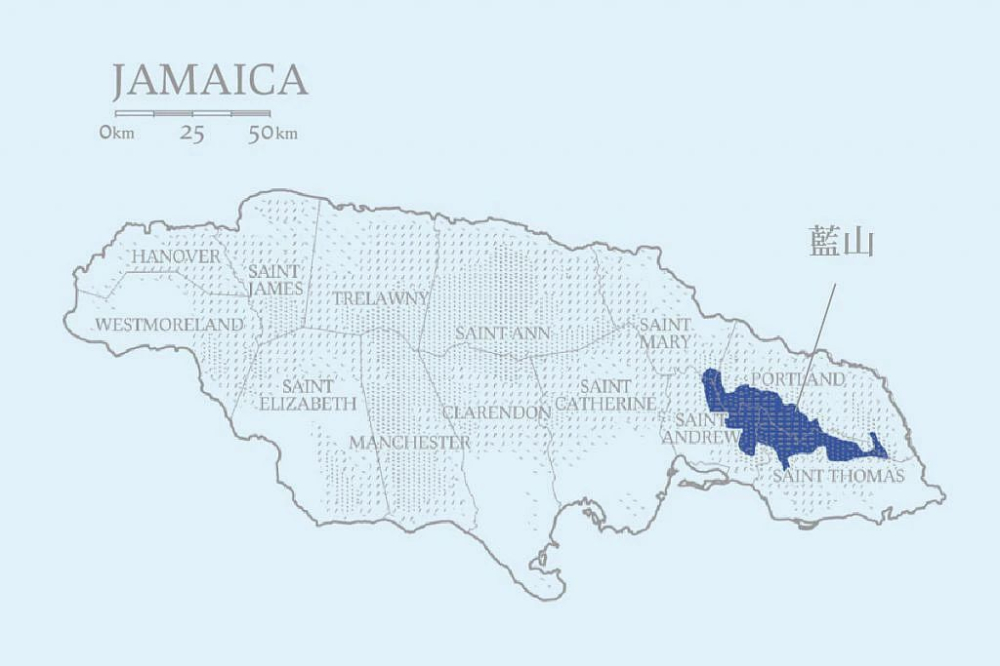
First, it must be clarified that not all coffee grown in the Blue Mountains can be called 'Jamaican Blue Mountain coffee.' According to the strict regulations of the Jamaica Coffee Industry Board (CIB), only Typica variety coffee planted within the approximately 6,000-hectare designated area of the Blue Mountains, at an altitude between 910 and 1,700 meters, and certified by multiple CIB standards, is qualified to bear this name. These areas are mainly distributed across the parishes of St. Thomas, St. Mary, St. Andrew, and Portland. The well-known four major estates — Clifton, Stoneleigh, Golden Cup, and RWS Coffee Estate — are the representatives of this sacred producing region.
Among them, Stoneleigh Estate has a history of about 80 years. Though not as widely known as other estates, its coffee has consistently received international market recognition for its stable and rich performance, especially enjoying a good reputation in the Japanese market. In contrast, Clifton Estate is the oldest and the only Blue Mountain coffee producer with Rainforest Alliance certification, accounting for 55% of Jamaica’s total exports and being one of the main sources of Blue Mountain No. 1. Meanwhile, Golden Cup and RWS Coffee Estates are formed by the merger of two and three century-old estates respectively, committed to modern management and industry promotion.
Although Stoneleigh Estate is not as extensively detailed here as Clifton, its altitude and microclimate conditions are similar to those of other Blue Mountain estates, contributing to the low acidity, richness, and sweet balance characteristic of Blue Mountain coffee. Next, we will take Clifton Estate as an example to delve into the exquisite process of Blue Mountain coffee from planting to processing — crucial for understanding the final pour over flavor.
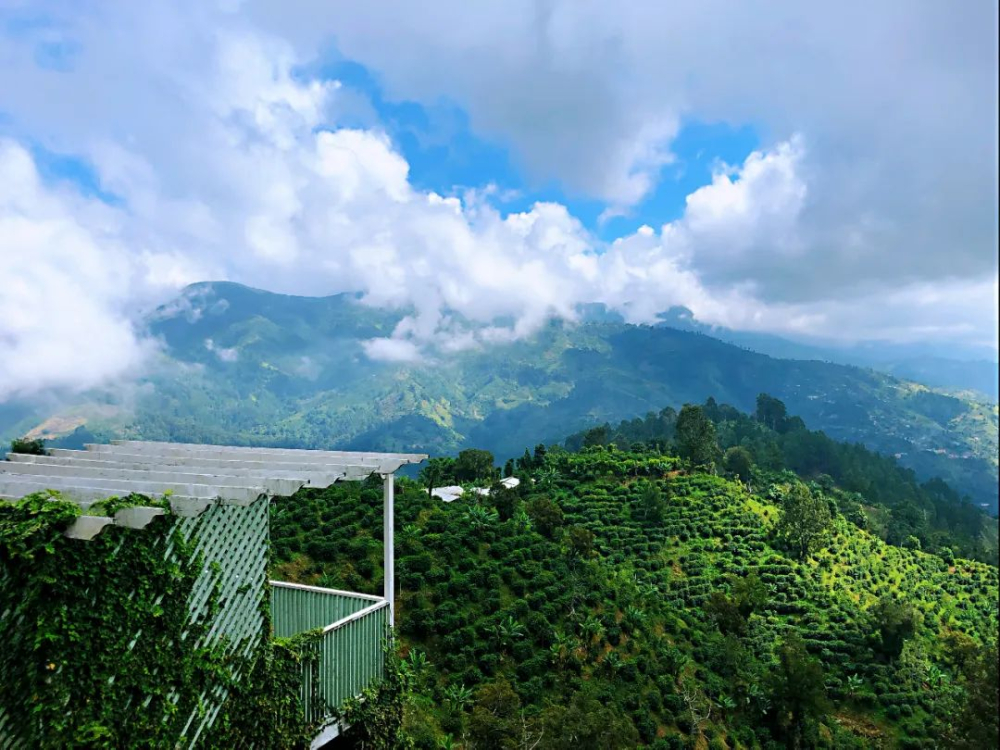
The history of Blue Mountain coffee cultivation at Clifton Estate dates back to the mid-18th century, around 1750, and has been managed by the Sharpe family since 1978. The estate is located on Mount Clifton, with an average altitude of the planting area and processing facilities at 4,300 feet (approximately 1,310.64 meters). This elevation allows for slower maturation of the coffee, and combined with the mountain’s characteristic thin mist, abundant sunlight, moderate rainfall, and mineral-rich soil, the coffee cherries accumulate richer aromatic compounds. It is worth noting that due to the rugged terrain, harvesting relies entirely on skilled manual labor, with only perfectly ripe coffee fruits handpicked each spring.
After the Sharpe family took over, in addition to reorganizing the overgrown jungle, they invested in building various sustainable facilities, including a solar power station, wastewater treatment system, and BMCP processing plant, making it the only estate in the entire Blue Mountains with 'Rainforest' certification. During processing, all water is recycled for agricultural irrigation, and the fruit peels are converted into organic fertilizer, demonstrating an environmentally friendly philosophy.
In terms of green bean processing, harvested coffee cherries first undergo flotation to screen out unripe beans. Then, the ripe cherries are conveyed into a pulping machine, followed by placing the beans, still coated with mucilage and parchment, into water tanks for fermentation. Once the mucilage is broken down, it is rinsed away with water flow, then sun-dried until the moisture content reaches 11% to 12%. Finally, these parchment-covered coffee beans are rested in the BMCP processing plant for about a month to promote flavor maturation and stabilize internal structure and water activity.
Jamaica has extremely strict grading criteria for Blue Mountain coffee. Since the establishment of the CIB in 1952, all coffee produced in the Blue Mountains must be certified by the CIB to be labeled as 'Jamaican Blue Mountain coffee.' Evaluation standards include green bean size, defect rate, color, uniformity, as well as cupping performance after roasting, such as dry aroma, wet aroma, acidity, flavor, body, and cleanliness. Bean size is graded by screen size, while color is judged by both the naked eye and colorimeter, with bluish-green being the highest grade.
Ultimately, Blue Mountain coffee is divided into four grades: Blue Mountain No. 1, Blue Mountain No. 2, Blue Mountain No. 3, and Blue Mountain Peaberry. Among these, Blue Mountain No. 1 is the top grade, requiring green beans of 17 mesh or larger, a defect rate below 3%, a moisture content of around 13%, and cupping results that exhibit rich aroma, low acidity, balanced taste, and lasting aftertaste. Only coffee that meets these strict criteria can be affixed with the CIB certification label and exported in wooden barrels — the globally unique packaging form for Blue Mountain No. 1, 2, and 3, distinct from the burlap sacks commonly used for other Jamaican coffees.
For pour over brewing of Blue Mountain coffee, particularly Blue Mountain No. 1 from Stoneleigh or Clifton, it is recommended to use a KONO filter to enhance extraction stability and richness. The smooth curved upper design of the KONO filter allows it to fit more tightly with the filter paper. Compared to v60, it leans more toward immersion-style extraction, helping to increase overall concentration and body fullness. If a KONO is unavailable, a Kalita wave (trapezoidal) filter or fabric dripper like a French press can also be used as slower-flow alternatives.
Since Blue Mountain is a medium-dark roast, the bean structure is relatively fluffy with high water absorption. It is recommended to use88°C water temperatureanda grind size similar to coarse sugar (75% passing rate through a standard #20 sieve)to avoid over-extraction leading to sharp acidity. A 1:15 coffee-to-water ratio is advised, using 15 grams of coffee beans as the base, for a total water volume of 225 grams, employing the classic three-stage pouring method.
Suggested pour over parameters are as follows:
Water temperature: 88°C
Grind size: 75% passing rate through a standard #20 sieve (coarse sugar-like fineness)
Coffee dose: 15 grams
Coffee-to-water ratio: 1:15
Filter: KONO (or alternatively Kalita trapezoid or fabric dripper)
Brewing method: Three-stage pouring
Detailed steps:
1. First stage: pour 30 grams of water and bloom for 30 seconds;
2. Second stage: steadily pour up to 125 grams, using even circular pouring motion;
3. When the water level drops halfway, continue pouring to 225 grams, with a total brew time of approximately 2 minutes.
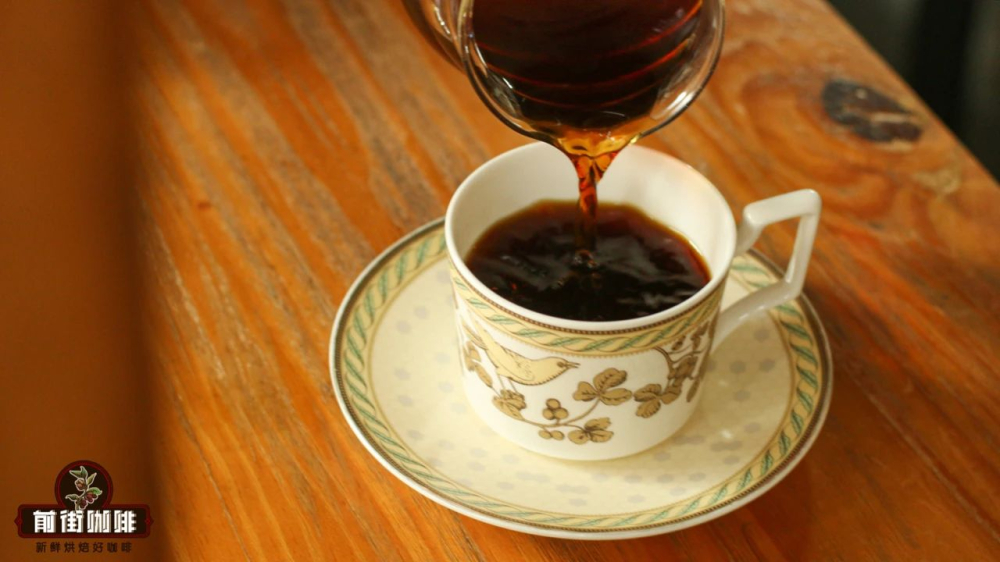
The resulting Blue Mountain No. 1 brewed this way presents intense black chocolate, roasted hazelnut, and creamy aromas when hot, with a rich, smooth mouthfeel and a notable almond aftertaste. As it cools slightly, roasted hazelnut, creamy sweetness, and delicate caramel notes emerge, with soft acidity and long-lasting aroma. Remember, Blue Mountain coffee should be enjoyed within 5 days of roasting to experience its fullest and most balanced flavor expression.
The above content is compiled by CoffeeHunters, a coffee news website.


