








Introduction:An in-depth exploration of the "Strawberry Candy" Gesha blend from Mirazu Estate in the Tarrazú region of Costa Rica. From the terroir of the growing area, processing methods, to the unique techniques of honey processing, this article takes you through the coffee’s pronounced floral-fruity notes and rich sweetness. It also provides professional pour-over brewing recommendations—including coffee-to-water ratio, water temperature, grind size, and pulse pouring techniques—to help you achieve an outstanding cup at home with bright acidity and honey-like sweetness.
Costa Rica is world-renowned for its refined honey-processed coffees, characterized by the golden hue of the parchmented beans after drying and a rich body with enticing sweetness when brewed. As one of the few countries in the world that legally mandates the cultivation of only Arabica varieties, Costa Rica’s commitment to coffee quality is unmatched. This article not only discusses the unique terroirs of the country’s seven major coffee-growing regions but also highlights the "Strawberry Candy" Gesha blend from Mirazu Estate in the Tarrazú region. This honey-processed coffee employs the raisin honey method to impart intense fruity and floral notes along with a vivid sweetness.

The reason Costa Rican coffee is hailed as precious as gold is not solely due to its market value, but because of the unique charm bestowed by its honey processing. During drying, honey-processed parchmented beans retain a large amount of mucilage, resulting in a coffee that, after roasting, exhibits a rich, full-bodied character with a prominent sweetness—particularly favored by coffee lovers who enjoy fruity and sweet flavor profiles.
A key criterion in the definition of specialty coffee is the use of the Arabica variety, and Costa Rica is the only country in the world to have legislatively banned the cultivation of non-Arabica varieties entirely. As early as 1989, the country implemented legal measures to prohibit the planting of low-quality coffee trees, striving to elevate overall coffee quality. It’s worth noting that Arabica has relatively demanding environmental requirements, relying on appropriate altitude, specific soil conditions, and stable climate to express its unique flavor potential.
Costa Rica features a distinct wet and dry seasonal climate, with an annual average temperature ranging between 17 to 28°C and an annual temperature variation of about 10°C. Coupled with high air humidity and abundant rainfall (annual precipitation of 2000–3000 mm), these conditions provide an ideal environment for coffee growth. Over 80% of the country’s coffee is cultivated at elevations of 800 to 1700 meters above sea level, paired with fertile volcanic soils, yielding SHG (Strictly Hard Bean) beans with complex flavor layers.
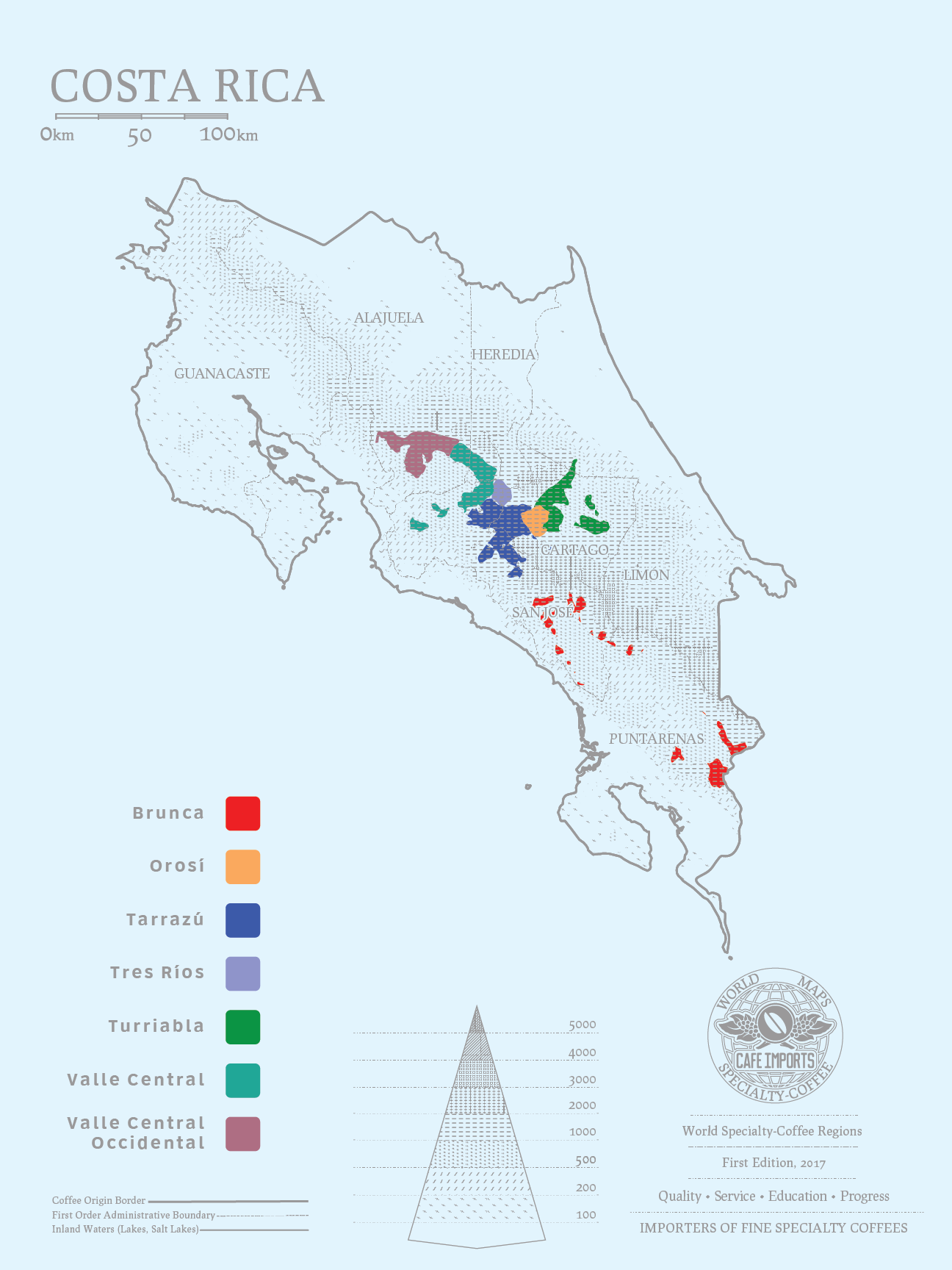
Costa Rica is officially divided into seven certified coffee-growing regions: Central Valley, Tres Ríos, Brunca, Turrialba, Tarrazú, Orosi, and West Valley. Each region, due to differences in terrain, altitude, and microclimate, produces coffee with distinct flavor characteristics.
[Central Valley] This region accounts for about 15% of the country’s total production, mainly located at altitudes between 1000 and 1200 meters. Volcanic soils lend the coffee distinct fruit and chocolate notes, accompanied by a hint of honey-like sweetness.
[Tres Ríos] Adjacent to the Irazú Volcano, it is the smallest region in size, with altitudes reaching up to 1650 meters. The coffee here is known for its bright and clean flavors, notable sweetness, and prominent fruity aromas.
[Brunca] Situated at the southernmost part of the country, contributing about 20% of total production, with altitudes ranging from 800 to 1700 meters. The coffee has a mild flavor profile with rich layers of citrus notes.
[Turrialba] This is the region with the highest rainfall. Coffee trees are mostly planted above 1400 meters, and the coffee is known for its light, soft body and balanced acidity.
[Tarrazú] One of the highest-altitude regions in Costa Rica, famed for producing SHB (Strictly Hard Bean). Its coffee performance is exceptionally outstanding, making it one of the country’s most recognized premium regions.
[Orosi] As one of the oldest coffee-growing areas in the country, blessed with abundant rainfall, coffee is grown on hillsides between 1000 and 1400 meters, producing coffee with a smooth mouthfeel and well-balanced flavors.
[West Valley] Adjacent to Tarrazú, it accounts for about 25% of national production, with altitudes ranging between 1200 and 1700 meters. The slower ripening of coffee cherries here aids in flavor accumulation.
Mirazu Estate is located in the Tarrazú region at an elevation of 1700 meters. It was founded by Esteban Sanches, who previously worked at La Candelilla Estate. "Mirazu" means "overlooking Tarrazú" in the local language, symbolizing its prime location and superior growing vista. The estate owner has in-depth knowledge of coffee equipment and post-harvest processing technologies, and is committed to improving coffee quality right from the source.
This coffee bean, named "Strawberry Candy," is a carefully blended Gesha combination, consisting of 50% Gesha variety and the remaining 50% made up of ET47, SL28, and Maico. Gesha originally hails from the Gesha Forest in Ethiopia. Though overlooked in its early years, it gained fame after winning the BOP competition at Hacienda La Esmeralda in Panama in 2004. It is renowned for its delicate floral notes, tropical fruits, and tea-like characteristics, making it a dream variety for many coffee enthusiasts.
The roaster of a certain brand chose a medium roast for this blend, aiming to balance the delicate floral-fruit notes of Gesha with the intense sweetness brought by the honey processing. It is recommended to use a high water temperature of 93°C, a medium-fine grind with 80% passing rate through a Chinese Standard No. 20 sieve, paired with the fast-flow Hario V60 dripper to fully showcase its aromatic and sweet layered profiles.
Pour-over brewing recommendations are as follows:
Dripper: Hario V60
Water Temperature: 93°C
Coffee Dose: 15 grams
Coffee-to-Water Ratio: 1:15
Grind Size: 80% passing through a No. 20 sieve (medium-fine)
Brewing Steps:
1. Start by pouring 30 grams of hot water for a 30-second bloom to awaken the coffee grounds.
2. Then, slowly pour in a second pour with a small stream in circular motion until you reach 125 grams, completing the first pour. This stage should take approximately 30–45 seconds.
3. Finally, pour the third pour steadily and gently in a circular motion until you reach 225 grams. Keep the total brew time around 2 minutes to achieve optimal balance and clarity of flavors.
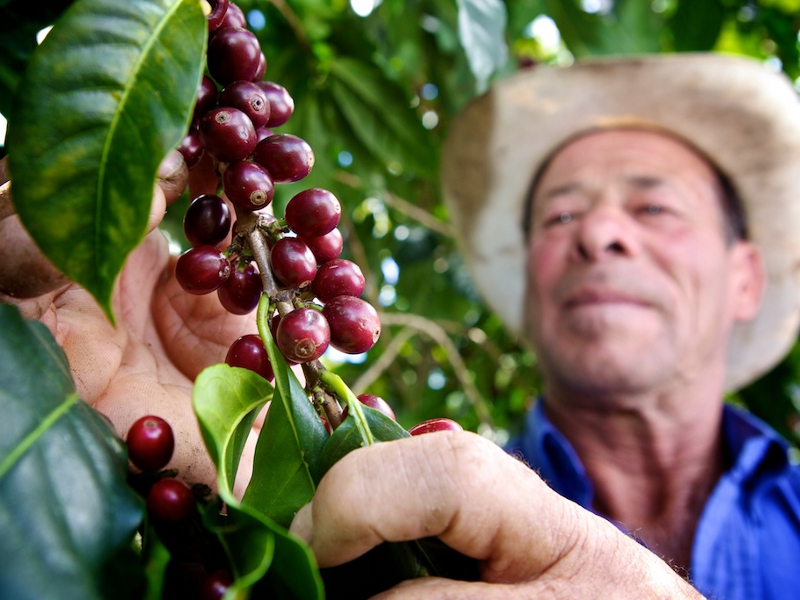
With precise parameter control and careful execution, this Costa Rican Mirazu Estate "Strawberry Candy" Gesha blend can present in the cup a bright acidity, rich floral notes, and pronounced honey-like sweetness—making it an unmissable choice for advanced pour-over enthusiasts.
The above content is compiled by CoffeeHunters, a coffee news website.


