








Introduction:Jamaica Blue Mountain coffee is hailed as one of the world’s finest coffees, yet its high price and complex grading system often leave people puzzled. This article delves into the three main growing regions of Blue Mountain coffee, its official certification marks, the characteristics of the Typica variety, as well as the grade differences between No. 1, High Mountain, and regular Jamaica coffee. It also explores how washed and natural processing methods affect flavor, and provides practical dark roast pour over parameters and flavor evaluations to help you select and brew the most authentic Blue Mountain experience.
Jamaica Blue Mountain coffee is undoubtedly a legend in the coffee world—renowned for its exorbitant price, limited supply, and unparalleled balanced flavor. What makes it so special? Beyond its exceptional growing environment, a rigorous grading system and official certification are key. This article will take you through a comprehensive exploration of this top-tier coffee, from its growing regions and varieties, to grade classifications, processing methods, and pour over recommendations.
Market Positioning and Purchase Certification of Blue Mountain Coffee
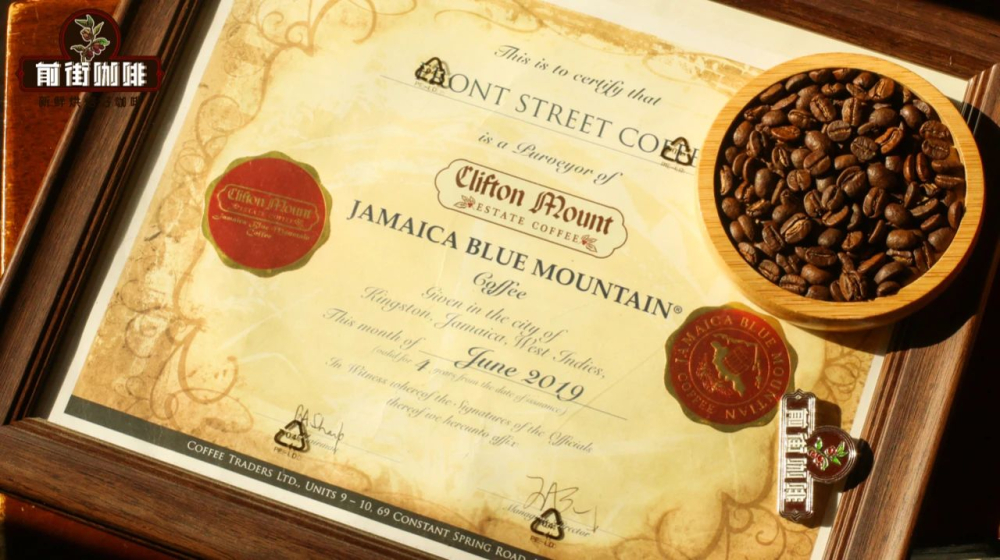
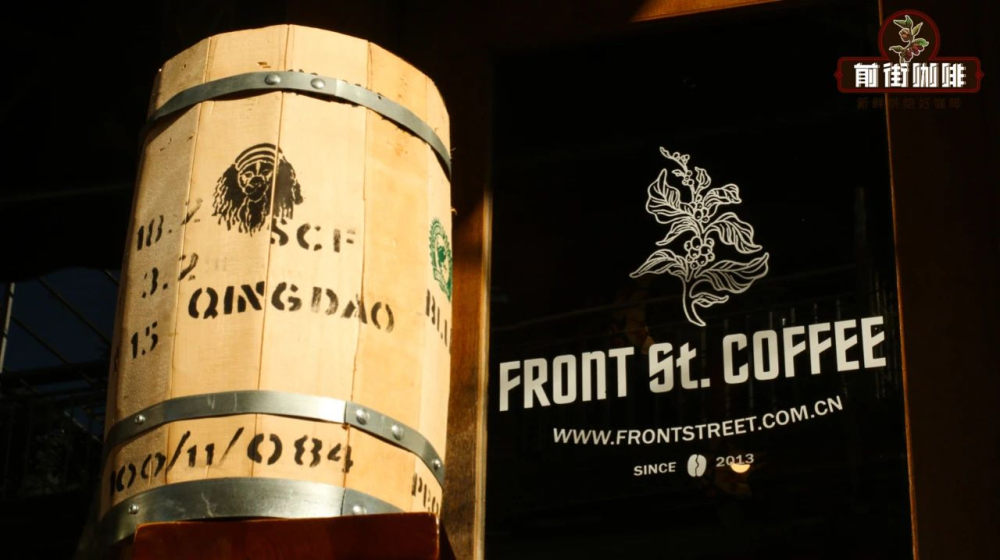
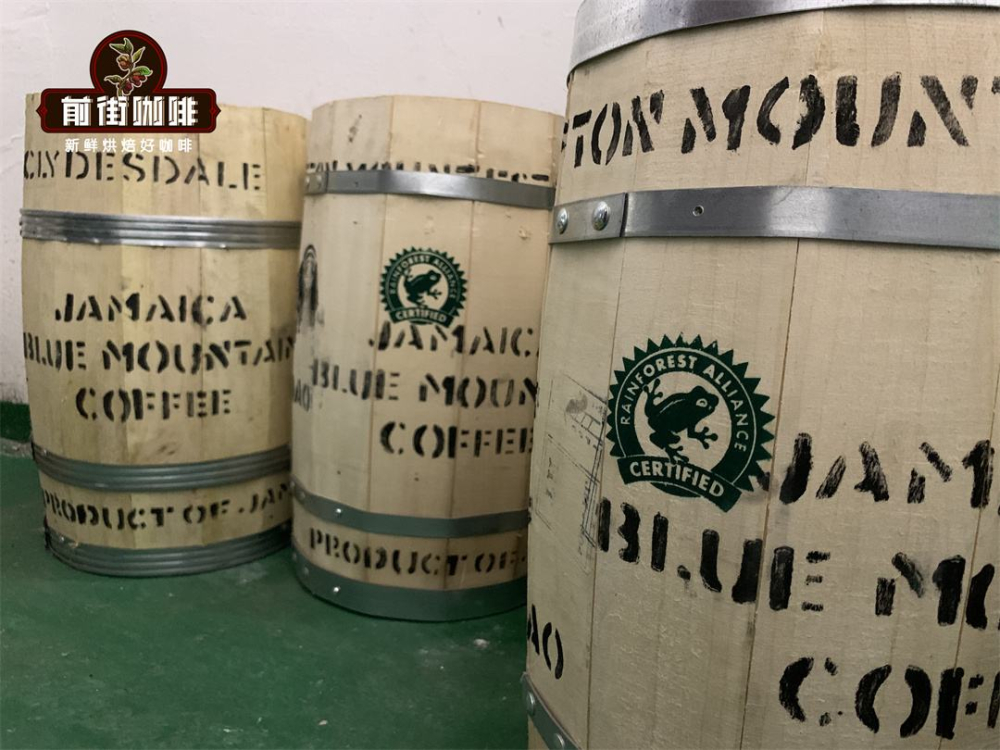
In the market, a cup of authentic Jamaica Blue Mountain coffee typically costs around 60 RMB, with 100 grams retailing for about 158 RMB. Behind such pricing lies strict official certification. Every batch of exported Blue Mountain coffee comes with a certificate issued by the Jamaica Coffee Industry Board (CIB), ensuring its origin and quality. Additionally, wooden barrels used to ship Blue Mountain green beans bear a green frog logo, symbolizing Rainforest Alliance certification. Such certified Blue Mountain coffee usually comes from renowned estates like the Clifton Estate.
It’s worth noting that Jamaica is the only country in the world that still ships green beans in wooden barrels. Aside from traditional reasons, this practice also helps maintain bean quality during transit.
Growing Regions of Blue Mountain Coffee
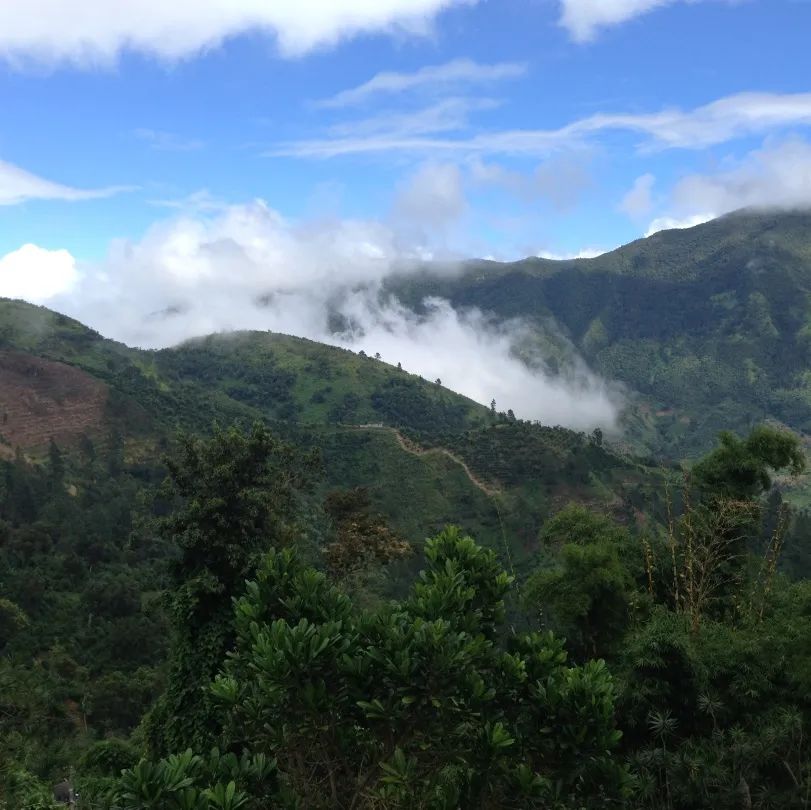
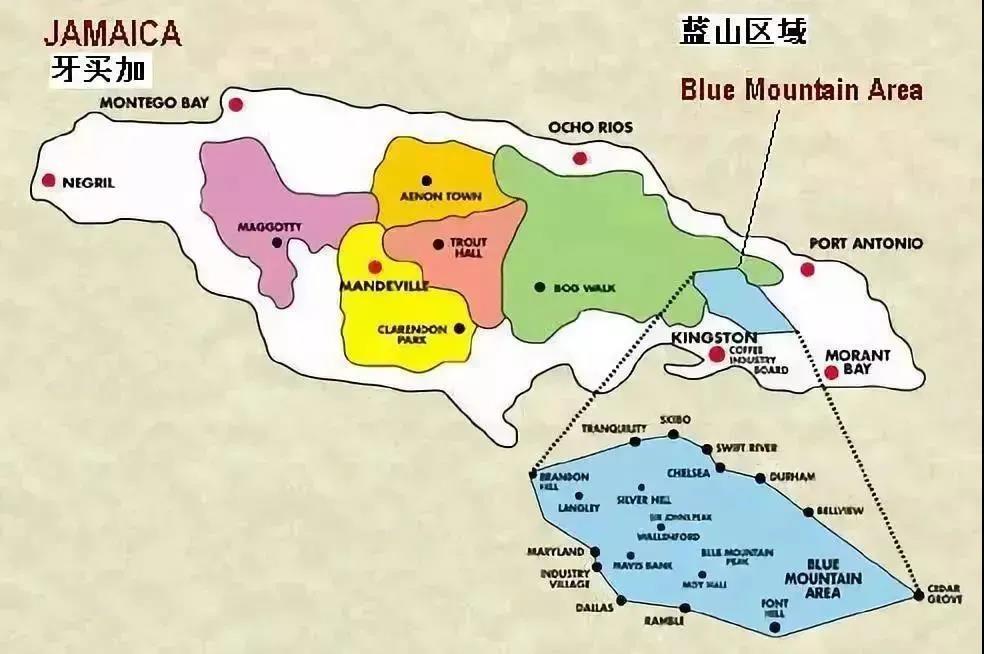
Authentic Blue Mountain coffee is grown exclusively in the Blue Mountains at elevations between 1,000 and 1,700 meters, covering a total area of just about 6,000 hectares. However, the surrounding regions also cultivate around 12,000 hectares of Jamaica High Mountain and Jamaica Prime coffee. The Blue Mountain range is mainly divided into three key regions: St. Andrew, Portland, and St. Thomas. Well-known estates such as Wallenford Estate, Silver Hill Estate, and Atlanta Estate are all located here.
These regions not only feature rugged terrain and cool climates but also benefit from specific altitude and microclimate conditions that define the unique flavor profile of Blue Mountain coffee. Even within the same region, variations in estate scale and family-run management can influence subtle flavor details.

Official Certification and Grading System of Blue Mountain Coffee
The Jamaica Coffee Industry Board (CIB) is the government agency responsible for managing the quality and brand of Blue Mountain coffee, operating under the Ministry of Agriculture and Fisheries. Only coffee grown at an elevationof 1,000 to 1,700 metersis eligible to be classified as Blue Mountain coffee. The CIB grades the beans based on size, defect rate, and moisture content, primarily dividing them into four grades: No. 1, No. 2, No. 3, and Peaberry (PB). Among these,NO.1No. 1 is the highest grade, requiring strict standards such as beans larger than 17 mesh, a defect rate below 2%, and a moisture content of around 13%.
Blue Mountain coffee is further categorized into three types based on region and processing method: Blue Mountain Coffee, Jamaica High Mountain Supreme, and Jamaica Prime Coffee Beans. Blue Mountain Coffee is graded from highest to lowest as No. 1, No. 2, No. 3, and PB; Jamaica High Mountain follows a similar grading system but generally exhibits slightly inferior flavor complexity compared to Blue Mountain; Jamaica Prime refers to coffee grown outside the Blue Mountain range, usually more affordable but with relatively simpler flavor profiles.
Impact of Variety and Processing Methods
Blue Mountain coffee predominantly uses the Typica variety, one of the oldest branches of Arabica. Typica coffee trees are tall, have low yields, and are weak in disease resistance, making their cultivation and maintenance costly. However, they also impart delicate, balanced flavor characteristics. The ripe coffee cherries are bright red, resembling cherries in appearance, but due to varietal traits, they are more susceptible to pests and diseases, which further limits yield.
In terms of processing, Blue Mountain coffee was traditionally processed only using the washed method—removing the pulp layer through fermentation, followed by prolonged sun drying to ensure pure flavor. However, in recent years, a small amount of naturally processed Blue Mountain No. 1 has emerged, bringing more layers of fruity and fermented notes to the flavor, offering a new dimension for flavor exploration.
Pour Over Recommendations and Extraction Parameters
Since most Blue Mountain coffee is dark roasted, it’s recommended to use a lower water temperature (e.g., 88°C) and a slow-flow filter cone (such as a Kono) to reduce the risk of over-extraction. Practical parameters are as follows: 15g of coffee, a 1:15 coffee-to-water ratio, grind size with about 75% of particles passing through a 20-mesh sieve (medium grind), employing a three-stage extraction—first blooming with 30g of water for 30 seconds, then pouring in small streams to reach 125g, followed by a final pour to 225g, with total extraction time controlled to around 2 minutes.
Additionally, it’s advised to gently shake the coffee server after brewing to evenly mix the coffee liquor for a more consistent flavor.
Flavor Characteristics of Blue Mountain Coffee
Washed Blue Mountain coffee typically showcases a rich base of dark chocolate and nuts, with a silky smooth mouthfeel and well-balanced acidity, sweetness, and bitterness—ideal for those who prefer mellow flavors. Natural-processed Blue Mountain, on the other hand, offers slight berry acidity, such as dark plum or mulberry, alongside dark chocolate, nuts, and subtle fermented aromas, presenting a more expressive flavor profile.
Regardless of processing method, Blue Mountain coffee is celebrated for its exceptional balance and refined nuances, making it the dream coffee for coffee enthusiasts worldwide.
The above content is compiled by CoffeeHunters, a coffee news website.


