







Introduction:Jamaican Blue Mountain coffee has long been hailed as the king of the coffee world, yet few truly understand it. This article delves into the cultivation history, core growing regions, official grading system, and washed processing methods of Blue Mountain coffee, taking you on a tour of its most representative estates. It also provides detailed flavor profiles, professional-level brewing recommendations, and practical tips for identifying authenticity based on appearance, grind, aroma, and taste—making it an essential guide for both beginners and enthusiasts seeking to deeply understand this legendary coffee.
When it comes to the top representatives of the coffee world, Jamaican Blue Mountain is undoubtedly the most prestigious name—even those who rarely drink coffee have heard of its legendary status. What exactly makes this coffee worthy of being called the “king”? We’ll start with the origins of Blue Mountain’s cultivation, detail the geographical conditions of its three core growing regions, and analyze the strict certification and grading standards of the Jamaica Coffee Industry Board, giving you a comprehensive understanding of the differences between Blue Mountain, High Mountain, and regular Jamaican coffee.
The cultivation history of Blue Mountain coffee dates back to the early 18th century. In 1717, King Louis XV of France ordered the planting of coffee in Jamaica. By the mid-1720s, then-Governor Sir Nicholas Lawes introduced Arabica seeds from Martinique, first promoting cultivation in the St. Andrew area—which remains one of the three core Blue Mountain coffee growing regions to this day. The other two are Portland and St. Thomas. Over the next eight years, Jamaica successfully exported more than 375 tons of pure coffee, demonstrating its early potential.
In 1950, the Jamaican government established a dedicated agency—the Jamaica Coffee Industry Board (JCIB)—responsible for setting and enforcing coffee quality standards, making it one of the few countries in the world with such stringent control mechanisms. This agency grants exclusive official seals to exported green and roasted beans, ensuring that all Blue Mountain coffee on the market meets high standards. Currently, there are six types of origin certification labels for Blue Mountain coffee, issued by different official bodies and associations, ensuring that each batch can be traced back to its source.
The unique flavors of Jamaican Blue Mountain coffee are inseparable from its exceptional geographical and climatic conditions. The Blue Mountains are the highest peaks in the western Caribbean, reaching an elevation of 2,256 meters, located near the 25°N latitude—within the coffee-growing “golden belt.” The region boasts fresh volcanic soil rich in nitrogen and phosphorus, clean unpolluted air, stable year-round rainfall, high humidity, along with significant diurnal temperature variations and cloud cover that shades the coffee plants—all of which contribute to the delicate, rich, and balanced flavor profile distinctive to Blue Mountain coffee. The harvest season is concentrated between June and November, and due to the steep terrain, harvesting largely relies on skilled local female workers, who carefully select only perfectly ripe coffee cherries to ensure bean quality.
Based on elevation and quality, Jamaican Blue Mountain coffee is divided into three major grades: Blue Mountain Coffee, Jamaica High Mountain Supreme, and Jamaica Prime Coffee. Each category is further subdivided into two grades, namely Blue Mountain No. 1, Blue Mountain No. 2, Jamaica High Mountain No. 1, Jamaica High Mountain No. 2, and Jamaica Prime Coffee. Among them, the green bean standards for Blue Mountain No. 1 include: bean size must be 17 mesh or larger, defect rate below 3%, and moisture content controlled at around 13%. Genuine Blue Mountain coffee must be grown at elevations between 457 and 1,524 meters, while beans grown between 274 and 457 meters are classified as High Mountain or regular Jamaican coffee—with a significant difference in price.
Currently, Blue Mountain coffee is processed exclusively using the washed method, which preserves the original flavors and cleanliness of the coffee to the greatest extent. The process involves removing the skin and pulp, followed by 12 to 18 hours of fermentation, then using water flow and friction between beans to remove the mucilage until the surface is smooth. The washed beans are still enclosed in their parchment, with a moisture content as high as 50%, and require prolonged sun drying or mechanical drying to reduce the moisture level to 12–14% before screening and proper storage. The entire process must be strictly controlled to ensure stable and excellent final flavor.
Among the many Blue Mountain coffee estates, several notable producers are particularly worth highlighting. The WALLENFORD estate, located on the slopes of the Blue Mountain peak at about 1,524 meters above sea level, has been cultivating Blue Mountain coffee since 1790. Its long-term cool and foggy environment yields coffee cherries with rich and full-bodied flavors. It is one of the very few estates still directly managed by the government, with extremely strict quality control. Mavis Bank has been operated by the Munn family since 1885, and its high-altitude processing techniques and zero-defect craftsmanship produce a smooth flavor that is rich yet carries a unique tea-like aroma. R.S.W Blue Mountain combines three estates at altitudes of 700 to 1,600 meters under one management, maintaining consistent flavor through centralized processing. Meanwhile, the Clifton Mount Estate is one of Jamaica’s few ancient producers with “Rainforest Alliance” certification, situated at over 1,300 meters altitude. Afternoon clouds and mineral-rich soil provide an ideal growing environment for the coffee.
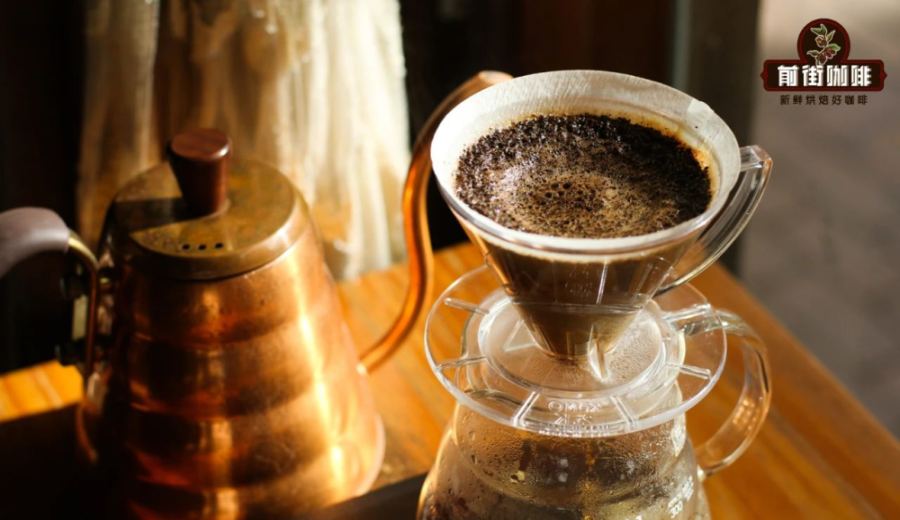
If you wish to brew the essence of Blue Mountain coffee at home, it is recommended to use V60, KONO, or Kalita wave drippers. Taking KONO as an example, you can use 15 grams of coffee grounds, a water temperature of about 89°C, a grind size similar to table sugar for pour over, and a coffee-to-water ratio of about 1:15, with the total brew time controlled to around 2 minutes. The specific steps are: start with a 30-second bloom using 25–30 grams of water, then pour up to 120 grams in the first stage and pause, using a slow circular motion with a small stream; in the second stage, pour up to 225 grams, slightly increasing the pouring speed to avoid clogging. This method fully highlights the balanced characteristics of Blue Mountain coffee—rich, sweet, with gentle acidity—and a lingering finish featuring fruity and chocolatey notes.
Finally, how can you tell if Blue Mountain coffee is genuine? First, look at the appearance: authentic Blue Mountain green beans are emerald green, medium to small in size, with slightly curled ends, and will visibly expand and become plump after roasting. Second, when grinding, high-elevation-grown Blue Mountain beans have looser cell structure, feeling crisp and smooth when hand-ground without any blockage. Third, genuine Blue Mountain has a rich and robust aroma, whereas counterfeit or blended versions often have a flat or mixed scent. Most importantly, consider the flavor profile: true Blue Mountain coffee offers a balanced taste, with acidity, sweetness, and bitterness well-harmonized—none of these elements overpower or are missing, which is its irreplaceable hallmark. Be especially cautious, as the market often sees cheap “Blue Mountain blends” or so-called “Blue Mountain coffee” sold at extremely low prices—most of which are merely commercial beans treated to mimic the aroma, and are far from real Blue Mountain.
The above content is compiled by CoffeeHunters, a coffee news website.


