







Introduction:Jamaican Blue Mountain coffee is renowned for its unparalleled growing environment, and its unique barrel transportation method embodies both historical and practical wisdom. This article delves into the characteristics of the Blue Mountain growing region, the evolution of Japan’s quota allocation, the strict oversight by the Jamaica Coffee Industry Board, and provides a detailed analysis of the processing method, roast profile, and optimal brewing recommendations for the Clifton Estate Blue Mountain No. 1. Discover this top-tier coffee from its origin to your cup in its entirety.
Blue Mountain coffee is hailed as one of the coffees grown under the most optimal conditions in the world, thanks to Jamaica’s distinctive natural environment. Located in the eastern part of Jamaica near the capital, Kingston, the Blue Mountain region sits at elevations exceeding 2,100 meters. The area enjoys a cool climate, frequent fog, abundant rainfall, and fertile soil with balanced moisture levels—ideal conditions for coffee trees. The local practice of mixed cultivation on terraces often sees coffee trees growing alongside bananas, avocados, and other crops, typically on steep slopes of up to 60 degrees, all harvested by hand. These exceptional conditions give Blue Mountain coffee its rich aroma and delicate flavor profile, making it one of the most sought-after specialty coffees on the market.
The rarity of Blue Mountain coffee is not only due to its outstanding quality but also its historical background. Prior to the 1960s, Jamaican coffee already enjoyed considerable prestige in the international specialty market. However, a devastating hurricane in 1969 severely damaged the local industry. Japanese UCC Corporation promptly provided financial and technical support, introducing scientific cultivation and management practices. In gratitude, the Jamaican government signed a 30-year contract with Japan, agreeing to supply 90% of its premium Blue Mountain coffee to Japan and the remaining 10% to Europe and the United States. After the contract expired, due to Japan’s economic downturn and a growing sense of autonomy among coffee farmers, the price of green beans increased, and Japan’s procurement ratio has since dropped to below 60%. Although there was once a market rumor that “only Japan has genuine Blue Mountain,” in reality, China has had direct import records since 2011. Today, the official Jamaican website even lists multiple Chinese authorized exporters, making it easier for consumers to enjoy authentic Blue Mountain coffee.
Another distinctive feature of Jamaican Blue Mountain coffee is its unique wooden barrel transportation method. Among countless coffee green beans, only Blue Mountain is shipped in wooden barrels, while others mostly use jute sacks. This tradition dates back to the 18th-century British colonial period when empty flour barrels shipped from Britain to Jamaica were repurposed for transporting coffee and rum. Today’s wooden barrels are made from timber sourced from temperate forests in the United States, chosen for their ability to steadily regulate internal and external humidity and mitigate the effects of drastic temperature changes during transit. The barrels’ excellent seal also effectively blocks external odors, preserving the coffee’s original aroma. Though relatively costly, this method further underscores the prestigious status of Blue Mountain coffee.
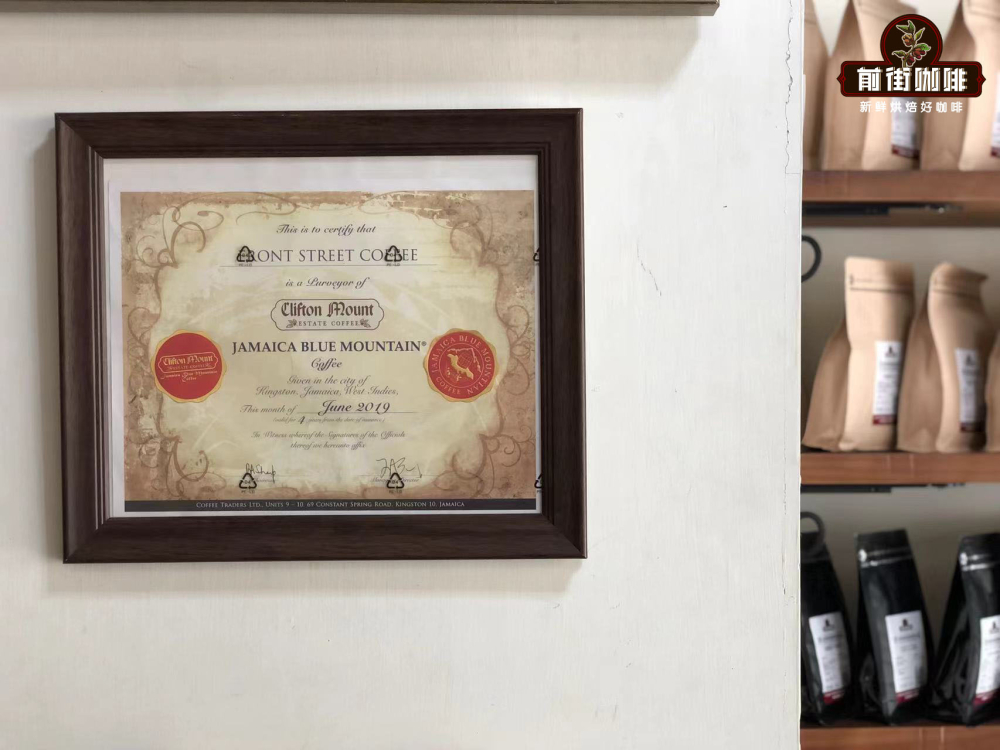
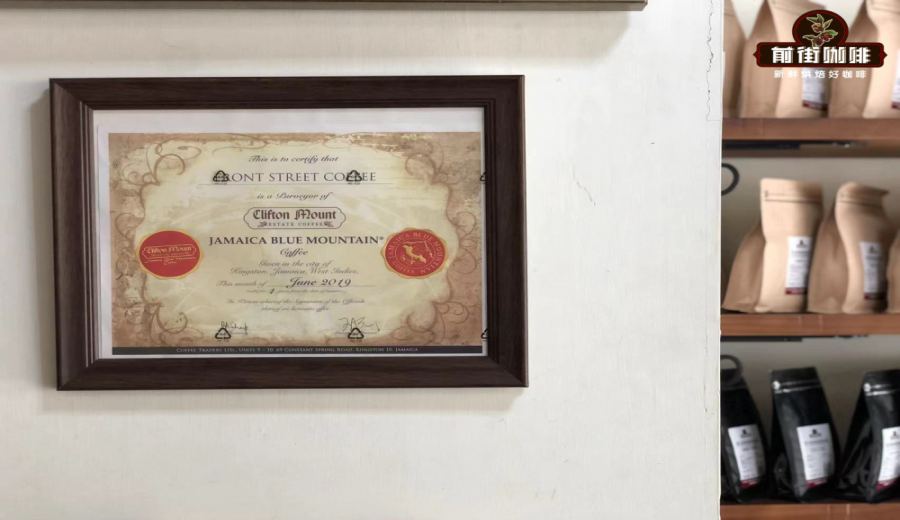
To ensure the quality of Blue Mountain coffee, the Jamaican government established the Coffee Industry Board (CIB) in 1953, becoming the world’s first country to name and strictly regulate coffee quality by production region. All exported coffee, especially products labeled as Blue Mountain, must be certified by the CIB to guarantee it is 100% sourced from the Blue Mountain region. Through such a rigorous management system, Jamaican Blue Mountain coffee has maintained its status as one of the world’s premier coffees.
The imported Blue Mountain No. 1 coffee beans come from the largest farm in the Blue Mountain region, the Clifton Estate. Though considered a smallholder operation by international standards, the farm is mostly family-owned with generations of farming heritage and over two hundred years of planting history. It is believed that the Blue Mountain No. 1 from Clifton Estate fully captures the essence of Blue Mountain coffee and is one of the representative products of the region.
Blue Mountain No. 1 is produced at the Clifton Estate in the Blue Mountain region, grown at an altitude of 1,310 meters from the Typica variety. Its processing methods include washed and natural, and it is graded as NO.1. The washed process is the traditional mainstream method, and starting this year, a natural option has also been added to offer more flavor choices.
Regarding processing methods, the washed process involves strict steps: first removing the pulp and flesh, then fermenting for 12 to 18 hours, followed by washing with water and friction against the beans until the surface is smooth. At this stage, the beans are still covered by the parchment layer and have a moisture content as high as 50%. They are then dried in the sun to reduce the moisture level to 12–14% to prevent mold, and finally undergo screening and storage. Each step affects the final quality. Starting in 2020, the region also introduced a natural version, offering consumers a different flavor experience of Blue Mountain.
There is a insightful analysis of the roast curve for Blue Mountain No. 1, with the goal of “transparently” showcasing the coffee’s potential. The recommendation is to start at a roaster temperature of 170°C with the air damper set to 3. After 1 minute, adjust the heat to 140°C, keeping the air damper unchanged. By 5 minutes and 10 seconds, when the temperature reaches 153°C, the bean surface turns yellow and the grassy aroma disappears, marking the completion of the drying phase. Then, increase the heat to 115°C and raise the air damper to 4. Around the 8-minute mark, when wrinkles and dark spots appear on the bean surface and the coffee aroma replaces the toastiness, it signals the prelude to first crack—closely monitor the onset of first crack. At approximately 8 minutes and 12 seconds when first crack begins, reduce the heat to 90°C, fully open the air damper, and finish roasting at 201.3°C to preserve the optimal flavor layers.
For brewing recommendations, it is advised to use 15 grams of coffee grounds, with water temperature controlled at 86–88°C, a coffee-to-water ratio of 1:15, and a grind size of medium-coarse (70–75% passing through a Chinese standard No. 20 sieve). Suggested filter cups include V60, Kalita Wave, or Kono, but considering the tendency for over-extraction at high temperatures, the Kono filter cup is recommended. With fewer and shorter ribs, it effectively reduces airflow between the filter paper and cup, extending contact time between water and coffee grounds, akin to an immersion effect. In practice, a three-stage pouring method is advised: start with 30 grams of water for a 30-second bloom, then pour in a small circular motion to 125 grams and pause. When the liquid level is about to expose the coffee bed, continue pouring to 225 grams to finish. Total extraction time is around 2 minutes to fully highlight the delicate and balanced flavor characteristics of Blue Mountain coffee.
The above content is compiled by CoffeeHunters, a coffee news website.


