







Introduction:Want to understand the true potential of Yunnan smallholder coffee? This article provides an in-depth comparison between Yunnan’s mainstream Catimor variety and the traditional Typica, covering aspects from yield and growing conditions to flavor profiles under washed and natural processing methods. It also offers professional-level Kono filter brew parameters and step-by-step extraction techniques to help you more accurately appreciate the authentic characteristics of Yunnan coffee.
In the Yunnan coffee market, the Catimor variety dominates. However, to mask certain flavor shortcomings, many producers turn to special processing methods to adjust the coffee’s profile. Yet the industry believes that relying on processing to alter flavor is not a sustainable solution—traditional washed processing better reveals the true character of the coffee. Especially the Typica grown in Baoshan, with its clean and clear taste, marks a key step in reshaping the perception of Yunnan coffee.
Most Yunnan coffee circulating in the market is of the Catimor variety. To enhance appearance, some employ special fermentation or anaerobic processing methods. While these may attract attention in the short term, they struggle to build stable quality recognition. In contrast, starting from the planting source—growing high-quality Typica in Baoshan and convincing consumers with actual flavor—proves that Yunnan can also produce specialty-grade Arabica coffee.
So why is Typica so important? Industry observers have noted over the years that despite the rapid development of Yunnan’s coffee industry, prices remain low. Even with special processing methods, market returns are limited. The reason is that the widely planted Catimor variety generally produces mediocre flavors, making it difficult to support higher value. Typica, an early classic variety introduced to Yunnan, offers unique freshness and layered complexity, better showcasing the coffee’s inherent potential.
But growing Typica is no easy task. Many ask, “Why not just switch entirely to Typica?” In reality, there are practical challenges. Typica grows slowly, has weak disease resistance, and yields are low. If farmers switch entirely from Catimor to Typica, they must wait four years with no stable income in the meantime, facing immense economic pressure. That’s why the choice is made to start from scratch, focusing on Typica as the main variety and committed to building high-quality Yunnan coffee right from the planting stage.
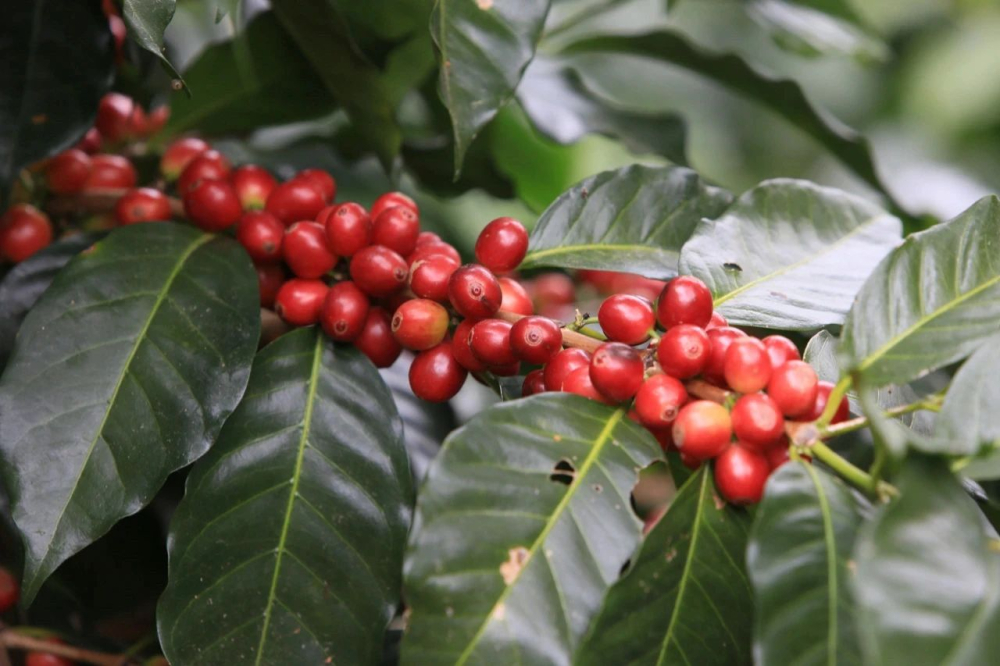
There are also significant differences in planting efficiency between Catimor and Typica. Catimor trees have an upright structure, suitable for dense planting—typically around 330 trees per mu, with yields as high as 300 kg per mu. In contrast, Typica trees grow tall, with trunks reaching up to 5 meters, and longer branch and internode distances, allowing only about 100 trees per mu, with yields around 100 kg per mu. This is one reason why Catimor is more common in the market: high yield meets commercial demand, but the flavor is often more ordinary.
The industry’s planting base is located in Baoshan, Yunnan, at an altitude of about 1200 meters, near the border with Vietnam. The region has a mild climate, with an average annual temperature of about 21.5°C, minimal frost throughout the year, and abundant rainfall, providing an ideal growing environment for coffee trees. In 2021, the Bourbon variety was also introduced here, and its future flavor performance is highly anticipated.
So, what’s the actual difference in taste between Catimor and Typica, both from Baoshan and processed with washed methods? This time, we use the Kono filter for step-by-step pour over, comparing their extraction performance and flavor profiles to help you master professional brewing techniques and gain a deeper understanding of how variety differences affect taste.
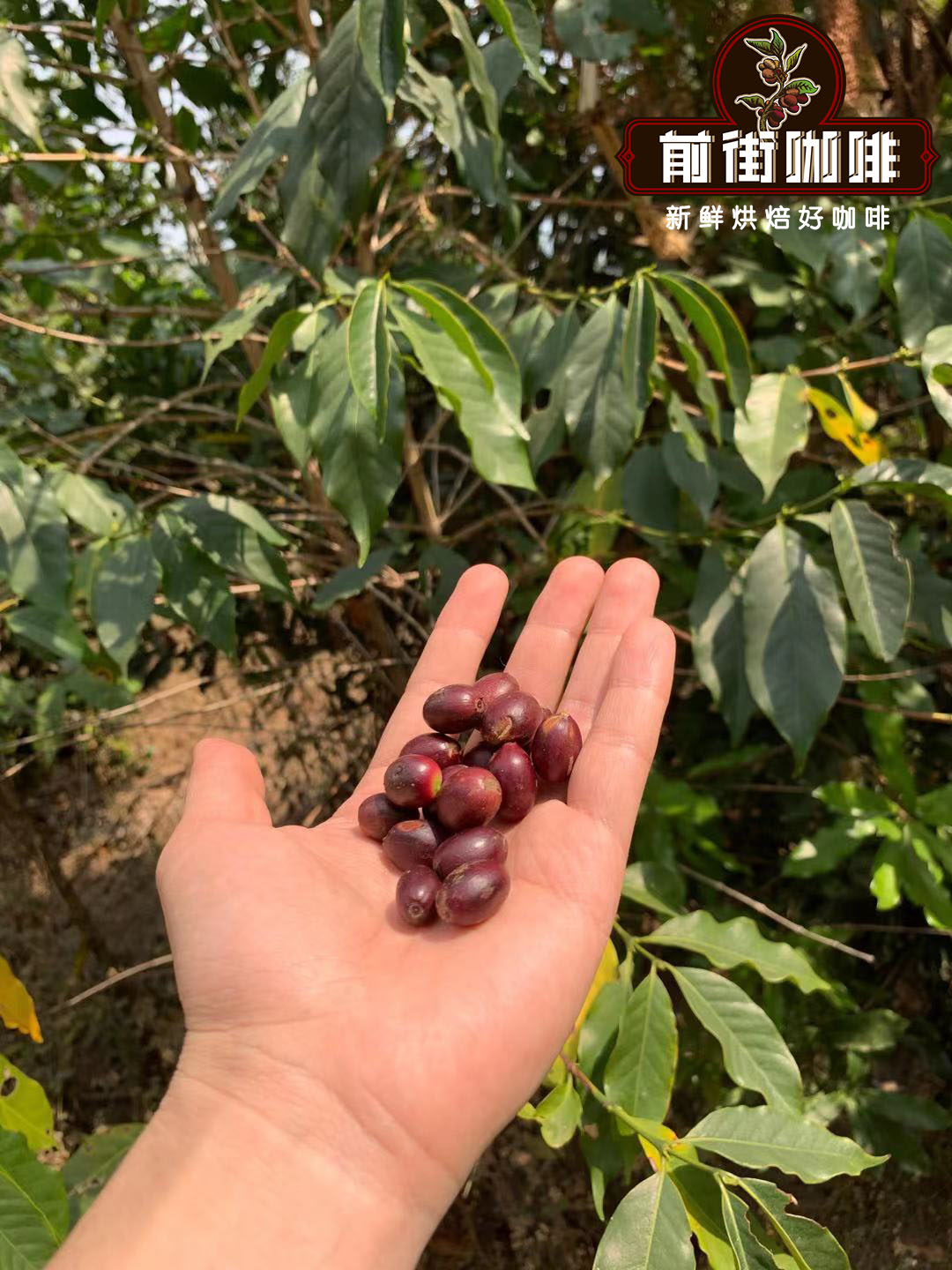
Yunnan Catimor Smallholder Coffee
- Region: Yunnan, Baoshan
- Elevation: 1200 meters
- Variety: Catimor
- Processing Method: Washed
- Region: Yunnan, Lincang
- Elevation: 1200 meters
- Variety: Typica
- Processing Method: Natural
To enhance the body of washed Yunnan coffee, this time we use the Kono filter for extraction. Its unique short rib design slows down the water flow, extending extraction time, thereby increasing overall body and mouthfeel richness.
Brewing Parameters:
- Dose: 15 grams
- Coffee-to-water ratio: 1:15
- Grind size: Medium-fine (recommended 0.85mm sieve retention rate of about 76%, close to the texture of fine sugar)
- Water temperature: 90°C
Step-by-step Pour Over Process:
- First, pour 30 grams of water for blooming, for about 30 seconds. The coffee grounds will expand into a “hamburger” shape.
- For the second pour, slowly add 125 grams of water in small circles from the center, keeping the pour height at 4 cm, with a flow rate of about 4 grams per second, and minimizing agitation of the coffee bed.
- When the water level drops to half of the coffee bed, begin the third pour. Pour in circles from the center outward, continuing until the total water reaches 225 grams. Maintain a steady flow rate and gentle movements throughout.
- Stop extraction once all the coffee liquid has dripped through the filter. Total brew time is approximately 2 minutes and 1 second.
- After brewing, gently swirl the server to mix the coffee evenly, then proceed to taste.
Flavor Profile Comparison:
2013 Natural Typica:The cup opens with distinct fruity notes, such as the freshness of melon and herbs. The mid-palate reveals a harmonious blend of nuts and milk chocolate, while the finish highlights a bright and lively plum acidity. Temperature changes bring out shifts in sweet and sour layers, with a natural transition from sweetness to acidity. The aftertaste carries a soft sweetness reminiscent of black tea and brown sugar.
Washed Yunnan Smallholder Catimor:The flavor is well-balanced, with a pronounced roasted nut character. The acidity is mild and non-aggressive, contributing to an overall rich and solid profile. Black chocolate aroma is clear, and the finish leaves a subtle hint of orange peel and dried fruit.
The above content is compiled by CoffeeHunters, a coffee news website.


